Gladiolus – Symbolizing the Primary Sword that Roman Foot Soldiers Used
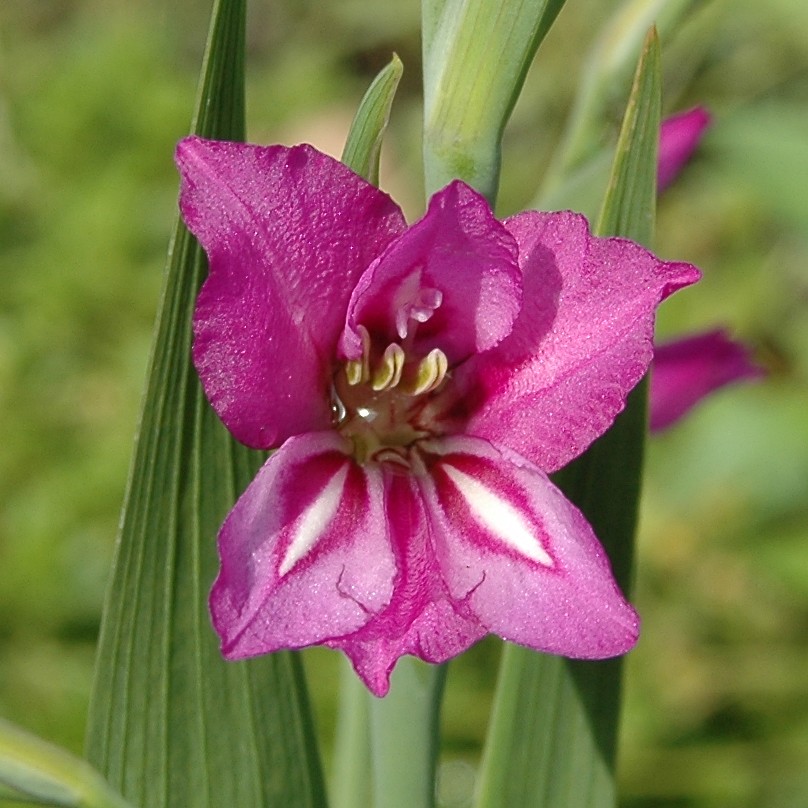
Gladiolus is a group of flowering plants in the iris family (Iridaceae) that grow from round underground storage organs called corms. The name comes from the Latin gladius, the short sword used by Roman foot soldiers, because the plant’s long, pointed leaves look like little swords, which is why it is also called the sword lily.
Scientific Classification & Quick Facts
| Common name | Gladiolus |
| Scientific name | Gladiolus |
| Kingdom | Plantae |
| Phylum | Tracheophyta |
| Class | Liliopsida |
| Order | Asparagales |
| Family | Iridaceae |
| Type | Flowering plants that grow from corms |
| Habitat | Full sun, light well-drained soil |
| Native range | Africa, Mediterranean Europe and Asia |
| Flowering season | Summer, 70 to 120 days after planting |
| Special feature | Called sword lily; belongs to the iris family |
About Gladiolus
There are around 300 species of gladiolus. Most come from Africa, with a large number found in South Africa, especially the Cape region. A smaller number grow wild around the Mediterranean, in western Asia and in Madagascar. Some plants that were once placed in separate groups, such as Acidanthera (the fragrant “peacock orchid”), are now included in Gladiolus.
Garden gladioli, often called “glads,” are hybrids bred from several species. They produce tall spikes of funnel-shaped flowers that open from the bottom up, in colors from white, yellow and pink to red, orange, purple and even green. The plural can be either gladioli or gladioluses.
Preparing to Plant
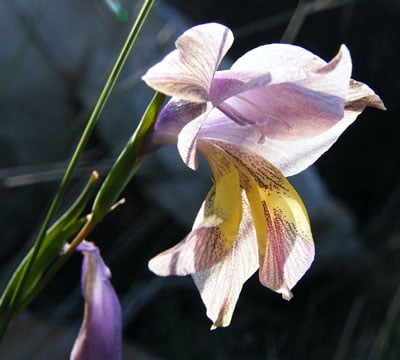
Photo by: Andrew Massyn
Gladioli like the same kind of soil as a vegetable garden: loose, fertile and well drained. Before planting, dig the bed to about 12 inches deep and mix in 2 to 4 inches of compost. Choose an open, sunny spot, because gladioli do not compete well with weeds or crowding plants and need full sun to bloom well.
Planting
- Plant corms in spring, around your area’s last frost date, once the soil has started to warm up.
- Set each corm with the pointed end facing up, about 4 to 6 inches deep. Planting a little deeper helps tall varieties stand up.
- Space corms about 4 to 6 inches apart, in rows or in clumps.
- Water well after planting.
- Tall varieties often need a stake. Put it in at planting time so you don’t stab the corms later.
Watering
Gladioli need steady moisture while they grow. If it doesn’t rain, give them about 1 inch of water per week. One deep soaking is better than lots of light sprinkles, because it encourages deep roots. A layer of mulch helps keep the soil moist and cuts down on weeds.
Flowering Period
Depending on the variety, gladioli bloom about 70 to 100 days after planting, with early types flowering sooner and late types taking longer. For flowers all summer long, try succession planting: plant a few corms every two weeks from spring into early summer.
After-Bloom Care
After the flowers fade, cut off the old flower spike but leave the leaves in place. The leaves keep making food through photosynthesis, which builds up the corm for next year. Keep watering as needed until the leaves turn yellow.
Gladioli are not frost-hardy in cold climates. In areas with cold winters (roughly USDA zone 7 and colder), dig up the corms in fall after the leaves yellow, let them dry for a couple of weeks, then store them somewhere cool, dry and frost-free until spring. In warmer areas they can often stay in the ground.
Gladioli as Cut Flowers
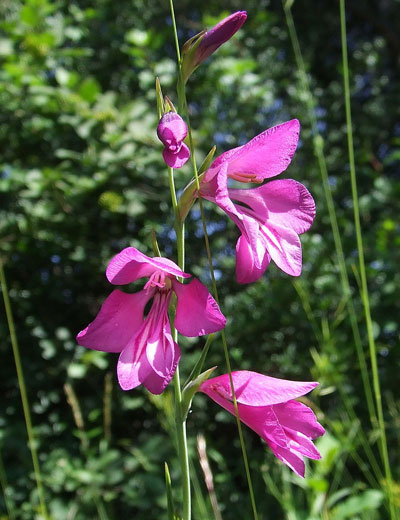
Photo by: Albert Häglsperger
Photo by: Albert Häglsperger
Gladioli make excellent cut flowers and can last a week or more in a vase. Cut a spike when the first one or two flowers at the bottom are just starting to show color. More buds will keep opening up the stem as the days go by.
- Cut in the cool of early morning or evening, when the stems are full of water.
- Leave at least four leaves on the plant so the corm can keep growing.
- Put the stems straight into a bucket of water, then recut them before arranging.
- Change the vase water every couple of days and pinch off faded flowers.
A Safety Note
Gladiolus plants, especially the corms, can upset the stomach if eaten. Keep them away from pets and small children, and contact a vet if you think your pet has chewed one.
Gladiolus FAQs
Why is gladiolus called the sword lily?
The name comes from a Latin word for the sword used by ancient Roman foot soldiers. The leaves and flower spikes are sword-shaped.
Where do gladioli come from?
Gladioli are native to tropical Africa, South Africa, Mediterranean Europe and Asia. Most species were found in the Cape region of South Africa.
How deep should you plant gladiolus bulbs?
Plant them 4 to 8 inches deep with the pointed end up, and 3 to 6 inches apart. Wait until the frost is over and the soil is warm.
How long does gladiolus take to flower?
Early types flower 70 to 90 days after planting, mid-season types take 90 to 110 days, and late ones take about 120 days.
How do you get gladioli to bloom all summer?
Plant a few new bulbs every 10 to 14 days for about 10 weeks. That staggers the flowering times.

Randi Jones is the owner and founder of the Nature Gift Store, an online retailer specializing in nature-themed gifts, educational science projects, live animal nature kits and real butterfly artwork. A biology graduate who fell in love with insects, she founded the company in 2001 to make active learning about nature fun, accessible and engaging for children and adults. Her store offers real butterfly frames, home and garden decor and educational live animal kits, including ant farms, worm farms, tadpoles, ladybugs and hermit crabs, and she runs a bug museum in Washington featuring live animals like Eddie the Iguana alongside other reptiles and insects.