Photinia Flowers – Derived from the Greek Word Photeinos, Meaning Shiny
Scientific Classification & Quick Facts
| Common name | Photinia |
| Scientific name | Photinia |
| Kingdom | Plantae |
| Phylum | Tracheophyta |
| Class | Magnoliopsida |
| Order | Rosales |
| Family | Rosaceae |
| Type | Large shrubs and small trees, mostly evergreen |
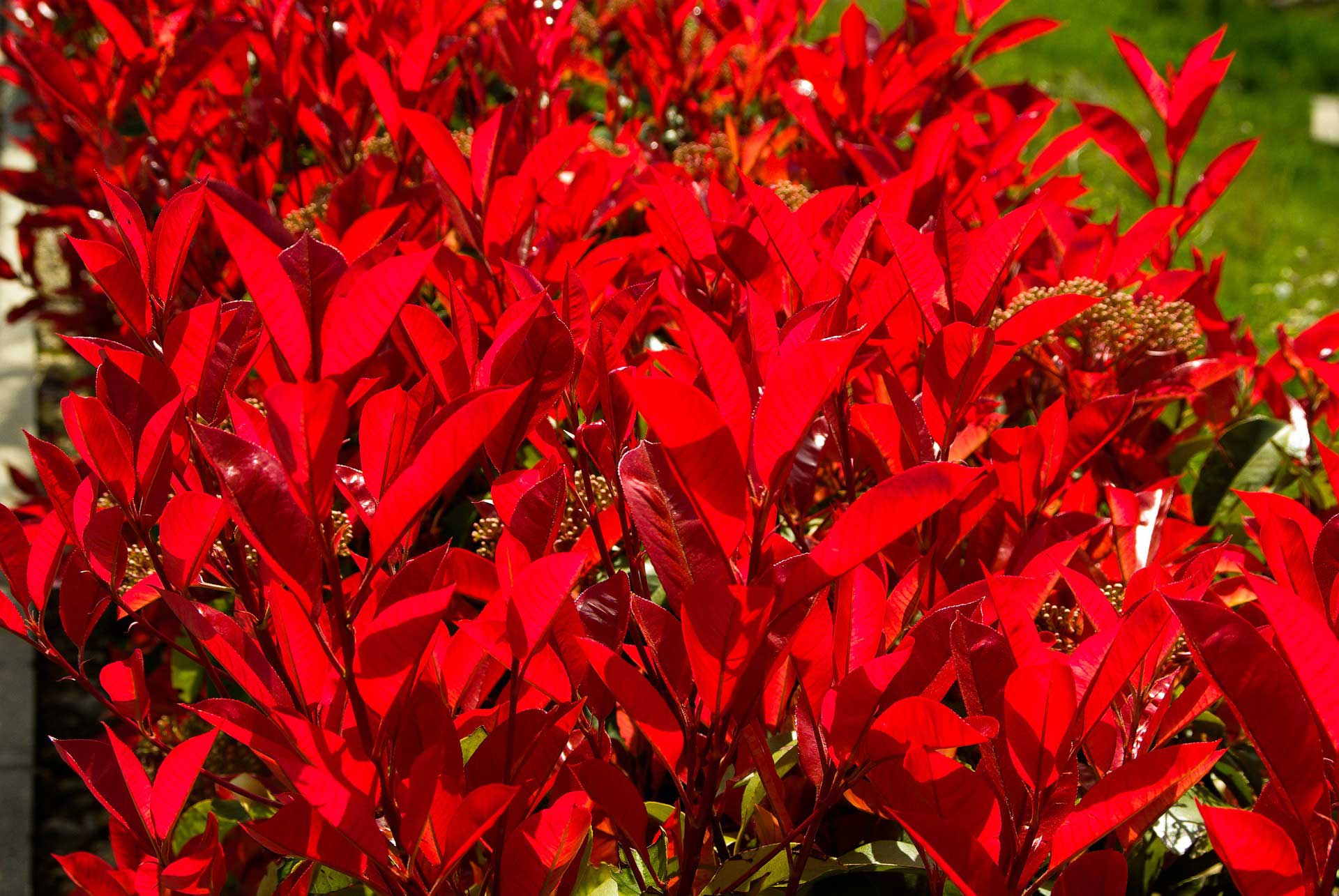
| Colours | White flowers, bright red fruit, bronze-red new growth |
| Flowering season | April to May |
| Height | 4–15 m |
| Special feature | Name means ‘shiny’, from its glossy leaves |
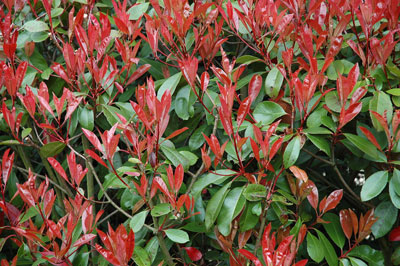
Photo by: Wouter Hagens
Photinia is a variety of plant comprising of 40 to 60 species of large shrubs and small trees, but their scientific classification has, as of date, differed to a great extent, with the genera Stranvaesia , Heteromeles and Aronia occasionally included in the genus Photinia. They belong to the rose family (Rosaceae) and are related to the apple. According to the variety, the botanical name Photinia comes from the Greek word Photeinos, meaning shiny, referring to the leaves which are always shining. The Majority of this variety is evergreen, although you can also see some deciduous species.
Anatomy
Photinias characteristically grow to a height of 4-15 m, with a normally asymmetrical circlet of angular branches that normally do not have thorns. The fine tooth shaped leaves assemble in alternate manner; based on their species they vary in length from 3 to 25 cm and in width from 1.5 to 5 cm. Most of the varieties are evergreen even though others are deciduous. The Photinia flowers bloom in late spring in thick terminal corymbs; the diameter of a single flower is 5 to 10 mm, with five white rounded petals; they emit a gentle hawthorn fragrance. The fruit is a tiny pome, bright red 4 to 12 mm in diameter, growing in great numbers. They mature in the fall and mostly continue into the winter.
How to Cultivate Domestically
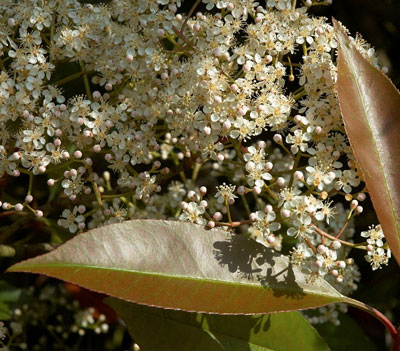
Photo by: Wouter Hagens
Preparation for Planting
Plant your red tipped Photinia in a place where you have a well-drained soil and a bright sunlight and partial shade alternatively. Find a location that will not hinderfresh air circulation to the plants. The ideal soil is one that is partly clayey to loamy. If the soil is highly clayey, change it.
Planting
- To plant Photinia Flowers make a hole that is double the potted plants depth and width. In case you are planting a cutting that has roots, make a hole of 12” in depth and width. Fill back the hole to its half and alter the soil configuration if necessary. If you have light clayey soil, add about 25% organic material and in heavy clay soil, add up to 50% organic matter. You can use compost, commercial products, or leaf mold as the organic matter. In case you have plans for multiple Photinia, make a hole that is at least 3 feet distance from one another or better still, because they grow wild, separate them by a distance of 6 to 8 feet and give provision for spreading
- Transplant the shrub from the pot to the soil. While planting them in the soil, retain the top soil of the potted plant in level with the ground. If necessary, remove or add soil to keep up the level. In case you decide to plant a rooted cutting, maintain the ground level at the meeting point of the stem and roots
- Fill back the hole to a finish
- Water thoroughly first and then, then in the absence of rain, water the ground at intervals of seven to ten days, from spring to fall for the first two years
Placement and Watering
Keep the potted Photinia outside in light shade. To preserve the humidity around the plant, mist the rooting and cutting moderately every day. Keep away from watering the leaves, water only at soil level. Once the shrub has fully bloomed, water the plant after a couple of weeks regularly or when at a touch you feel the soil is dry. Never water the soil in excess.
Flowering Period
The flowering period is in April and May.
After Bloom Care
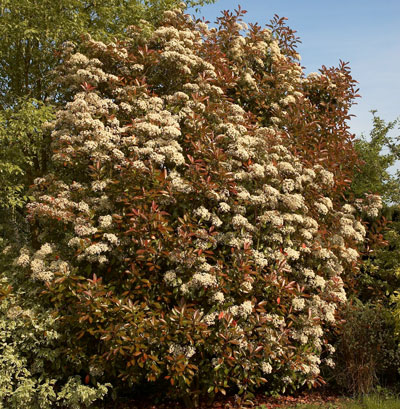
Photo by: Wouter Hagens
Once the Photinia flowers have faded, prune the plants every year. In order to retain the desired shape, cut off the new growths or clip off parts of them. If you see spots on the leaves it shows a sign of fungus “leaf spot”. In order to impound the fungus, cut away the leaves or branches affected by this spot including those leaves that have fallen on the ground.
As Cut Flower
Most people plant Photinia as a hedge plant in a large area. Photinia has a great reputation for its bright bronze-red fresh growth and fresh flowers. This shrub, always fresh and green, grows to a maximum height of 10 to 15 feet and spreads its branches five to ten feet around.
Photinia FAQs
What does the name Photinia mean?
Photinia comes from the Greek word ‘photeinos’, which means shiny. It refers to the glossy leaves that always look bright.
How tall does Photinia grow?
Photinias grow about 4 to 15 metres tall in general. Garden hedge plants usually stay around 10 to 15 feet tall and spread 5 to 10 feet wide.
What do Photinia flowers look like?
The flowers are small, only 5 to 10 millimetres across, with five round white petals. They grow in thick clusters and smell a little like hawthorn.
Does Photinia have berries?
Yes. After flowering it makes lots of tiny bright red fruits, called pomes, that are 4 to 12 millimetres wide. They ripen in autumn and often stay through winter.
Why do people plant Photinia as a hedge?
Most people plant Photinia as a hedge because it stays green all year. Its fresh new leaves are a bright bronze-red.

Randi Jones is the owner and founder of the Nature Gift Store, an online retailer specializing in nature-themed gifts, educational science projects, live animal nature kits and real butterfly artwork. A biology graduate who fell in love with insects, she founded the company in 2001 to make active learning about nature fun, accessible and engaging for children and adults. Her store offers real butterfly frames, home and garden decor and educational live animal kits, including ant farms, worm farms, tadpoles, ladybugs and hermit crabs, and she runs a bug museum in Washington featuring live animals like Eddie the Iguana alongside other reptiles and insects.