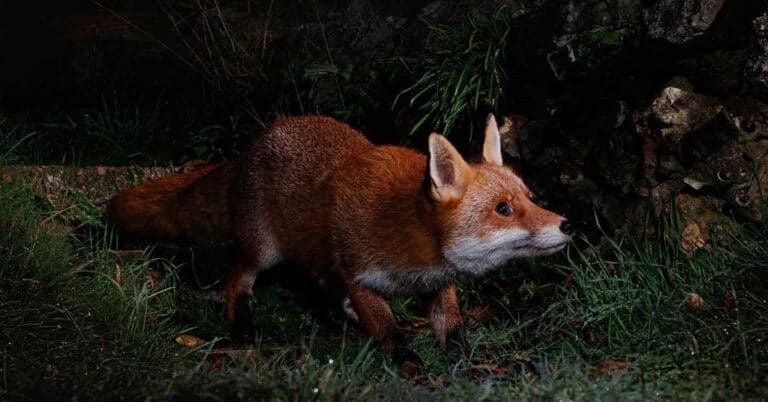
Foxes: Facts, Types, Habitat & Behavior for Kids

Quick answer: A fox is a small wild member of the dog family with a pointed snout, big ears and a bushy tail. Foxes live on every continent except Antarctica, eat rodents, birds, insects and fruit, and are most active at dusk, dawn and night.
A fox is a small wild member of the dog family with a pointed snout, large upright ears and a long, bushy tail. Foxes live on every continent except Antarctica, and they are found in places as different as frozen Arctic tundra, hot sandy deserts, thick forests and busy city neighborhoods.
Fox Quick Facts
| Common name | Fox |
| Scientific name | Vulpes vulpes |
| Kingdom | Animalia |
| Phylum | Chordata |
| Class | Mammalia |
| Order | Carnivora |
| Family | Canidae |
| Genus | Vulpes |
| Conservation status | Least Concern |
| Type | Mammal (dog family, Canidae) |
| Example species | Red fox, the most widespread |
| Diet | Omnivore: rodents, rabbits, birds, insects, fruit |
| Size | Body 18–35 in (45–90 cm) plus a bushy tail |
| Weight | About 6–24 lb (3–11 kg) |
| Lifespan | About 2–5 years in the wild |
| Babies | Kits, usually 4–6 per litter |
Foxes are clever, quick and adaptable, which is why they show up in so many stories and legends. This guide covers the main kinds of foxes, how their bodies and senses work, what they eat, how they raise their young and how to stay safe if you meet one.
What Is a Fox?
Foxes are canids, which means they belong to the dog family, Canidae, along with wolves, coyotes, jackals and pet dogs. Like their relatives, foxes are mammals with sharp teeth for eating meat, a keen sense of smell and four legs built for trotting long distances.
Scientists call about a dozen species the true foxes. They all belong to one genus (group of close relatives) named Vulpes. The red fox, arctic fox, fennec fox, kit fox and swift fox are all true foxes. Several other animals are also called foxes but belong to different branches of the dog family. The gray fox of North America, the bat-eared fox of Africa and the crab-eating fox of South America are good examples.
Foxes are smaller and lighter than wolves and coyotes, and they usually hunt alone rather than in packs. If you want to learn how to tell them apart from their larger cousins, see our guide to the differences between foxes and coyotes.
Types of Foxes
Each kind of fox is shaped by the place it lives. Here are some of the best-known species. You can meet even more of them in our full list of types of foxes.

- Red fox (Vulpes vulpes) – the largest true fox and the most widespread wild carnivore on Earth, found across North America, Europe, Asia and North Africa. Despite the name, some red foxes are dark or patchy, like the cross fox, which has a dark stripe across its shoulders.
- Arctic fox (Vulpes lagopus) – lives in the far north. Most arctic foxes grow a thick white coat in winter and turn brown or gray in summer.
- Fennec fox (Vulpes zerda) – the smallest fox, living in the Sahara and other North African deserts. Fennec foxes have the biggest ears for their size of any canid.
- Gray fox (Urocyon cinereoargenteus) – found from southern Canada to northern South America. It is one of the few canids that can climb trees.
- Kit fox (Vulpes macrotis) – a small, big-eared fox of the deserts of the southwestern United States and Mexico.
- Swift fox (Vulpes velox) – a small fox of the North American Great Plains, named for its speed.

Body and Senses
A red fox is about the size of a small dog. Its body is roughly 18 to 35 inches (45 to 90 cm) long, plus a bushy tail that can be more than half that length again. Even so, most red foxes weigh only about 6 to 24 pounds (3 to 11 kg), because they have light bones and a slim build under all that fur.
Built for hunting
- Ears: Foxes have excellent hearing and can pick up the tiny squeaks and rustles of mice moving under grass or snow.
- Nose: A strong sense of smell helps them find food, recognize other foxes and read scent marks.
- Eyes: Foxes have vertical, slit-shaped pupils, a bit like a cat’s, that help them see well in dim light.
- Whiskers: Sensitive whiskers on the face and legs help them feel their way in the dark.
- Tail: The fluffy tail, called a brush, helps with balance when running and turning, and it works like a warm blanket when a fox curls up to sleep in the cold.
Foxes can run fast in short bursts. Red foxes have been recorded at about 30 miles per hour (48 km/h), which helps them chase prey and escape danger.
Where Do Foxes Live?
Foxes live in forests, grasslands, mountains, farmland, deserts, tundra and towns. The red fox has the largest range of any wild member of the dog family, and people also brought it to Australia, where it now lives in the wild.
Most foxes have a home range, an area they know well and travel through to find food. They rest in sheltered spots during the day, such as thick bushes, hollow logs or rock piles. Find out more about where foxes sleep, from snowy hollows to cozy burrows.
Foxes leave clues that show where they have been, including paw prints, scent marks and droppings. Fox droppings are often twisted with fur, seeds or bits of bone. Our page on what fox poop looks like explains how to recognize it. Never touch animal droppings with bare hands.
What Do Foxes Eat?
Foxes are omnivores, which means they eat both animals and plants. Their menu changes with the seasons and with what is easy to find. Common foods include:
- Mice, voles and other small rodents
- Rabbits and hares
- Birds and eggs
- Insects such as beetles and grasshoppers, plus earthworms
- Frogs, lizards and fish
- Berries, apples and other fruit
- Leftovers from dead animals, and in towns, scraps from trash cans
Small rodents like mice are a favorite meal for many foxes. For a closer look at their menu, read what foxes eat through the year. Many people also wonder whether foxes are a danger to pets; our article on whether foxes eat cats looks at the facts.

The famous mousing pounce
One of the most amazing things a fox does is the mousing pounce. When a fox hears a mouse hidden under grass or snow, it stands very still, tilts its head to pinpoint the sound, then leaps high into the air and dives nose-first onto its prey. Arctic and red foxes can even catch rodents under deep snow this way. Some scientists think red foxes may use Earth’s magnetic field to help aim their jump, but this idea is still being studied.
When a fox catches more food than it can eat, it often buries the extra in a small hole and covers it up. This is called caching. The fox comes back later when food is harder to find.
Dens and Family Life
A female fox is called a vixen. A male is called a dog, tod or reynard. Learn the story behind these names in our article on what a female fox is called.
Most foxes mate in winter. The vixen then gets a den ready. A den may be a burrow she digs herself, an old burrow made by another animal, or a space under a shed, rock pile or fallen tree. Foxes mainly use dens for giving birth and raising young, not as year-round homes. See how to spot one in our guide to fox dens.

Raising the kits
In spring, after about seven to eight weeks of pregnancy, the vixen gives birth to a litter of babies called kits (also cubs or pups). Red foxes usually have about four to six kits. The newborns are blind, deaf and covered in dark fuzzy fur. Their eyes open at around two weeks old.
At first the kits drink their mother’s milk while the father and sometimes other helpers bring food to the den. By about a month old, the kits start peeking out and playing near the entrance. They wrestle, pounce and chase each other, which builds the skills they will need to hunt. By fall, most young foxes are ready to leave and find a home range of their own. Read more about fox babies or follow every stage in the fox life cycle. In the wild, many red foxes live only about two to five years.
Fox Behavior
Foxes are most active at dusk and dawn, which is called being crepuscular, and many also hunt through the night. In quiet places where they feel safe, foxes are often seen during the day too. Our page asking are foxes nocturnal? explains how their daily schedule changes.
Unlike wolves, foxes usually hunt alone. Many foxes live mostly solitary lives outside the breeding season, though red foxes sometimes live in small family groups that share a territory. A group of foxes may be called a skulk or a leash.
Foxes communicate with body language, scent marks and a surprising range of sounds, including barks, yips, howls and loud screams. The eerie scream of a vixen on a winter night can sound almost human. To learn how foxes act and react, take a look at our article on fox personality.
Foxes and People
Foxes have lived alongside people for thousands of years. They appear in folk tales, fables and myths all over the world, often as clever tricksters. You can explore these stories in our article on fox symbolism in different cultures.
Today many red foxes live in towns and cities, where they find food in gardens, parks and trash cans and raise kits under sheds or decks. These urban foxes help control rats and mice, but they can sometimes become too bold around people.
Stay safe around wild foxes
Wild foxes are usually shy and will run away. Still, it is important to treat them with respect:
- Watch foxes from a distance and never try to touch, catch or pet one.
- Do not feed wild foxes. Feeding makes them lose their fear of people and can cause problems for both foxes and neighbors.
- Keep pet food indoors and trash cans tightly closed.
- Foxes can carry diseases, including rabies. If a fox acts strangely, seems very tame or bites anyone, tell an adult and contact local wildlife or animal control officials.
- If a pet is bitten or scratched by a fox, ask a vet for help right away.
Want to know more about how foxes behave toward people? Read are foxes friendly? to learn why wild foxes are best enjoyed from afar.
Fun Facts About Foxes
- The fennec fox is the smallest canid in the world, and its ears can be about 6 inches (15 cm) long.
- The gray fox can climb trees using its strong, hooked claws.
- Arctic foxes have fur on the bottoms of their feet to keep their paws warm on ice and snow.
- A fox’s tail is called a brush, and foxes wrap it around their noses to stay warm while sleeping.
- Foxes bury extra food and remember where they hid it.
- The red fox lives on more continents than any other wild member of the dog family.
Fox FAQs
What is a baby fox called?
A baby fox is called a kit. People also call young foxes cubs or pups.
What is a female fox called?
A female fox is called a vixen. A male fox is called a dog, tod or reynard.
Are foxes dogs or cats?
Foxes belong to the dog family, Canidae, along with wolves and coyotes. They have some cat-like habits, such as slit-shaped pupils and pouncing on prey, but they are not related to cats.
Are foxes dangerous to people?
Healthy wild foxes are shy and rarely a threat to people. They can carry diseases such as rabies, so never touch or feed a wild fox, and tell an adult if one acts strangely.
How many types of foxes are there?
There are about a dozen true foxes in the genus Vulpes, including the red, arctic and fennec fox. Several other animals, such as the gray fox and bat-eared fox, are also called foxes.

Randi Jones is the owner and founder of the Nature Gift Store, an online retailer specializing in nature-themed gifts, educational science projects, live animal nature kits and real butterfly artwork. A biology graduate who fell in love with insects, she founded the company in 2001 to make active learning about nature fun, accessible and engaging for children and adults. Her store offers real butterfly frames, home and garden decor and educational live animal kits, including ant farms, worm farms, tadpoles, ladybugs and hermit crabs, and she runs a bug museum in Washington featuring live animals like Eddie the Iguana alongside other reptiles and insects.