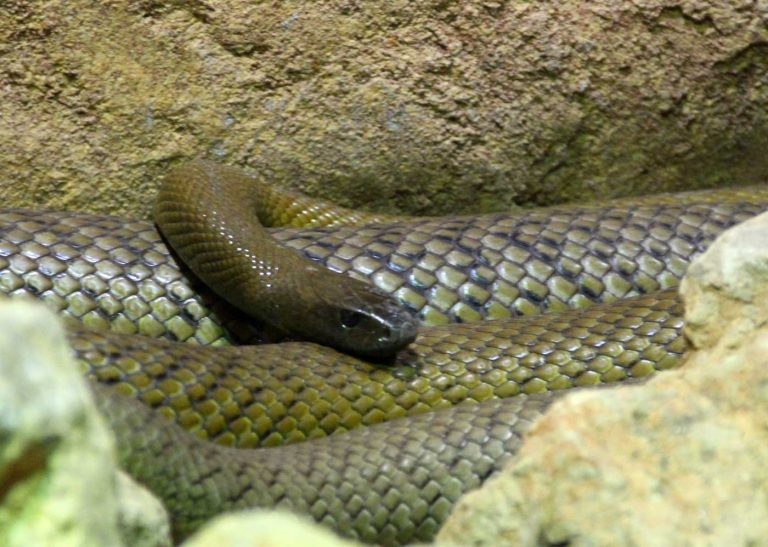
What Snake Can Kill You the Fastest? Exploring the Potency of Snake Venoms
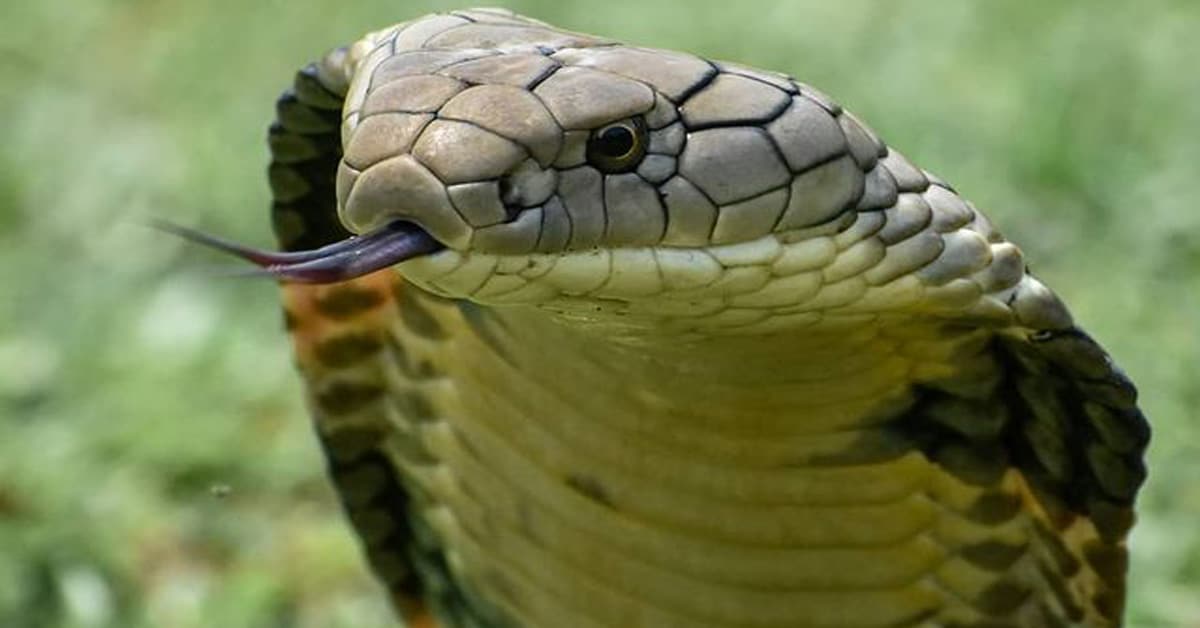
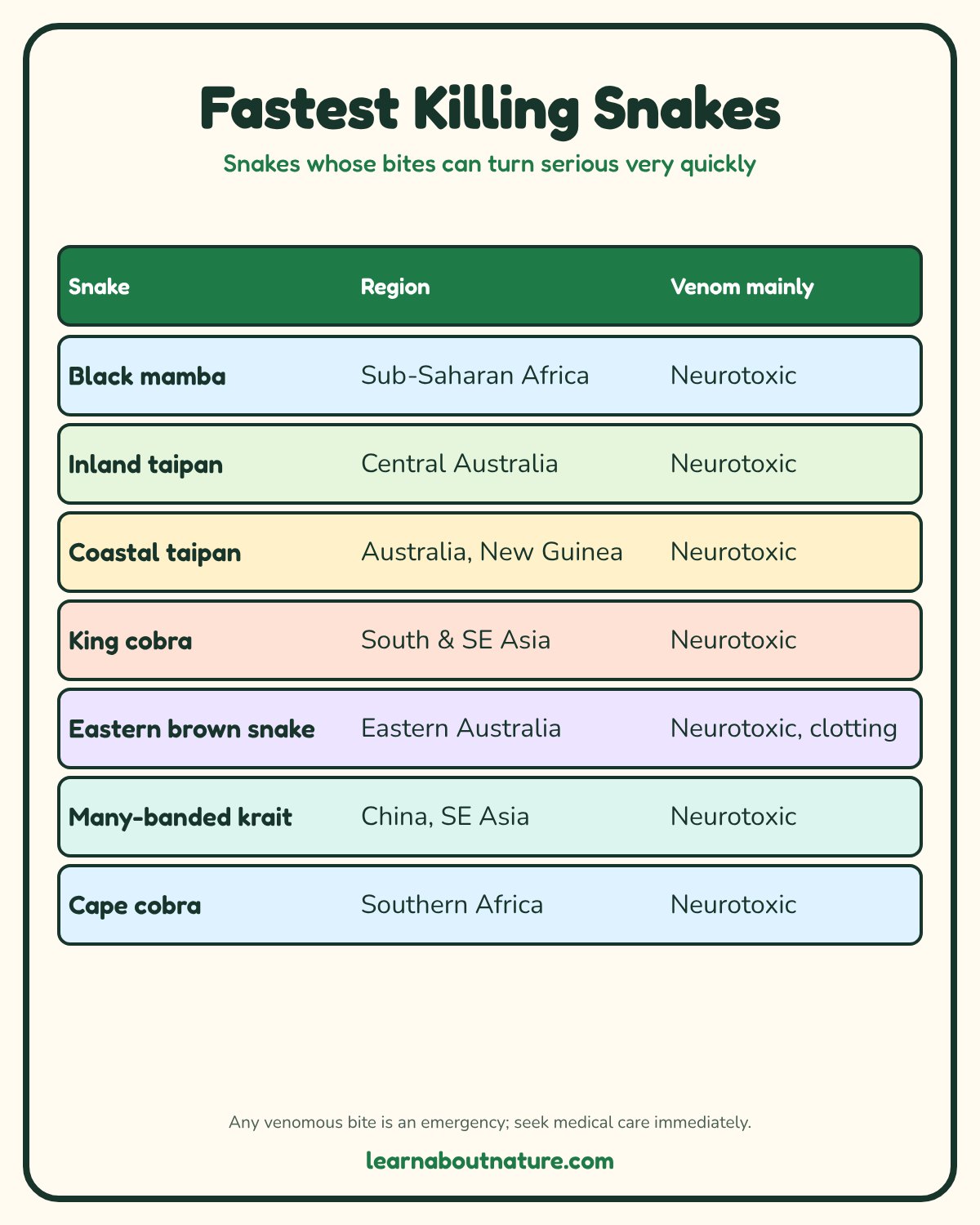
Quick answer: The inland taipan has the most toxic venom of any snake, but it is shy and rarely bites people. Black mambas and some other species are often called the fastest killers; any snakebite is an emergency, so seek medical help immediately.
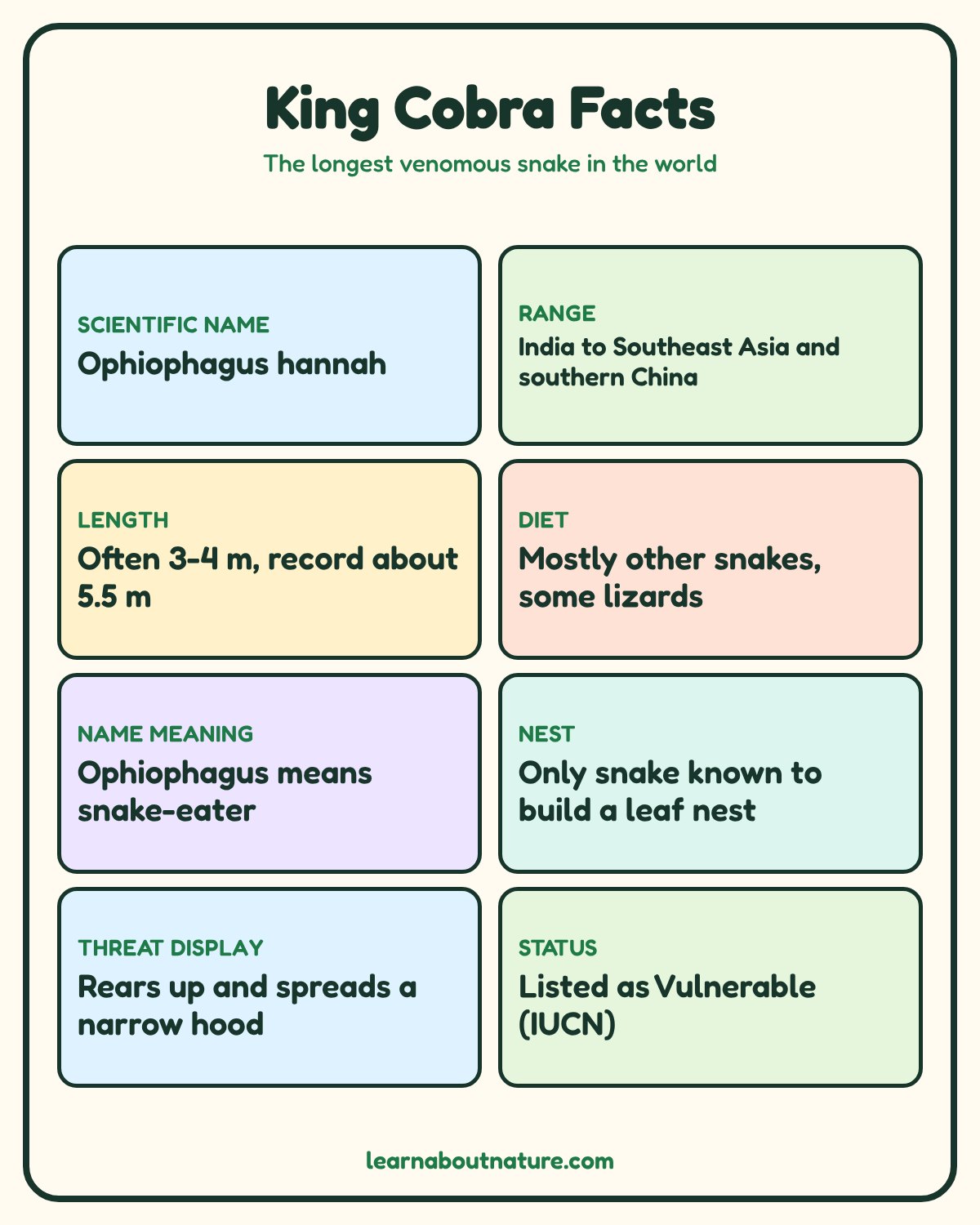
Are you wondering what snake can kill you the fastest? If so, you should be aware of the king cobra, which is the world’s longest venomous snake. Its name is derived from the Greek language and refers to “snake eater”.
Nevertheless, King Cobras suffer a slow metabolic rate and may survive for months without feeding. In fact, even one bite can kill an individual in 15 minutes and a mature elephant in a matter of hours.
In this article, we will comprehensively address all the relevant queries regarding what snake can kill you the fastest. So, let’s proceed and learn everything you wish to comprehend!
What Snake Can Kill You the Fastest? Behavior Patterns of King Cobra
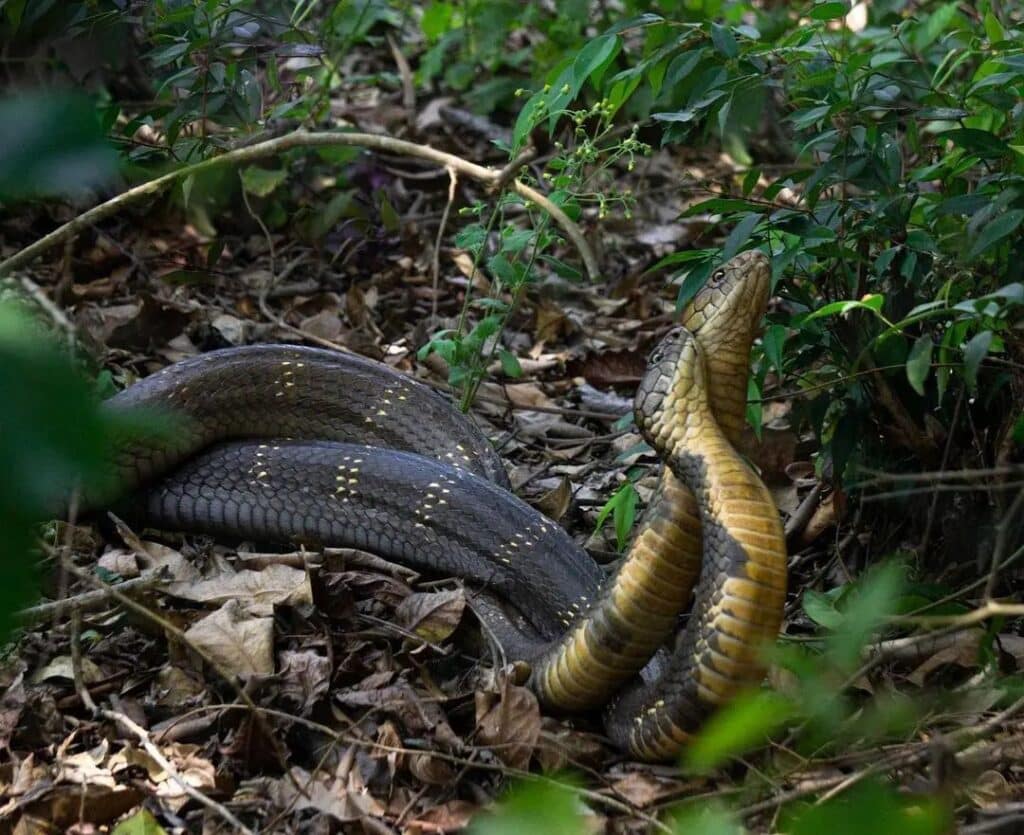
The answer to the common question “What snake can kill you the fastest?” may seem surprising at first glance. In fact, King Cobra is considered one of the most dangerous snakes. Even though it’s timid and avoids interactions with people when provoked, it becomes the most lethal snake in the world.
King Cobra can detect a moving object from approximately 100 meters away thanks to its exceptional vision. They may advance to attack when confronted while lifting a third of their bodies off the ground. Therefore, your interest in what snake can kill you the fastest now will have an obvious answer.
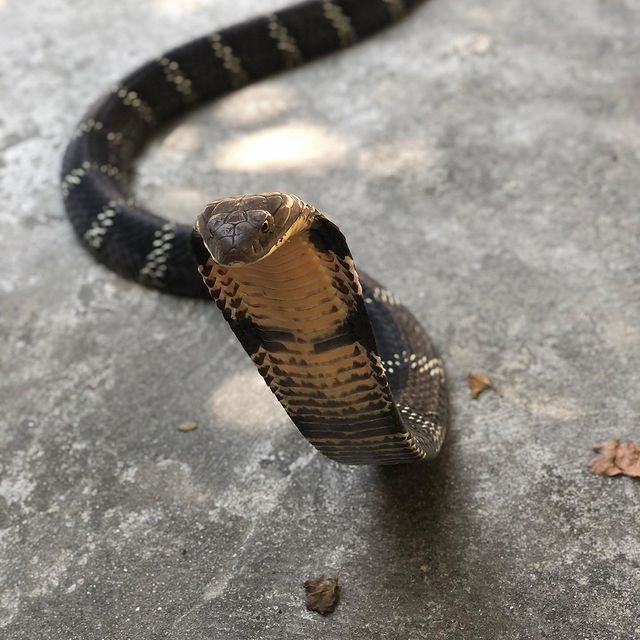
King Cobras mostly inhabit the rainforests and lowlands of Southern China, Southeast Asia, and India; therefore, the colors of these reptiles can differ significantly between regions. A fully matured king cobra might be yellow, green, brown, or black, though most often they feature crossbars or chevrons that are yellowish or white.
Depending on the species, the belly may feature bars or be a single color. Approximately 5 meters long, with two crossbars at the snout and two behind the eyes, the King Cobra displays blackheads.
In contrast to other snakes, female King Cobras are particularly devoted parents. In addition to being the only species that builds a nest for its eggs and watches over them until they hatch, King Cobras are monogamous, which means they breed with just one partner for life.
Even though cobras typically have their hoods fanning out in photographs, it’s possible to come across a cobra without this identifying feature. Therefore, take caution in all situations. Although their main diet consists of other snakes, especially poisonous ones, they will also consume lizards, birds, and rodents when food is in short supply.
How Much Venom Does a King Cobra Bite Contain?
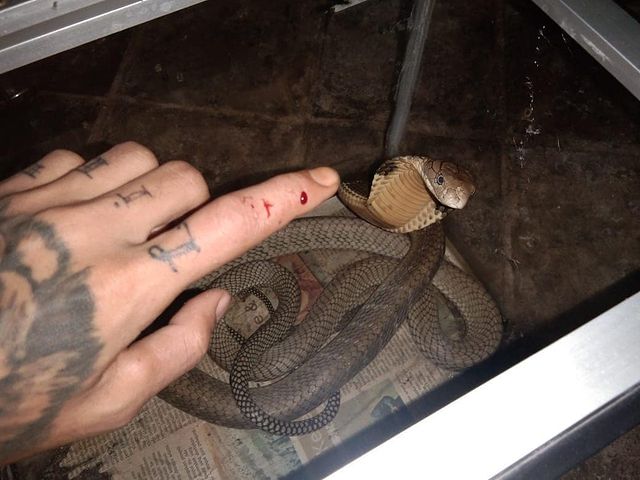
When it comes to your question regarding what snake can kill you the fastest, you should be aware that one bite from a king cobra can contain up to 400-500 milligrams of venom. You can only imagine how powerful the typical king cobra is considering that it takes about 1 mg of venom to kill a single mouse.
The venom of a king cobra paralyzes the nervous system right away. There is a particularly strong neurotoxin in the snakes’ venom that operates by attaching to receptors on muscle cells. The poison prevents the brain chemicals from controlling muscular contraction, resulting in respiratory failure and paralysis.
The king cobra can progressively paralyze a person by preventing their body’s muscles from functioning. The diaphragm muscle, which is in charge of every breath you take, slows down and stops as a result of the venom overpowering the body’s neurons. The venom is capable of preventing the heart from beating, resulting in a severe heart attack that occurs in a matter of minutes.
So, it seems that the king cobra is not only the answer to the question of what snake can kill you the fastest. Along with quick death, this type of snake also promises the most devastating and painful last minutes of your life.
How Do Snakes Generate Lethal Venom?
When answering your question about what snake can kill you the fastest, we want to be particularly informative, so I’ll tell you that according to the World Health Organization, snakes attack approximately 5.4 million people annually, resulting in 81,000 to 138,000 deaths.
A common indicator of the lethal nature of venomous snakes is mortality, which is frequently determined by measuring toxicity in mice. However, other factors, such as how effectively it delivers venom, how much venom it produces, and how it behaves when it comes into contact with people, are crucial.
With their prey, which is becoming more and more resistant to snake venom, snakes are engaged in an evolutionary arms race. To counter this, snakes have developed venoms that are complex mixtures of several hundred distinct proteins and enzymes. Some disrupt the flow of information between nerves, while others alter the heart’s rhythmic pounding.
Snakes can manage the amount of venom they inject with each bite, and they typically utilize considerably more venom than is necessary to kill. Venomous snakes inject poison into their prey with the help of their fangs. The poison is created in a modified salivary gland.
Recent genome research on the king cobra revealed that the poisons in its venom are modest variants of common proteins. Snakes have developed a complicated mixture of 50–100 different proteins to modify blood pressure, interfere with blood coagulation, and paralyze nerves in response to the progressive evolution of immunity in their victims.
King Cobra Envenomation: Treatment & First Aid
Now that you are already aware of what snake can kill you the fastest, you need to gain comprehensive information about the measures to take in the event of King Cobra envenomation.
Since all symptoms of King Cobra envenomation can be reduced or completely eradicated by antivenom alone, antivenom therapy is the cornerstone of treatment. The treatment of other symptoms will call for further therapeutic techniques.
Let’s now examine what you should and most definitely shouldn’t do if you get bitten by a king cobra:
- To prevent irreversible venom damage, get medical attention right away or have someone else do it for you. However, keep in mind that driving oneself to the hospital is not recommended because persons who have been bitten by snakes may experience dizziness or fainting.
- Remain calm, don’t move your limbs or walk around. Try to take a seat or lie down while remaining bite in a neutral position for relaxation.
- Do not attempt to drain out the venom or open the incision; instead, simply wash the bite with water and then bandage it with a dry, clean cloth. Take off any jewelry or accessories that are restricting, such as watches, rings, bracelets, etc. But keep in mind not to apply any creams or ointments to the damaged area.
What Animals Are Immune to King Cobra Venom?
Since humans have been attempting to figure out the answer to this question since ancient times, you should know that you are not the only one who has been wondering for a while what snake can kill you the fastest.
In contrast to mankind, to best meet their individual needs when evading or hunting snakes, animals develop venom resistance in various ways. Scientists have a good understanding of how snake venom harms potential victims. However, they still lack complete comprehension of how immunity functions. Thanks to the concept of evolution, the following animals are now almost immune to the venom of king cobras:
- Honey badger
- Domestic pig
- Hedgehog
- Mongoose
- Opossum
- California ground squirrel
It’s interesting to note that some have not only acquired venom resistance but also a particular form of immunity. For instance, while honey badgers feature thick skin, hedgehogs employ blood-based antivenom in combination with their germs.
The mongoose, on the other hand, has powerful jaws that may kill a snake in one strike and rapid reflexes that allow it to avoid the cobra’s protective bite. However, the courage of the mongoose has genetic roots as well. An attacking mongoose may occasionally be bitten, but it has an additional line of defense against the venom since its acetylcholine receptor has transformed as well, rendering it impossible for the cobra neurotoxin to get through.
King Cobra Vulnerability to Extinction
Since the answer to your question about what snake can kill you the fastest is the king cobra, you may have a special negative attitude towards this specie, but you need to know that because of the numerous risks posed by human activity, the International Union for Conservation of Nature has designated the King Cobra as being at risk of going extinct.
King cobras are extensively hunted for their skin, food, and medicinal properties, and their habitats have been greatly reduced in Southeast Asia due to heavy deforestation. Along with being gathered for the exotic animal trade, King Cobras are also hunted down by people out of fear of their feared reputation.
The king cobra is an officially protected species in various nations, including Vietnam. Certain protections are presumably provided by the protected areas that make up this snake’s geographic range, and organizations like the King Cobra Conservancy attempt to increase public awareness of the species’ characteristics while preserving its environment.
To identify any snakes that have recently been seized in captivity, which is forbidden to lessen the illegal wildlife trade, the Indian government even installs microchips on king cobras.
Final Thoughts
As you can see, the fear seems perfectly rational when you find out what snake can kill you the fastest and how lethal its venom is. Now you know that King Cobras can paralyze the nervous system right away and prevent the brain chemicals from controlling muscular contraction, leading individuals to death in 15 minutes.
From this moment on, when you ask yourself what snake can kill you the fastest, you may not only resemble a king cobra but also think about how its venom is capable of preventing your heart from beating, resulting in a severe heart attack occurring in a matter of minutes.
So, take care of yourself and consider all the comprehensive precautionary measures to safeguard yourself while visiting the rainy forests and lowlands of Southern China, Southeast Asia, and India!
King Cobra Venom FAQs
What snake can kill you the fastest?
The king cobra and the black mamba are often cited as among the fastest-killing snakes because their large doses of neurotoxic venom can cause paralysis and respiratory failure, sometimes within an hour or less without treatment. Prompt medical care and antivenom greatly improve survival.
Is the king cobra the most venomous snake?
No. The king cobra is the world’s longest venomous snake and delivers a very large amount of venom per bite, but its venom is not the most potent. The inland taipan of Australia has the most toxic venom by laboratory measures, though it rarely bites people.
What does king cobra venom do?
King cobra venom is mainly neurotoxic. It blocks signals between nerves and muscles, leading to drooping eyelids, difficulty swallowing and speaking, paralysis, and eventually respiratory failure if untreated. Antivenom and breathing support in hospital are the main treatments.
What eats king cobras?
Adult king cobras have few predators, but mongooses can kill them thanks to their speed and partial resistance to the venom. Young king cobras may be eaten by birds of prey, other snakes, and carnivorous mammals. Humans are the biggest threat through habitat loss and hunting.
What should you do if bitten by a snake?
Stay calm, keep still, and call emergency services or get to a hospital quickly. Remove tight jewelry and keep the bitten limb still. Do not cut the wound, suck out venom, apply ice, or use a tourniquet. Note the snake’s appearance if it is safe to do so.

Nato is a content writer and researcher with a background in psychology who’s eager to explore the wonders of nature. As a travel enthusiast and animal lover, she hopes to inspire others to discover and cherish the beauty and importance of the natural world.