Blue Ladybug
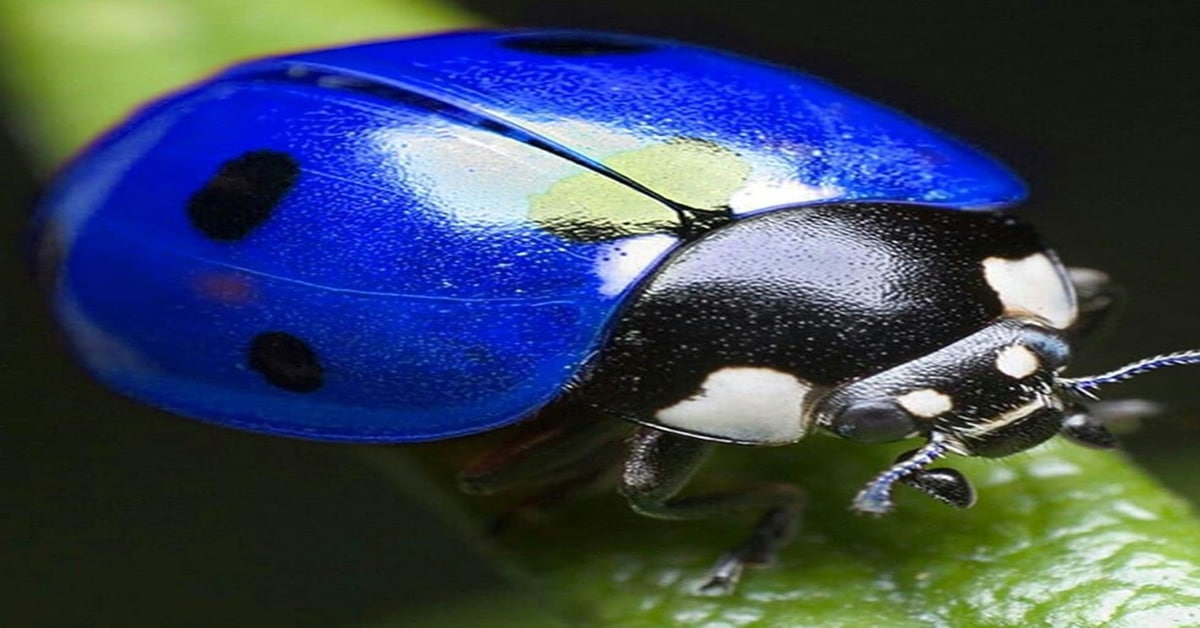
There are different species of ladybugs, and each of them is marvelous and fascinating in its own way. One striking species of ladybug is Halmus chalybeus, widely known as the Steelblue Ladybird. It is a part of the Coccinellidae family and is common in specific regions like New Zealand and Australia.
Blue ladybug Quick Facts
| Common name | Blue ladybug |
| Scientific name | Halmus chalybeus |
| Kingdom | Animalia |
| Phylum | Arthropoda |
| Class | Insecta |
| Order | Coleoptera |
| Family | Coccinellidae |
| Genus | Halmus |
| Type | Insect (beetle) |
| Diet | Scale insects, moth eggs, plant lice, honeydew, nectar |
| Habitat | Gardens, parks, crops |
| Native range | Australia (introduced to New Zealand) |
| Size | 4-5 mm long |
| Colours | Shiny dark blue or green |
| Special feature | Sleeps through winter in diapause |
This type of ladybug has a very interesting way of life and is very attractive with its blue and green coloration. In this article, we are going to talk about the features and lifestyle of the blue ladybug.
Let’s find out how different they are.
Habitat of the Blue Ladybug
You can easily find blue ladybugs in Australia and New Zealand. Because of their feeding habits, the blue ladybug is common in gardens, backyards, parks, crops, and other native ecosystems. In 1899, these tiny insects were released from Australia to New Zealand, and the main reason for this was to control the black scale.
It is widely known that blue ladybugs are as beneficial as other species. They are the best solution to get rid of pests and aphids from your garden or other areas. During the cold winter months, blue ladybugs go into dormancy, and before this time, they find a shelter to survive in cold weather. In spring, they usually come out, mate with other ladybugs, and go to find food together.
How to Identify a Blue Ladybug?
The body length of the blue ladybug is about 4-5 mm. If you see it from the top, it looks like a small circle. Its metallic wing covers are shining dark blue or green, and they act like a helmet of protection over the body. This kind of ladybug is very active during the day and its wings allow it to fly between plants, searching for food or just to escape from predators.
Differences between Male & Female have Species
There are a few differences between the male and female blue ladybirds. Males are smaller and the main distinction is that they have aw color on their faces and forelegs, whereas females have the same dark blue color throughout the entire body. Blue ladybugs do not have spots on their bodies that differ from the other species of ladybirds.
Fake Ladybugs
It is interesting what we call fake ladybugs. They are known as Asian lady beetles and are like a bad type of ladybug. They are aggressive, can bite, are harmful to dogs, and can damage pieces of furniture and walls. At first, they appeared in North America in 1916 to deal with aphids. However, after that, they have caused more serious problems.
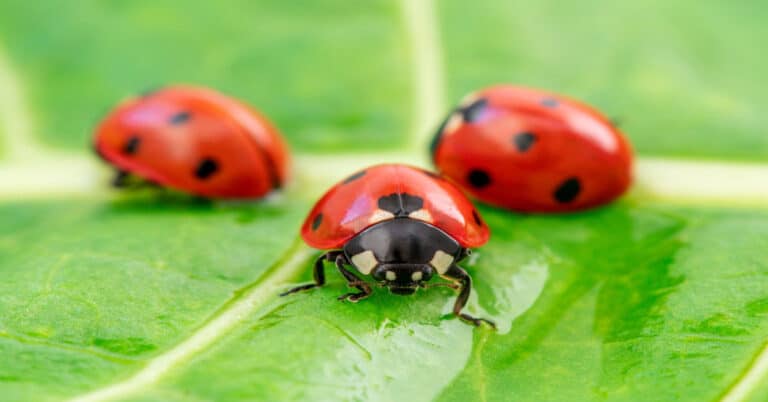
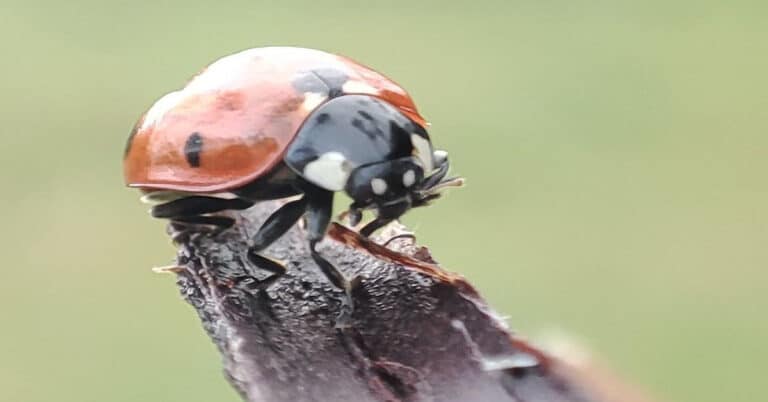
Not surprisingly, real and fake ladybugs are almost identical. That’s why people sometimes don’t understand what they are seeing. The main distinctive mark between these two species is that behind the bug’s head, exactly on the black section, a white M is marked, and this small difference will help you to identify what kind of ladybug you are dealing with.
Life Cycle
After the female ladybug lays the yellow eggs with black material, a larva hatches from each egg. It is dark gray and has long hair at the tip. They use three pairs of legs for walking and also the tip of the abdomen. There are four larval stages, and after that, it moves into the pupa. If there is a high temperature, the period of this life stage is shorter.
From the pupa, the adult ladybird hatches and mates with other ladybugs. You can see the eggs of ladybugs in the summer and spring. There are two generations of blue ladybirds per year. The first appears in January and the second in April. The life cycle takes about 4–8 weeks. When the temperature drops in the winter, ladybugs hibernate and sleep for several months. After that, they can fly again and start searching for food.
Egg Stage
The life cycle of a blue ladybug begins with an egg stage. After the ladybird mates, the female one lays the eggs in a cluster of five to 30. And usually, it sets these eggs on the plant, where there are lots of aphids for hatched adult ladybirds.
Larvae Stage
After the egg stage, in about 10 days, ladybird larvae appear from their eggs. Temperature can have a big effect on this period. For full growth, about two weeks are necessary for full growth, and during this period, larvae can consume 350–400 aphids. Furthermore, it sometimes eats the eggs of ladybirds. Larvae start molting and it lasts through four instars. When it attaches to a surface, it means that it’s time to move into adult form.
Pupa Stage
This period of Ladybug lasts about 7–15 days. The pupa stage is like a turning point because Ladybug’s body goes through lots of remarkable transformations. The body produces special cells known as histoblasts, and after this period, the ladybug is ready to move into the adult form.
Adult Stage
The last stage of the ladybird’s life cycle is the imaginal stage. They live from 3 months to 3 years. We have talked about how important helpers are to ladybirds in getting rid of aphids. Furthermore, we have to mention that feeding with aphids helps adult Ladthree birds grow, become larger, and faster.
Blue Ladybug Diet
For the blue ladybugs, the main food sources are scale insects, moth eggs, and plant lice. They don’t like to eat aphids as much as other species. However, other feeding habits are almost the same. Adult ladybirds’ jawbones have a structure that helps them to easily hold and chew their prey.
They usually eat honeydew that is on the leaves, and they feed on the nectar of flowers. They usually search for small insects like psyllids, whiteflies, citrus red mites, and other kinds of tiny insects. These mites damage leaves and plants, so ladybirds are beneficial insects, and with the help of them, people can easily deal with different kinds of parasites.
Do Blue Ladybugs Bite?
Ladybugs are considered harmless insects. They are not dangerous to humans. However, there is a low risk, but they can be aggressive and bite people. According to the NHS, a bite can sometimes be very painful, but it is not something to worry about.
After its bite, you have to wash this area with water and soap and apply an ice pack. Furthermore, bites can sometimes cause allergies in people, but it depends on the species of ladybugs. The blue ladybug is not an aggressive one.
Spiritual meaning of Blue Ladybug
Steel blue ladybugs are the symbols of love, luck, and prosperity like other ladybirds. It is a sign that positive things are about to happen. The reason why ladybugs are associated with luck is connected to the farming theory.
It is a widely known fact that these tiny insects help farmers. As we already mentioned, they are a natural means of pest control, and it is a happy moment for farmers to see that parasites do not spread over the crops. Don’t forget that when you see the ladybird, it may be a harbinger of transformation.
Bright Blue Ladybug
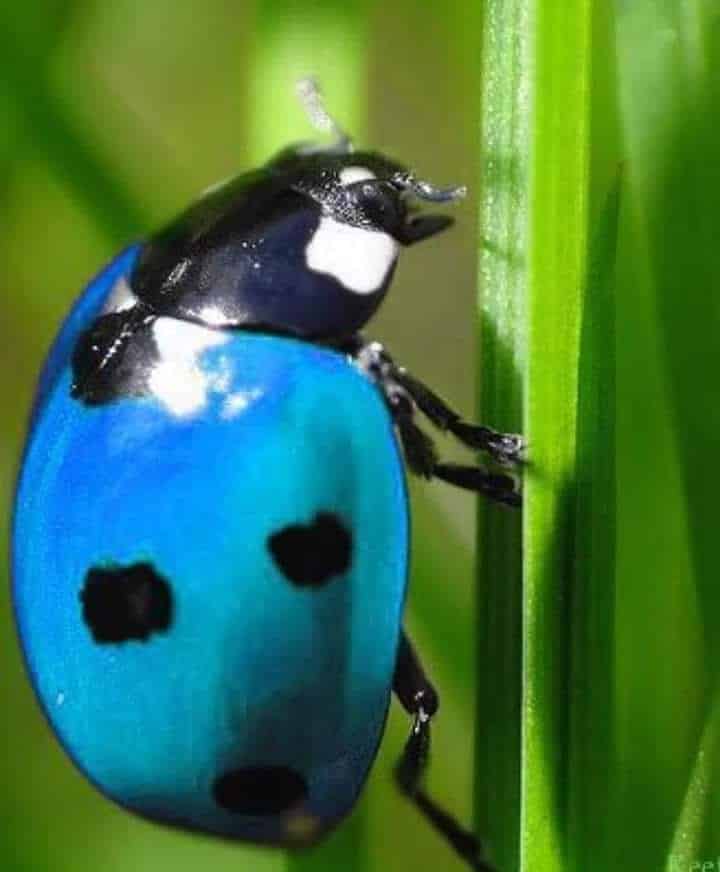
We are talking about the blue ladybugs that have dark blue wings and we know that they exist. However, some people see bright blue ladybirds’ photos on the internet and believe that they are real, but we already know that photoshop can make any kind of thing and create a different reality.
So, if you see bright blue ladybugs on the internet, don’t think that they exist. The real blue ladybug has a different yet beautiful dark look.
Enemies of Ladybugs
It is an interesting fact that ladybugs have a defensive system, and because of it, it is not easy for predators to kill these tiny ladies. However, their enemies are spiders, true bugs, and some birds that are immune to the defensive chemicals of ladybirds. The bright color of ladybugs means that they have more toxic substances and are dangerous to any kind of predator.
Are Blue Ladybugs Rare?
We can say that blue ladybugs are not widespread in the whole world, but this doesn’t mean that they are rare. In specific areas like Australia and New Zealand, there are lots of them. It is strange, but we cannot find any other reported information that blue ladybugs have been found outside of these regions. Not even in some countries close to Australia, like Indonesia.
Diapause
In the winter months, ladybugs are inactive and often enter diapause. This is like hibernation and describes a period when ladybirds stop developing. Some species of ladybugs have learned how to use some strategies to deal with cold temperatures, but the majority of them, including the blue ladybug, cannot remain active, and that’s why they enter diapause and sleep for several months.
Bottom line
Everyone loves ladybirds because of their features and beneficial side. In this article, we discussed things that are connected to the steelblue ladybug, called Halmus chalybeus, also known as the blue ladybug. It has very riveting habits and a way of life.
You will not find them everywhere, only in specific areas like Australia and New Zealand. Blue ladybugs are friendly and fascinating members of the Coccinellidae family.
Blue ladybug FAQs
What do blue ladybugs eat?
Blue ladybugs mainly eat scale insects, moth eggs and plant lice. They also eat small pests like whiteflies and mites, and they sip honeydew and flower nectar.
Where do blue ladybugs live?
Blue ladybugs live in Australia and New Zealand. You can find them in gardens, backyards, parks and crops. They were taken from Australia to New Zealand in 1899 to control a pest called black scale.
How big is a blue ladybug?
A blue ladybug is tiny, only about 4-5 millimetres long. From above it looks like a small round circle with shiny dark blue or green wing covers.
Do blue ladybugs bite?
Blue ladybugs are not aggressive and are harmless to people. Ladybugs very rarely nip, and if one did, you would just wash the spot with soap and water.
Are blue ladybugs helpful?
Yes! Blue ladybugs help gardeners by eating pests that harm plants, so they are a natural way to protect a garden.

Nato is a content writer and researcher with a background in psychology who’s eager to explore the wonders of nature. As a travel enthusiast and animal lover, she hopes to inspire others to discover and cherish the beauty and importance of the natural world.