Northern Caiman Lizard
Scientific Classification
| Kingdom: | Animalia |
| Phylum: | Chordata |
| Class: | Reptilia |
| Order: | Squamata |
| Family: | Teiidae |
| Genus: | Dracaena |
| Species: | D. guianensis |
Among the Largest Species of Lizards Found in America
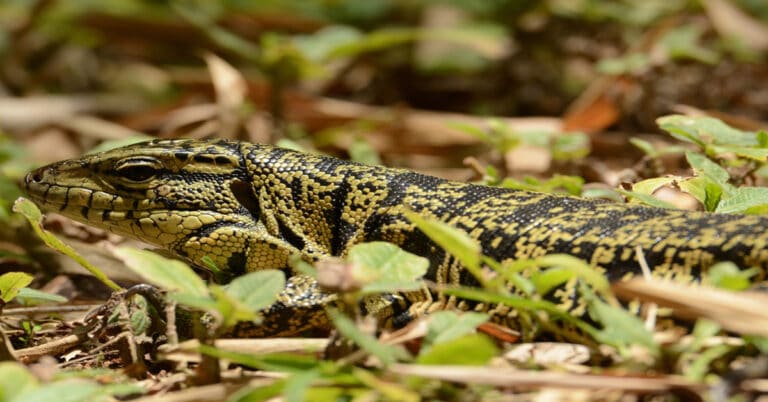
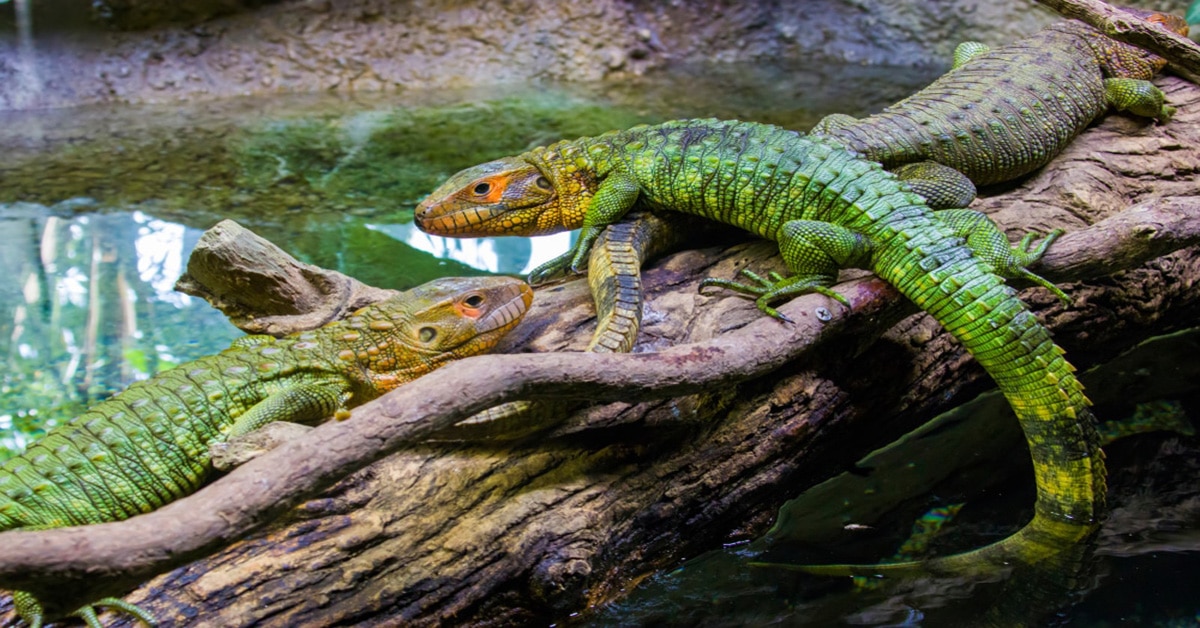
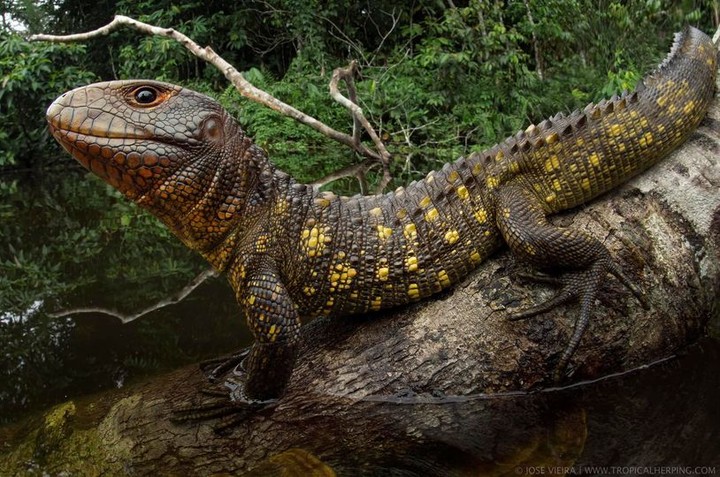
The Lizard Dracaena Guianensis or the Northern Caiman Lizard, inhabiting South American jungles, is a lizard of medium size with a strong build and is among the largest species of lizards found in America.
Natural Habitat
The Northern Caiman Lizard lives in its natural habitat in the swampland areas and rainforests of South American countries like Peru, Ecuador, Colombia, and Brazil. You can most frequently see Caiman lizards in flooded areas, being aquatic creatures by nature.
Anatomy
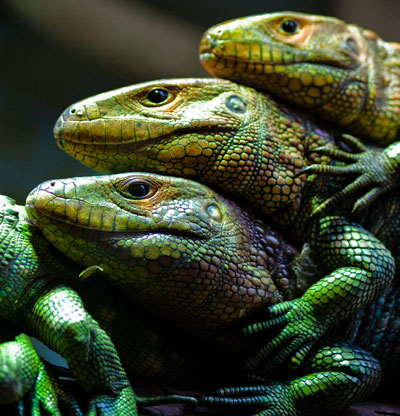
This lizard, big and strongly built, attains 120 centimeters in length from its muzzle up to its tail end.
The build of the Northern Caiman Lizard is akin to its cousin, the teguIts. It has a large head, generally in red or orange color. Its powerful jaws help eating the usual prey of crawfish, freshwater clams and snails. It also has some adaptive traits to help it in its watery habitat. Its tail is a long and flattened, true to its namesake, the Caiman. They can live up to 20 years.
As a Pet
Housing
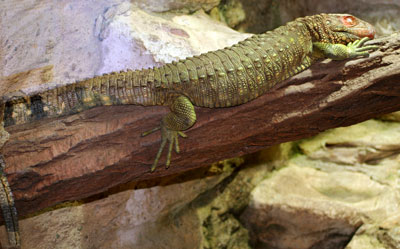
The container for the pet should be large enough, though it need not be very tall, as this variety of lizard does not climb largely. The minimum recommended size of wooden or glass terrarium is 2×4 feet and 8×4 feet for larger pets. One end the container should have a soaking or swimming pan for the lizard to submerge in filtered and heated water. You should use an Aquatic Heater with thermostat setting of 25 – 28° C and an Aquarium internal filter for the purpose. You can make the land or dry area from coir or forest bark, providing cork tubes or caves, sufficiently big for the lizards to coil up at the cooler end of the terrarium.
Substrate
You can use a wood mulch substrate in the terrarium for this animal. Make sure you provide a water area, as these lizards are semi-aquatic
Temperature and Humidity
You would do well to maintain the following features about temperature and humidity
• Basking spots (use a basking spot lamp) – Temperature of 32-35 degrees C
• Cooler temperatures – 25-28 degree C with 21-24 degrees C at night
• Control the temperatures with a pulse thermostat
Food
The large Northern Caiman Lizard is carnivorous and hunts prey mainly for nutrient sustenance. Although their main foods are snails, they will also eat other invertebrates like crabs, insects and larger animals like amphibians, rodents and fish.
Surprisingly, they also like hard-boiled eggs, can O’ snails, rats, mice, chicks, Goliath hornworms, canned jumbo krill, mangoes, grapes, banana, peach, apples and the like. Variety is the key of their diet.
Breeding
There is not much recorded evidence about the breeding habits of the Northern Caiman Lizard, although many experts feel that their behavior in this regard will have a similarity with those of the other species of large lizards. Post mating, the females dig a hole in the substrate, deposit their eggs in it, and cover it up in protection. Normally, in their original habitat, they bury their eggs in the sand in riverbanks to prevent access to predators. The babies, when they hatch, are independent, and get no maternal care from their mother.
Having discovered a fondness for insects while pursuing her degree in Biology, Randi Jones was quite bugged to know that people usually dismissed these little creatures as “creepy-crawlies”.