Australian Water Dragon
Scientific Classification
| Kingdom: | Animalia |
| Phylum: | Chordata |
| Class: | Reptilia |
| Order: | Squamata |
| Suborder: | Lacertilia |
| Family: | Agamidae |
| Subfamily: | Agaminae |
| Genus: | Physignathus |
| Species: | P. lesueurii |
Survives in a domestic enclosure for over 25 to 28 years
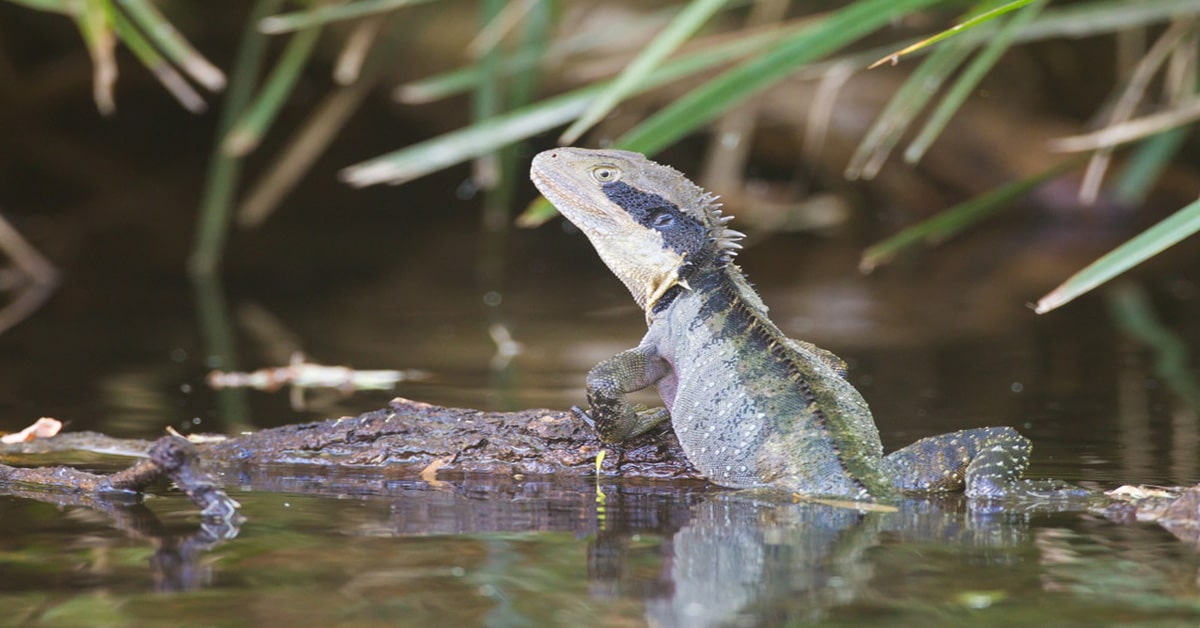
The Australian Water Dragon (Physignathus Lesueurii) belongs to the subordinate variety of Gippsland water dragon and Eastern Water Dragon. These varieties dwell in trees and are natives of the northern part of Eastern Australia from Northern Victoria to Queensland. The availability of water basins (known as Billabong in Australia) or close by rivers restricts the wide distribution of these animals. This variety survives in a domestic enclosure for over 25 to 28 years.
Anatomy
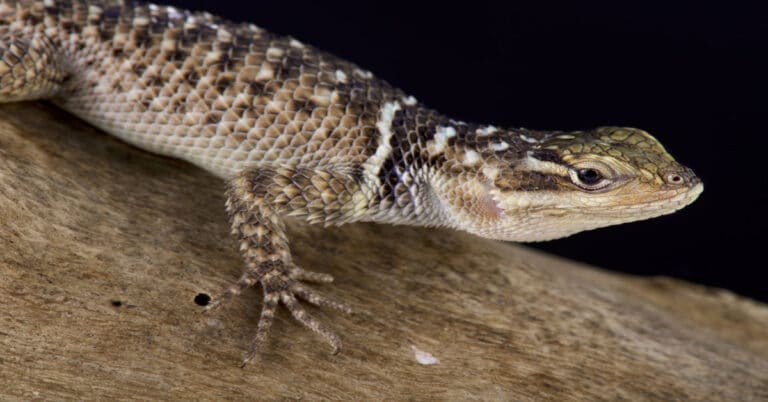
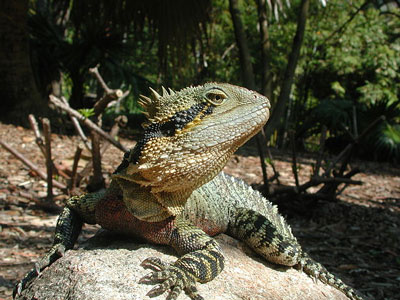
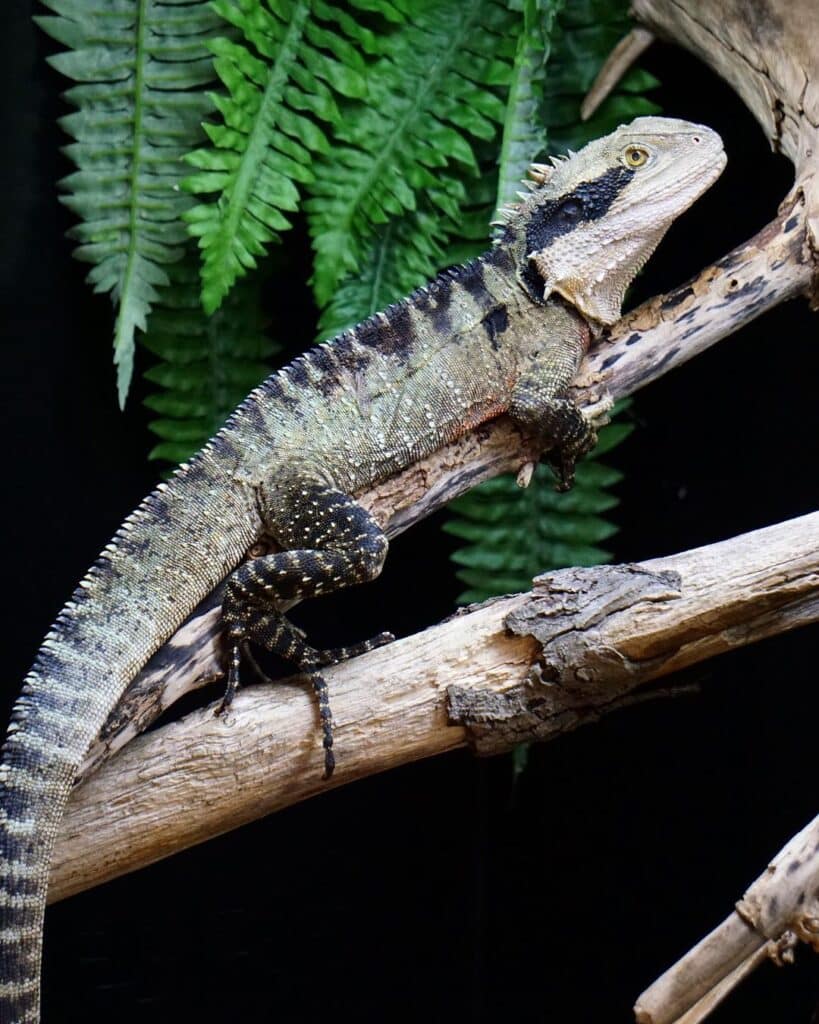
The full length of a male is 2-2.5 feet. The males have a tuft around their neck, the upper part of their forearms and stomach has red color. The males are very significant by the white/black pattern on their head, which is comparatively larger than that of the females. The lips of the male are white with strong black stripes at the back of their eyes. The female’s head is small with dullish white lips and black/gray stripes at the back of their eyes; the color of their belly merges from pink to white.
As a Pet
Housing
Keep the young ones in tall enclosures of 29-gallon size and place a flat vessel with water. As a substrate, place some offshoots to climb on and paper napkins. Try to use less space for the young ones in their enclosure thereby providing some space for the crickets to hide.
House a single adult dragon or a pair in a tall enclosure of 2’ x 4’ x 4’. Suppose you decide to accommodate 2 to 4 adults in a cage then 4’ x 4’ x 6’ is ideal. Use cypress mulch outdoor-indoor carpet, soil or sand as substrate. It is essential to keep water and provide many branches for them to climb.
Substrate
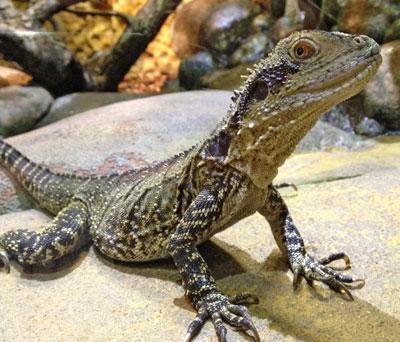
Different substrates serve the needs of the Australian Water Dragon. You can use outdoor-indoor carpets, sterilized potting soil or mulch of cypress for the adults. For infants, you can consider outdoor-indoor carpets, paper napkins or newspapers are ideal. Do not use pine or cedar in the enclosure, as it is toxic.
Temperature
Maintain the daytime heat from 84°F to 88°F and a basking temperature of 90 to 95°F. Maintain a temperature of 75 to 80°F at night. At winter, these animals adjust to a lower temperature.
Food
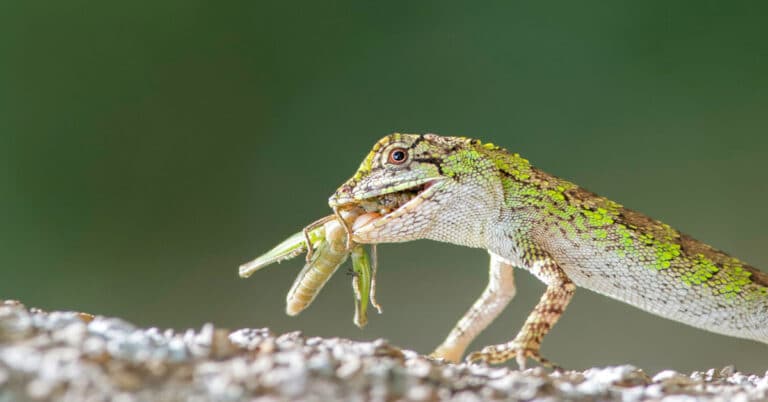
Regular Australian Water Dragon care demands that you feed these animals with super worms, mealworms and crickets. You can also feed them with feeder fish, earthworms, cockroaches and shredded leaves like collard, green/red leaves, mustard, and vegetables like carrots, yellow squash, green beans and sweet potato. Provide them with fruits such as blueberry, strawberry, banana, raspberry and other varieties of melons.
Lighting
Australian Water Dragon prefers UVB and UVA lighting. It is mandatory to follow the instructions in placing the lamps at the right distances. The ultraviolet rays absorbed by the lizard will vary a lot if you change the bulb’s positioning by 2 inches from the top or bottom of the basking area.
Temperament
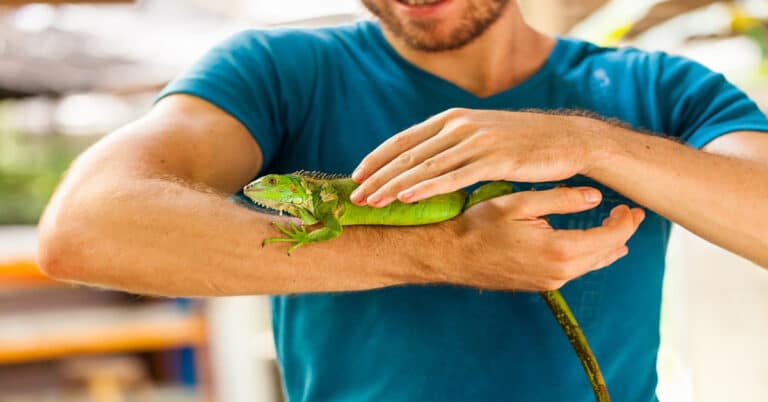
The Australian Water Dragon is an inspiring lizard. It is unusual to see them bite; rather they escape if they you bully them. Be cautious and patient in tackling them. Give enough time for them to acquaint with you. When compared to other lizards, these animals are more playful. With proper care and handling, you will own a wonderful and inspiring pet.
Having discovered a fondness for insects while pursuing her degree in Biology, Randi Jones was quite bugged to know that people usually dismissed these little creatures as “creepy-crawlies”.