Corydoras
Scientific classification
| Kingdom: | Animalia |
| Phylum: | Chordata |
| Class: | Actinopterygii |
| Order: | Siluriformes |
| Family: | Callichthyidae |
| Subfamily: | Corydoradinae |
| Tribe: | Corydoradini |
| Genus: | Corydoras |
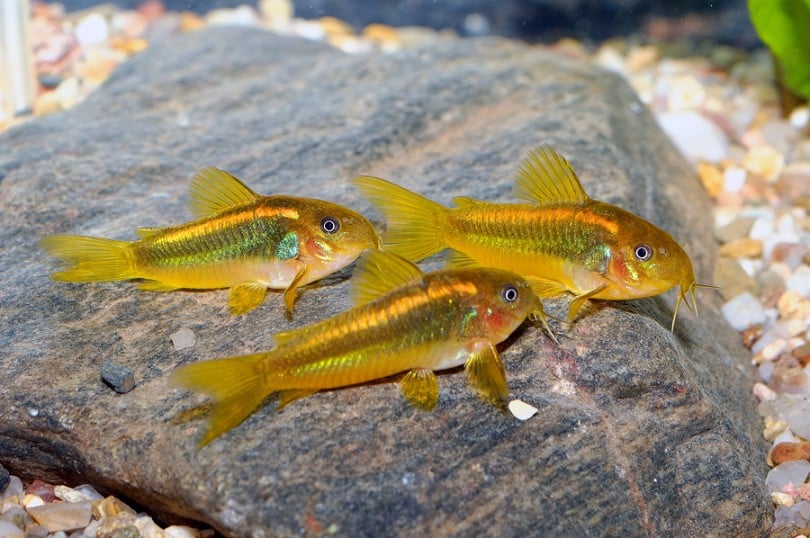
The South American members of the Corydoras genus are basically freshwater species found in tropical and temperate regions. They are members of the armored Catfish family and the Corydoradinae subfamily. The other common synonyms of this fish are Cory, Corydoras, and Cory Catfish. This name is derived from the Greek word “Kory”, which means ‘helmet’ and doors, means ‘skin’. The genus Corydoras is the largest among the Neotropical fish that consists of 142 species. It is the only genus in the Corydoradini tribe. These different species display diverse colorations and body structures. Usually, these fish are small in size, and have a body length of 25 to 120mm.
Habitat and Distribution
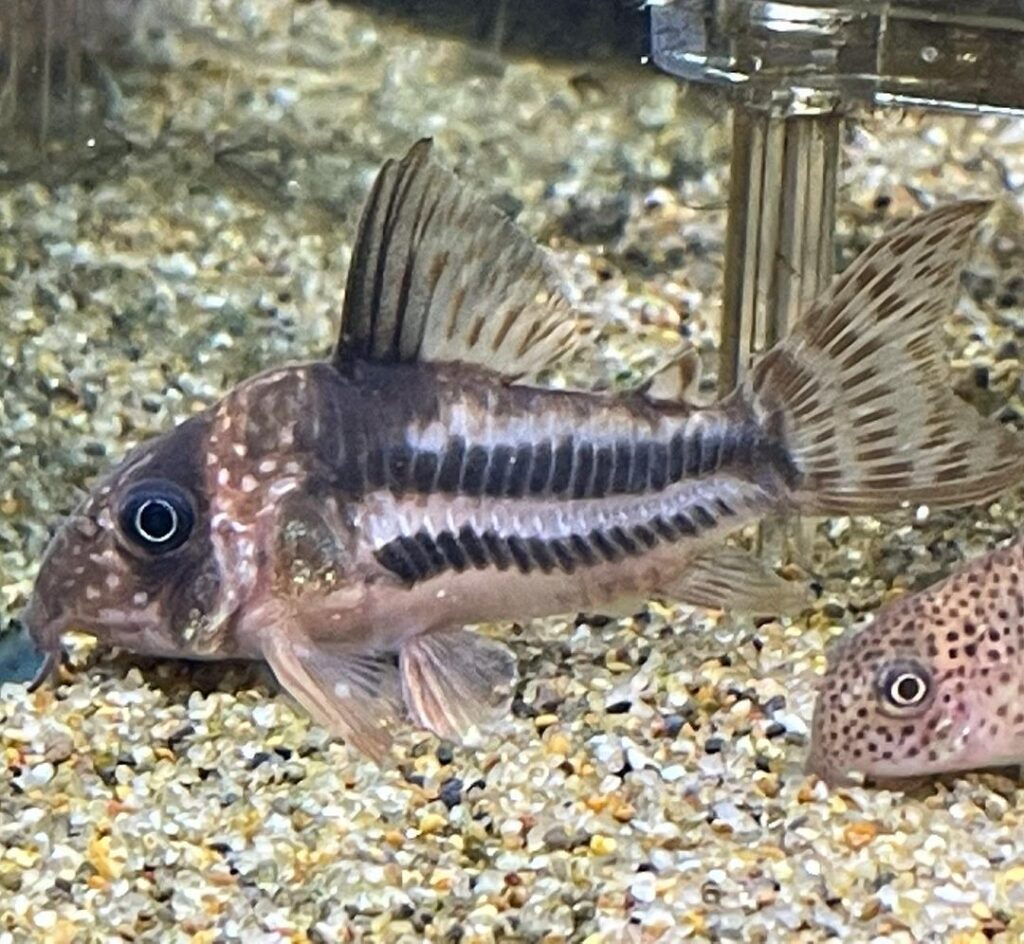
The Corydora species are mostly found in South America from the eastern parts of Andes till the Atlantic coast, and in Argentina ranging from Trinidad to Rio de la Plata drainage. They prefer inhabiting small streams flowing along large river margins, ponds and marshes. They can also be seen in the South America’s smallest rivers, where the water is clear and shallow. This fish thrives in Slow-moving or still streams. They are basically bottom dwellers, who love to explore the gravel, sand or detritus. They are also often seen near the dense vegetation on the sides and banks of the streams. They will survive in any water condition, but prefer neutral to slightly alkaline or acidic water, and cannot tolerate high amount of salts.
Reproduction
The Cory genus has a versatile way of reproduction. The Corydoras Aeneus species are found with this type of insemination. They carry out courtship rituals, in which the male chases the female. The female cleans a spot to lay her eggs. When the male gets hold of the female fish, he lays on top of the female fish and seems to shiver, and as the spawning period nears, the male fish offers his abdomen to the egg laying female fish. The genital opening is attached to the female fish’s mouth to drink the sperm. This “T’’ position is often seen in all the Corydoras genus. The sperm transfers through the female fish’s intestine. Later, while discharging the eggs, these sperms are also discharged in a pouch developed by the pelvic fin of the female fish. These species lay 10 to 15 eggs in each spawn on the leaves of plants, filters, heaters or any other substrates. The spawning continues till the female fish lays around 250 to 400 eggs. It may take more than 1 hour for the spawning process. The eggs hatch after 4 to 6 days of spawning and usually these species eat up their own fry; hence the parents should be separated from their eggs in a domestic habitat.
Types
The Corydora genus has more than 142 species that exhibits different behavior and appearance. Some of the most common Corydoras fish are:
Corydoras Adolfoi
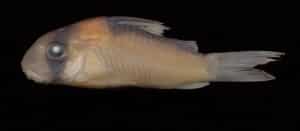
The common name of this fish is Adolfo’s Cory. They attain a size of 4 to 5 cm in the fish tank. The pH level required is 5.5 to 7.5, temperature should be from 19 to 26 degree C, and water hardness needed is 4 to 18 dGH.
Corydoras Aeneus
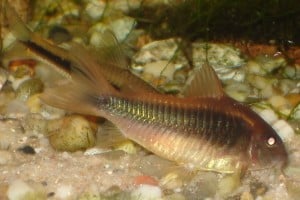
This fish is commonly known as Bronze Cory, and it attains a body length of 6 to 8 cm. The pH level required is between 5.8 and 7.7, and the temperature should be around 22 and 29 degree C. The water hardness preferred is 4 to 12 dGH.
Corydoras Agassizii
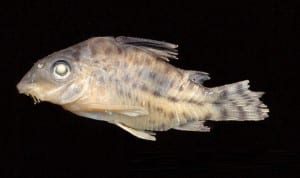
This fish is commonly known as Agassizii’s Cory that grows from 6 to 8 cm in body length. The recommended pH level for this fish is around 6.0 to 8.0. The water hardness suitable is about 2 and 25 dGH, and the temperature recommended is 22 to 27 degree C.
Corydoras Arcuatus
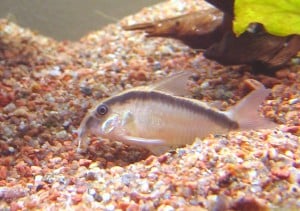
This fish is popularly known as Skunk Cory, and it attains a length of 4 to 5 cm in a fish tank. The water conditions required for this species are, pH between 6.5 to 8, temperature of around 22 to 28 degrees and the hardness between 4 to 12 dGH.
Corydoras Atropersonatus
This Cory fish is commonly known as Fairy Cory and grows up to 4 or 5 cm. The water conditions recommended are pH value about 6.3 to 7.7, temperature around 21 and 26 degree C and the hardness level required is from 7 to 11 dGH.
Growing Fish Corydoras At Home
Food
The Cory Catfish is omnivorous and can be seen dwelling at the bottom. Hence, the food you provide should have the capability to sink to the bottom, or else other middle and top dwellers will eat all the food. The basic nutrition they require can be provided by the flake diet. A nutritious pellet diet is also advisable. The other ideal food for this species are-:
- Vegetable wafers
- Daphnia
- Mosquito larvae
- Small Worms
- Brine shrimp
- Chips like Sera Wels-Chips.
Provide food in low quantity and several times a day. Always feed from the same spot and at the same time every day.
Water
The Cory species cannot adjust in the water having high levels of nitrites and ammonia. Hence, while breeding these fish with others like Guppies, Platies or Mollies, you should change the water almost every day, because the waste produced by these fish is prolific. This cause the increase of ammonia and nitrate content in the water. The perfect reading of ammonia, nitrates and nitrites must be zero in the tank water. Try to provide an environment similar to their original habitat with similar water conditions like pH level, temperature and water hardness.
Tank
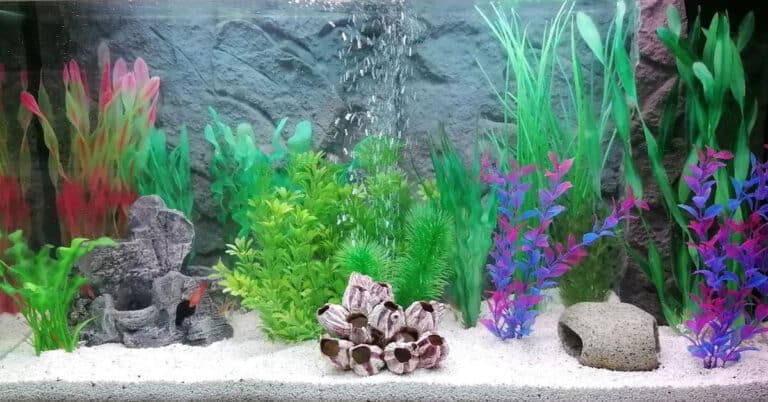
Corydoras requires a 10 gallon tank, or you can also place them in a community tank, as they are very peaceful in nature. They will adjust well with other peaceful specimens like Danios, Tetras and other Livebearers. Due to their sensitive barbels, you have to be careful while selecting the substrates for the tank. The substrates should not have any sharp edges or it may damage their barbels, which they use for locating their food. Fine gravels having a diameter of less than 3mm are the best substrate to keep their barbels in a good condition. The substrate should also be dark in color because they feel safe in such substrates when they take shelter in it. The light colored gravel makes them feel stressed. As they are bottom feeders, they prefer dim light. They hide if the tank is set with bright lightings. Caves and bog-woods should be provided for them to hide. They also prefer heavy plantation in the tank for resting. But care must be taken while placing heavy rooted plants, as there are chances of these fish getting caught in the roots. A heavy filtration is recommended for the tanks holding the Corydoras. The water should be clean as well as highly oxygenated. Change the water up to 10 to 25 %, at least once in a week.
Having discovered a fondness for insects while pursuing her degree in Biology, Randi Jones was quite bugged to know that people usually dismissed these little creatures as “creepy-crawlies”.