Yoyo Loach
Scientific classification
| Kingdom: | Animalia |
| Phylum: | Chordata |
| Class: | Actinopterygii |
| Order: | Cypriniformes |
| Family: | Cobitidae |
| Genus: | Misgurnus |
| Species: | M. Anguillicaudatus |
| Binomial name: | Misgurnus Anguillicaudatus |
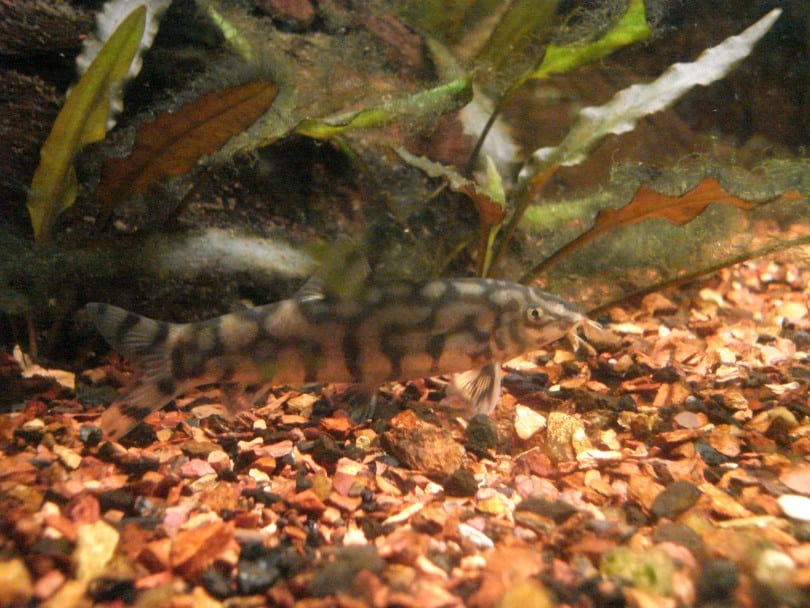
The Yoyo Loach fish is also known as Pakistani Loach or Almora Loach. It is a freshwater fish and belongs to the Loach family Botiidae. This fish is named for its pale and dark patterns and originates in the still and slow-running waters of the Ganges basin of Northern India and perhaps in Nepal. This fish is identified by its four pairs of barbels, which stick out from the mouth area. It does best in a community aquarium with other less aggressive species.
Habitat and range
The Yoyo Loach fish was described in 1920 by Narayan Rao. And it is found in India and Nepal, but even though it is labeled as “Pakistani Loach”, it is not found there.. As it is quite hardy and has a widespread range, this species is listed as of least concern on the IUCN Red List. In the wild, it inhabits slow-flowing streams.
The Yoyo Loach is a very pretty fish and it reaches up to a height of 2.5 inches only. The average life span of this fish is about 5 to 8 years. But it also have been reported to live about 16 years if good care is given to them. With dark vertical bands, it is basically a silver color. It is a good community fish and it hides during the day and active and lively in the evening.
Growing at Home
Breeding
For Breeding of Yoyo Loach fish, there is no confirmed report. This fish has not yet been bred commercially.
Tank size
To house the Yoyo Loach fish, a 25 gallon tank is the minimum requirement. A larger tank of 45 gallons is a better choice, because it is a social fish and likes to live in a group of 5 to 6 fishes.
Water conditions
The Yoyo Loch fish hails from still water in India and it prefers a soft, warm and acidic water. But, this fish is highly adaptable to water conditions and it can be kept in both hard and soft water tanks. This fish requires a water temperature of 75 to 86 degree F.
Nutrition
The Yoyo Loach requires a small amount of food several times in a day. It is an omnivore and it is not a picky eater. Generally, it will eat all kinds of sinking pellets, table food, flakes, algae and live foods. They also like frozen food. To keep a good balance in diet, feeding of high quality flake food or tablet food is ideal for them. This fish likes brine shrimp, Tubifex, Daphnia, mosquito larvae and some vegetable foods like algae wafers. It also likes to eat snails. When this fish feeds, it generates a “clicking” noise. This same sound is also observed when they are swimming. This clicking sound is generated by the grinding of Pharyngeal teeth of the Yoyo Loach fish.
Setup
The Yoyo Loach fish lives on the bottom of the aquarium, but sometimes it will also swim in the middle and upper parts of the aquarium. When food is offered, it will come to the surface. This fish requires a larger aquarium with plenty of hiding spaces and caves. It requires good water movements, because it provides plenty of oxygenation. An Under-gravel filter is ideal for this, as it helps in reducing the waste and also in creating high oxygen throughout the aquarium.
Having discovered a fondness for insects while pursuing her degree in Biology, Randi Jones was quite bugged to know that people usually dismissed these little creatures as “creepy-crawlies”.