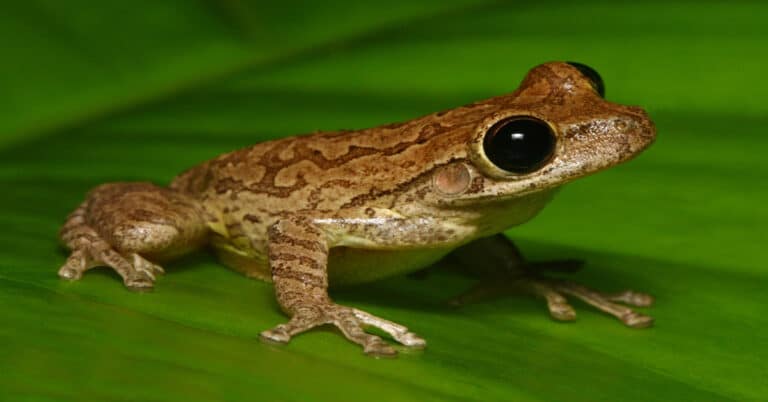
Green Frog

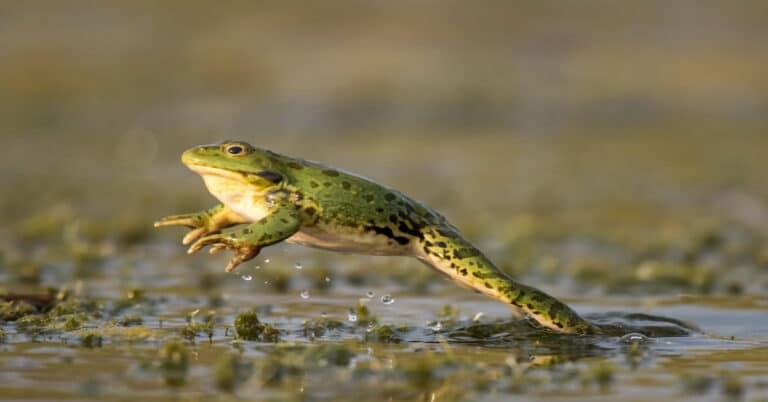
Lithobates clamitans belong to the species of frogs. They are commonly known as Green frogs and usually belong to the Eastern half of Canada and the United States. The other subspecies of the green frog are the northern green frog and Bronze Frog Rana Clamitans.
Green frog Quick Facts
| Common name | Green frog |
| Scientific name | Lithobates clamitans |
| Kingdom | Animalia |
| Phylum | Chordata |
| Class | Amphibia |
| Order | Anura |
| Family | Ranidae |
| Genus | Lithobates |
| Conservation status | Least Concern |
| Type | Amphibian |
| Diet | Insects, spiders, snails, crayfish, fish and other frogs |
| Habitat | Shallow freshwater: ponds, lakes, streams, swamps |
| Native range | Eastern Canada and eastern United States |
| Size | 5–10 cm long |
| Weight | 28–85 g |
| Special feature | Call sounds like a plucked banjo string |
Anatomy

Pacific Tree Frog

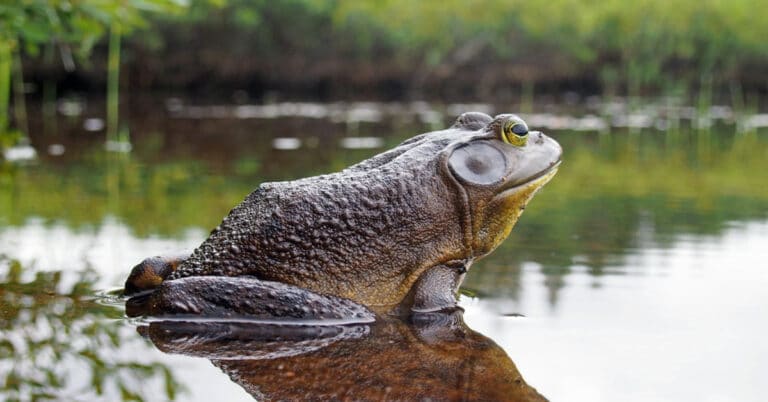
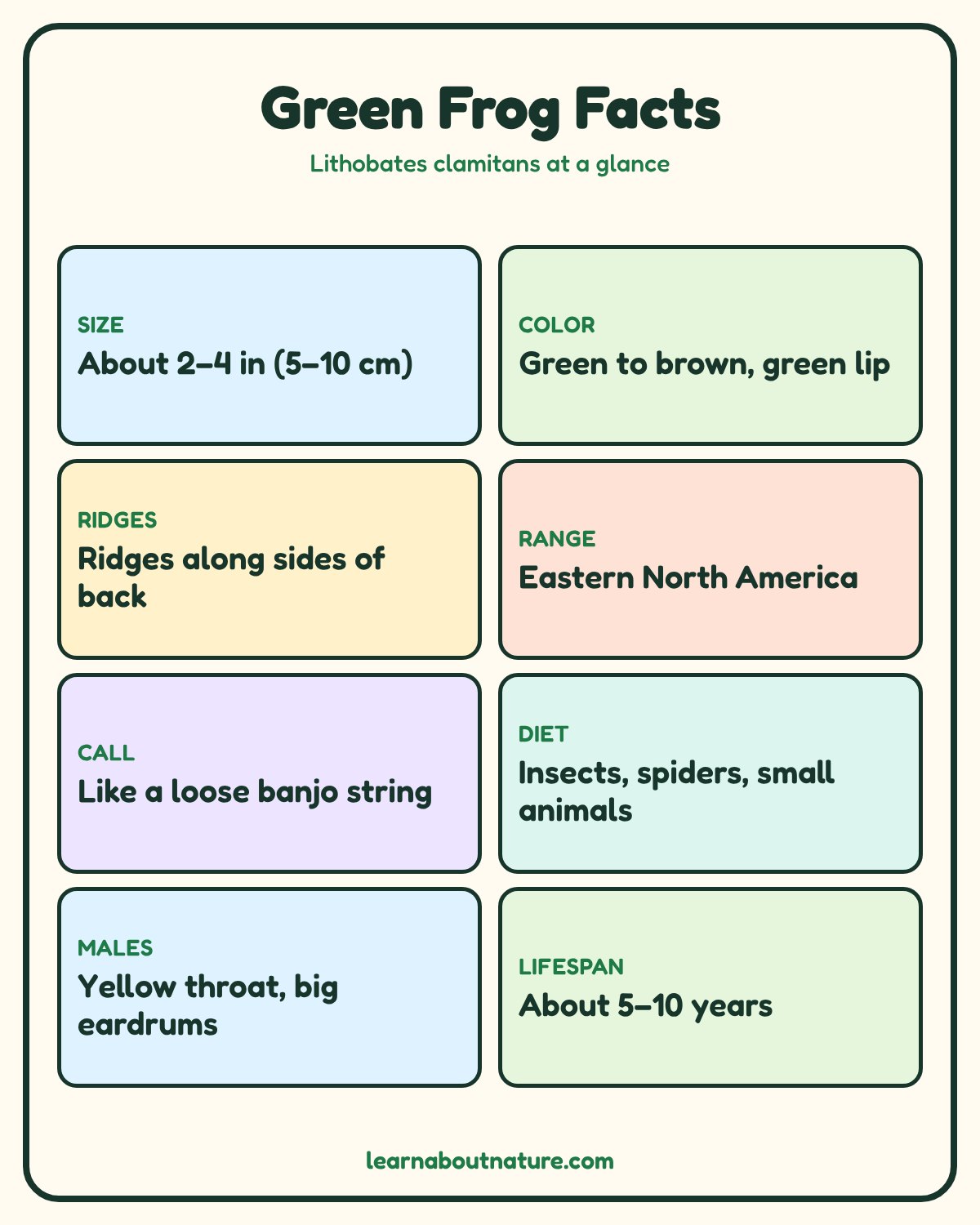
Green frogs are medium-sized frogs. Adults are usually about 5 to 10 cm (2 to 4 inches) long and weigh roughly 28 to 85 grams. Females are often a little larger than males, but males have the bigger eardrum (tympanum): in a male it is larger than the eye, while in a female it is about the same size as the eye. Green frogs have a raised ridge of skin running down each side of the back, called a dorsolateral fold. This ridge is an easy way to tell them apart from bullfrogs and some other frogs, which do not have it.
Size
The size of these frogs ranges from 5 cm to 10 cm.
Color
Green frogs are not always bright green. Their backs can be green, olive, brown or bronze, often with darker spots, and the upper lip is usually bright green. Their bellies are white or cream, often with dark mottling under the head and legs. Unlike bullfrogs, they have a raised fold of skin along each side of the back.
Sounds
The male green frogs have two vocal pouches. They usually call during the night and the day. They make a throaty sound like plucking banjo strings.
Their big bulging eye can see anywhere in any direction. They have a tympanum which is also called the eardrum, behind their eyes. This eardrum allows the frog to hear the voices of other creatures. This circular spot behind their eye vibrates to sounds, that are then conveyed to the brain of the frog.

Behavior
Adult frogs of this species, mostly stay in the water while the younger green frogs stay on the land as well when the soil and grass are moist. Green frogs are generally diurnal. However, their sound can be heard in hotter days and nights.
Habitat
You normally associate Green frogs with shallow freshwater lakes, ponds, ditches, brooks, swamps and streams. They can be frequently observed on the shores, resting and hunting for food. However, they immediately leap into the water when an intruder approaches them. They are Ecotone. While resting on the aquatic and terrestrial boundary, these green frogs can take a one long easy leap into the water and leaves behind their enemies. This species of green frog can also be seen in ditches and streams.
Reproduction

Species of green frogs mate either in permanent or in semi-permanent fresh water. Male frogs call from different territories, making a sound that resembles to banjo string playing at single note. Their mating season usually takes place between April and August.
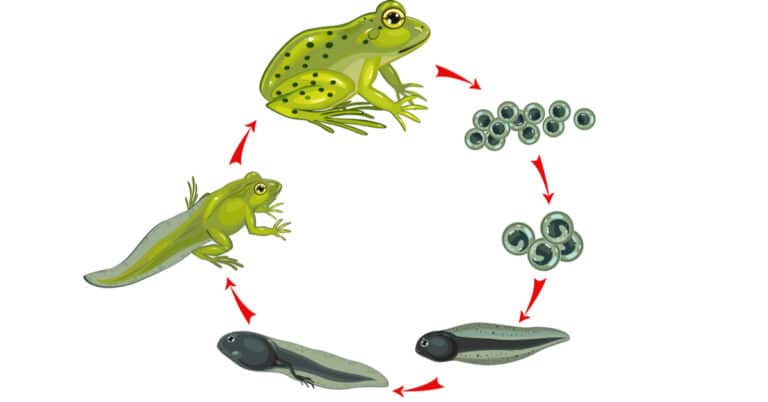
Their mating takes place as Amplexus, when the male frog holds the female frog’s body behind her front legs with his front legs. In the end, the female releases the eggs. The male frog ejects its sperm. This sperms float to the egg and are then covered by an egg mass. The entire fertilization occurs in water. Every individual egg clutch can consist of 1000 -7000 eggs, which are attached to the vegetation submerged under water.
These green frogs are usually olive green in color, with the bottom layer of the abdomen, creamy white. A Metamorphosis takes place in the same season as that of mating. The male tadpoles become sexually active within 1 year, while female tadpoles take some time and become sexually mature in 2-3 years. Green frogs breed in fresh water bodies.
Food
Adult green frogs can eat any medium sized prey that can enter into their mouth easily. They forage for spiders, small insects, small snakes, snails, birds, fish, other frogs, crayfish and shrimps. The young tadpoles rely on water plants and algae.
These tadpoles mainly graze on diatoms and aquatic algae. The adult green frog shows an amazing characteristic of eating everything that passes by them, without really going after prey. Other than this they usually eat fish, frogs, insects, worms and occasionally tadpoles.
The American Green Tree Frog

Don’t mix up the green frog with the American green tree frog (Hyla cinerea), which is a different species from the tree frog family. It is smaller, growing up to about 6 cm (2.5 inches) long, with smooth bright green skin, big sticky toe pads and usually a pale stripe along each side of its body. It lives in the southeastern United States and is the state amphibian of Georgia and Louisiana. Green tree frogs spend much of their time climbing in plants, while green frogs stay close to the water’s edge.
As A Pet
Green frogs and green tree frogs are both sometimes kept as pets, but they need different homes. The tips below describe a setup with both land and water that suits frogs like the green frog. A tree frog would need a taller tank with plenty of branches and plants to climb.
Housing
- For 1 or 2 frogs an aquarium of 10 gallon capacity is sufficient. However, if you want to increase the number of number of frogs, then enlarge the size of the tank as well.
- To make your aquarium more suitable for their inhabitants, make sure that the substrate material is larger than they can ingest.
- Make sure that you cover the aquarium; otherwise the frog can escape.
- Keep the water depth in the aquarium shallow, about 3 to 4 inches.
- Sphagnum moss or soil is suitable.
- Make sure that your aquarium’s water dish is large if your frogs are adults. Make sure that you provide a large-enough water dish for the frogs to submerge. However, little tadpoles can survive in an aquarium filled with water.
- Decorate your aquarium with live or artificial plants and toys for their pleasure.
- A Temperature of 68 to 75 F should be maintained inside the aquarium. Room temperature is suitable for frogs though the temperature goes down during the night.
- Water inside the aquarium should be free from chlorine. Dechlorinated water is best suitable for frogs. Water filtration is not needed; however, it is required to change at least 50 % of water regularly. If it is not possible daily, then try to change at least two times in a week. Some experts feel that continuous water vibrations caused by the filter can be harmful for frogs.
Feeding
Feeding these cute little pets is not difficult. You can serve them earthworms, live crickets, small fishes and meal-worms. You can also sprinkle some vitamin powder on their food. These powders are easily available in your local pet shops. To start with, initially you can sever them 3-4 small crickets every day. However, few experts suggest feeding adult frogs on alternative days. These frogs usually enjoy variety in their food. So, you can make a diet which primarily consists of cricket and add some other supplemented items such as earthworm or some fishes. You must take care to gut- load the prey or food items with nutritional supplements.
Green frog FAQs
What do green frogs eat?
Adult green frogs eat nearly anything that fits in their mouths, such as insects, spiders, snails, crayfish, fish and other frogs. Tadpoles eat algae and water plants.
Where do green frogs live?
They live in the eastern half of the United States and Canada, in shallow fresh water like ponds, lakes, ditches, brooks and swamps. They sit on the shore and leap into the water if scared.
What sound does a green frog make?
A male green frog makes a throaty twang like someone plucking a banjo string. Males call both day and night.
How big are green frogs?
Green frogs are medium sized, about 5 to 10 cm long. They weigh around 28 to 85 grams.
How many eggs does a green frog lay?
One egg clutch can hold 1,000 to 7,000 eggs, attached to plants under the water.

Randi Jones is the owner and founder of the Nature Gift Store, an online retailer specializing in nature-themed gifts, educational science projects, live animal nature kits and real butterfly artwork. A biology graduate who fell in love with insects, she founded the company in 2001 to make active learning about nature fun, accessible and engaging for children and adults. Her store offers real butterfly frames, home and garden decor and educational live animal kits, including ant farms, worm farms, tadpoles, ladybugs and hermit crabs, and she runs a bug museum in Washington featuring live animals like Eddie the Iguana alongside other reptiles and insects. Randi wrote most of the guides on this site. They first appeared on her long-running nature sites, including Monarch-Butterfly.com, Ladybug-Life-Cycle.com, Frog-Life-Cycle.com, Dragonfly-Site.com and Butterfly Pictures, which have now been brought together here at Learn About Nature.