Flying Squirrel

Scientific Classification
| Kingdom: | Animalia |
| Phylum: | Chordata |
| Class: | Mammalia |
| Order: | Rodentia |
| Family: | Sciuridae |
| Subfamily: | Sciurinae |
| Tribe: | Pteromyini |
Quick Facts
| Common name | Flying squirrel |
| Scientific name | Pteromyini |
| Type | Gliding squirrel (tribe Pteromyini) |
| Diet | Omnivore: nuts, berries, buds, insects, eggs |
| Habitat | Coniferous, mixed and hardwood forests |
| Weight | 3-5 oz (85-140 g) |
| Colours | Brown back; white or cream belly |
| Special feature | Glides up to 150 ft on a skin membrane |
The scientific name for Flying Squirrels is Petauristini or Pteromyini, These belong to the 44 varieties of the tribes of squirrels. Unlike bats or birds, they cannot really fly high; they glide between trees. Flying squirrel belongs to the average-size rodents, resembling the squirrels seen across grasslands all over the world and in woodlands. They are a bit smaller in size when compared to the ordinary varieties.

Anatomy
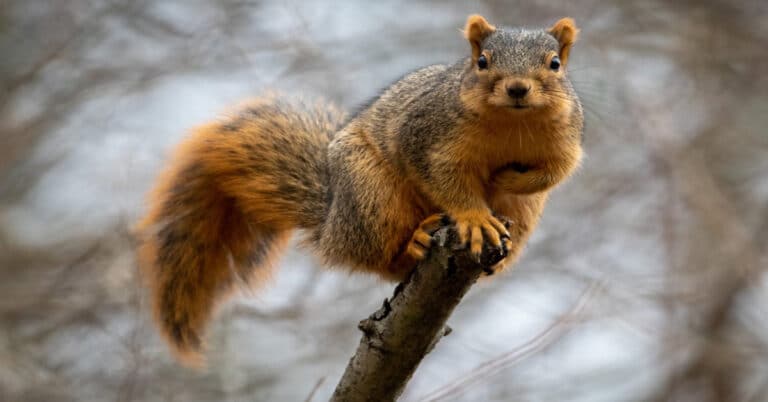
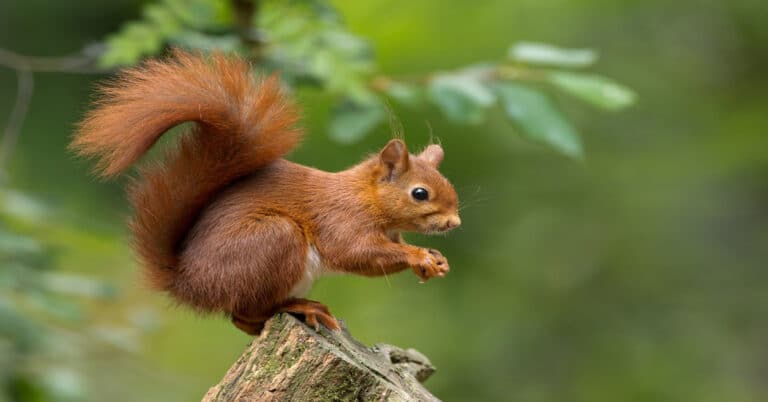
Flying squirrels are smaller in size when compared to the ordinary varieties. Flying squirrels have a furry elongated membrane that extends from its front leg to the back legs. When these flying squirrels want to escape fast, they stretch their legs and arms out and make use of the membrane that act like a parachute. The tail of the flying squirrel is flat and stubby, and they have large eyes. The color of the flying squirrel is brown on the back and white color on its belly and below the furry membrane.
Behavior
Flying squirrels are active at night because they are not thoroughly proficient in escaping from the birds of prey that hunt during the day. When the flying squirrel’s legs are stretched, the gliding membrane expands from the fore leg of the hind leg and helps them to glide from perch to perch, at times up to 150 feet.
Habitat
The variety from the northern side is a native of coniferous forests or mixed forests, whereas those from the southern side live in hardwood forests of hickory, oak, beech and maple. Most of the time we see them in Carolinian deciduous forests starting from the South of Ontario, you can also see them in the northern part of the Ottawa Valley and Muskoka, even in parts of Nova Scotia and Quebec.
As a Pet

Breeding
The Flying squirrels breed twice in a year, in the beginning of spring and once again in summer. Their gestation period remains for 40 days, after which, the female flying squirrel delivers from 2 to 7 little ones, These babies are naked and blind at birth.
Housing
Since they are not big a moderately small cage is enough for the southern flying squirrels. However, you must them with enough space for climbing and running about. They need more vertical space than floor space, hence a cage with height is fine. Furnish the cage with branches for climbing and chewing and cotton ropes hung in the cage for them to play and climb. Provide nest boxes and paper towels or facial tissues as nesting materials.
Food
The Flying Squirrel’s diet consists of both animals and plants in the wild, which means they are omnivorous animals. The flying squirrels of the southern areas consume insects, different types of nuts, fruits and seeds. When in captivity, they enjoy walnuts, hickory nuts, pine nuts, pecans, pumpkin seeds, acorns and sunflower seeds, In addition, they have different types of fresh veggies (corn and sweet potatoes are common), mix of bird seed and fruits. Apart from these, they eat wax worms and meal worms, and at times chicken or hard-boiled eggs. Proteins added to the diet is good. Moths too are their favorite.
Handling
When acquainted from an early stage, the flying squirrels become very familiar with the owner, climbing on him and playing with him or even sleeping in his pocket.
Overview
When it comes to squirrels, one of the first things that you may not think about is flying squirrels! Of course, when we say flying squirrels, we do not mean that these furry mammals actually fly, instead they glide using a thin and furred piece of membrane that extends from their wrists all the way to their ankles. It is almost like the squirrel has a cape on and with these species of squirrels only weighing between three and five ounces, the act of gliding is definitely not all that hard to do.

Most flying squirrels are very similar to regular squirrels, minus the fact that these can glide everywhere versus just jumping. They have the same soft, velvet fur that comes in a variety of colors ranging from grayish all the way to reddish brown. The underbelly of the flying squirrel is usually dark gray at the base but is most of the time tipped with a cream color or a white. Their tail is not fluffy like the usual squirrel; instead it is broad and flattened down. They have large, black eyes that take up a lot of their head and their ears are usually small and rounded.
Now that you know exactly what a flying squirrel looks like, you should know that these little critters usually nest in tree cavities and use lichen, dried grass, or very finely shredded bark to line their nest with. This is great to know, especially if you are looking to spot a flying squirrel!
The flying squirrel’s diet mainly consists of berries, blossoms, buds, cherries and definitely all types of nuts. These nut and berry loving critters will never turn down some meat though; insects, stolen bird eggs and even small nestling birds have all become a meal to the flying squirrel and while we are not used to seeing a squirrel eat anything but vegetarian things, the flying squirrel is a little bit unique that way.
This amazing creature is also a very social critter. They usually like to live together, usually with more males than females, but that is not to say that females are not in the nest too. If the female does happen to have a young one, they have to go live in a separate nest with the young; the flying squirrel mothers are extremely overprotective and nurturing. Male squirrels are not allowed near the maternal nest and they do not take part in raising the young squirrels at all. Usually, mating will begin in February and end in late March, so if you are looking to catch them mating, you will want to travel in these months.
Flying squirrel FAQs
Can flying squirrels really fly?
No. They glide. A furry fold of skin stretches from the front legs to the back legs and works like a parachute, letting them sail from perch to perch, sometimes up to 150 feet.
When are flying squirrels active?
Flying squirrels come out at night. They are not good at escaping from birds of prey that hunt in the day.
What do flying squirrels eat?
They eat nuts, seeds, berries, blossoms, buds and cherries. They are omnivores too, so they eat insects, bird eggs and even nestling birds.
Where do flying squirrels nest?
They nest in tree cavities and line the nest with lichen, dried grass or finely shredded bark.
How many babies do flying squirrels have?
They breed twice a year, in early spring and again in summer. After about 40 days the mother has 2 to 7 babies, born naked and blind.

Randi Jones is the owner and founder of the Nature Gift Store, an online retailer specializing in nature-themed gifts, educational science projects, live animal nature kits and real butterfly artwork. A biology graduate who fell in love with insects, she founded the company in 2001 to make active learning about nature fun, accessible and engaging for children and adults. Her store offers real butterfly frames, home and garden decor and educational live animal kits, including ant farms, worm farms, tadpoles, ladybugs and hermit crabs, and she runs a bug museum in Washington featuring live animals like Eddie the Iguana alongside other reptiles and insects.