African Helmeted Turtle

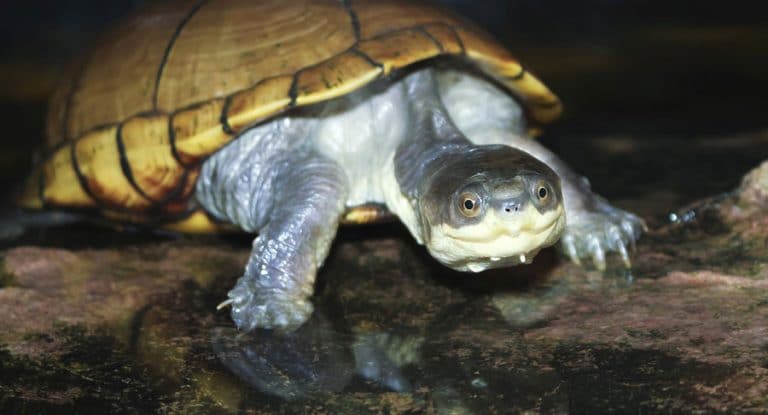
The African helmeted turtle (Pelomedusa subrufa), also called the marsh terrapin or crocodile turtle, is a small freshwater turtle found across much of Africa and in parts of the Arabian Peninsula. It is a side-necked turtle, which means it tucks its head sideways under the edge of its shell instead of pulling it straight back.
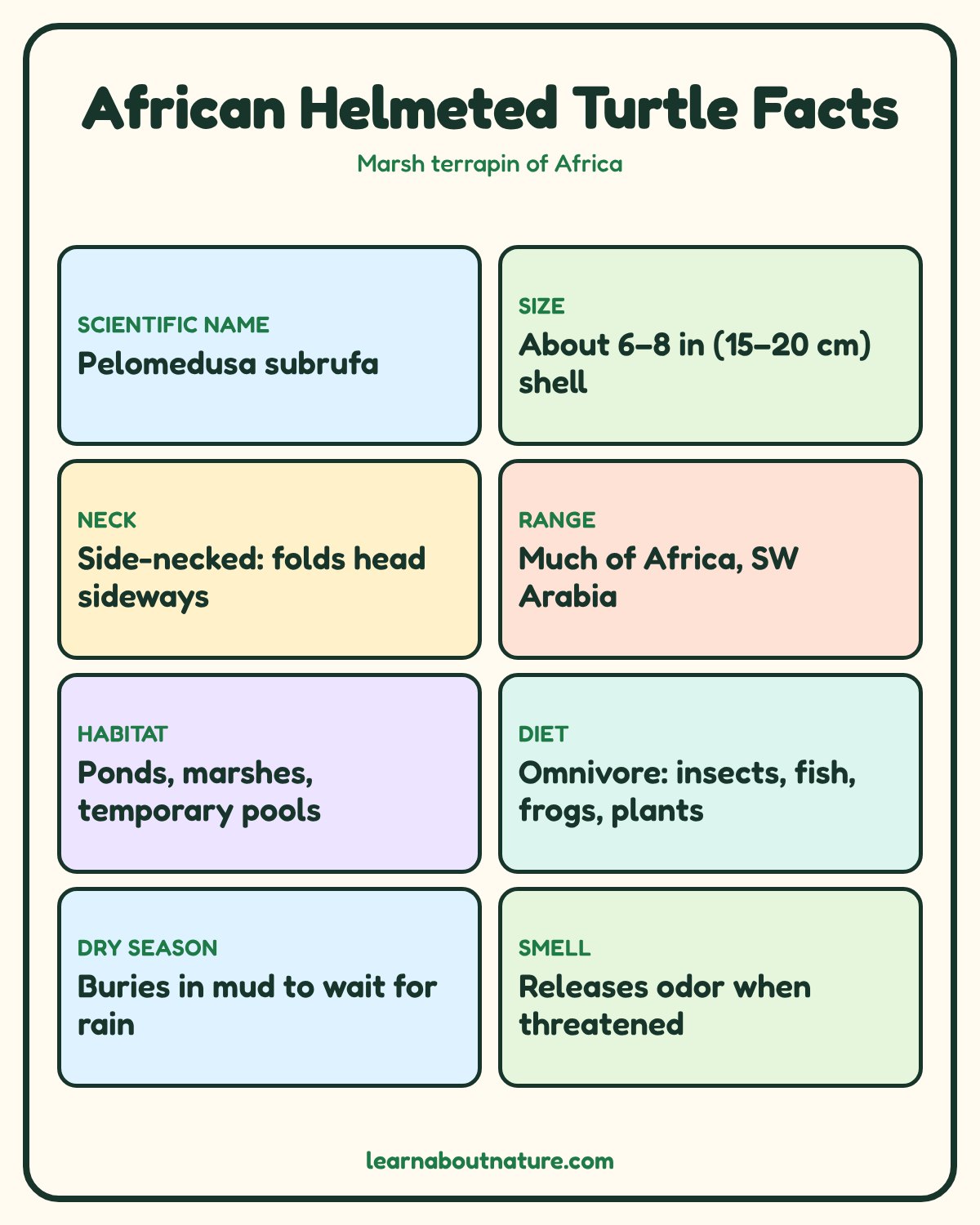
Scientific Classification & Quick Facts
| Common name | African helmeted turtle |
| Scientific name | Pelomedusa subrufa |
| Kingdom | Animalia |
| Phylum | Chordata |
| Class | Testudines |
| Family | Pelomedusidae |
| Genus | Pelomedusa |
| Type | Reptile (side-necked freshwater turtle) |
| Diet | Minnows, crickets, other small live animals |
| Habitat | Still fresh water: lakes, dams, swamps and rain pools |
| Native range | Most of Africa, and southern Yemen |
| Size | Usually about 20 cm; record 32.5 cm |
| Colours | Brown or black shell with a yellow underside |
| Special feature | Flicks its long neck to flip itself upright |

Anatomy

This is a fairly small turtle. Most adults have a shell (carapace) about 15 to 20 cm (6 to 8 inches) long, although a few big individuals have measured over 30 cm (12 inches). The shell is flat and smooth, colored olive, brown or black, which helps the turtle blend into muddy water. The skin of the head, legs and tail is grayish-brown on top and paler or yellowish underneath.
It has a wide, flattish head with a cheerful-looking mouth, two tiny fleshy bumps called barbels under the chin, and webbed feet with claws for swimming and digging. Like many turtles, it has musk glands along the sides of its shell that release a strong smell if it is grabbed by a predator.
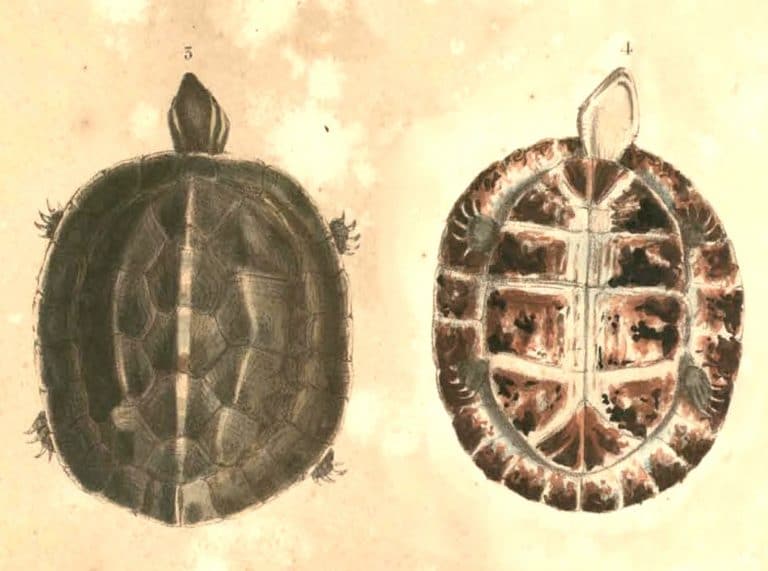
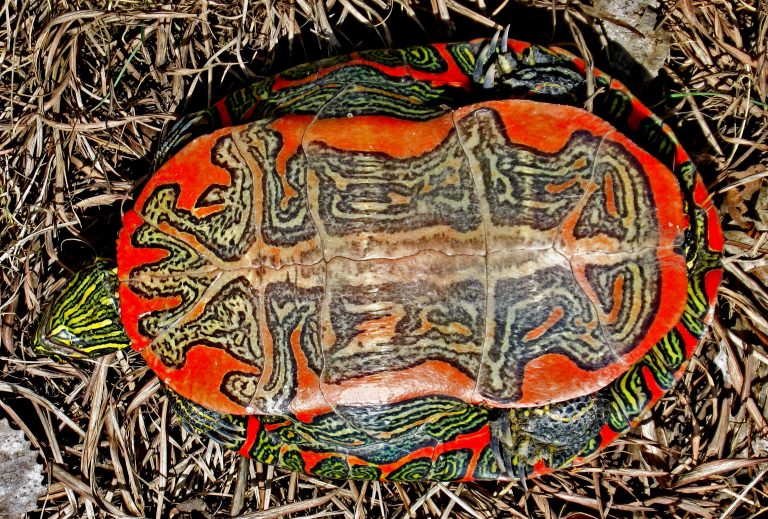
One thing makes this turtle stand out from its close relatives, the African mud turtles: its lower shell, called the plastron, has no hinge. Mud turtles can fold the front of their plastron up to close their shells, but the helmeted turtle cannot. If it is flipped onto its back, it uses its long, strong neck to push and flip itself the right way up.
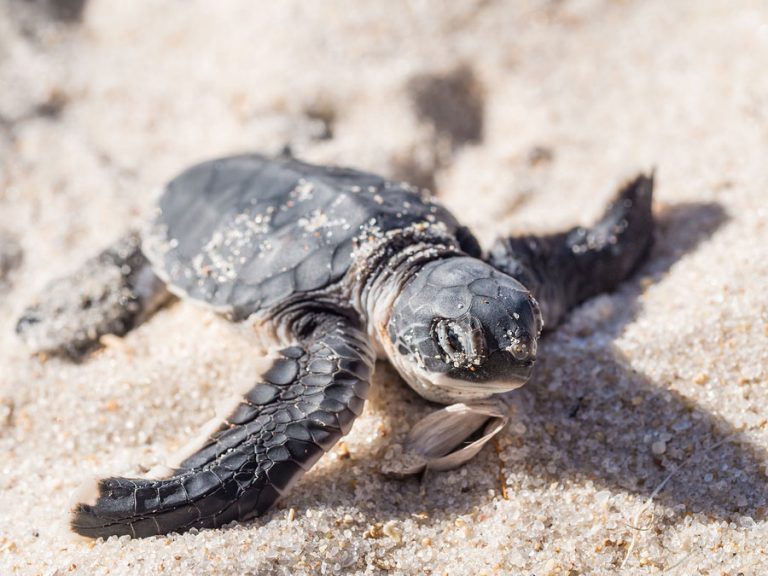
Males and females can be told apart as they grow up. Males have longer, thicker tails and often larger heads, while females have shorter tails and slightly broader shells. Hatchlings are only about 3 cm (just over 1 inch) long.
Habitat
African helmeted turtles live in most of Africa south of the Sahara, from Sudan and Ethiopia in the north down to South Africa’s Cape, and west to Ghana and beyond. They are also found on Madagascar and in Yemen and southwestern Saudi Arabia. Scientists have recently discovered that this “one” turtle is actually a group of several very similar species.
They prefer still or slow-moving water such as ponds, marshes, swamps, lakes, dams and temporary rain pools on the savanna. They are less common in fast rivers and are not found in true deserts or thick forests. When their pool dries out, they bury themselves in the mud and go into a resting state called aestivation, waiting until the rains return.
Behavior and Diet in the Wild
Helmeted turtles are omnivores, though they eat mostly animals. They catch insects, worms, snails, tadpoles, frogs and small fish, and they also scavenge on dead animals and eat some water plants. They are famous for one surprising trick: groups of them have been seen grabbing doves and other birds that come to the water’s edge to drink, pulling them under and sharing the meal.
As a Pet
Helmeted turtles are sometimes kept as pets. They are hardy and can live for decades, so they are a long-term commitment. They can also be aggressive, so keep each turtle on its own. Never house them with other turtle species, or with helmeted turtles of very different sizes, as they may bite and injure each other.
Housing

These turtles are good swimmers, but they also like to walk along the bottom. A large aquarium or indoor pond with plenty of space to swim is ideal, with water at least deep enough for the turtle to swim freely and a gently sloping area or ramp so it can easily climb out. A strong filter is important because turtles are messy eaters.
Provide a dry basking area with a heat lamp and a UVB light. UVB helps turtles make vitamin D3, which they need to use calcium and grow a healthy shell. Add some rocks, driftwood or plants as hiding places and visual barriers. Wash your hands after cleaning the tank or touching the turtle, as reptiles can carry salmonella bacteria.
Breeding
Mating takes place in the water. The male follows the female, bobs and sways his head, and climbs onto the back of her shell, holding on with his claws. In the wild, females usually nest once a year, often at the start of the rainy season.
The female digs a hole about 15 cm (6 inches) deep in damp soil and lays a clutch of oval, white eggs. Clutch size varies a lot, from just a handful of eggs to a few dozen, and young females usually lay fewer. Each egg is roughly 3 cm (just over 1 inch) long. Depending on temperature, the eggs hatch after about two months. The tiny hatchlings have to look after themselves from day one.
Diet for Pets
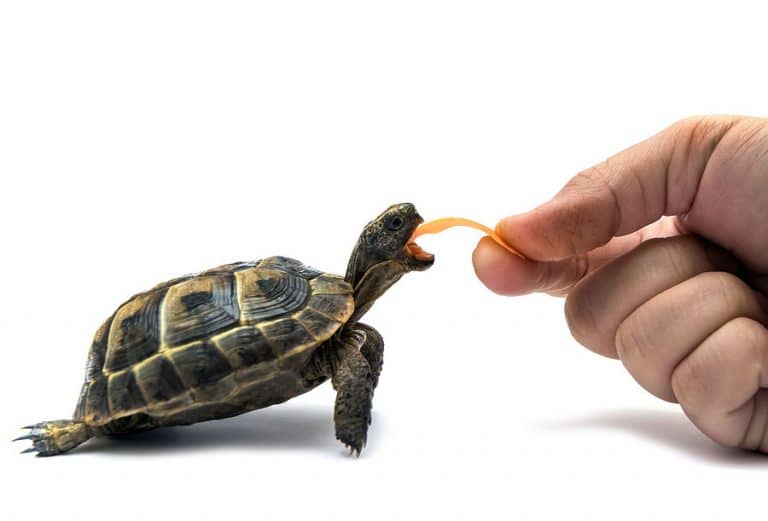
Helmeted turtles can be shy, and a newly moved turtle may refuse food for a while. Live foods such as earthworms, crickets and small feeder fish usually tempt them to start eating. Once settled, most will happily take good-quality commercial turtle pellets, along with earthworms, insects, snails, occasional fish and a few leafy greens.
Some keepers offer the odd thawed pinky mouse as a rare treat, but this is very rich and should not be a regular food. A varied diet plus a calcium supplement keeps the shell strong. If your turtle stops eating for a long time, seems weak or has a soft shell, ask a reptile vet for advice.
African helmeted turtle FAQs
What does the African helmeted turtle eat?
It eats small live animals such as minnows, crickets and small mice. In the article it is described as both omnivorous and carnivorous.
Where does the African helmeted turtle live?
It lives in slow, still fresh water across most of Africa, from Sudan to the Cape, and in southern Yemen. It likes lakes, dams, pans and swamps, and is not found in deserts, mountains or forests.
How big does the African helmeted turtle get?
It is a fairly small turtle. Most have a shell about 20 centimetres long, and the biggest one recorded was 32.5 centimetres.
Why is it called a side-necked turtle?
It tucks its head sideways under the shell edge, instead of pulling it straight back.
Can African helmeted turtles live together?
Not well. They are aggressive and may hurt or kill other turtles, and they fight even with others of their own species that are different sizes.

Randi Jones is the owner and founder of the Nature Gift Store, an online retailer specializing in nature-themed gifts, educational science projects, live animal nature kits and real butterfly artwork. A biology graduate who fell in love with insects, she founded the company in 2001 to make active learning about nature fun, accessible and engaging for children and adults. Her store offers real butterfly frames, home and garden decor and educational live animal kits, including ant farms, worm farms, tadpoles, ladybugs and hermit crabs, and she runs a bug museum in Washington featuring live animals like Eddie the Iguana alongside other reptiles and insects. Randi wrote most of the guides on this site. They first appeared on her long-running nature sites, including Monarch-Butterfly.com, Ladybug-Life-Cycle.com, Frog-Life-Cycle.com, Dragonfly-Site.com and Butterfly Pictures, which have now been brought together here at Learn About Nature.