Yellow Jacket Wasp: Everything You Need To Know

Yellow jackets are black-and-yellow social wasps that live in large paper nests, often underground. They are often mistaken for honey bees, but they are a different kind of insect, with a smooth stinger they can use more than once.
Yellowjacket Quick Facts
| Common name | Yellowjacket |
| Scientific name | Vespula |
| Kingdom | Animalia |
| Phylum | Arthropoda |
| Class | Insecta |
| Order | Hymenoptera |
| Family | Vespidae |
| Type | Social wasp |
| Diet | Insects, nectar, berries, sweets and meat |
| Habitat | Nests in barns, rooftops, lumber piles, old burrows |
| Size | About 12 mm long |
| Lifespan | Queens up to a year |
| Colours | Yellow and black stripes |
| Special feature | Smooth stinger can sting many times |
Yellow jackets can be a nuisance at picnics in late summer, but they are also useful garden predators that eat lots of pest insects. Like other wasps, they go through four life stages: egg, larva, pupa and adult.

Identification
An adult yellow jacket worker is about half an inch (around 12 millimeters) long, with bold yellow and black bands on its body. Because they look similar and visit some of the same foods, yellow jackets are often confused with honey bees.
Here is how to tell them apart:
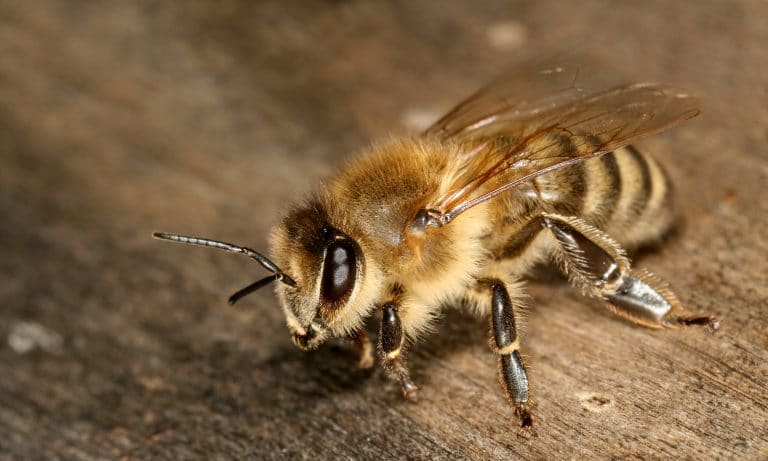
- Body hair: honey bees are covered in fuzzy hairs, while yellow jackets look smooth and shiny.
- Shape: yellow jackets have a narrow “wasp waist” between the thorax and abdomen, while honey bees look plumper.
- Color: yellow jackets are bright yellow and black, while honey bees are usually golden brown.
- Pollen: foraging honey bees often carry balls of yellow or orange pollen on their back legs. Yellow jackets do not collect pollen.
- Stinger: a yellow jacket’s stinger is smooth, so it can sting again and again. A worker honey bee’s stinger is barbed and usually stays stuck in the skin, so the bee dies after stinging.
Yellow Jacket Life Cycle
Egg
Yellow jackets are social insects, with a queen, many female workers and, later in the year, males. Only young queens that mated in the fall survive the winter. Everyone else in the colony dies when the cold weather comes.
In spring, each surviving queen wakes up and searches for a place to build a nest. In South Carolina, for example, new colonies usually start in April or May.
Many yellow jackets nest underground, often in old rodent burrows. Others build nests in wall spaces, attics, sheds, hollow logs or bushes. The nest is made of paper, which the queen creates by chewing wood fibers and mixing them with saliva.
The queen builds a few small paper cells and lays an egg in each one. At first she does all the work herself, foraging for food and caring for her young.

Larva and Pupa
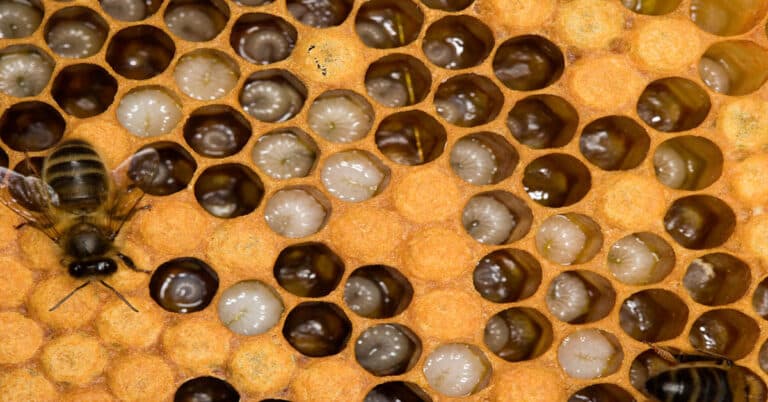
When the eggs hatch, out come small, white, legless larvae. They stay in their cells and are fed chewed-up insects and other protein brought in by the adults. The larvae grow quickly over a couple of weeks.
Once fully grown, each larva spins a silk cap over its cell and becomes a pupa. Inside, its body transforms into an adult wasp with legs, wings and a stinger. After a week or two, the new adult chews its way out of the cell.
Adult
The first adults to emerge are workers, sterile females that cannot lay eggs. They take over building the nest, finding food, feeding the larvae and guarding the colony, while the queen stays inside and lays eggs. Workers usually live only a few weeks, but the queen can live for about a year.
The colony grows fast. By late summer, a nest can contain thousands of workers. The nest can grow to the size of a basketball or bigger.
Late in the season, the colony starts raising new queens and males instead of workers. A new yellow jacket queen is the future founder of a colony, much like queen bees are for honey bees. The new queens and males leave the nest to mate. The males die soon afterward, while the mated queens find sheltered spots to spend the winter, such as under loose bark, in rotting logs, in leaf litter or in cracks in buildings.
As cold weather arrives, the old queen and the workers die, and the colony comes to an end. Old nests are not reused the next year. Animals such as skunks, raccoons and bears sometimes dig into underground nests to eat the larvae and pupae.
In places with mild winters, such as parts of the southern United States, some colonies survive the winter and keep growing. These can end up with several queens and become enormous.
Food
Adult yellow jackets mainly drink sugary liquids such as flower nectar, ripe fruit juice and honeydew, a sweet liquid made by aphids. They hunt insects such as caterpillars and flies, and scavenge meat and other protein, which they chew up and feed to the larvae.
In return, the larvae give the adults a sugary liquid. This food sharing between insects in a colony is called trophallaxis.
Because they hunt so many insects, yellow jackets help control garden pests. Gardeners still have to deal with slow-moving pests like snails some other way, though, since yellow jackets mainly hunt insects and spiders.
In late summer and fall, there are fewer insects to catch and the colony is at its biggest. Hungry yellow jackets then search for other food, which is why they buzz around picnics, trash cans and outdoor meals, attracted to soda, sweets, fruit and meat. Always check cans and cups before drinking outdoors in case a wasp has crawled inside.
How Fast Can a Yellow Jacket Fly?
Yellow jackets are quick, agile fliers. Exact speed estimates vary, but an angry group can chase a person for some distance. They defend their nest fiercely and can sting several times each, and if one stings it releases a scent that can call others to attack.
For most people, a sting is painful but not dangerous. However, some people are allergic to stings, and many stings at once can be serious for anyone. Signs of a severe reaction include trouble breathing, swelling of the face or throat and dizziness. Anyone with these symptoms needs emergency medical help right away.
To stay safe:
- Watch for wasps flying in and out of holes in the ground, and keep away from nests.
- Do not swat at yellow jackets, and never disturb a nest.
- If you are being stung, move away quickly and get indoors or into a car.
- Ask an adult to call a pest control professional if a nest needs to be removed.
Yellowjacket FAQs
What do yellow jackets eat?
Adult yellow jackets eat sweet foods like flower nectar, berries and soft drinks. They also hunt insects and look for protein, which they chew up and feed to their larvae.
Can a yellow jacket sting more than once?
Yes. A yellow jacket has a smooth stinger, so it can sting many times. A honey bee has a barbed stinger and can only use it once.
How big are yellow jackets?
Adult yellow jackets are about 12 millimeters long, with bright yellow and black stripes.
Are yellow jackets dangerous?
Yes, they can be. They sting in groups when their nest is disturbed, and a sting can cause serious reactions in allergic people. But they also eat many garden pests.
How can you tell a yellow jacket from a honey bee?
Honey bees are a bit bigger and have hairy bodies, while yellow jackets look sleek and smooth. Honey bees also carry yellow pollen on their hind legs.

Randi Jones is the owner and founder of the Nature Gift Store, an online retailer specializing in nature-themed gifts, educational science projects, live animal nature kits and real butterfly artwork. A biology graduate who fell in love with insects, she founded the company in 2001 to make active learning about nature fun, accessible and engaging for children and adults. Her store offers real butterfly frames, home and garden decor and educational live animal kits, including ant farms, worm farms, tadpoles, ladybugs and hermit crabs, and she runs a bug museum in Washington featuring live animals like Eddie the Iguana alongside other reptiles and insects.