California King Snake
Scientific Classification
| Kingdom: | Animalia |
| Phylum: | Chordata |
| Subphylum: | Vertebrata |
| Class: | Reptilia |
| Order: | Squamata |
| Suborder: | Serpentes |
| Family: | Colubridae |
| Genus: | Lampropeltis |
| Species: | L. getula |
| Subspecies: | L. g. californiae |
| Trinomial name: | Lampropeltis getula californiae |
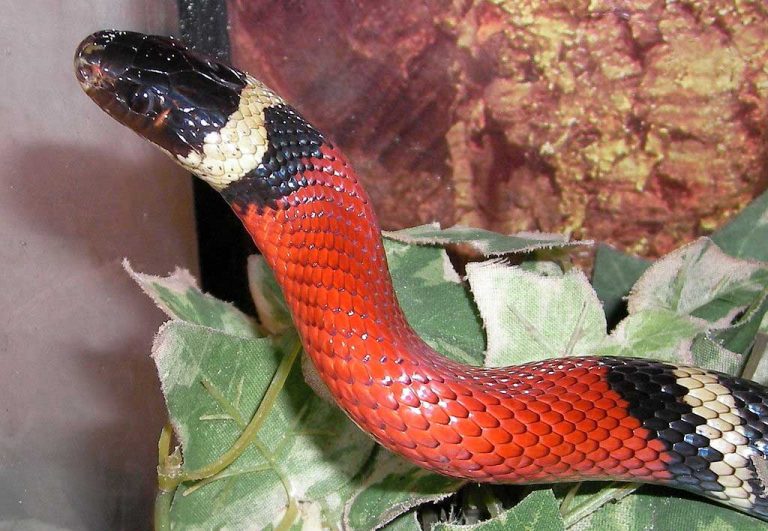
The California King Snake, which belongs to the Colubridae family is known to be non-venomous in nature. These are the relatively smaller subspecies of the Kingsnake, which we are commonly aware of, and it does not require any particular form of environment for healthy living, as it will survive in a wide variety of habitats without any signs of problems. The California Kingsnake Lampropeltis Getula Californiae, is known as the most common snake bred in captivity by owners and because of this, they tend to have a varied range of patterns, forms or color variations in their appearance. The changing natural habitats and the environments, all give a proper definition of its form.
Anatomy
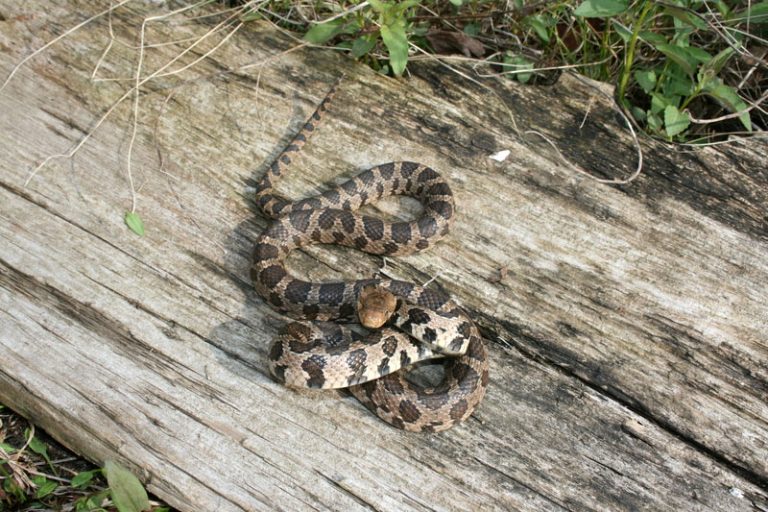
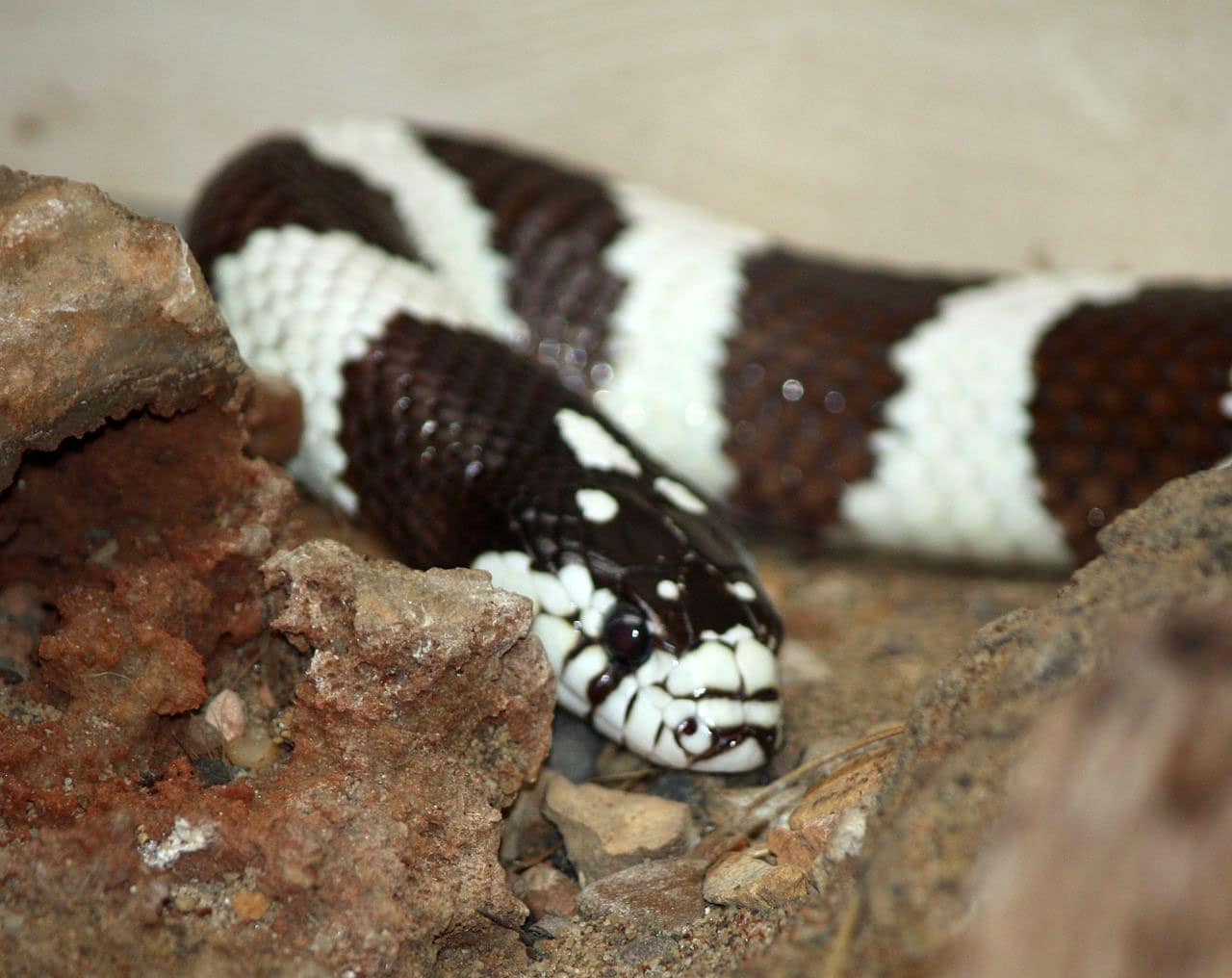
The California Kingsnakes has bold dark brown, creamy white or yellow bands across its body. The so-called Desert Phase animals are to be found in very contrasting white or black colors. The black color is due to the Melanistic pigments that the snake might have on its skin, which gives it the darker shade. There are instances, when the snake would lack its bands and would only posses a full length light mid-dorsal stripe which is usually about two scales wide, while in captivity, the snake might posses both the above mentioned patterns.
Behavior
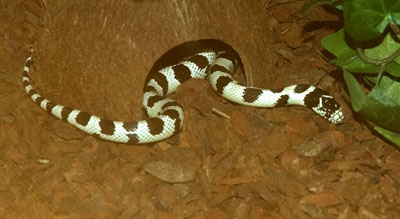
The California Kingsnakes are usually diurnal in normal weather conditions, but if the weather is too hot, it can change its pattern and would turn into a nocturnal creature. In winter, like many other snakes, it will go underground, far deeper, and tends to put itself on a hibernation-like state called brumation. When under such a state, their metabolism slows down and and activity reduces. The California Kingsnake, as the name suggests, occurs in California and you can also find them in the neighboring states of Nevada, Baja California, Oregon, and Arizona.
Habitat
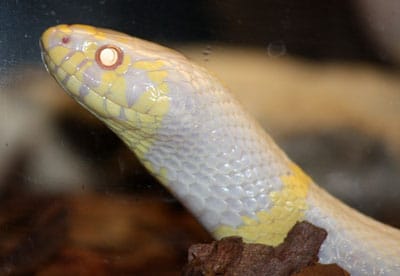
As we have already mentioned earlier, the California Kingsnakes are to be found in a wide range of habitats. They can live in places along the West Coast or areas that are marked by high mountain ranges, like the Tehachapi Mountains, located in the southern part with an altitude of approximately 6,100 ft, the southeastern Sierra Nevada Mountains. You can also find the California Kingsnakes in various other areas like the southern portions of Nevada, Utah, Oregon, or in northwestern New Mexico, and even in extreme places like the southwestern Colorado.. In places like Arizona, these snakes are found in a ‘hybrid’ like form, as they integrate with the Mexican black Kingsnake and desert Kingsnake.
As a Pet
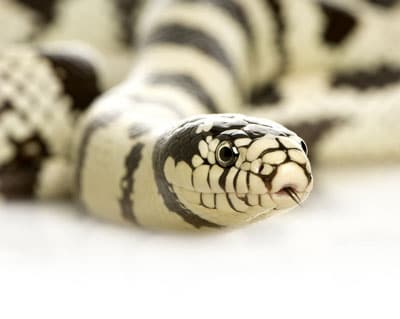
The California King Snake is kind of a favorite of the breeders as they are very easy to handle and have a very attractive appearance that tends to draw the attention of the buyers.
Breeding
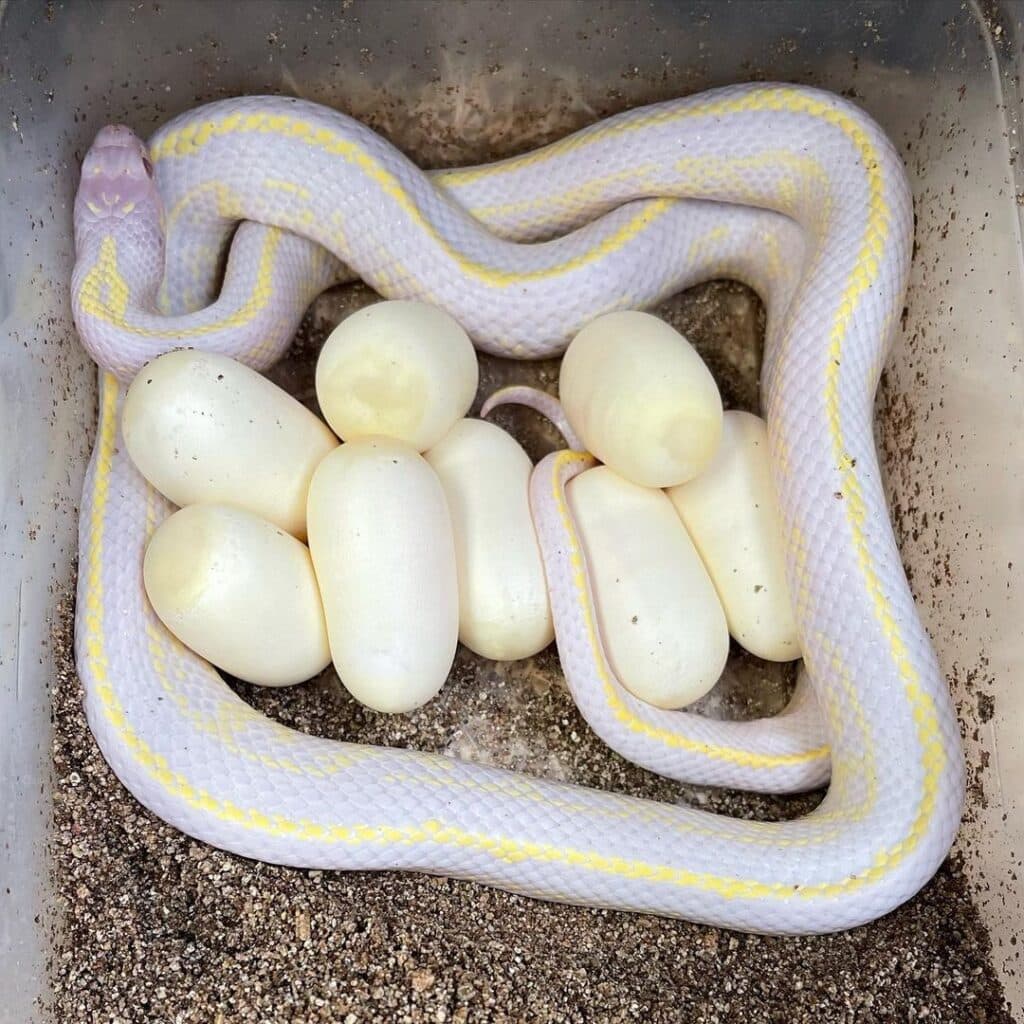
The California Kingsnake attains sexual maturity within 3 or 4 years. The Breeding would take place after a few weeks’ time, once they have recovered from their hibernation-like state. Since they are oviparous creatures, they would lay eggs instead of giving birth to a live one, unlike some other snakes. The courtship begins during the Spring time and after 1 or 2 months, the females would lay eggs. The numbers may vary between 3 and 24 of which 6-12 are considered to be normal. These eggs require 45-60 days to hatch and they are laid between the months of May and August.
The mating ritual involves the male to vibrate uncontrollably, after the competition for the available female snake. The normal clutch size varies from being five to twelve eggs, and the average is supposed to be nine, although there have been numerous instances with clutches of 20 or more eggs.
Housing
The hatchlings would easily fit in a shoe box and would not feel any distress until they grow into their slightly mature form. But when it comes to an adult, you must keep it in a 20-25 gallon tank, the bigger the better. Like any human being, the snakes too would like some extra space as they tend to roam about, even if it is for a small while. The tank must contain a device to heat it up. At least, one side must be hotter than the other side and the temperature should read between 80 and 85 F, while on the other, which is supposedly the cooler side, the temperature must be within 75-80 F.
.
The terrarium must have at least two hides and you must provide fresh water in a bowl which is large enough to hold the entire body of the snake, as it likes to soak itself from time to time. Make sure that you use many substrates, like newspapers, reptile carpets, aspen beddings or maybe cypress mulch to line the cage, as most of these snakes are incredible escape artists and unless the cage is strong enough to hold the snake, it will most likely escape. Paper towels are a good option to line the cages of the baby snakes. You should provide clean and dry substrate at all times, and always remember that pine and cedar shavings are toxic for the snakes, so never use put them anywhere close to the snakes.
Having discovered a fondness for insects while pursuing her degree in Biology, Randi Jones was quite bugged to know that people usually dismissed these little creatures as “creepy-crawlies”.