Sage
Scientific Classification & Quick Facts
| Common name | Sage |
| Scientific name | Salvia officinalis |
| Kingdom | Plantae |
| Phylum | Tracheophyta |
| Class | Magnoliopsida |
| Order | Lamiales |
| Family | Lamiaceae |
| Genus | Salvia |
| Conservation status | Least Concern |
| Type | Evergreen sub-shrub with woody stems |
| Habitat | Full sun; well-drained, alkaline soil |
| Native range | Mediterranean region |
| Colours | Bluish-purple, white or pink flowers |
| Flowering season | Late spring or summer |
| Height | Up to about 2 ft |
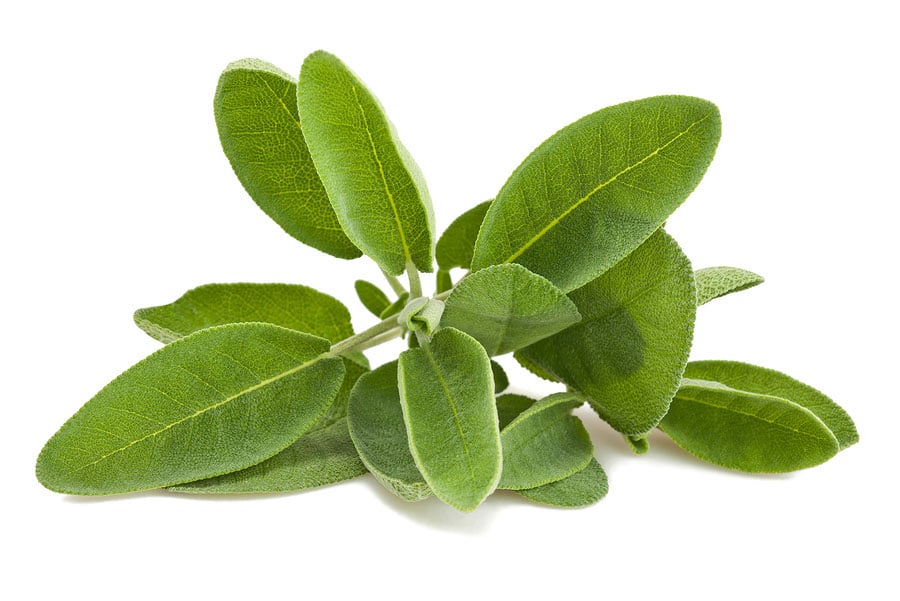
| Special feature | Wrinkled gray-green leaves, white and hairy underneath |
Salvia officinalis (sage, otherwise called Garden sage, or common sage) is a plant found all year round; this evergreen sub-shrub with bluish purple flowers and leaves with gray tint has woody stems. All over North America and Europe Sage or Salvia officinalis is one of the most commonly used herbs. Its name originates from the Latin word “salvere” meaning to be well or in good health and hence people consider it as a potion for mind and body. The Sage group belongs to the mint family Lamiaceae along with many other herbs with a strong aroma. The semi-arid regions of the Mediterranean, Africa, and America house around 900 species.
History
Since ancient times people have used Salvia officinalis for snake bites, driving away evil, and boosting female fertility and much more.
Anatomy
Cultivars vary in size and pattern of foliage with a variety of variegated leaf types as well as the hue of flowers and leaves. A similar variety belonging to the Old World grows up to 2 ft (0.61m) in height and width, with flowers in white, pink or purple color but mostly lavender. It is towards the close of spring or summer that the plants flower. The oblong leaves range in size up to 2.5inches (6.4 cm) in length to 1 in (2.5 cm) in width. The grayish green leaves display a rugosity (wrinkled surface) on the upper surface and the soft, short hairs on the lower side give an almost white color. Cultivars of modern times have a variety of combinations with leaves ranging from purple, cream, rose to yellow.
Habitat
The sage plant has acclimatized to several regions all over the world, although a native of the Mediterranean region. In the present day it finds its place as an ornamental plant in the garden, while you can trace its history back to a plant equally valued in medicine and cooking. This plant survives in USDA Hardiness Zones 5 – 9. When compared to the decorative varieties of purple, tri-color and golden sages, the common sage is slightly hardier.
Growing Sage at Home
Planting
Total sunlight results in healthy sage plants. They tolerate a little shade in the early evening in zone of heat with USDA 8 or greater; however, you would do well to prevent prolonged periods of moisture in the leaves. Spring is best for planting, leaving 12 to 18 inches space between plants. When summer is half way through, prune back 1/3. Use a layer of mulch like dry leaves to make a good cover by late autumn. In spring, remove lifeless and disorderly growth and prune to shape.
Starting indoors, sage grows from cuttings as well as from seeds.
Soil for Planting
Provide the sage plant with good drainage for it grows well in a variety of soils. These plants prefer a soil with an alkaline pH. Plant them in total sun.
Watering
The plants need watering only during periods of dryness, mostly, once or twice a week.
Pests and Pesticides
Diseases or pests seldom trouble the herb. They are vulnerable to spider mites when grown indoors. You can treat this by frequently washing the infected plants with tepid water.
Pests and Pesticides
Once or twice a season, add a general purpose fertilizer and supply to the soil through the water. This promotes growth ideally.
Harvest Month and Storage
To get the best flavor, harvest young and tender leaves before the plant flowers. On a pleasant dry morning, (when the dew is gone) and well before the temperatures peak, do your harvesting. In order to let the plant get ready for winter.Stop to harvest by early autumn.
Sage FAQs
Where does sage come from?
Sage is a native of the Mediterranean region. It has settled in gardens across the world and is one of the most common herbs in North America and Europe.
How tall does sage grow?
Garden sage grows up to about 2 feet (0.6 metres) tall and wide. Its oblong leaves are up to 2.5 inches long.
When does sage flower?
Sage flowers towards the end of spring or in summer. The flowers are mostly lavender-blue, but can also be white, pink or purple.
How much sun and water does sage need?
Sage likes full sun and soil that drains well. Water it only in dry spells, about once or twice a week.
When should you pick sage leaves?
Pick young, tender leaves before the plant flowers for the best flavour. Harvest on a dry morning after the dew is gone, and stop by early autumn.

Randi Jones is the owner and founder of the Nature Gift Store, an online retailer specializing in nature-themed gifts, educational science projects, live animal nature kits and real butterfly artwork. A biology graduate who fell in love with insects, she founded the company in 2001 to make active learning about nature fun, accessible and engaging for children and adults. Her store offers real butterfly frames, home and garden decor and educational live animal kits, including ant farms, worm farms, tadpoles, ladybugs and hermit crabs, and she runs a bug museum in Washington featuring live animals like Eddie the Iguana alongside other reptiles and insects.