Devil’s Claw
Scientific Classification
| Kingdom: | Plantae |
| (unranked): | Angiosperms |
| (unranked): | Eudicots |
| (unranked): | Asterids |
| Order: | Lamiales |
| Family: | Pedaliaceae |
| Genus: | Harpagophytum |
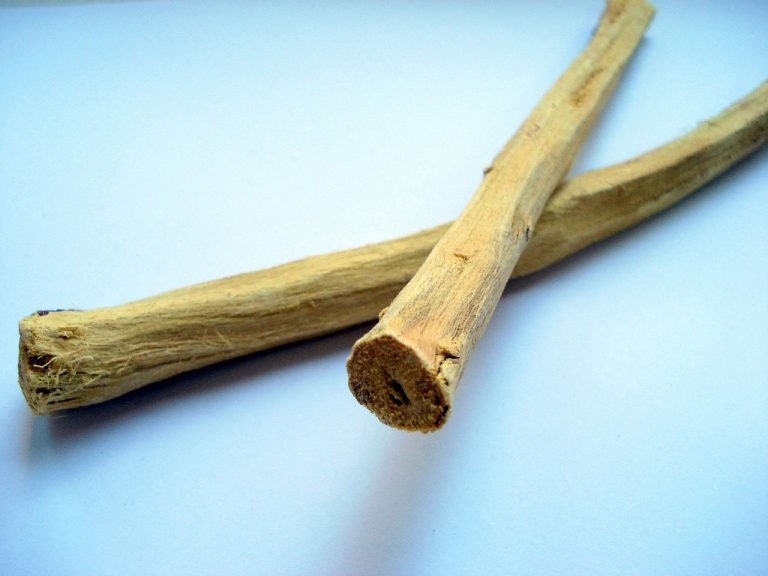
Harpagophytum is known by the names: wood spider, and grapple plant, but is generally called devil’s claw. It belongs to the sesame group of plants, indigenous to the southern province of Africa. It is because of the typical manifestation that it earned its name devil’s claw. It is a large-fruited and pink-flowered annual plant. The large tubular roots of the plant are made use of in the medical field for healing fever and pain and for stimulating digestion.
History
The natives of South Africa make use of Devils claw as remedies for diseases ranging from disorders of the kidney and liver, headaches, allergies, and generally rheumatism. It was in the middle of the 1900s that a German soldier apparently brought known the Devils claw to Europe. Further, it gained fame as the herbalists of other countries like Canada, Britain and Europe started using and prescribing it. In Europe and Canada, Devils claw is sold to people as a remedy to get relief from arthritis. In America, the Devils claw was introduced during the slavery period. The slaves shared the knowledge about the uses of this herb to the Native Americans. Traditionally it was also used as a pain reliever and for complications during pregnancies. An ointment made from this herb was very commonly used in those days for treating skin injuries and bruises. Peter Bretting of the Indian University has named two types of Devils claw, the black seeded one as P. Parviflora and the domestic white seeded one as P. Parviflora Hohokamiana. The white seeded plant was grown by Native Americans in Arizona for making the finest quality baskets. White, black, red and green are the four basic colors in the baskets.
Anatomy
Harpagophytum Procumbens is a perennial weed that grows on the fruit like protrusions of small Devils claws, it has a sturdy tap root centrally grown as deep as 2m. The minor roots are made use for preparing tea and decoctions. The leaves of the plant are big and colored green-gray and are sun trackers. In the morning time, the leaves are usually soft but soon it becomes turgid and face towards the light. As the time passes, the leaves turn a complete 180 degree towards the sun. It generates purple, pink or red flowers shaped like trumpets. These big flowers are usually pollinated by big bees like carpenter and the bumblebee. The fruit is fleshy and somewhat banana shaped. But soon it dries and turns into a woody capsule that is less than five inches in length. It produces black seeds which can take several years to germinate. This seed is edible and are rich in oil and proteins.
Habitat
We find the Devils claws in sandy soils, mostly in vacant trampled and lands that were over-grazed, covered by the low lying herbs and grass, we also find them in open woodlands and arid savannas South of Botswana, southeast part of Namibia, the region of the Kalahari, belonging to the Northern Cape, and southern Africa are the places where Harpagophytum Procumbens is prominent. Besides, we also find Harpagophytum Zeyheri in the south of Angola and the north of Namibia (called Ovamboland). It can also be found across the Sonoran desert from southern California to the Mexico regions. It can be seen in disturbed soil and most often found in agricultural fields and roadsides.Apart from this plant, many varieties of the North American plants of the genus Proboscidea and Urtica,as also particular varieties of Pisonia, are called by the name devils claw
Soil
In order to plant the devils claw seed, the top layer of the soil is loosened with a rake and the ground is cleared of all the vegetation. In case the soil is compressed, the soil is dug out to a depth of 8cm and turned over for the purpose of loosening it for planting. Once the soil is ready for planting, take a rake and level the bed so that an even surface is obtained for sowing the seeds.
Temperature
Devils claw thrives in temperature ranging from 17 to 30°C. It grows very well in properly drained light, red color rocky soils. The plant tolerates mild frost.
Planting
Devils claw is a very difficult plant to grow. Many attempts have been carried out by experts to cultivate it, but a very small percentage had positive results. Tissue culture and cutting was also tried, but the plant could not bear the harsh conditions in the wild. Usually this plant can be harvested only once. Even the seed germination takes place in a very slow rate.Early summer or late spring is ideal for planting the Devils claw. Before sowing, soak the seeds overnight in warm water to soften the seed coat. It can also be removed by rubbing with a sandpaper or scraper. Researchers opined that there is a 100% improvement in the germination process if the seeds are used by removing the seed coat. Before planting, add at least 2 to 3 inches of organic matter to the soil. For sowing the seed, either prepare a furrow of width 60cm and depth 20cm and scatter the seeds evenly over the furrow, or sow them on an even bed.. Once the seeds are sown, lightly rake the seeds and spread a thin layer of sand on them. Plant the tiny tubers 50 cm apart and 10 cm deep. If the seeds are planted very deep, it will result in weak germination.
Watering
Early summer or late spring is ideal for planting the Devils claw. Before sowing, soak the seeds overnight in warm water to soften the seed coat. It can also be removed by rubbing with a sandpaper or scraper. Researchers opined that there is a 100% improvement in the germination process if the seeds are used by removing the seed coat. Before planting, add at least 2 to 3 inches of organic matter to the soil. For sowing the seed, either prepare a furrow of width 60cm and depth 20cm and scatter the seeds evenly over the furrow, or sow them on an even bed.. Once the seeds are sown, lightly rake the seeds and spread a thin layer of sand on them. Plant the tiny tubers 50 cm apart and 10 cm deep. If the seeds are planted very deep, it will result in weak germination.
Pests and Disease
Animals living on tubers are the only pests known to disturb these plants. Among them are the antelopes like Steenboks, Duiker and Porcupines. Newly seeded beds of wild flowers attract birds. Where the area is small, and the birds build their nests, and shredded palm or dried leaves are spread over the bed/ Once you see the seedlings sprout, remove the mulch. An excess of water leads to problems related to fungus. Registered fungicides are useful.
Having discovered a fondness for insects while pursuing her degree in Biology, Randi Jones was quite bugged to know that people usually dismissed these little creatures as “creepy-crawlies”.