Red Ackie Monitor
Scientific Classification
| Kingdom: | Animalia |
| Phylum: | Chordata |
| Class: | Reptilia |
| Order: | Squamata |
| Family: | Varanidae |
| Genus: | Varanus |
| Subgenus: | V. (Odatria) |
| Species: | V. acanthurus |
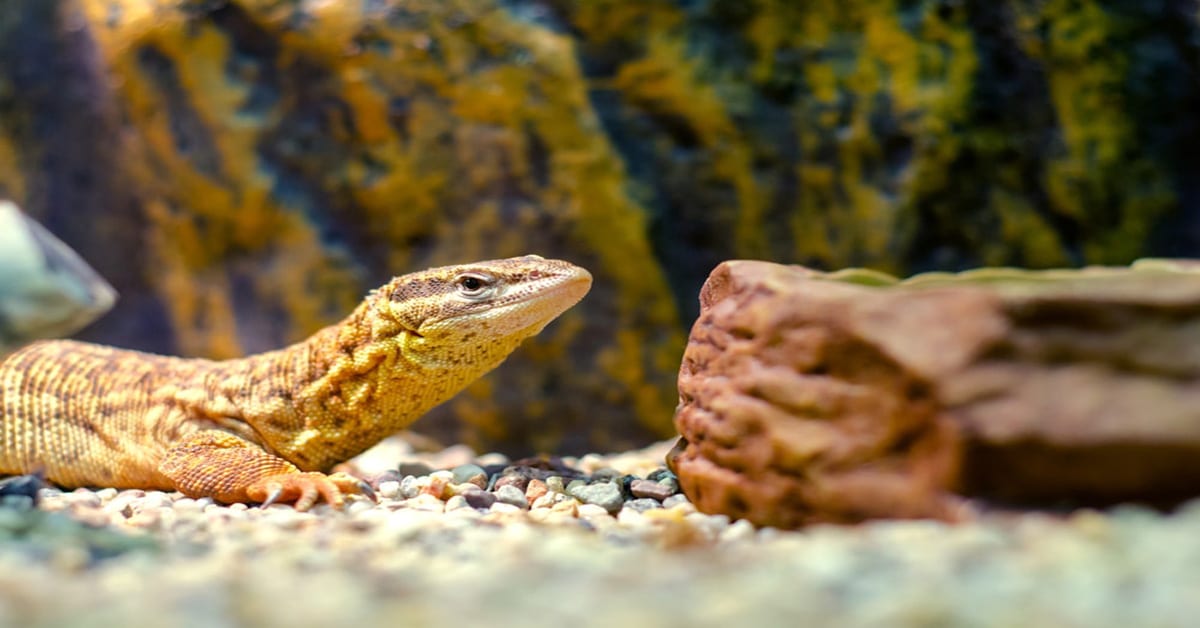
The Red Ackie is an Australian variety of lizards, from the genus of monitor lizards (Varanus). The biologists call them the Red Spiny-tailed monitor (Varanus Acanthurus), Ackie dwarfs monitor, or ridge-tailed monitor.
Anatomy
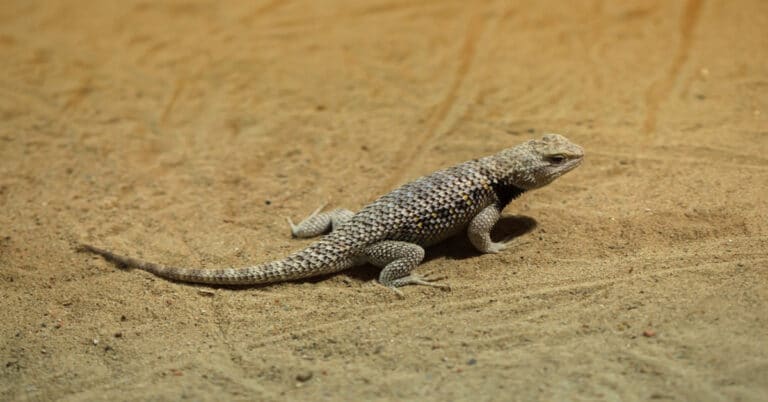
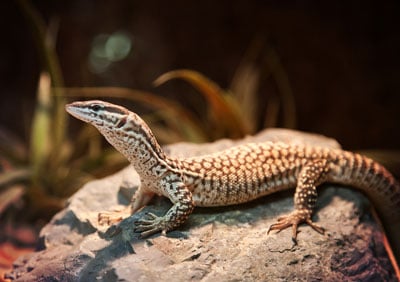
Spiny-tailed monitor, of average size reaches a total length of 70 cm. Its tail is around 1.3 -2.3 times lengthier than its body and head. Its upper part is deep dark brown spotted with illustrious cream to yellow spots that include some dark scale. They have spinose tails with a circular section. The central part of the body has 70 – 115 scales.
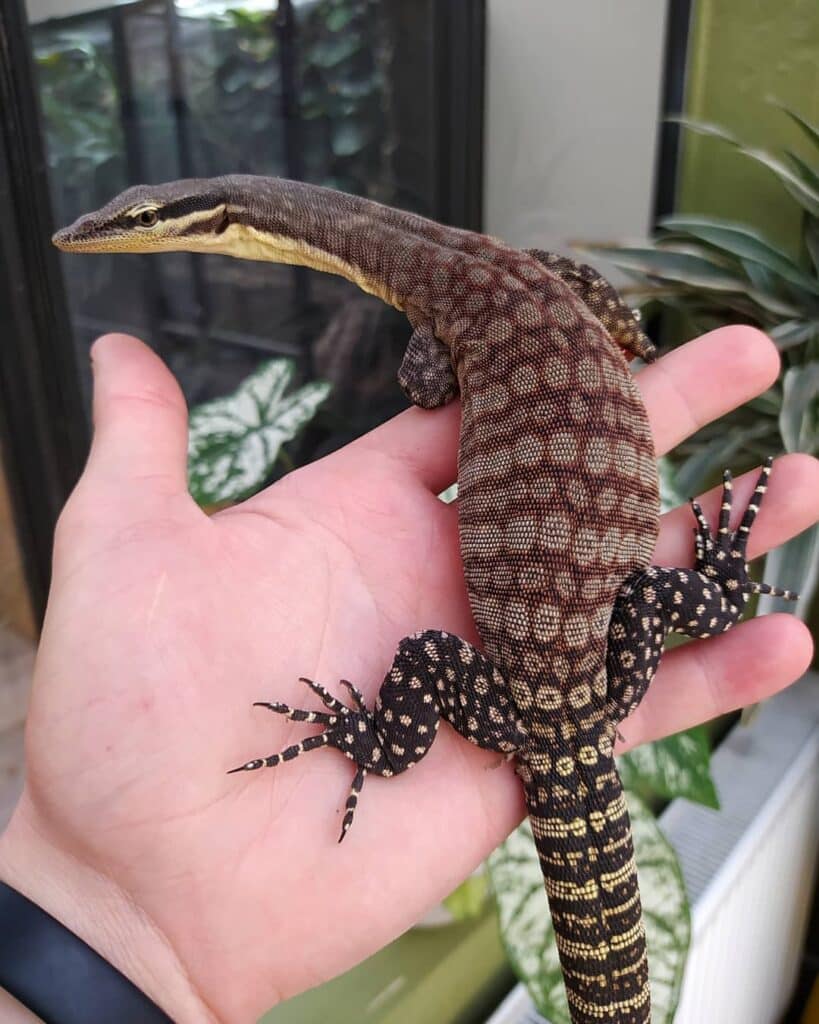
Natural Habitat
The lizard that adapts to aridity and you see them in North West part of Australia, in the Northeast and eastern areas of Queensland in the Northern Territory. These Spiny-tailed monitors prefer to live in the dry Rocky Mountains and its projections.
As a Pet
Housing
You need to build a considerably larger tank because the Red Ackie will avail whatever room is available. The experts say that, for a couple, a 4’x2’ enclosure is ideal. These fellows derive pleasure in digging and therefore build the enclosure sufficiently strong with enough of dirt in it. Big holes for ventilation are not necessary, as you need to preserve humidity.
Substrate
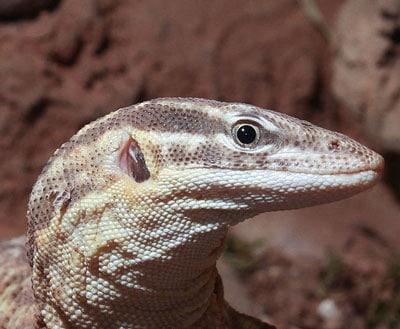
These lizards find pleasure in burrowing, so you need a large measure of dirt. Moisten the dirt sufficiently to make sure the substrate does not break down. The dampened burrows aid to make sheds. Simply accumulated muck will serve the purpose. You should make sure that they are free from pesticides. Separate the small rock pieces. Place the young ones on ordinary paper napkins so that you watch their food habits, excrement, etc.
Heat and Light
As per details available on Red Ackie care, these animals need basking. Give them a choice of basking temperatures by placing a Retes Stack which is primarily a set of stacked platforms one above the other, to allow the lizards to mount and bask at various positions of heat. Try for basking temperatures of 130°-150°F.
Humidity
Maintain 50-60% humidity and temperature of 70-75°F for the cooler portions of the cage and 85-90°F for the warmer portions. Maintain the basking temperature at 125-150°F. Adjust the temperature range and watch the lizard’s reaction to see its preference for different temperatures, as they are likely to act differently when temperature is high.
Feeding
This the best part in owning Ackies. They enjoy running after their prey. They get accustomed to you while you regularly feed them. Thereby, when you approach the room with food, they get excited and scratch the glass eagerly waiting to get their feed. The best Red Ackie diet includes roaches and crickets. Dust the feed well with calcium. You would do well to offer the matured and grown-up Red Akies lizards the pinky mice.
Handling
Although they are charming and robust animals when confined, these lizards give little or no problem to the Red Ackie breeder while handling them. This Red Ackie enjoys mingling with human beings after a period of acclimatization. Give the monitors enough time to adjust and form a comfortable owner-monitor relationship that will result only from patient handling from you. Many keepers have expressed the pleasure of handling these lizards when tamed.
Having discovered a fondness for insects while pursuing her degree in Biology, Randi Jones was quite bugged to know that people usually dismissed these little creatures as “creepy-crawlies”.