Horse Chestnut
Scientific Classification
| Kingdom: | Plantae |
| Order: | Sapindales |
| Family: | Sapindaceae |
| Genus: | Aesculus |
| Species: | A. Hippocastanum |
Horse chestnut, also known as the Canker Tree, is a deciduous and Synoecious (having both male and female on the same plant) tree. Throughout the temperate world, it is widely cultivated along, the parks and the streets. It has been successful in the United Kingdom, where it is found along the banks of rivers. It is a traditional remedy for leg vein health. It has antioxidant properties. Its leaves, bark, and seeds are useful parts and they are used to make medicines. It also contains a significant amount of poison. If it is eaten raw it may cause death. This plant can grow 100 feet tall and 50 feet wide.
History
In the early 1980s Horse Chestnut was used commercially in Germany. The nuts of the horse chestnut were fed to horses. Its common name came from Turkey. For centuries it has been used in traditional medicines and a variety of commercial applications. Its bark is used to make a yellow dye and its wood is used for furniture and packing cases.
Anatomy
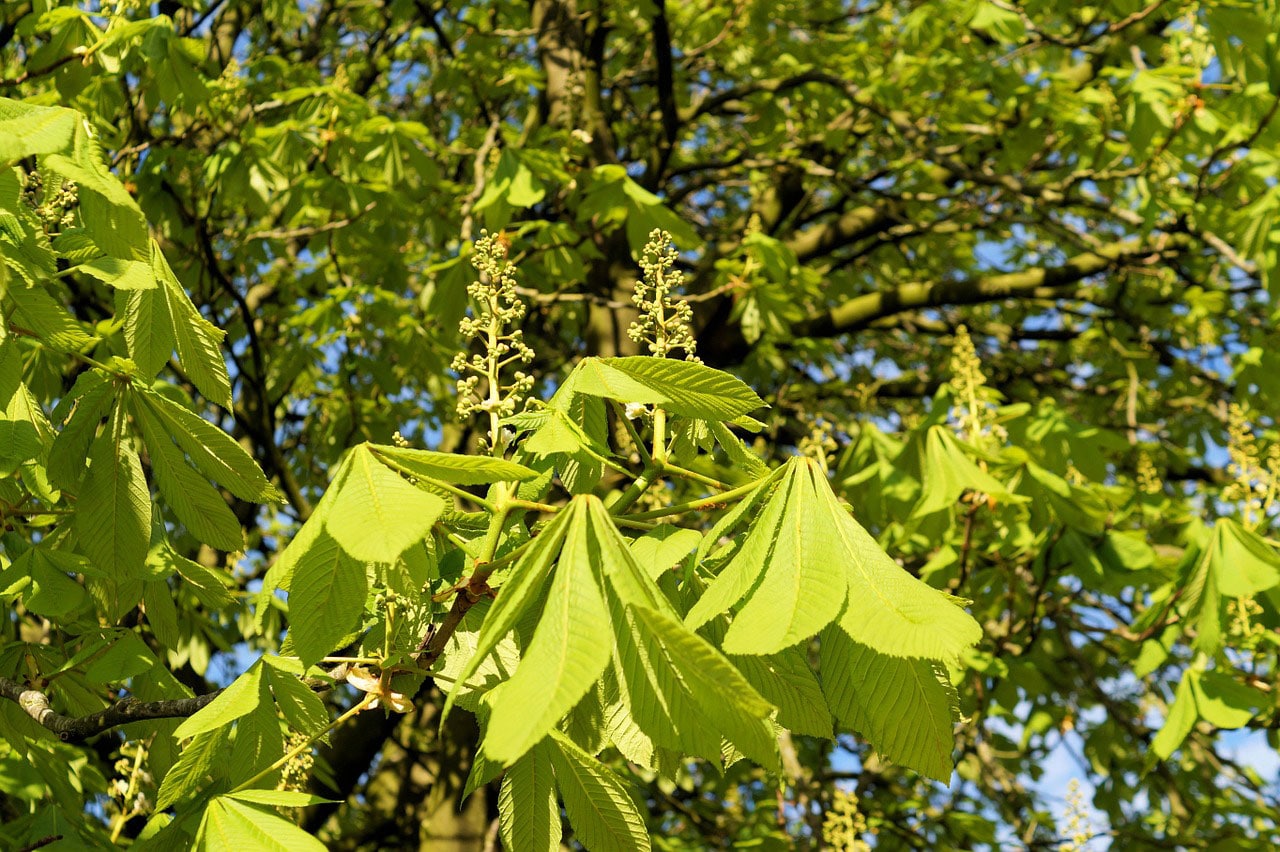
The seeds produced by the horse chestnut tree are used as a dietary supplement extract. This seed extract is a rich source of nutrients called ezine that is a biologically active compound with anti-inflammatory properties. The leaves of horse chestnut plants are palmately compound, and its flowers have erect clusters in the shape of an inverted cone.
Habitat
The horse chestnut plant is native to the North Temperate Zone. It is native to the Balkan mixed forests and Pindus Mountains mixed forests of South East Europe. In the temperate world, it is cultivated in the streets and parks. In the United Kingdom it is found along the banks of rivers..
Soil
The horse chestnut plant is native to the North Temperate Zone. It is native to the Balkan mixed forests and Pindus Mountains mixed forests of South East Europe. In the temperate world, it is cultivated in the streets and parks. In the United Kingdom it is found along the banks of rivers.
Planting
The Seeds of the horse chestnut plant have to be sown outdoors in cold frames. The seeds germinate rapidly. Planting of horse chestnut is not a very difficult job it is very easy. It makes an addition to the landscape.
Water
The horse chestnut plant requires watering regularly because it needs moisture. It prefers a colder climate and full sunlight. It does not give the best results in warmer areas.
Temperature and Humidity
The horse chestnut plant requires mild temperature and wet weather. To dry the nuts of the plant it requires 95 to 105 degree Fahrenheit.
Care
The plant requires care. They do not tolerate excessively dry conditions. For caring mulching is ideal to maintain moisture in the soil.
Harvest
The nuts of the seeds of horse chestnut fall from the plant when they mature. This type of harvesting does not require any tools or equipments. The nuts of the chestnut plant falls automatically.
Pests and Disease
Leaf Miner is an exotic pest of the horse chestnut plant. It destroys the tissues of the leaf and can cause severe damage to the leaves of the plant. Leaf blotch disease is caused by the fungus by which the leaves turn brown in color and shrivel.
Uses
Horse chestnuts have been taken internally and used in the treatment of frostbite and leg ulcers. It is applied also as a gel, ointment and lotion. Its leaf and seeds are used in treating hemorrhoids, swollen veins and varicose veins. Its seeds are used in the treatment of fever, diarrhea and enlarged prostate. The leaves of horse chestnut are used in the treatment of joint pains, cough, sprains, eczema, menstrual pain, soft tissue swelling from bone fracture and arthritis. Its bark is used in the treatment of dysentery and malaria.
Having discovered a fondness for insects while pursuing her degree in Biology, Randi Jones was quite bugged to know that people usually dismissed these little creatures as “creepy-crawlies”.