Gotu Kola
Scientific Classification
| Kingdom: | Plantae |
| Order: | Apiales |
| Family: | Mackinlayaceae |
| Genus: | Centella |
| Species: | C. Asiatica |
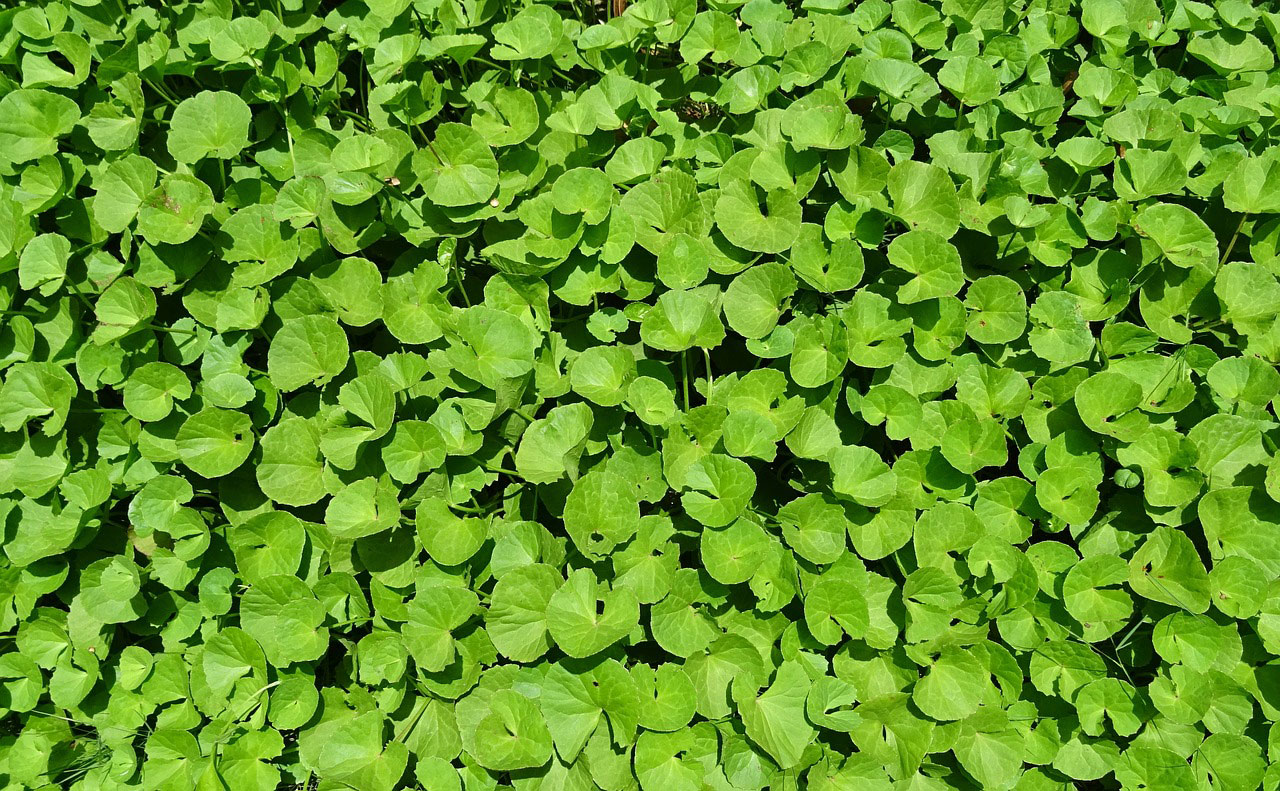
Gotu kola is also known as Cantella Asiatica. It is a perennial flowering plant that belongs to the Mackinlayacea sub-family and Apiaceae family. It is a common herb that is found in most parts of the world and very commonly found in the whole of Asia and the South Pacific regions. This annual plant is usually grown around water or swampy areas. It bears fan-shaped green leaves and small white or pink flowers formed in clusters. It also produces oval-shaped small fruits that are densely reticulated. It is a small herbaceous plant. In Asia, it is native to the wetlands. It is also known as the Indian Penny-Wort and the Asiatic Penny-Wort. It has many other names in different languages. Gotu kola is used as a medicinal herb in traditional African medicine, traditional Chinese medicine, and also in Ayurvedic medicine. In India, It is popularly known by many varieties of names. The Indian name of Gotu Kola is Brahmi. It means bringing knowledge of the supreme reality.
History
For thousands of years in China, India and Indonesia Gotu Kola has been used in the treatment of many conditions. In the past times in China, it was called the foundation of life. Because, the result of taking Gotu Kola, a Chinese herbalist lived for more than 200 years. Since 100 AD it has been used as medicine. Since 1852, in Mauritius, it was used to treat leprosy. It has a very long history of use.
Anatomy
The stem of Gotu kola plant is slender. They are green to reddish green in color. They connect plants to each other. Its leaves are small and fan-shaped and are green in color. These leaves are borne on petioles. Its root stock consists of rhizomes and they grow vertically down. These are cream in color and are covered with root hairs. The flowers of Gotu kola are pinkish to red or white in color. These flowers are smaller in size and form in rounded bunches near the surface of the soil. Each flower bears two styles and five stamens. It has no smell or taste. It has a small oval fruit. Its leaves and stems are used as a medicine. The form and shape of this herb are affected by different environmental conditions. It looks different in different habitats. For example, in shallow water, the plant puts forth floating roots and the leaves are found resting on top of the water, whereas in dry condition; it has numerous roots and small, thin leaves.
Habitat
The Gotu kola plant grows along ditches and wet, low areas. It is a perennial plant and native to Indonesia, China, India, South Pacific, South Africa, Japan and Sri Lanka. In India it grows in waterlogged places. Commercially it is gathered from the wild. It is a suitable herbal plant to grow in gardens that have moist soil and shady areas.
Soil
The Gotu kola plant can grow under a wide range of environmental conditions. It can grow in any soil condition. High amount of mulch in the soil helps spread the plant easily and establish it strongly. It prefers wet or moist soil. Medium loamy or heavy clay soil is also ideal for them
Temperature and Humidity
The Gotu kola plant can tolerate temperature down between -5 to -10 C. It has the ability to tolerate drier conditions. Riverbanks and marshy areas are ideal for them.
Planting
Seeds of the Gotu kola plant have to be sown in spring season under cover or in the autumn season in an unheated greenhouse. Its seeds can be difficult to germinate. Providing high content of mulch to the soil will help this herb to grow healthy and fast. Seeds should be planted at least 2 to 3 inches apart. Enrich it with water generously and do not allow the soil to dry. It prefers shady conditions and damp rocky areas. The plants require at least one to two weeks (depending upon the climate) to establish. Once the seeds emerge, the seedling should be transferred into bigger pots until large enough to be planted outside.
Water
The Gotu kola plant needs regular watering. It prefers fast draining, humid air and regular watering. New plant needs water daily to grow well.
Care
At first, Gotu Kola is a slow growing plant. So it requires care and attention. It prefers full sunlight, but it can survive in partial shade. To get a continuous supply of this herb, apply some liquid fertilizer such as Phostrogen once a week. Snails are very fond of this herb; hence using a Snail pellet is recommended. Spreading sawdust will also help to keep away the snails.
Harvest
The leaves of the Gotu kola plant can be harvested in the summer months. In many places throughout the year the aerial parts of the herb are harvested. Any time in the year its leaves and stems can be harvested and are used dried or fresh. To be able to harvest two leaves a day, the herb has to be allowed to grow at least for a month to establish.
Pests and Disease
Gotu kola plant is attacked by viruses. In South East Asia and India Gotu Kola plants suffer from bacterial contamination. It is sensitive to pollutants because it is an aquatic plant. In the right conditions Gotu kola can be a quick spreading ground cover and somewhat difficult to eradicate if uncontrolled or not harvested regularly. It spreads by rhizomes.
Uses
Gotu Kola is very helpful in treatment of reduced swelling and it also improves the flow of blood. It is used in the treatment of skin ulcers, mental function, wound healing, scars, minor burns, blood disease, high blood pressure, urinary tract infections and hepatitis. It improves and strengthens circulations in the veins and the capillaries. This herb also works as a tonic of the brain and stimulates the growth of hair. It revitalizes the nervous system and the brain. It also cleans the blood and helps in treatment of blood impurities. Its leaves can be eaten raw as a salad. It also provides restful sleep. The whole plant is used medicinally. In India, Gotu kola is referred as the most spiritual herb till date. This herbal plant is grown in some areas of the Himalayas where yogis use it for improving meditation. Yogis believe that it helps to develop the crown chakra, which means the energy center at the top of the head. It is also said to provide balance to the right and left hemisphere of the brain as the leaves resemble the shape of the brain. It is considered as the most effective rejuvenative herb in Ayurvedic medicine. Many compositions of Ayurvedic medicines include this herb as an important ingredient. In Sri Lanka, it is noted that the elephants consume this herb and it is believed that the elephants live long due to munching its leaves. Hence it is also regarded as a promoter of long life.
Having discovered a fondness for insects while pursuing her degree in Biology, Randi Jones was quite bugged to know that people usually dismissed these little creatures as “creepy-crawlies”.