
Caring for Newborn Puppies
Newborn puppies are a miracle. They are also somewhat fragile. They are entirely dependent upon their mother for their survival. And, since you control their environment, they are also dependent upon you. Caring for newborn puppies takes a great deal of commitment on the part of the breeder since any problem can quickly become very serious.
Most dams (mother dogs) usually do an excellent job of caring for their puppies. There are occasional exceptions. Your job is to closely monitor how your bitch is caring for her puppies and to make sure that things run smoothly. Your dog will be busy nursing and cleaning the puppies for at least the first three weeks after whelping. After that time she will usually begin to wean them. Then you will have the task of cleaning up after the puppies, introducing them to solid foods, and helping them explore the world, with the dam’s help.
In the meantime, here are some tips for caring for newborn puppies.
Keep the puppies in a warm environment. One of the most common causes of death in newborn puppies is chilling. When puppies are born they have no way to regulate their own body temperature. They can’t shiver or do anything to produce body heat. They depend on their mother’s body for warmth. If they get too far away from her they can quickly become chilled. For this reason it’s very important for you to keep the whelping room very warm for the first week. Keep the temperature in the room between 85 and 90 degrees. This will undoubtedly seem very hot to you and even the dam may pant, but this is a good temperature to keep the puppies alive and well. This temperature will also prevent Fading Puppy Syndrome from occurring in your puppies. This virus can wipe out your litter very quickly.
You can also use a heat lamp suspended above the whelping box or place a well-covered heating pad in the whelping box to help maintain warmth.
After the first week you can begin to reduce the temperature to 80 degrees. You can continue to reduce the temperature slowly until the room is set at 75 degrees by the time the puppies are a month old.
Keep things clean. Even newborns can be messy. Your bitch will be washing and cleaning the puppies frequently but the papers and towels or blankets in the whelping box will need to be changed frequently. You’ll need to clean the whelping box every day. If your bitch has a large litter you may need to clean more often.
If it makes you feel better, the cleaner you keep the whelping box and adjoining area, the easier it will be to housetrain the puppies later on. Caring for newborn puppies does have its advantages since you can help shape the puppies’ later behavior.
Monitor the puppies. Any changes at all in newborns can be significant. If a newborn goes without nursing when his brothers and sisters nurse, he can quickly lose body weight, become dehydrated and weak. If a puppy is pushed out of the whelping box he can quickly become chilled which could lead to death. If a puppy becomes trapped under the blanket in the box he can easily smother and die. Anything that happens to newborn puppy can become an emergency so you need to watch the puppies very closely, especially during the first week to ten days before their eyes open.
During these first weeks you should weigh the puppies each day and record the weights to make sure that they are gaining weight.
Once the puppies’ eyes are open and they can hear they will become very mobile. At this point you can let them start exploring more. If you have an x-pen up around the whelping area they should be fine within the pen. As they get larger they will want to get out and explore a larger area. You will still need to monitor them to keep them out of trouble.
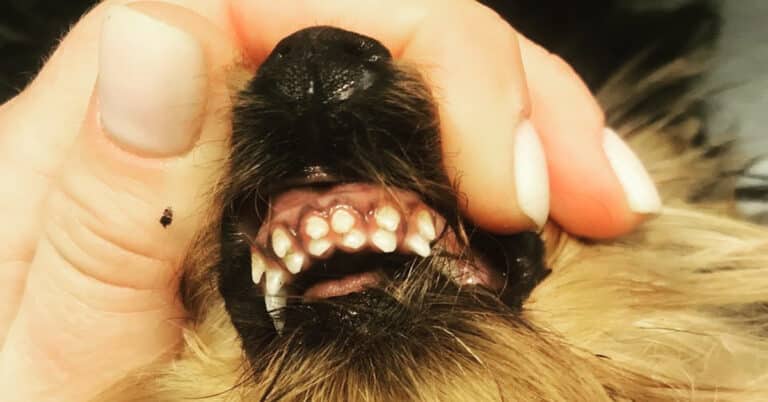
You can start introducing the puppies to puppy food soaked with puppy formula when they are three to four weeks old. By this time their mother will be ready to start weaning them since they will have very sharp little teeth that hurt when they nurse. Gradually use less formula in the mixture and more puppy food until the puppies are eating solid food.
By watching the puppies very closely you will be able to detect any potential problems right away. If you see any puppy who’s not gaining weight or who’s losing weight you should find out why. You may need to take him to the vet. Don’t waste time. Puppies can crash very quickly.
If a puppy is continually crying it also signifies a problem. Happy puppies don’t cry. They nurse or sleep. When a puppy cries something is wrong.
There are times when the bitch will push a puppy out of the whelping box or push it off a nipple. She seems to discard the puppy. You can make efforts to hand raise the puppy or save it. You may take it to the vet. There may not be anything obviously wrong with the puppy. But, in many cases even if you succeed in saving the puppy and he or she survives there may turn out to be something wrong with the puppy later in life. Bitches often seem to know if there is something not right with a puppy.
Caring for newborn puppies is a lot of hard work. You may not get much sleep for the first couple of weeks due to the fact that you will be monitoring the puppies. It helps if you have a friend or family member who can help you so you can take turns watching the puppies and getting some sleep. You don’t have to watch the puppies every moment but it is a good idea to be close enough so you can hear them in case they cry or if anything goes wrong. A baby monitor situated in the whelping room is a good idea.
If you have friends who are experienced breeders it’s a good idea to keep them on speed dial. You may have 100 questions for them while your litter is young.
The good news is that most people do survive caring for newborn puppies. It’s when the puppies are older and tearing up your house that they kill you.
Having discovered a fondness for insects while pursuing her degree in Biology, Randi Jones was quite bugged to know that people usually dismissed these little creatures as “creepy-crawlies”.