Celestial Pearl Danio
Scientific classification
| Kingdom: | Animalia |
| Phylum: | Chordata |
| Superclass: | Osteichthyes |
| Class: | Actinopterygii |
| Subclass: | Neopterygii |
| Infraclass: | Teleostei |
| Superorder: | Ostariophysi |
| Order: | Cypriniformes |
| Family: | Cyprinidae |
| Subfamily: | Danioninae |
| Genus: | Danio |
| Species: | D. Margaritatus |
| Binomial name: | Danio Margaritatus |
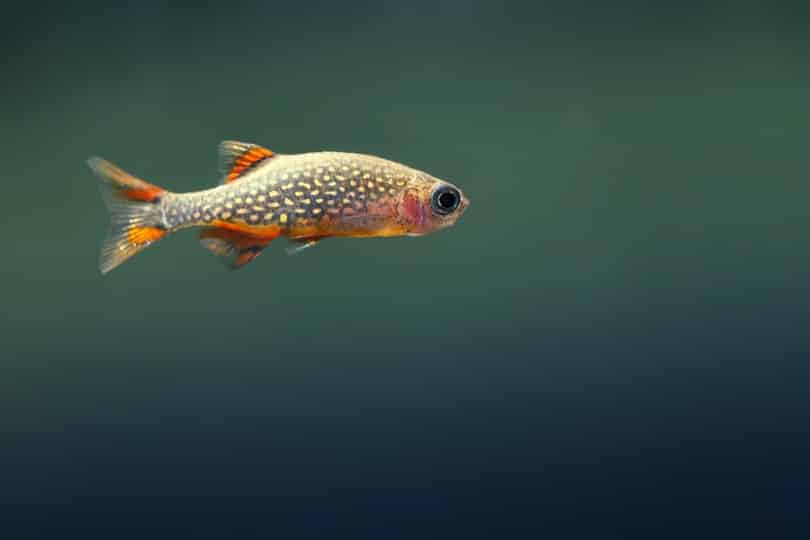
Celestial pearl Danio fish is also known as Danio Margaritatus. In the aquarium trade, it is often referred to as galaxy Rasbora. Originally, this fish was known as galaxy Rasbora, but on February 2007, that was changed by Tyson R. Roberts with his formal description of the species. This beautiful, little, and unique fish is a wonderful addition to the aquarium hobby. This fish originates from Thailand and Myanmar. It is sold as a protein snack and has been considered a food fish. The average lifespan of this fish is 3 to 5 years. In the aquarium trade, within six months of its appearance, species of this fish were falsely reported as having become so rare. It is a mild-tempered, energetic, and hardy fish and is a good fish for beginners in their first aquarium.
At first, the Celestial Pearl Danio fish was considered a species from the genus Microrasboras. Later within a year, this species was described scientifically as a Celestial Pearl fish and was placed in the Celestichthys genus. A comprehensive study done in the 2008 year, led to the discovery that this species is actually the relative of genus Danio Choprae and Danio Erythromicron, and it originally belonged to the genus Danio.
Habitat and range
The celestial pearl Danio fish has been found near Hopong, East of Inle Lake in a very small area. Its natural habitat is a part of the Salween basin, namely the Nam Pawn and Nam Lang rivers. It was discovered in 2006 and its species rapidly appeared in the Aquarium trade, where its bright colors and small size made it an immediate hit. In their homeland, this fish is found in a series spring fed ponds and groundwater.
The original habitat of this fish is the small ponds formed by the seeping water from the ground or by the overflowing water from the small springs or brooks. Hence, the water may be shallow that quickly warms up to a temperature of around 20 degree C, which means these Danio Margaritatus species can tolerate temperature till mid 20. These water bodies like the others from the Inle drainage also have slightly alkaline water, and the habitat is found with dense vegetation of Hydrocharitaceae, similar to the water weed known as Elodea.
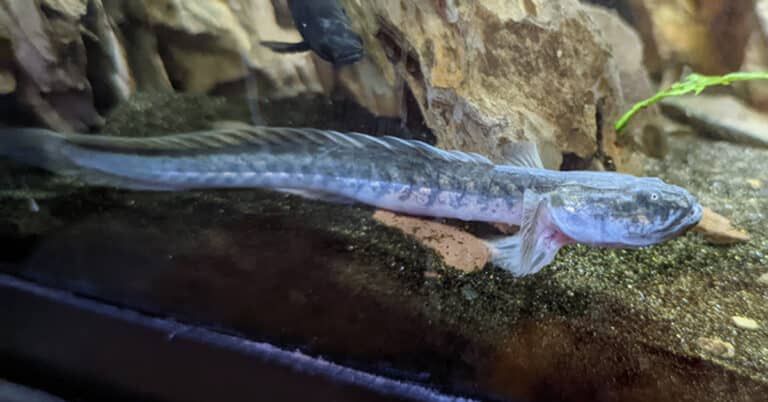
The habitat of celestial pearl Danio consists of very few other fish species like a Microrasboras, Dwarf Snakehead Channa Harcourt butler and the Rosy Loach. From this group, the Dwarf Snakehead Channa Harcourtbutleri fish is the only predator of the Celestial Pearl Danio fish.
This Danio species are a good source of proteins and locally used as a food in some areas.
Description
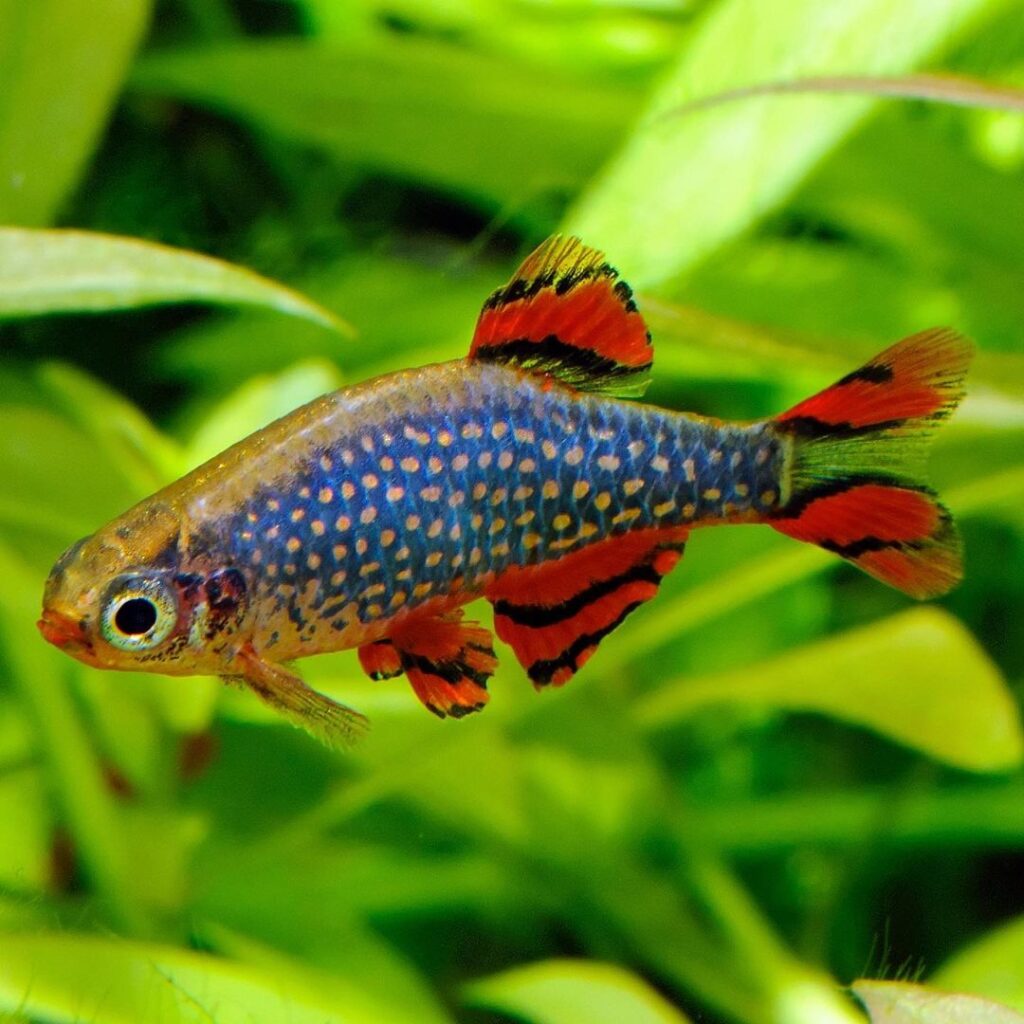
The Celestial pearl Danio fish is a small and fleshy Danionins. It has markedly blunt nose with a standard length of 2 to 2.5 cm. The body of this fish is three times as long as its height.
Its species shows sexual Dimorphism. Its females have a dull blue colored background and males have a bright blue colored background. And their fins are brightly colored.
Growing at Home
Breeding
The celestial pearl Danio fish was discovered in August 2006. So, in the wild this species is now at risk of extinction due to over collecting. In the captive breeding, the spawning behavior of this species has significant consequences. There are no constant breeding seasons for this species. Even the females are not found laying eggs continuously, instead, a small batch of about 30 eggs, are formed by the female counterpart in each spawning episode. The duration between two spawning process is still unknown. The eggs cannot be found deposited on any surface, nor are they released freely into the water. The assumption is that the eggs are laid on the dense vegetation and kept hidden. Though it is not quite sure, but the male fish are seen defending the dense vegetation to fertilize the eggs. Unlike the courtship seen in the other species, the chasing of the male and the readiness of the female for mating is never seen in this species.
Tank size
To house a celestial pearl Danio fish a 15 gallon tank is the minimum requirement. But, it’s better to start with one of 20 to 30 gallons. This fish lives in small ponds which are created by the overflow from small springs and seeping groundwater. The Maximum amount of surface area is good for them because a large surface area of water helps the fish in taking oxygen easily. The tank must be well cleaned beforehand and it would be better to use table salt to disinfect and clean the tank. This will give the fishes a chance to grow into a healthy and full size.
Water conditions
The celestial pearl Danio fish thrives best in slightly alkaline and fairly soft water at not a high temperature. It can also tolerate a wide range of water conditions. It requires a water temperature of 73 to 79 degree F and a PH of around 6.5 to 7.5. Weekly water changes are essential to keep fish healthy.
Nutrition
The celestial Pearl Danio fish is an omnivore and it will eat everything which reaches the bottom. For food, this fish will not swim to the surface. Generally, it will eat all kinds of sinking pellets, table food, flakes, algae and live foods. They also like frozen food. To keep a good balance, feeding of high quality flake food or tablet food is ideal for them. This fish likes brine shrimp, Tubifex, Daphnia, mosquito larvae and some vegetable foods like algae wafers.
Setup
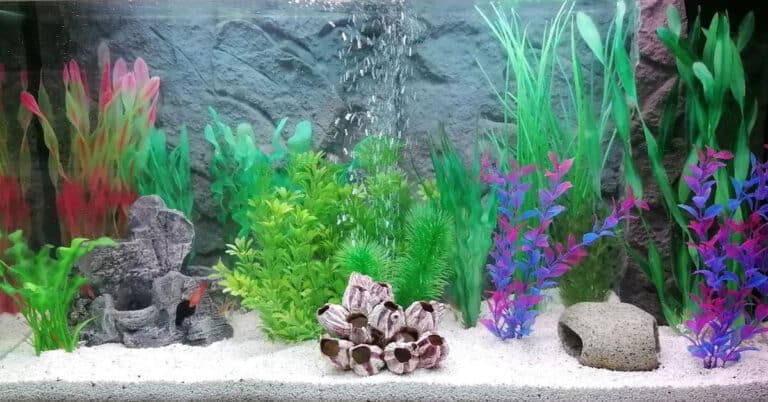
The Celestial Pearl Danio fish likes a heavily planted aquarium. And direct daylight is also favorable for them. This fish is not an active swimmer. The females are sometimes shy and the males are aggressive with each other in the aquarium, but they do not harm. It requires good water movements, because it provides plenty of oxygenation. An Under-gravel filter is ideal for this, as it helps in reducing the waste and also creates a high oxygen presence throughout the aquarium. It is good to provide plenty of cover so that the fish feel secure. The Small amount of tannin free wood and stones will provide fish additional hiding places. It is a peaceful fish and does well in community living. The like sized tank mates are Microrasboras, Boraras and small Danionins.
Having discovered a fondness for insects while pursuing her degree in Biology, Randi Jones was quite bugged to know that people usually dismissed these little creatures as “creepy-crawlies”.