Chicken

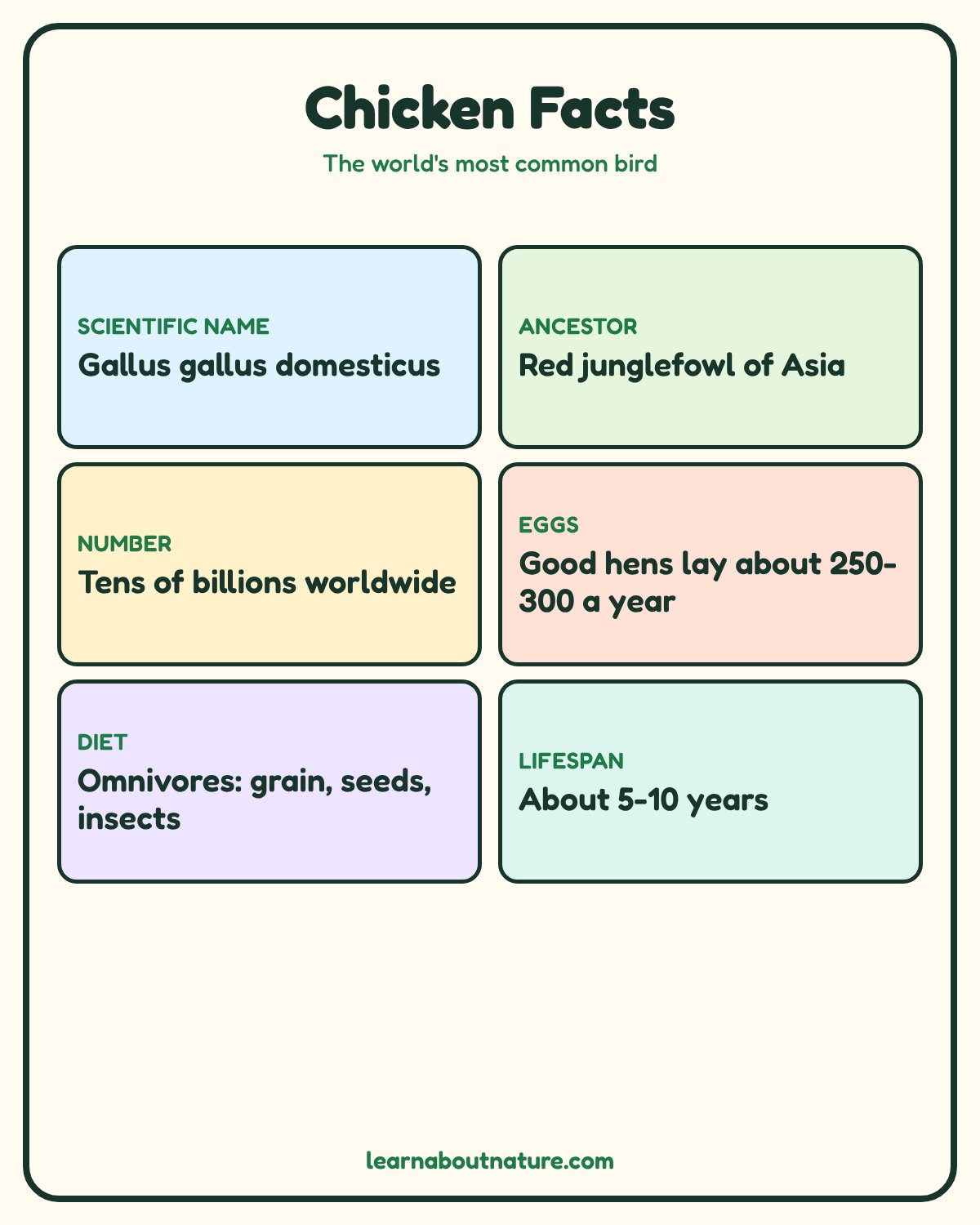
The chicken (Gallus gallus domesticus) is a domesticated form of the red junglefowl, a wild bird from Asia. It is the most common and widespread bird on Earth: there are more chickens alive at any one time than any other kind of bird, and back in 2003 there were already more than 24 billion of them. People everywhere eat chicken meat and eggs, making the chicken one of our most important sources of food.
Chicken Quick Facts
| Common name | Chicken |
| Scientific name | Gallus gallus domesticus |
| Kingdom | Animalia |
| Phylum | Chordata |
| Class | Aves |
| Order | Galliformes |
| Family | Phasianidae |
| Genus | Gallus |
| Type | Domestic bird (poultry) |
| Diet | Omnivore: insects, seeds, small lizards and mice |
| Native range | Domesticated in Asia from the red junglefowl |
| Lifespan | Usually 5-10 years |
| Colours | Eggs from white and brown to green, blue or purple |
| Special feature | Lives in flocks with a pecking order |
Scientists believe chickens were first domesticated from red junglefowl in Asia several thousand years ago, most likely in Southeast Asia. Genetic studies suggest that chickens may have been domesticated more than once, in different parts of East, Southeast and South Asia.
Description
Chickens are omnivores, which means they eat both plants and animals. They peck at seeds, grains, plants and insects, and they will also catch small animals such as lizards, young mice and small snakes. Chickens usually live about 5 to 10 years, but some live much longer: the oldest known hen died in 2024 at the age of 21.
Reproduction

Roosters (males) look different from hens. They have long, flowing tail feathers and shiny, pointed feathers on the neck and back, and their colors are usually brighter than those of hens of the same breed. Roosters also tend to have larger combs and sharp spurs on the backs of their legs. Adult chickens have a fleshy red crest on top of the head, called a comb, and flaps of skin hanging under the beak, called wattles. Most domestic chickens are too heavy to fly far, but lighter birds can flutter up into a tree or over a fence.
Behavior
Chickens are social birds that live in flocks and like company. Hens may even share nests and help care for chicks together. Every flock has a “pecking order,” a ranking in which higher-ranked birds get first access to food and the best nesting spots. If a rooster or hen is removed from the flock, or a new bird is added, the pecking order is upset for a while until the birds sort out a new one.
Mating
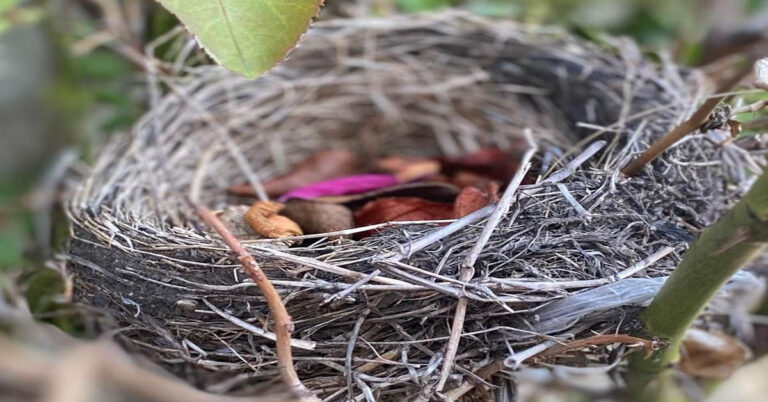
Like other birds, chickens court before mating. A rooster may perform a “circle dance” around a hen, dropping one wing low so that it brushes the ground near her. This display is thought to make the hen interested. If she crouches down in response, the rooster mounts her to mate. When laying, hens often choose nests that already have eggs in them, so several hens may lay in the same nest. Farmers sometimes put fake eggs in nest boxes to encourage hens to lay there.
Farming

Chickens are so popular for meat and eggs that tens of billions are raised for food every year. Most of them are raised on large, intensive farms. According to figures from the Worldwatch Institute, intensive farms produced about 74% of the world’s chicken meat and 68% of its eggs. Chickens can also be raised in free-range systems, where they can go outdoors. Critics say intensive farming is bad for animal welfare, the environment and human health, while supporters say it uses less land, feed and water to produce the same amount of food.
Small backyard flocks, usually of fewer than a dozen hens, are also becoming popular in towns and suburbs. People keep them for fresh eggs, to control garden pests such as bugs and slugs, and for their droppings, which make good garden fertilizer.
Reared For Meat (Broilers)
Chickens raised for meat are called broilers. They grow very fast and reach market size in about 5 to 9 weeks. Broilers are usually not kept in cages but in large barns called grow-out houses.
Reared For Eggs
Hens raised to lay eggs are called layers. Eggs are eaten all over the world; people in the UK alone eat around 30 million eggs a day. Some breeds of hen can lay around 300 eggs a year, and the record is 371 eggs in 364 days. Many laying hens are kept in cages that let droppings fall through the floor and roll the eggs onto a conveyor belt, although cage-free and free-range systems are becoming more common.
Eggs Laying
Chicken eggs can be white or brown, and some breeds lay green, blue or even pinkish eggs. A hen usually lays a clutch of up to about 12 eggs and then sits on them to keep them warm. While she is incubating, she rarely leaves the nest to eat, drink or dust-bathe, and she turns the eggs regularly. Many modern breeds have had most of this broody behavior bred out of them. The eggs hatch after about 21 days, usually all within a day or two of each other. Hens are excellent mothers. They keep the chicks warm under their wings, lead them to food and water, and fiercely defend them from predators. The mother hen looks after her chicks for several weeks, and then she starts laying eggs again.
As Food

Chicken is one of the world’s favorite meats and can be cooked in many ways: baked, roasted, fried, stewed, grilled, made into sausages or added to salads. Eggs are also eaten in many ways, such as scrambled, boiled, fried or in omelets, and they are an important ingredient in baking. Some people eat raw eggs, but the body absorbs less of the protein from raw eggs than from cooked eggs, and raw eggs can carry germs.
Chicken FAQs
What do chickens eat?
Chickens are omnivores. They eat insects and seeds, and they will also catch small animals such as lizards, young mice and small snakes.
How long do chickens live?
A chicken usually lives about 5 to 10 years. The oldest one on record was a hen named Peanut that died in 2024 at age 21.
What is a pecking order?
It is the ranking system chickens set up in a flock. Birds higher up get first choice of food and nesting places, and if one bird is removed the order is briefly upset until a new one forms.
How long does it take for a chicken egg to hatch?
A chicken egg takes about 21 days to hatch. During this time the mother hen rarely leaves the nest and turns the eggs regularly.
Where do chickens come from?
Chickens belong to the red junglefowl group. Evidence suggests they were first domesticated in Asia thousands of years ago, probably around 3,500 years ago in Southeast Asia.

Randi Jones is the owner and founder of the Nature Gift Store, an online retailer specializing in nature-themed gifts, educational science projects, live animal nature kits and real butterfly artwork. A biology graduate who fell in love with insects, she founded the company in 2001 to make active learning about nature fun, accessible and engaging for children and adults. Her store offers real butterfly frames, home and garden decor and educational live animal kits, including ant farms, worm farms, tadpoles, ladybugs and hermit crabs, and she runs a bug museum in Washington featuring live animals like Eddie the Iguana alongside other reptiles and insects. Randi wrote most of the guides on this site. They first appeared on her long-running nature sites, including Monarch-Butterfly.com, Ladybug-Life-Cycle.com, Frog-Life-Cycle.com, Dragonfly-Site.com and Butterfly Pictures, which have now been brought together here at Learn About Nature.