About The Eastern Red Bats
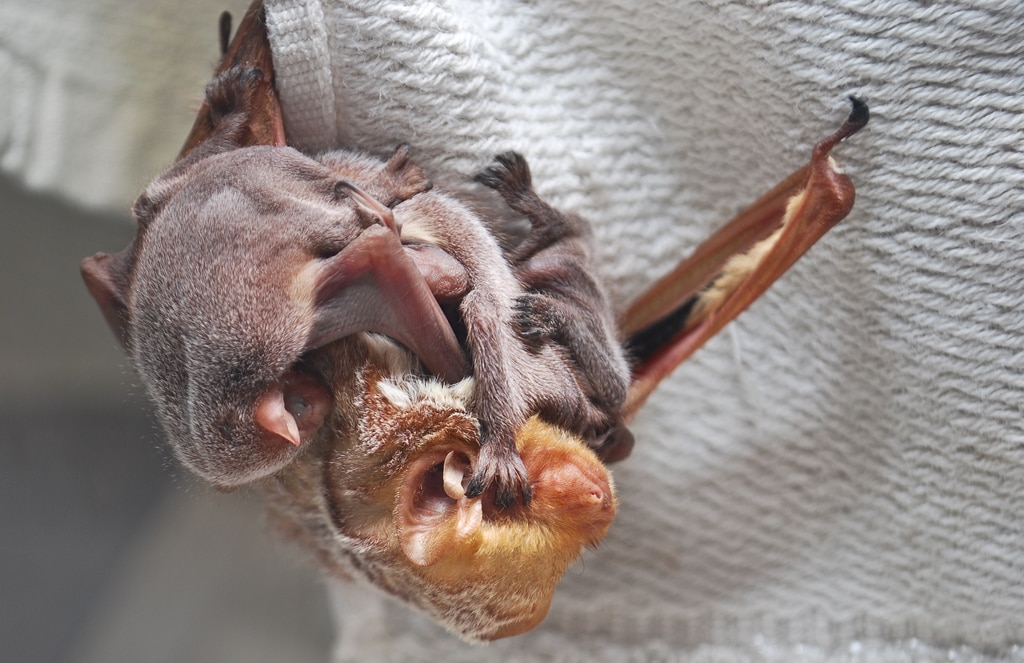
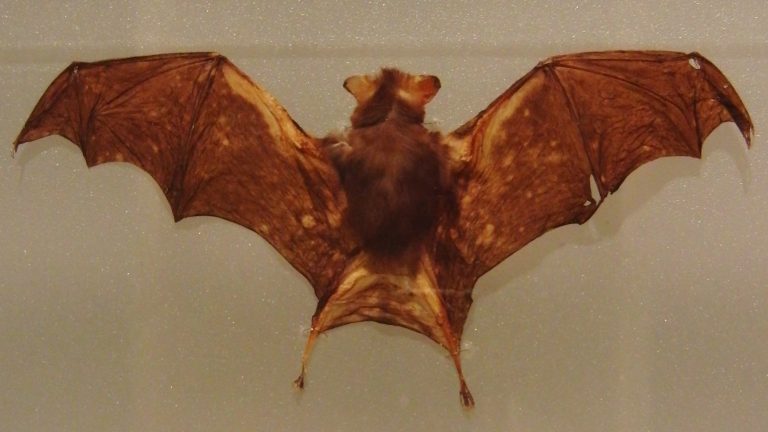
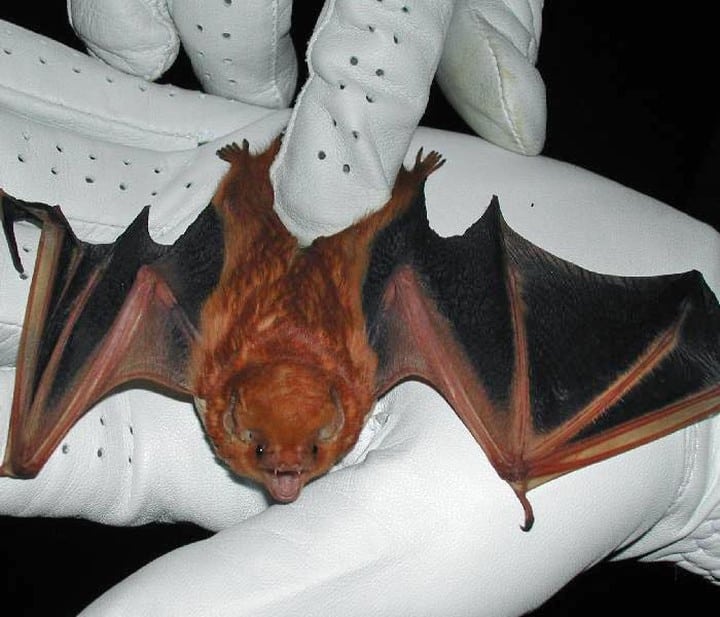
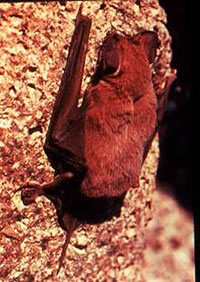
Lasiurus Borealis, the Eastern Red Bat, is just about medium in size and, as the name implies, has a distinct red color (see picture). It has short ears that are broad, rounded at the tips, and slightly furry. It is very difficult to mistake the Eastern Red Bat with any other of its bat brethren. This bat looks a little frosted, due to white tips on its reddish fur at least in the females. The majority of the males in this species do not have white tips on their fur. As such, they tend to look much more red than the females. Their average length is one hundred and eight millimeters and in general they weigh anywhere between ten and fifteen grams.
Eastern red bat Quick Facts
| Common name | Eastern red bat |
| Scientific name | Lasiurus borealis |
| Kingdom | Animalia |
| Phylum | Chordata |
| Class | Mammalia |
| Order | Chiroptera |
| Family | Vespertilionidae |
| Genus | Lasiurus |
| Conservation status | Least Concern |
| Type | Mammal (bat) |
| Diet | Insectivore: moths, beetles, leafhoppers, winged ants |
| Habitat | Forests; roosts in trees and Spanish moss |
| Native range | USA and southern Canada; winters in the south |
| Size | About 10.8 cm long |
| Weight | 10-15 g |
| Colours | Reddish fur; females have white tips |
Eastern Red Bat Habitat and Behavior
Eastern Red Bats prefer to dwell in the forests and, for the most part, they are creatures that enjoy solitude. They are a primarily solitary species of bats. They are not the only solitary species, of course, but unlike most other species in North American they will roost either out in the open or up in trees. Although most bats enjoy the occasional cave or tunnel, the Eastern Red Bat usually do not even consider them as a possible roosting site. They greatly prefer trees, especially the foliage. Down south, they are not above going to roost in a lush hang of Spanish moss. Their love of this and tree foliage is due to the fact that, when concealed in a proper roost, a roosting Eastern Red Bat will look quite a lot like a red leaf.
Eastern Red Bat Migration
Like most other bats, the Eastern Red Bat migrates, going north in the spring and south in the fall. Typically, they like to spend the winters in the southern portion of the United States, as well as locations south of the border, like Bermuda, Mexico, and the Antilles.
How Eastern Red Bats Feed
When they feed, they like to go out during the early evening hours. They hunt near to the ground and prefer to do so in orchards and shaded groves. They tend to be territorial in their feeding patterns. Their favorite prey consists of insects that fly at night, namely winged ants, moths, planthoppers and leafhoppers, and any number of different beetles, such as scarabs, ground beetles, and assassin beetles.
Eastern Red Bat Breeding and Babies
The Eastern Red Bat breeds in a number of different locations. Some of the baby bats are born way down south in the United States, such as Texas, while others are actually born way up in the southern portions of Canada. The babies are usually born in the late spring or early summer: May, June, or July. The Eastern Red Bat differs from other bats in how many babies they produce at one time as well. A lot of bats can only carry one to two embryos, but these bats can carry anywhere up to four. Typically, the females carry three on the average.
Eastern red bat FAQs
What do eastern red bats eat?
Eastern red bats eat night-flying insects. They like moths, winged ants, leafhoppers, planthoppers and many beetles, and they hunt near the ground in orchards and shady groves.
Where do eastern red bats live?
They live in forests and usually roost alone in trees, often hanging in the leaves or in Spanish moss. Hidden there, a red bat looks a lot like a red leaf.
Do eastern red bats migrate?
Yes. They travel north in spring and south in autumn, and spend winter in the southern United States and places further south such as Mexico.
How many babies do eastern red bats have?
Eastern red bats can have up to four pups at a time, which is more than many bats. Three is typical. The babies are born in May, June or July.
Why are eastern red bats red?
They have reddish fur. Females have white tips that make them look a little frosted, while most males lack the tips and look redder.

Randi Jones is the owner and founder of the Nature Gift Store, an online retailer specializing in nature-themed gifts, educational science projects, live animal nature kits and real butterfly artwork. A biology graduate who fell in love with insects, she founded the company in 2001 to make active learning about nature fun, accessible and engaging for children and adults. Her store offers real butterfly frames, home and garden decor and educational live animal kits, including ant farms, worm farms, tadpoles, ladybugs and hermit crabs, and she runs a bug museum in Washington featuring live animals like Eddie the Iguana alongside other reptiles and insects.