Mustard

Scientific Classification
Mustard, originating from the seeds of the mustard plant, is used for seasoning food. There are white or yellow mustards (Sinapis alba), brown or Indian mustards (Brassica Juncea), and black mustards (Brassica Nigra). Mustard seeds in the form of whole, ground, bruised, or cracked, are blended with either salt, water, lemon juice, or even other liquids, and, at times mixed with other flavors and spices, and made into a paste or rather sauce in different colors ranging from brilliant yellow to deep brown. This tastes either spicy or sweet.
History
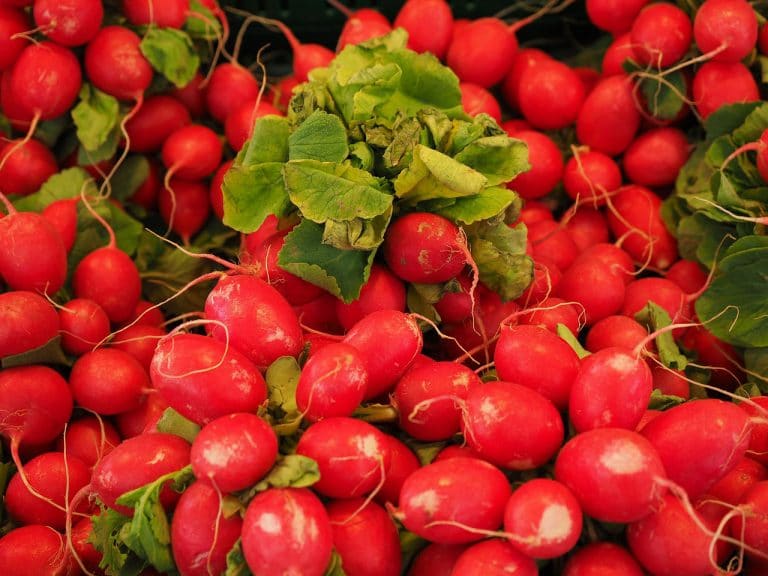
Hopf and Zohary note that, although certain types of mustard plants were long-established crops in Roman and Hellenistic times, archaeological records of these crops are scarce. Mustard found in the wild and their kind, the turnip and radish are found in Europe and west Asia. Making them useful in food items began in these places. Hopf and Zohary concluded that ideas about where these plants were first used rest mainly on linguistic evidence.
Anatomy
The color of the mustard plant is colored brilliant yellow, which gradually fades. Its stems are 1/4th to 1/2. Thick, parted four ways in racemes, that are elongated. Immediately thereafter, the four sided narrow pods appear vertically around ½ an inch in length cling to the stem. The lobes of its leaves are segmented in various forms having fine segregations; the lobes at the end are bigger in size than the ones that are branched into two or four at the sides.
Habitat
Other than the Northeastern regions, the mustard plant grows all over Europe. It also grows in the Northern regions of Africa, Asia Minor and Southern Siberia. It grows naturally in South and North America. In England, Italy, and Holland, Germany and in other places, it is cultivated in large scale, particularly for the purpose of its seeds. It is partially used as oil and partially as a condiment. In the East of India, this oil is the main cooking medium.
Soil for planting
In rich and moist soils mustard leaves are tender and they grow quickly. Sunlight is still appreciated, since they produce mainly leaves rather than fruits they are more adjustable to the shady environment when compared to the fruiting vegetables such as tomato. Make the soil healthy by adding compost in a thickness of 3 6 inches above the portion you wish to plant your mustard. Further, use a tilling fork, either uplift the bed or upset the soil onto the ground. If you intend to plant your mustard seeds in a pot make use of a good quality potting mix. Many a times we think it is early when we plant the mustard seed; however it is rewarding doing so. When you intend to harvest in the fall, plant your mustard 4 to 6 weeks prior to the predicted frost. While harvesting in spring, it is necessary to begin planting 4 weeks before the end of the frost date and proceed planting after sometime.
Water
You need to water your mustard plants at the rate of two inches per week. Generally, when the weather is cool, you need a sufficient supply of rainfall, but in case you fail to get it, it is necessary that you provide extra watering.
Temperature and Humidity
Mustard flourishes when the climate is cool and in the periods when the growth is short. Seedlings adjust to mild frost and the temperature is reduced to 4.40C (400F). However, the plant dies in acute frost.
Care
In the cultivation of mustard, weeds play a vital role, bringing great loss to the mustard cultivation, since they outgrow the mustard seedling. At this stage, eradicating the weeds becomes complicated, once they are set. Planting the seedlings to the correct depth is the ideal way of getting rid of the weeds. When the seeds are planted in shallow soil, they germinate faster, and permit the growth of a homogeneous plant.
Pests and Disease
The common issues faced by the mustard plants are cabbage worms and aphids. You can use organic pesticides for other greens and Mustard plants. The mustard plants are subjected to the effects of mildew. In order to restrict the spread of the disease, encourage a healthy and quick growing plant, so much so that they are less prone to diseases.
Uses
In certain countries, mustard shoots and leaves are edible, just like any other vegetable. The mustard seed is included in dressing and seasoning. It is possible to grow mustard seeds in rotation along with other vegetables. Despite this the earlier Greeks understood the optimal use of this plant as a medicine and the characteristics of its detection were given to Asclepius, the demigod of healing and medicine.
Mustard FAQs
What is mustard made from?
Mustard is made from the seeds of the mustard plant. The seeds can be whole, ground or cracked, and are mixed with salt, water, lemon juice or other liquids to make a paste or sauce.
What kinds of mustard plants are there?
The article names yellow or white mustards, brown mustards, Indian mustard (Brassica juncea) and black mustard (B. nigra).
Where does mustard grow?
Mustard grows across Europe, North Africa, Asia Minor and southern Siberia. It is grown in large amounts in England, Italy, Holland and Germany for its seeds.
Can you eat mustard leaves?
Yes. In some countries the shoots and leaves are eaten like any other vegetable, and the seeds are used in dressings and seasonings.
How do you grow mustard?
Mustard likes rich, moist soil and cool weather. Give it about two inches of water a week and keep weeds away, as they can outgrow the seedlings.

Randi Jones is the owner and founder of the Nature Gift Store, an online retailer specializing in nature-themed gifts, educational science projects, live animal nature kits and real butterfly artwork. A biology graduate who fell in love with insects, she founded the company in 2001 to make active learning about nature fun, accessible and engaging for children and adults. Her store offers real butterfly frames, home and garden decor and educational live animal kits, including ant farms, worm farms, tadpoles, ladybugs and hermit crabs, and she runs a bug museum in Washington featuring live animals like Eddie the Iguana alongside other reptiles and insects.