Marigold Calendula
Scientific Classification
| Kingdom: | Plantae |
| (unranked): | Angiosperms |
| (unranked): | Eudicots |
| (unranked): | Asterids |
| Order: | Asterales |
| Family: | Asteraceae |
| Tribe: | Calenduleae |
| Genus: | Calendula |
| Species: | C. Officinalis |
| Binomial Name: | Calendula |
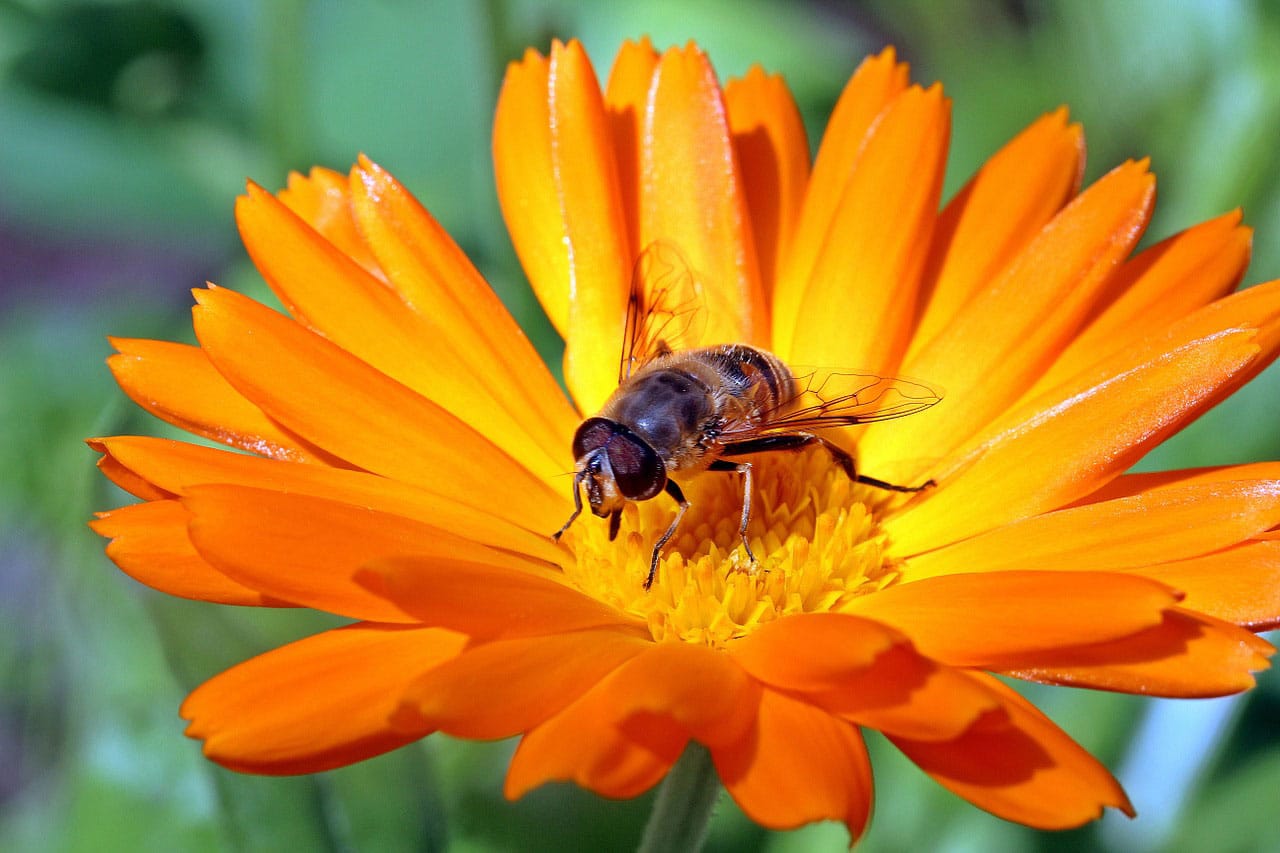
Common Marigold, usually known as Calendula or pot marigold (US) is a herbaceous annual or perennial plant of the Asteraceae family. This genus has around 15 to 20 species which are known as different types of marigolds like Desert Marigolds, Corn Marigolds, and Marsh Marigolds. They are indigenous to Western Europe, Macaronesia, the Mediterranean, and southwestern Asia.
History
Pot marigold was used as an ornamental plant for a long time till its medicinal values were discovered. It was grown in European gardens from 12th century itself. Its flowers were used as a drug to treat stomach ache and intestine diseases. It was also grown by Indians, Arabs, Egyptians and Greeks for medicinal purposes in the 12th century. In ancient Greece, the flower petals were used for decoration purpose. The name Calendula was derived from the Latin word calendae.
Anatomy
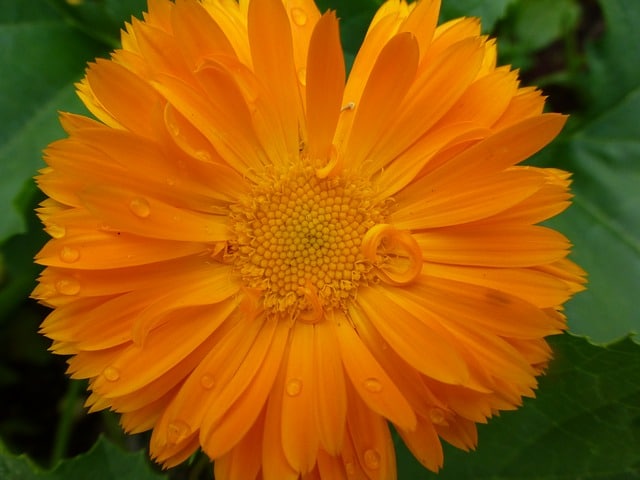
The Calendula is an aromatic and a short-lived herb. It is a perennial herbaceous plant that grows up to 80 cm height and has an erect stem. Its leaves grow about 5 to 17 cm long and are oblong-lanceolate. It is hairy on both sides with margins that are occasionally or entirely waved. The flora is yellow in color and has a thick capitalism with a diameter about 4 to 7 cm which is surrounded by hairy bracts.
Habitat
Marigold is indigenous to specific parts of Europe. But now it is very commonly found as an ornamental herb in all zones, especially temperate zone. It thrives well in sunny locations and in well drained soil.
Soil
Experts say, it is very simple to grow a pot marigold. It will thrive in any soil but prefers a rich and moist soil. The seeds should be sown at a gap of 12 to 15 inches and 1/4th inches deep into the soil. The soil should have a pH level of 5.5 to 7.
Planting
If planning to grow indoors, the seeds should be sown ¼ inch deep and in the early spring. In hot areas, it can be sown in autumn. Transplanting should be done only after 8 weeks. Germination should be done at dark and it will take about one or two weeks.
Water
Calendula doesnt require regular watering, except in dry climates. Water should not be sprinkled with the flowers and the leaves, to avoid mildew and water logging. Even if water is sprinkled on the leaves, it should be done early in the morning, so that the leaves will get time to dry.
Temperature and Humidity
Calendula always prefers cool temperature and stops blooming in extreme heat. The plants will survive temperatures of up to 25°F. Seeds can be sown when the temperature of soil reaches 60°F. Seeds can also be sown in a bowl and preserved at10 °C temperature and after the seeds germinate, it should be kept in a temperature of 7°C. .
Care
Young plants should be trimmed to make it bushier. Deadhead should be done to maintain prolonged blooming. The blooms should also be frequently cut to encourage more budding. Water the surrounding areas along with the plant and keep the soil moist. Provide occasional manure.
Pests and Disease
Pests like aphids, snails, slugs, and white flies can harm this herb. Other problems like fungal leaf, white smut, gray mold, cucumber mosaic virus and aster yellow can also damage the herb.
Diseases:
Diseases like rust, powdery mildew, fungal leaf blights and botrytis can harm this plant.
Uses
The Calendula has many uses; medicinal, culinary and ornamental. The flowers are used for ornamental purpose and to make yellow dye out of it. The petals can add color and flavor to salads and cheese. The flower head is bitter and mainly used in making medicines. The Greeks and Romans considered golden Calendula as very sacred and used it during ceremonies and rituals by making garlands and crowns.
Having discovered a fondness for insects while pursuing her degree in Biology, Randi Jones was quite bugged to know that people usually dismissed these little creatures as “creepy-crawlies”.