Flax Seed Oil
Scientific Classification
| Kingdom: | Plantae |
| Order: | Malpighiales |
| Family: | Linaceae |
| Genus: | Linum |
| Species: | L. Usitattisimum |
The flax seed oil herb is also known as Linum Usitattisimum. It is a fiber and food crop. This crop is grown in the cooler regions of the world. From the skin of the stem or from the bark, flax fibers are extracted. This flax fiber is lustrous, flexible, and soft. This plant can grow up to 3 to 4 feet in height. The seed of flax produces vegetable oil, which is known as linseed oil or flaxseed oil. It is the oldest oil and also commercial oil. It is obtained by expeller pressing and sometimes by solvent extraction. It is edible oil. The flax seed oil solvent processed has been used in varnishing and drying oil in painting for many centuries. The flaxseed oil is obtained from the seeds of the flax plant.
History
In the earlier times, wild flax was used by humans to make a textile. It was cultivated in Egypt in ancient times. Also in Egypt, the walls of temples had paintings of flowering flax and the mummies were also buried in linen which made of flax. Priests of Egypt wore only linen, which because linen fiber is made of flax and it was considered as a symbol of purity. In India and China it was cultivated from 5000 years ago. In the European middle ages the main center of linen industry was Flanders The colonists introduced it in North America. Due to easy availability of other fibers, this fiber lost its importance as a commercial crop.
Anatomy
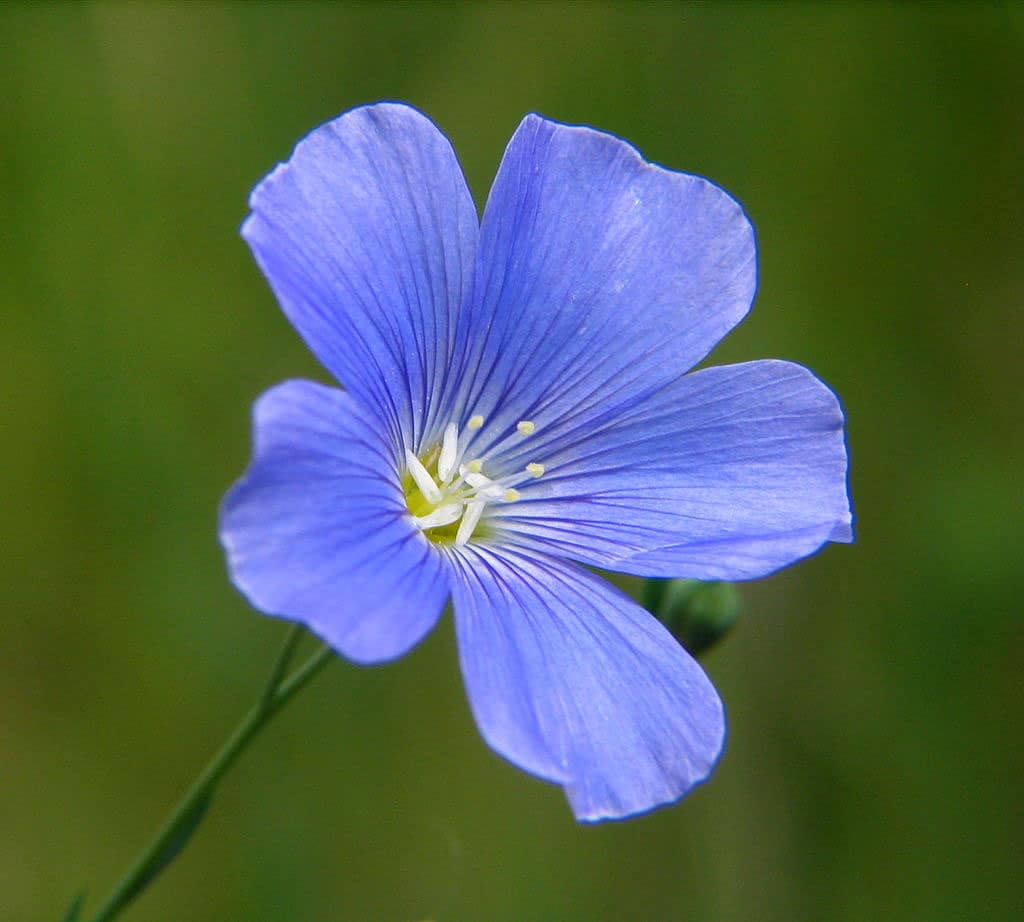
The leaves of flax herb are green in color and are 20 to 40 mm tall and 3 meters broad. The flowers are pale blue in color and they have five petals. In diameter, these leaves are 15 to 25 meters. Its fruit is dry and round and has capsules of 5 to 9 mm in diameter. It contains many glossy and brown seeds which are 4 to 7 mm long and are shaped like an apple. Seeds of flax are of two varieties- Yellow or Golden and brown. Nutritional characteristics of both kinds are similar and have an equal number of omega-3 and fatty acids. Yellow flax is called Solin and it has a different oil profile and may show very low levels of fatty acids and omega-3. .
Habitat
The leaves of flax herb are green in color and are 20 to 40 mm tall and 3 meters broad. The flowers are pale blue in color and they have five petals. In diameter, these leaves are 15 to 25 meters. Its fruit is dry and round and has capsules of 5 to 9 mm in diameter. It contains many glossy and brown seeds which are 4 to 7 mm long and are shaped like an apple. Seeds of flax are of two varieties- Yellow or Golden and brown. Nutritional characteristics of both kinds are similar and have an equal number of omega-3 and fatty acids. Yellow flax is called Solin and it has a different oil profile and may show very low levels of fatty acids and omega-3.
Soil
For flax plants, the soil is the most important factor. As compared to the alluvial soil the most suitable soil is deep loamy soil, which contains rich amounts of organic matter. In can berry bogs, it is found growing above the waterline. It also requires some pesticides or fertilizers. Clay soil is not suitable for them. It grows well in deep moist soil which is rich in sand and silt. Highly fertile soil is not ideal for them.
Temperature and Humidity
After sowing the seeds the flax plant will reach 10 to 15 cm in height within eight weeks. Under favorable conditions the plant will reach 70 to 80 cm in 15 days. It is self pollinating.
Planting
After sowing the seeds the flax plant will reach 10 to 15 cm in height within eight weeks. Under favorable conditions the plant will reach 70 to 80 cm in 15 days. It is self pollinating.
Watering
The Flax plant requires 15 to 20 cm rainfall. Watering is necessary. But under-watering is better than over watering of this plant.
Harvest
Flax plant is harvested for flaxseed oil and for the production of fibers. They are harvested after the 100 days of maturity. Or it is harvested one month after flowers are in bloom and 2 weeks after the seed capsules are formed. The seeds are not useful if the plants are still green. At this time the fiber is in an underdeveloped condition. When the base of the plant begins to turn yellow in color, then this is the ideal time to harvest. There are two methods of harvesting the flax plant. First method- harvesting is done my mechanical equipment.
Second method-in this method harvesting is done manually.
Care
Flax plant requires less care once it established in the correct location. Dry conditions make flax plant woody and short. Heavy storm and wind are not suitable for it. So at this condition care is necessary.
Pest and Disease
On the flax plant many fungi have been found that affect the plant. Its serious disease is flax Wilt. Seedling blights, plasma and several rusts are also a serious disease of this plant. Insects are not a serious problem for them. Aster Yellow is another disease which can turn the top parts of the plant into yellow color. Flowers are also converted into yellow color. Diseased flowers cannot produce seeds. Rust is the most dangerous disease for them. Powdery pustules (Microscopic Spores) or bright orange color occurs on the leaves of the plant. It can damage the plant.
Uses
Flaxseed oil is used in the varnish and paints as a drying oil. Flax is used as a nutritional supplement. It is grown for its oil. And in many wood finishing products it is used as an ingredient. In the gardens this plant is also grown as an ornamental plant. Its fibers are used in the making of linen. These fibers are obtained from the stem of the plant. The fibers are straight and smooth. Flaxseed oil is used in the treatment of heart disease. It helps in the reducing of disease of heart. This oil is also helpful in hormone related problems, skin disease and inflammatory disorders. It is also used in the treatment of high blood pressure and chest pain. It reduces the inflammation of the kidneys and joints. This oil reduces severe and sudden pain of joints and swelling. The Lignans (polyphenolic substances) of flaxseed oil are used in the treatment of skin cancer, prostate and colon.
Having discovered a fondness for insects while pursuing her degree in Biology, Randi Jones was quite bugged to know that people usually dismissed these little creatures as “creepy-crawlies”.