Summer Flowers: Passion Flowers

Passion flowers are climbing plants in the genus Passiflora, famous for their amazing, complicated flowers. There are more than 500 species, and most of them are vines that climb using curly tendrils. Some kinds, like the purple passion fruit, also give us tasty fruit.
Scientific Classification & Quick Facts
| Common name | Passion flower |
| Scientific name | Passiflora |
| Kingdom | Plantae |
| Phylum | Tracheophyta |
| Class | Magnoliopsida |
| Order | Malpighiales |
| Family | Passifloraceae |
| Type | Climbing vines, about 500 species |
| Habitat | Rich, moist, well-drained soil; sun or part shade |
| Colours | Purple, white, pink, red and blue |
| Flowering season | Mid to late summer |
| Edible parts | Fruits of some kinds |
| Special feature | Only large bees can pollinate the flower |

Photo by: Bernard Loison
What Are Passion Flowers?
Passion flowers belong to the Passifloraceae family. Most are evergreen or semi-evergreen climbers, but a few are shrubs, small trees or herbs. They are native mainly to the warm parts of the Americas, with some species in Asia and Australia.
Gardeners love them because they grow quickly and produce eye-catching blooms all summer. In mild parts of the UK, the hardy blue passion flower (Passiflora caerulea) can grow outdoors against a sunny wall. In colder places, more tender kinds are grown in greenhouses or conservatories.
The name comes from Spanish missionaries in South America, who saw parts of the flower as symbols from the Christian story of the Passion.
What They Look Like
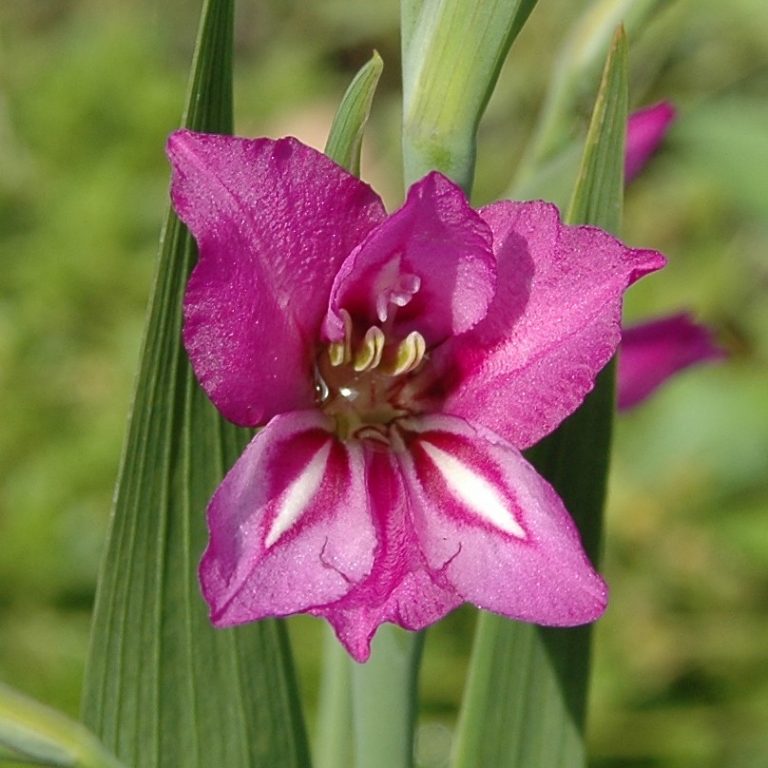
A passion flower looks almost like it was built by an engineer. It has five to ten petals and petal-like sepals arranged in a flat or bent-back circle. On top of these sits a ring of thin, colorful threads called the corona, often banded in purple, white or blue.
In the center, a stalk lifts up the stamens (which carry pollen) and the ovary. Above them are three stigmas that catch pollen. This shape is perfect for large bees, like carpenter bees and bumblebees, which brush against the pollen as they feed on nectar. Some species are also pollinated by hummingbirds or even bats.
Flowers can be purple, white, pink, red or blue. The leaves grow one at a time along the stem (alternately) and can be simple or deeply lobed, depending on the species.
Passion Fruit
Many passion flowers make fruit, but the best known is the passion fruit from Passiflora edulis. Its round fruit has a tough skin and is filled with juicy, tangy pulp and crunchy black seeds. Not every passion flower fruit is good to eat, so only eat fruit you know is safe. Some species, like maypop (Passiflora incarnata), have also been traditionally used as calming herbal remedies, but always ask a doctor before using any plant as medicine.
Growing Passion Flowers at Home

Photo by: Tomas Castelazo
Sun and Soil
Passion flowers do best in rich, moist but well-drained soil with a pH close to neutral (about 6.1 to 7.5). They don’t like to dry out completely, but they also hate waterlogged roots.
Give them full sun or light shade, with at least four hours of direct sunlight a day. In very hot regions they appreciate some afternoon shade. In cooler places, a warm, sheltered wall facing south, southwest or west (in the Northern Hemisphere) is ideal, away from cold, drying winds.
Starting from Seed
Passion flower seeds can be slow and patchy to sprout. Soaking them in warm water for a day before sowing can help. Sow them in damp seed-starting mix and cover them lightly with soil.
Keep the pot warm, ideally around 75 to 85°F (24 to 29°C). A heat mat works well. Covering the pot with a clear plastic bag keeps the moisture in. Be patient: seeds can take anywhere from a couple of weeks to a few months to come up.
Planting Out
Once seedlings have several true leaves, move them to bright light but out of harsh direct sun at first. Keep the soil moist and indoor temperatures above about 50°F (10°C). When the young plants are big enough to handle and all danger of frost has passed, plant them outside next to a fence, trellis or wall wires they can climb.
Watering
Water regularly during the growing season, especially plants in containers, so they never dry out completely. In winter, the plants need much less water. Let the top of the soil dry a little between waterings.
When Do They Bloom?
Most passion flowers bloom from early or mid summer until early fall. Each flower usually lasts only about a day, but a healthy vine keeps producing new ones for weeks.
Care After Blooming

Photo by: Kurt Stüber
Passion flowers are fairly low-maintenance. You don’t need to remove old flowers, because they drop off by themselves.
Pruning isn’t required, but it keeps the vine tidy and encourages bushier growth. The best time to prune is late winter or early spring. Remove dead, weak or tangled stems and shorten side shoots.
In colder areas, help borderline-hardy plants survive the winter by stopping fertilizer at the end of summer, so the plant doesn’t make soft new growth. Once the soil cools in fall, spread a thick layer of mulch over the roots. Even if frost kills the top growth, the roots often send up new shoots in spring.
Using Passion Flowers Indoors
Because each bloom lasts only about a day, passion flowers aren’t long-lasting cut flowers. They are still lovely for a special occasion: float a freshly opened flower in a shallow bowl of water to enjoy its amazing shape up close.
Fun Facts
- Passion flower vines are the food plant for the caterpillars of several colorful butterflies, such as the gulf fritillary and zebra longwing.
- Some species have tiny nectar glands on their leaf stalks that attract ants, which help protect the plant from plant-eating insects.
- Paraguay’s national flower is a passion flower.
Passion flower FAQs
How many kinds of passion flower are there?
The Passiflora genus has about 500 species. Apart from a few shrubs and herbs, they are all vines.
Can you eat passion flower fruit?
Some kinds of passion flower produce edible fruits, but not all of them do.
How does a passion flower climb?
Passion flowers climb by clinging with tendrils. They like to grow against a warm, sunny wall facing west or south.
Who pollinates passion flowers?
The flower has an unusual shape, so only a large bee can pollinate it well. The stigma curls down and back to help with pollination.
When do passion flowers bloom?
Passion flowers normally bloom in the middle or end of summer. They need at least four hours of sun a day.

Randi Jones is the owner and founder of the Nature Gift Store, an online retailer specializing in nature-themed gifts, educational science projects, live animal nature kits and real butterfly artwork. A biology graduate who fell in love with insects, she founded the company in 2001 to make active learning about nature fun, accessible and engaging for children and adults. Her store offers real butterfly frames, home and garden decor and educational live animal kits, including ant farms, worm farms, tadpoles, ladybugs and hermit crabs, and she runs a bug museum in Washington featuring live animals like Eddie the Iguana alongside other reptiles and insects.