Spring Flowers: Lotus

Scientific Classification & Quick Facts
| Common name | Sacred lotus |
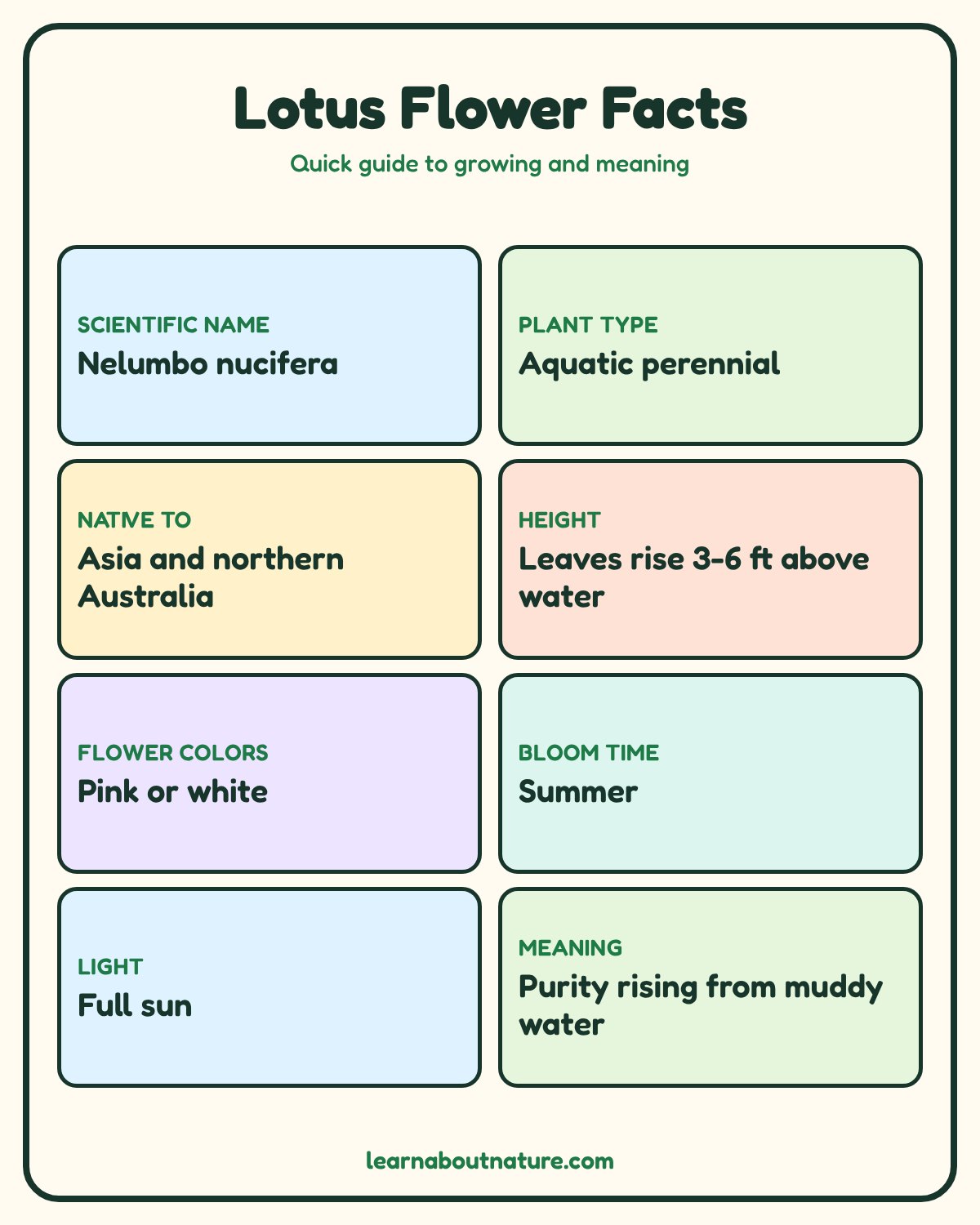
| Scientific name | Nelumbo nucifera |
| Kingdom | Plantae |
| Phylum | Tracheophyta |
| Class | Magnoliopsida |
| Order | Proteales |
| Family | Nelumbonaceae |
| Genus | Nelumbo |
| Type | Aquatic perennial |
| Habitat | Ponds and rivers, roots in the mud |
| Native range | Australia and South Asia |
| Colours | White or pink |
| Special feature | Can control its own temperature, like animals |

The lotus is an aquatic perennial flower. At times we mistake it for the water-lily, The structure of the lotus is perceptibly different. The colors of the lotus are either white or pink. On the contrary, the lily appears in several colors. The roots stay fixed in the river or pond soil and the leaves float on the surface. In the reports given by certain researchers, the lotus can control its own temperature, similar to animals and human beings.
There is normally a fallacy considering lotus as a water-lily (Nymphaea) that is a totally different plant. When you look into the middle of the flower, there is a distinct round seed pod in the flower Nelumbo nucifera which is absent in the water lily.
Growing lotus flower plants in the interior water garden gives you a lot of pleasure.
Anatomy
The lotus plant, native to Australia and South Asia, is an aquatic perennial; it usually grows in water gardens. The roots of the plant are steadfastly rooted in the mud and the flowers fasten themselves to the lengthy stems emerging from the roots. The flower of the lotus is always seen above the surface of the water and the leaves occasionally. The attractive and sweet-scented lotus flower opens in the morning and closes later in the day, and each flower lasts several days before its petals drop.
GROWING THE PLANT AT HOME

Preparation for Planting
Take a pot of diameter 18 inches and depth 8 inches, ensure that it has no holes for drainage.
Add to your pot heavy loam and pond plant potting mix. Then add 3 inches of soil to the pot.
Ensure that your tuber is whitish to gray in color and firm, keep the tuber over the soil and put 1 inch soil over it.
Fill the excess space with water to a depth of 3 – 4 inches.
When the leaves start showing out, add a water garden fertilizer tablet round the plant in the water and repeat this process once in 3 weeks.
Planting
When you are initiating planting, in the beginning, keep the pot slightly under the surface and slowly keep lowering it as and when the lotus grows. Once the plant settles, let the pot remain at the required depth.
While planting the aquatic plants, consider the depth because if it is too high the hardy plants get frozen in winter and if too low the tender plants will not receive sufficient sunlight. As for water lilies they favor a maximum of 18 inches and a minimum of 4 inches below the surface.
During spring add more garden fertilizer every fortnight.
In order to retain the health of your plants discard the leaves once they are yellow or dead.
Every alternate year, re-pot your plant by removing all the dead tubers and add fresh soil around the good tubers.
After Bloom Care
Healthy maintenance schedule: discard the faded yellow and withered leaves to keep the health of your plant.
As Cut Flowers

Photo by: H. Zell
Unlike the traditional flowers such as carnations, tulips, roses and lilies, lotus is not popular as a cut flower. You can use these flowers for flower arrangements because, immediately you cut them, the petals drop. Many people use the buds for their floral displays, sometimes going up to even hundreds for a single arrangement.
Sacred lotus FAQs
What does a lotus look like?
A lotus has white or pink flowers held on long stems above the water, and round leaves that float on the surface. In the middle of the flower is a round seed pod.
Is a lotus the same as a water lily?
No. They are different plants. The lotus (Nelumbo nucifera) has a round seed pod in the middle of its flower, and the water lily (Nymphaea) does not.
Where does the lotus grow?
The lotus is a water plant native to Australia and South Asia. Its roots are fixed in the mud of a river or pond, and the leaves float on top.
Can a lotus control its own temperature?
Yes. Some researchers report that the lotus can regulate its own temperature, similar to animals and people.
Are lotus flowers good for vases?
Not really. The petals drop soon after the flower is cut. Florists sometimes use lotus buds instead.

Randi Jones is the owner and founder of the Nature Gift Store, an online retailer specializing in nature-themed gifts, educational science projects, live animal nature kits and real butterfly artwork. A biology graduate who fell in love with insects, she founded the company in 2001 to make active learning about nature fun, accessible and engaging for children and adults. Her store offers real butterfly frames, home and garden decor and educational live animal kits, including ant farms, worm farms, tadpoles, ladybugs and hermit crabs, and she runs a bug museum in Washington featuring live animals like Eddie the Iguana alongside other reptiles and insects. Randi wrote most of the guides on this site. They first appeared on her long-running nature sites, including Monarch-Butterfly.com, Ladybug-Life-Cycle.com, Frog-Life-Cycle.com, Dragonfly-Site.com and Butterfly Pictures, which have now been brought together here at Learn About Nature.