Mastigophora
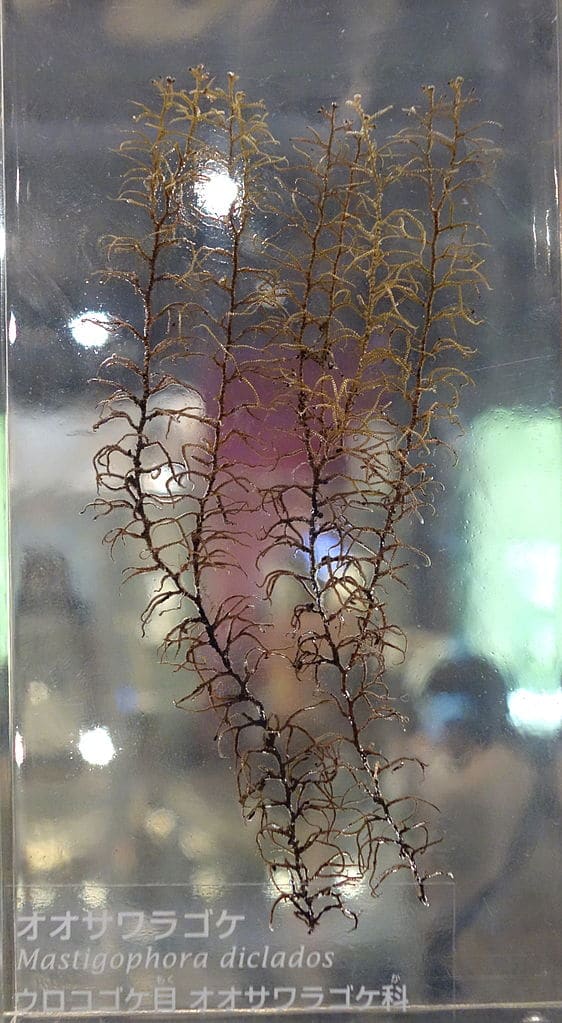
The Mastigophora are known as Flagellates and are a division Protozoans with a single cell. It is an organism which is characterized by the presence a single or multiple organelles known as flagella.
Flagellate Quick Facts
| Common name | Flagellate |
| Scientific name | Mastigophora |
| Type | Single-celled protozoa with flagella |
| Diet | Photosynthesis, eating food, or feeding on a host |
| Habitat | Fresh water, sea, and inside other organisms |
| Special feature | Whip-like flagella for swimming and feeding |
There are thousands of species of Mastigophora, depending on how the group is defined. In their life cycle, they possess one or many flagella (A Mastigophora hallmark) that help them for locomotion sensation and food capture. These species are well known for their characteristic self propulsion. They are primitive and simple protozoa and their body is usually covered with a thin pellicle (Thin Covering). With a single Endosome, usually one nucleus is present and mega nucleus is absent. They include primitive and minute protozoa.
Microtubules support Eukaryotic flagella, nine of their fused pairs surrounding two singlets at the center that originate from the flagellates’ basal body. These organisms use their flagella to propel the food to the mouth, also called the cytostome.
History
Flagellates were among the first microscopic living things ever seen. In the late 1600s, the Dutch scientist Antonie van Leeuwenhoek used his homemade microscopes to look at drops of water and described tiny moving creatures, including a flagellate now known as Giardia. Later scientists grouped these whip-tailed, single-celled organisms together as the Mastigophora. Today scientists know that flagellates are not all closely related, so the name Mastigophora is mostly found in older books.
Habitat
Mastigophora live in fresh water and in the sea, and some live in damp soil. Many are free-living and swim around on their own, but some are parasites that live inside other organisms. A few of these parasites can cause diseases in people and animals.
Locomotion
Unicellular flagellates like the Mastigophora, use their whip-like flagella to create locomotion. The fact that some of these species resort to amoeboid locomotion alludes to a similarity with the Sarcodina that use needle/ lobe-like protoplasmic extensions.
Classification of Mastigophora
The Mastigophora is classified into two subclasses- Phytomastigina and Zoomastigina. The Phytomastigina are plant-like flagellates that are regarded as unicellular algae, which have chromatophores that contain chlorophyll. They have a pigmented Eyespot. The Zoomastigina are saprozoic or holozoic flagellates. They don’t have Chromatophores and stigma.
Phytomastigina
The Phytomastigina have six orders.
- The Phytomastigina contain their first order as Dinoflagellata as it contains two flagella, one longitudinal and other transverse.
- Three of the orders have a gullet or groove from which the flagella grow. These are the Cryptomonadina, which usually have two flagella and store food as starch; the Euglenoidina, which have a complex contractile vacuole system; and the Chloromonadina, which store food as oil.
- The remaining two orders do not have a gullet or groove. The Volvocina are usually green, with cup-shaped chloroplasts and one or more pyrenoids, and they store food as starch. The Chrysomonadina are usually golden-yellow or brown and store food as oil and other substances instead of starch.
Zoomastigina
Zoomastigina are animal-like flagellates. Unlike the Phytomastigina, they have no chloroplasts, so they cannot make their own food and must take it in from their surroundings. Different kinds have anywhere from one to many flagella. Zoomastigina are usually divided into five orders.
- The first one is Rhizomastigina which have one or two flagella. Its body surface is permanently amoeboid. This order includes Mastigamoeba which is found in fresh water.
- The second one is Holomastigina which have numerous flagella. This order includes Multicilia which are spherical in shape and possess 40 to 50 flagella that are scattered on their whole body surface.
- The third order is Protomonadina which also have one or two flagella. An extra-nuclear division-center is not present in them. It includes Monas that has two unequal flagella.
- The fourth order is Polymastigina, which have several flagella. It includes Trichonympha, which lives in the guts of termites and helps them digest the wood they eat, so wood particles can often be seen inside its body.
- The last order is Opalina which have many flagella and is found in the rectum of frogs or toads.
Anatomy
Mastigophora have one or more whip-like organelles known as flagella. The position of these flagella is the key of their identification. In addition to flagella, some Mastigophora are capable to extend their cytoplasm (interior content) outwards in an arm like protrusion. These protrusions termed as Pseudopodia, are the temporary structures that are used to trap the food by the microorganisms.
Reproduction
The reproduction in Mastigophora is by equal longitudinal fission. The fission is either binary or repeated. The number of these fissions varies in the same species of Mastigophora. The binary fission is generally in those species which don’t have stout cuticle and are occurring in free-swimming stage and the repeated fission generally occurs in the cyst. The replication in this organism is by internal duplication of their content which is followed by the splitting of microbes to form two daughter cells. This process is called binary fission. In addition to the binary fission, some of these can reproduce by the process known as Syngamy, in which process Mastigophora reproduce sexually by the combining of genetic material from two Mastigophora.
Diseases
Most Mastigophora are harmless, but some are parasites that cause diseases in people and animals. These parasites depend on a host to complete their life cycle. One well-known example is Trypanosoma, which causes sleeping sickness and is spread by the bite of the tsetse fly. Another is Giardia lamblia, which can get into drinking water and cause an illness called giardiasis that affects the small intestine and gives people an upset stomach. Giardia forms tough, tiny cysts that can survive in water, which is one reason clean, safe drinking water is so important.
Behavior
Mastigophora are single-celled flagellates that use their flagella to swim. Some also beat their flagella to make a current that sweeps food toward them. Plant-like flagellates can make their own food using sunlight, while animal-like ones must eat other things. Most spend their lives swimming and feeding, and only a few kinds cause disease.
Some Examples of Mastigophora
The common example of Mastigophora is Euglena that has two flagella and they are present in the basal part of the body. Out of these two flagella, one is very small and the other one is long and easily visible in the light microscope. Euglena doesn’t have a cell wall but it has a pellicle (thin skin, membrane, cuticle or film), which is made up of protein layer. They are flexible and contractile.
The other example is Chilomonas. The one thing common in all Mastigophora is that they have flagella in them. These are very small organism and they are the source of food for the larger Protozoans. They are biflagellate that means they possess two flagella which helps them for locomotion and feeding.
The third example is Eudorina, a colonial flagellate. A colony is made of 16 to 64 round cells held together in a ball of jelly, and each cell has two flagella. The cells contain chloroplasts, so they can make their own food using sunlight.
Flagellate FAQs
What are Mastigophora?
Mastigophora, or flagellates, are single-celled protozoa that have one or more whip-like flagella. They use them to swim, sense things and catch food.
How many kinds of Mastigophora are there?
There are about 1,500 species.
Where do Mastigophora live?
They live in fresh water and in the sea. Some live inside other animals as parasites.
Can Mastigophora make you sick?
Some can. Trypanosomes cause sleeping sickness, and Giardia can contaminate drinking water and infect the gut.
What is an example of a Mastigophora?
Euglena is a common one. It has two flagella, one short and one long, and a flexible protein layer instead of a cell wall.
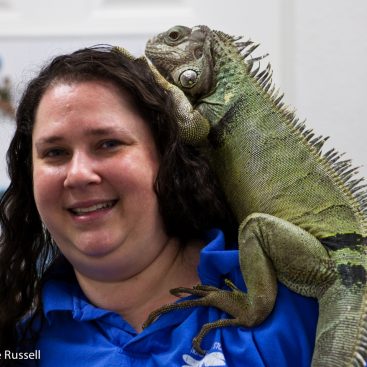
Randi Jones is the owner and founder of the Nature Gift Store, an online retailer specializing in nature-themed gifts, educational science projects, live animal nature kits and real butterfly artwork. A biology graduate who fell in love with insects, she founded the company in 2001 to make active learning about nature fun, accessible and engaging for children and adults. Her store offers real butterfly frames, home and garden decor and educational live animal kits, including ant farms, worm farms, tadpoles, ladybugs and hermit crabs, and she runs a bug museum in Washington featuring live animals like Eddie the Iguana alongside other reptiles and insects.