Cat Life Cycle: Stages From Kitten to Senior Cat
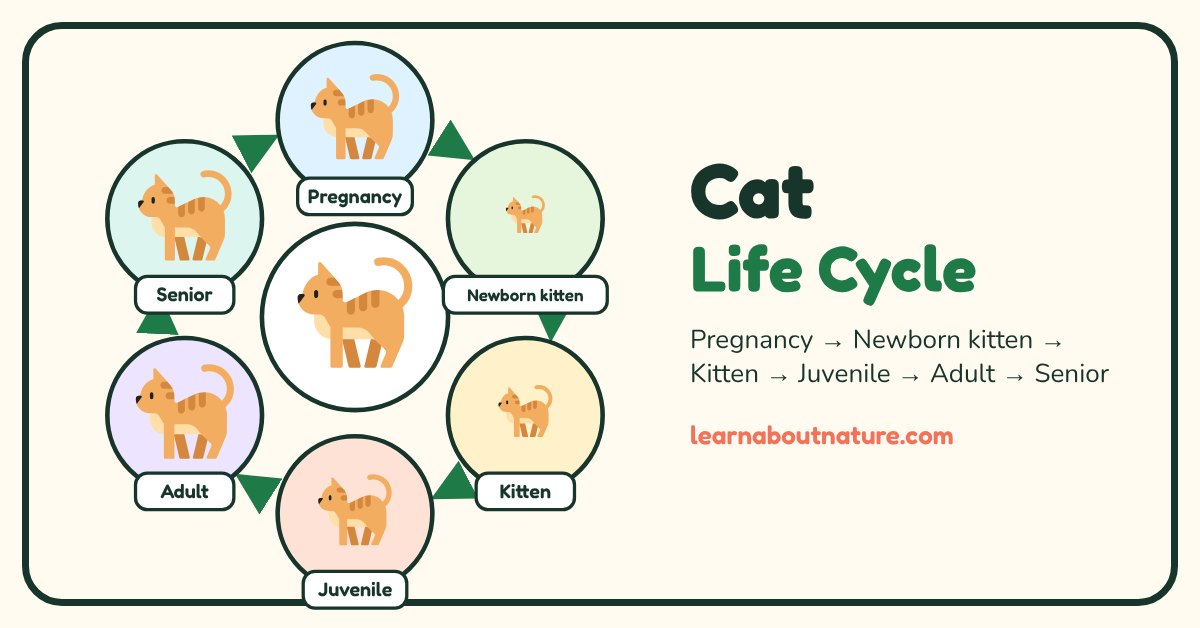
Quick answer: The cat life cycle has six stages: pregnancy, newborn kitten, kitten, juvenile, adult and senior. A mother cat is pregnant for about nine weeks and usually has around four kittens. Kittens open their eyes at about two weeks, eat solid food by about eight weeks, become adults at one year and seniors at about ten.
Every cat, from a tiny kitten to a sleepy old house cat, follows the same life cycle. The early weeks pass astonishingly quickly: a newborn kitten that cannot see or hear is running, pouncing and climbing curtains within about a month.
This page explains the cat life cycle for the domestic cat, the cat people keep as pets. The life stages used here follow the guidelines vets use, which divide a cat’s life into kitten, young adult, mature adult and senior stages.
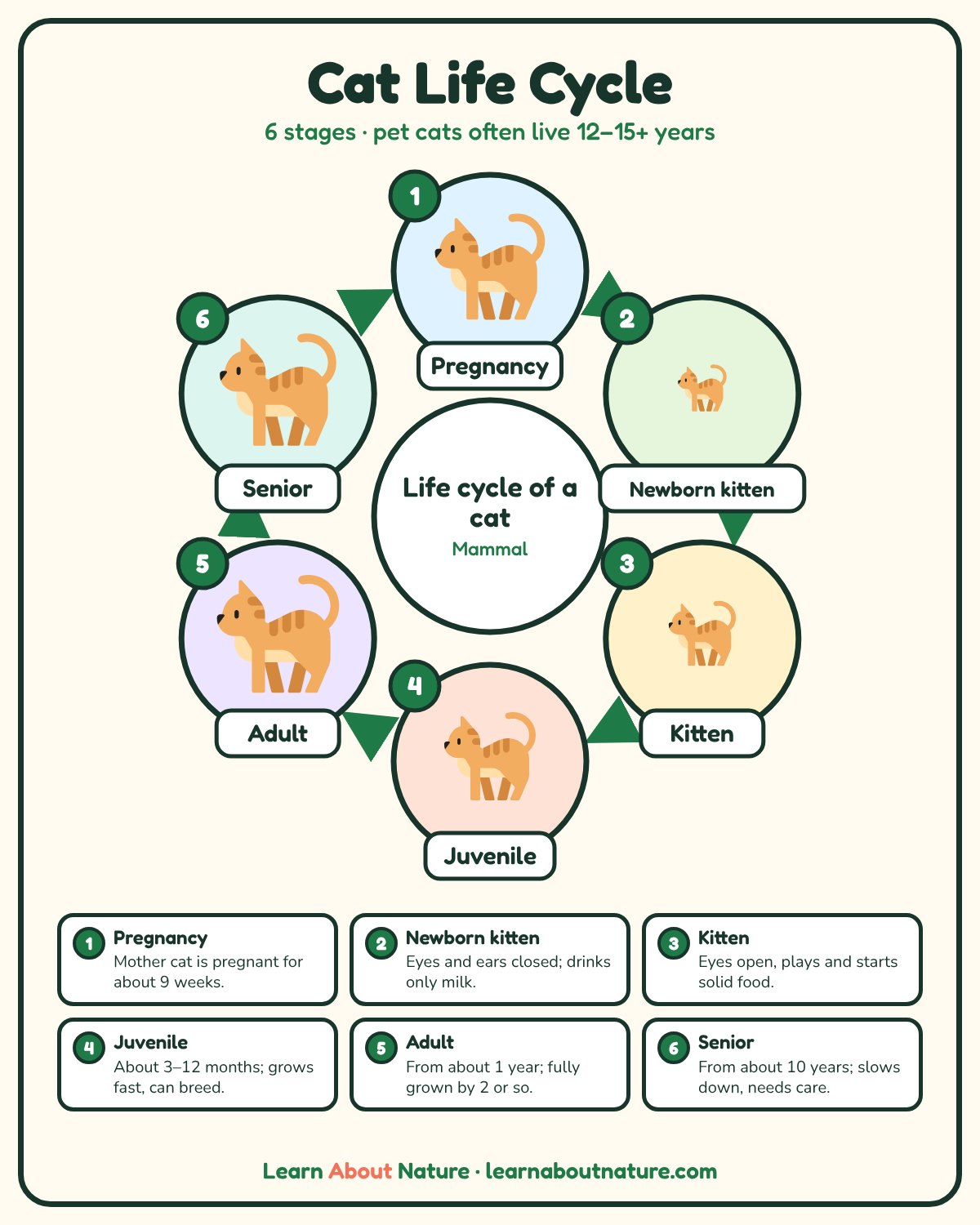
Teachers and students: you’re welcome to use this diagram in lessons and projects with credit to Learn About Nature.
Free printable: Download the Cat life cycle worksheet (PDF) – label the diagram, cut and sequence the stages, and match key words. Answer key included.
Cat Life Cycle Quick Facts
| Gestation | about 63–65 days (around 9 weeks) |
| Kittens per litter | usually about 4 |
| Eyes open | about 10–14 days |
| Weaning | starts about 4 weeks; mostly solid food by 5–8 weeks |
| Socialization period | about 2–7 weeks |
| Puberty | often before 6 months |
| Adult | from 1 year (young adult 1–6, mature adult 7–10) |
| Senior | from about 10 years |
| Average life expectancy | about 11.7 years (UK study); many live longer |
Heat and Mating
Female cats, called queens, come into heat in cycles, mostly during the longer days of spring and summer. A queen in heat may yowl loudly, roll on the floor and try hard to get outdoors. Male cats, called toms, can be drawn from far away by her scent and calls.
Cats are induced ovulators. That means a female releases eggs only after mating, which makes it very likely she will become pregnant. A queen can mate with more than one tom during a single heat, so kittens in the same litter can have different fathers.
Stage 1: Pregnancy
A cat is pregnant for about 63 to 65 days, or roughly nine weeks. As the birth gets closer, her belly grows, her nipples become pinker and larger, and she starts looking for a quiet, hidden spot, such as a closet, a box or a space under a bed.
A pregnant cat usually eats more as the weeks go by, and some become extra affectionate. A vet can confirm the pregnancy and give advice on caring for the mother and her coming litter.
A litter usually has about four kittens, though anything from one to more than six is possible. The kittens are born one at a time, and the mother licks each one clean and helps it breathe.
Stage 2: Newborn Kitten
For the first two weeks of life, a kitten is almost completely helpless. Its eyes and ears are sealed shut, and it cannot keep itself warm, so it snuggles against its mother and littermates. It finds the mother’s teats by smell and touch.
Kittens should start nursing within about half an hour to 40 minutes after birth. The first milk, called colostrum, carries antibodies that help protect them against infections. Kittens can purr from just a couple of days old.
Healthy kittens gain weight every day. By the end of their first week, many have roughly doubled their birth weight.
The mother cat does almost everything for her kittens in these early weeks. She feeds them, keeps them warm, washes them, and licks their bellies to help them pass waste. If she feels the nest is not safe, she may carry the kittens one by one by the scruff of the neck to a new hiding place.
Stage 3: Kitten (2 to 12 Weeks)
A kitten’s eyes open at around 10 to 14 days. All kittens have blue eyes at first, and their adult eye color starts to show at about four weeks or later. Their ears unfold during the third week, and baby teeth start coming through at about three weeks.
By about four weeks old, kittens walk confidently and start to play with each other. This is also when they usually begin tasting solid food. Most are eating mainly solid food by about five to eight weeks, although they may still nurse now and then.
The weeks from about 2 to 7 weeks old are especially important. During this socialization period, gentle, positive handling by people helps kittens grow up friendly and confident. Kittens that meet few people at this age are more likely to be shy or fearful later. The window gradually closes by around 9 to 10 weeks.
- Eyes open: about 10–14 days
- Ears unfold: about 3 weeks
- Baby teeth appear: about 3 weeks
- Walking confidently and playing: about 4 weeks
- Mostly eating solid food: about 5–8 weeks
Stage 4: Juvenile (3 to 12 Months)
From about three months old, kittens look more like small cats. They are full of energy, curious about everything, and still growing quickly. Rough play with littermates peaks and then gradually drops off from around three months.
Between about three and six months, a young cat’s baby teeth fall out and are replaced by adult teeth, so chewing on toys is common. Juvenile cats are also practicing their hunting skills, stalking toys, insects and even their owners’ feet.
This is also when cats become able to breed. Many cats reach puberty before six months of age, and some female kittens can become pregnant while still very young themselves. For this reason, many vets and animal welfare charities recommend spaying or neutering pet cats at around four months old. Spaying (for females) and neutering (for males) are routine operations that prevent pregnancy; an owner’s vet can advise on the right timing.
Stage 5: Adult
In vet guidelines, a cat is a kitten until its first birthday. From 1 to 6 years old it is a young adult, and from 7 to 10 years old it is a mature adult. Most cats reach their full adult size by around one year, though some large breeds, such as Maine Coons, keep filling out for longer.
Adult cats spend much of the day resting, and they are often most active around dawn and dusk. Even well-fed pet cats keep their hunting instincts, so daily play with toys that can be chased and pounced on helps keep them fit and happy. Regular vet check-ups help catch any health problems early.
Stage 6: Senior Cat
Cats are usually called seniors from about 10 years old. Older cats tend to sleep more, play less and may find it harder to jump up to high places. Some lose weight, while others gain it.
Senior cats often benefit from small changes at home, such as steps or ramps to favorite spots, a litter box with a low side, and soft beds in warm, quiet places. Vets usually recommend more frequent check-ups for older cats, because many age-related illnesses are easier to manage when found early.
Many senior cats stay playful and affectionate well into old age. Short play sessions, gentle brushing and a predictable daily routine help older cats stay active and comfortable.
How Long Do Cats Live?
A large study of UK pet cats by the Royal Veterinary College found an average life expectancy of about 11.7 years from birth. Female cats lived a little longer than males, and crossbred cats lived slightly longer than purebreds on average. Burmese and Birman cats had some of the longest life expectancies in the study, at about 14.4 years.
Many cats live well beyond the average and reach their late teens, and a few pass 20. Good food, a safe environment, regular veterinary care and plenty of play all help a cat live a long, healthy life.
Interesting Cat Life Cycle Facts
Here are a few facts that might surprise you about how cats grow up.
- All kittens are born with blue eyes, even if their eyes change color later.
- Kittens can purr when they are only a couple of days old.
- Kittens in the same litter can have different fathers.
- A kitten’s eyes and ears are closed when it is born.
- Cats are usually considered seniors from around age 10.
Cat Life Cycle for Kids
Here is the cat life cycle in simple steps:
- Pregnancy: A mother cat carries her kittens for about nine weeks.
- Newborn kitten: Tiny kittens can’t see or hear yet and drink their mom’s milk.
- Kitten: Kittens open their eyes, start to play and try their first solid food.
- Juvenile: Young cats are full of energy and grow very fast.
- Adult: Grown-up cats like to nap, play and explore.
- Senior: Older cats sleep more and need a little extra care.
Key words: kitten – a baby or young cat; queen – a female cat that can have kittens; tom – a male cat; litter – a group of kittens born to one mother at the same time; socialization – when a young animal learns to feel safe around people and other animals; spay and neuter – operations that stop cats from having kittens.
Try this: Make a cat timeline with photos or drawings of a cat at each life stage, and write one thing a cat can do at each stage, such as opening its eyes or climbing.
Related Life Cycles and Guides
- How long do cats live?
- Lion life cycle
- Pig life cycle
- Tiger life cycle
- Rabbit life cycle
- Wolf life cycle
- All animal & plant life cycles
See also: Cat Anatomy
Cat Life Cycle FAQs
How long is a cat pregnant?
A cat is pregnant for about 63 to 65 days, which is roughly nine weeks. Toward the end of the pregnancy, the mother looks for a quiet, hidden place to give birth. Most litters have about four kittens.
When do kittens open their eyes?
Kittens are born with their eyes and ears closed. Their eyes usually open at around 10 to 14 days old, and their ears unfold at about three weeks. All kittens have blue eyes at first.
When can kittens leave their mother?
Kittens usually eat mostly solid food by about five to eight weeks, but they keep learning from their mother and littermates. Many animal welfare groups wait until kittens are at least eight weeks old before they go to new homes.
At what age is a cat considered a senior?
Vet guidelines usually call cats seniors from about 10 years old. Before that, a cat is a kitten until age one, a young adult from 1 to 6 years, and a mature adult from 7 to 10 years.
How long do cats live?
A large UK study found pet cats live about 11.7 years on average, with females living slightly longer than males. Many cats live into their late teens, and some pass 20 with good care, a safe home and regular vet visits.
Sources: AVMA JAVMA News: AAHA, AAFP update feline life stage guidelines (2021); AAHA: Behavioral Developments in Cats; ASPCA Pro: Kitten Progression Chart; PDSA: Pregnancy in Cats; Royal Veterinary College VetCompass: Life expectancy for companion cats; Cats Protection: Don’t let kittens have kittens

Nato is a content writer and researcher with a background in psychology who’s eager to explore the wonders of nature. As a travel enthusiast and animal lover, she hopes to inspire others to discover and cherish the beauty and importance of the natural world. She also writes about the history of candy and snacks for Snack History and about food and healthy eating for The Fitchen.