Cute Snakes That Will Change Your Mind About Serpents

Not every snake is big, scary, or dangerous. Many snakes have big round eyes, tiny snouts, and bright patterns that make them surprisingly cute, and some are gentle enough to be popular pets. Here are ten adorable snakes that might just change how you feel about serpents.
10 Cute Snakes You Should Know About
1. Eyelash Viper

The eyelash viper is a small tree-dwelling snake from the rainforests of Central and northern South America. It belongs to the Viperidae family, and it comes in an amazing range of colors, including bright yellow, green, pink, red, brown, and gray, often speckled or blotched.
Its most famous feature is the set of pointed scales above each eye that look just like eyelashes. Scientists think these “lashes” may help break up the snake’s outline or shield its eyes as it moves through leaves.
Cute as it is, the eyelash viper is venomous. It is a snake to admire in photos, zoos, and documentaries, not one to keep as a pet.
2. Ball Python

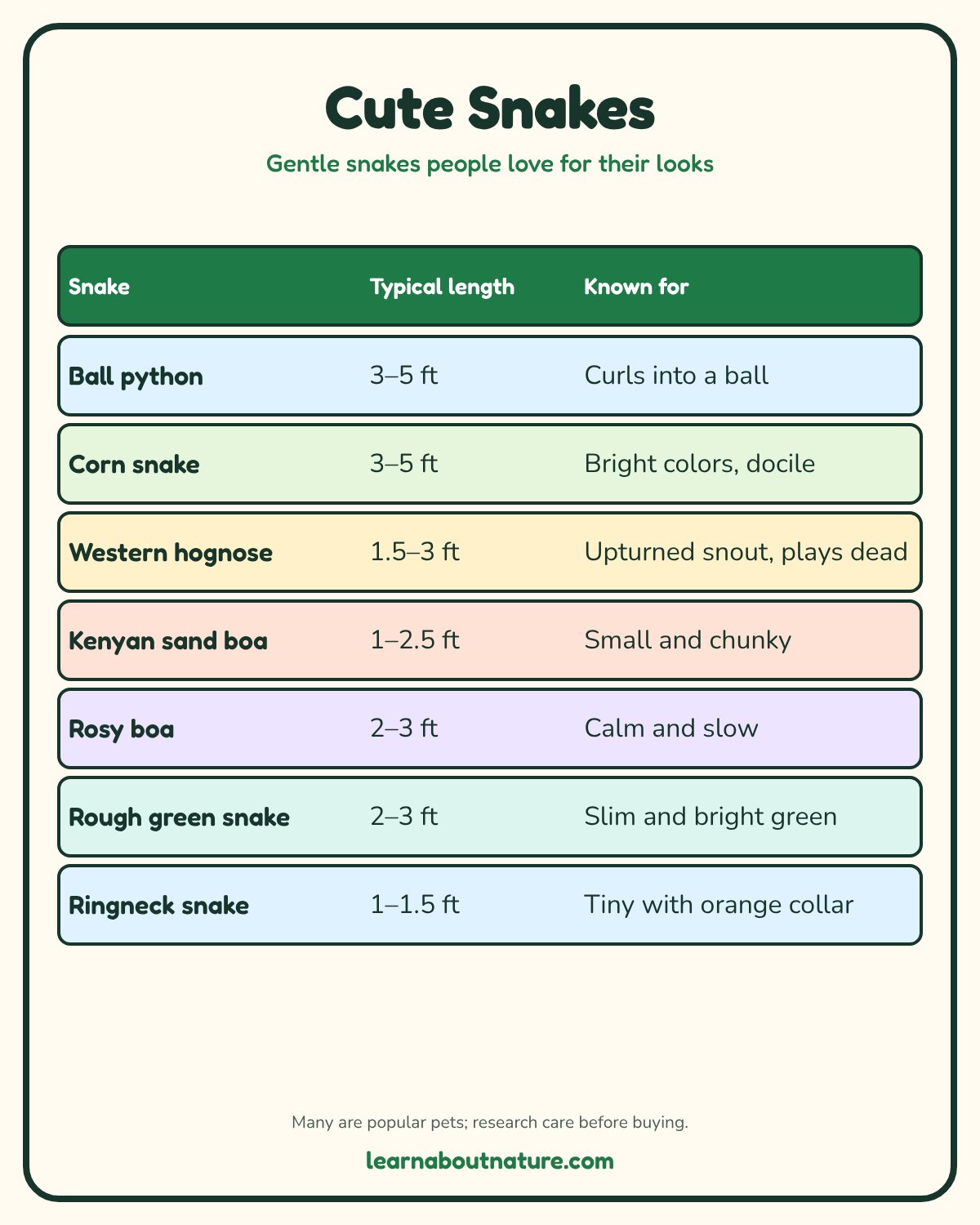
The ball python, also called the royal python, gets its name from its habit of curling into a tight ball with its head tucked in the middle when it feels scared. It comes from the grasslands, savannas, and open forests of West and Central Africa.
Adults usually grow 3 to 5 feet long, and they are calm, slow-moving snakes. Ball pythons can live 20 to 30 years or more in captivity, so owning one is a long commitment. Like many pythons, they are not venomous.
The species is listed as Near Threatened on the IUCN Red List of conservation status, partly because huge numbers are caught for the pet trade and for meat and skins. If your family is thinking about a ball python, choose a captive-bred snake. It will be healthier and more relaxed than one taken from the wild.
3. Garter Snake

If you spot a garter snake in your yard, there is no need to panic. These slim, striped snakes are common across much of North America and are harmless to people. They help gardeners by eating slugs, worms, insects, and other small animals.
Most garter snakes are 1.5 to 3 feet long, though a few reach about 4 feet. They are usually happiest left alone outdoors, where you can watch them sunning themselves on warm days.
4. California Kingsnake

The California kingsnake is one of the most popular pet snakes, and it is easy to see why. These non-venomous reptiles come in bold black-and-white or brown-and-cream bands and stripes, and they have bright eyes and a neat, rounded snout.
They usually grow 3 to 4 feet long and can live 15 to 20 years or more in captivity. In the wild, kingsnakes are famous for eating other snakes, including rattlesnakes, because they are resistant to rattlesnake venom.
5. Bimini Blind Snake and Its Relatives

Blind snakes are tiny burrowing snakes that look a lot like shiny earthworms. The Bimini blind snake lives in the Bahamas, and it has hundreds of relatives around the world, including the very small thread snakes. One thread snake, the Barbados threadsnake, is the smallest known snake on Earth, only about 4 inches long.
These snakes have very small eyes covered by scales, so they can sense light and dark but not much more. They spend most of their lives underground or under leaf litter, eating ant and termite eggs and larvae. The Brahminy blind snake is often carried around the world in potted plants, which is why it is nicknamed the “flowerpot snake.”
Blind snakes are odd in another way, too: some families have teeth only in the upper jaw, while others have teeth only in the lower jaw. The biggest blind snake species can reach nearly 3 feet, but most are much smaller.
6. Corn Snake

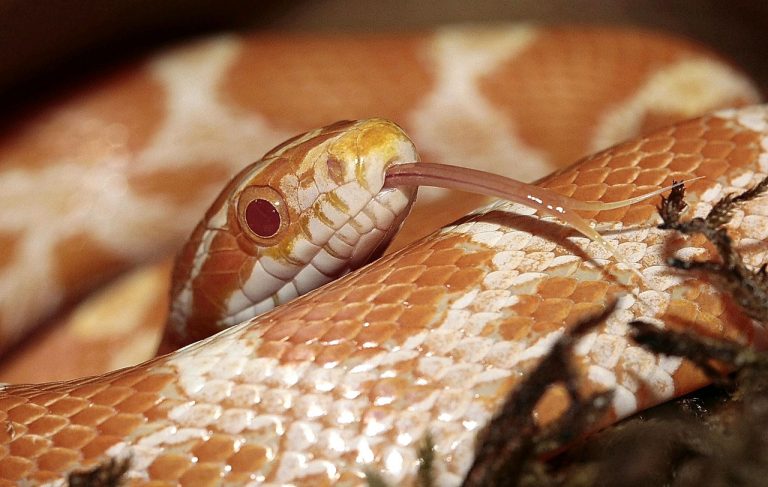
The corn snake is often called the perfect first snake. This non-venomous North American snake is usually calm when handled, grows to about 3 to 5 feet, and has a small head with big, friendly-looking eyes.
Corn snakes come in dozens of colors and patterns, from bright orange and red to pale pink, gray, and even all-white. Breeders have produced so many color forms that scientists have studied the snake’s genetic mutations to learn how skin color and pattern are controlled. A well-kept corn snake can live 15 to 20 years.
7. Ringneck Snake

Ringneck snakes are small, shy snakes found across much of North America. Adults are usually only 10 to 15 inches long, weigh just a few grams, and are rarely thicker than a pencil. Many people think they are babies, but even fully grown ringnecks stay this tiny.
They are easy to recognize by the bright yellow or orange ring around the neck and their colorful yellow, orange, or red belly. Ringnecks eat earthworms, slugs, salamanders, and other tiny invertebrates and small animals. They are harmless to people, though they may give off a smelly musk if picked up.
8. Hognose Snake

The hognose snake has a turned-up snout that looks a little like a pig’s nose. It uses this shovel-like snout to dig in sandy soil. Western hognose snakes have become popular pets because they stay fairly small and come in many color forms.
Hognose snakes are also famous actors. When threatened, they puff up, hiss, and may even roll over and play dead, sometimes with their tongue hanging out!
They are not ideal for beginners, though. Some are fussy eaters, and they have mild venom that is not considered dangerous to people but can cause swelling. If you want one, buy from a reliable breeder and learn about their needs first.
9. Rosy Boa

The rosy boa is a small, gentle snake from the deserts and rocky hills of the southwestern United States and northwestern Mexico. It belongs to the Boidae family of boas, but unlike its giant cousins it usually grows only 2 to 3 feet long.
Rosy boas have rounded heads, smooth scales, and stripes that can be orange, rusty red, brown, or gray, depending on where they come from. In the wild, these colors help them use camouflage to blend into rocks and sand.
They are slow, calm snakes that can live 25 years or more in captivity. Some rare color forms can be expensive.
10. Pueblan Milk Snake

This colorful milk snake from south-central Mexico is often called a tricolor because of its bands of red or orange, black, and white or cream. It usually grows to about 3 feet long, eats readily, and can live around 20 years.
Pueblan milk snakes are non-venomous and seldom bite once they are used to gentle handling. When frightened, though, they may “musk,” releasing a bad-smelling liquid from glands near the tail. Calm, careful handling usually keeps this to a minimum.
Bottom Line
Snakes are not all scary. From tiny ringnecks to colorful corn snakes, many are shy, gentle, and harmless. If your family is thinking of keeping one, research its needs first, choose a captive-bred snake, and remember that venomous species like the eyelash viper are best admired from a distance. Next time you spot a snake, take a closer, safe look. You might find it cute!
Cute Snakes FAQs
What is the cutest snake to have as a pet?
Corn snakes, ball pythons, rosy boas, and western hognose snakes are often considered among the cutest pet snakes because of their rounded faces, gentle temperaments, and wide range of colors. Corn snakes are especially recommended for beginners because they are hardy and easy to handle.
Are ball pythons good pets for beginners?
Ball pythons are popular beginner snakes because they are docile, stay a manageable size of about 3 to 5 feet, and rarely bite. They can live 20 to 30 years or more, so they are a long-term commitment. Some are picky eaters, and they need correct humidity.
What is the smallest snake in the world?
The Barbados threadsnake is considered the smallest known snake, with adults measuring only about 4 inches long, thin enough to curl up on a coin. It lives under leaf litter on the Caribbean island of Barbados and feeds on the larvae of ants and termites.
Is the eyelash viper venomous?
Yes. The eyelash viper is a venomous pit viper from Central and South America. Its bite can cause severe pain, swelling, and tissue damage and requires medical treatment. Despite its cute appearance and colorful forms, it should only be kept by experienced keepers with proper permits, if at all.
Why do hognose snakes play dead?
When threatened, hognose snakes first flatten their necks, hiss, and bluff strike. If that fails, they roll onto their backs, open their mouths, let their tongues hang out, and may release a foul musk to appear dead. Many predators lose interest in prey that seems already dead.

Nato is a content writer and researcher with a background in psychology who’s eager to explore the wonders of nature. As a travel enthusiast and animal lover, she hopes to inspire others to discover and cherish the beauty and importance of the natural world.