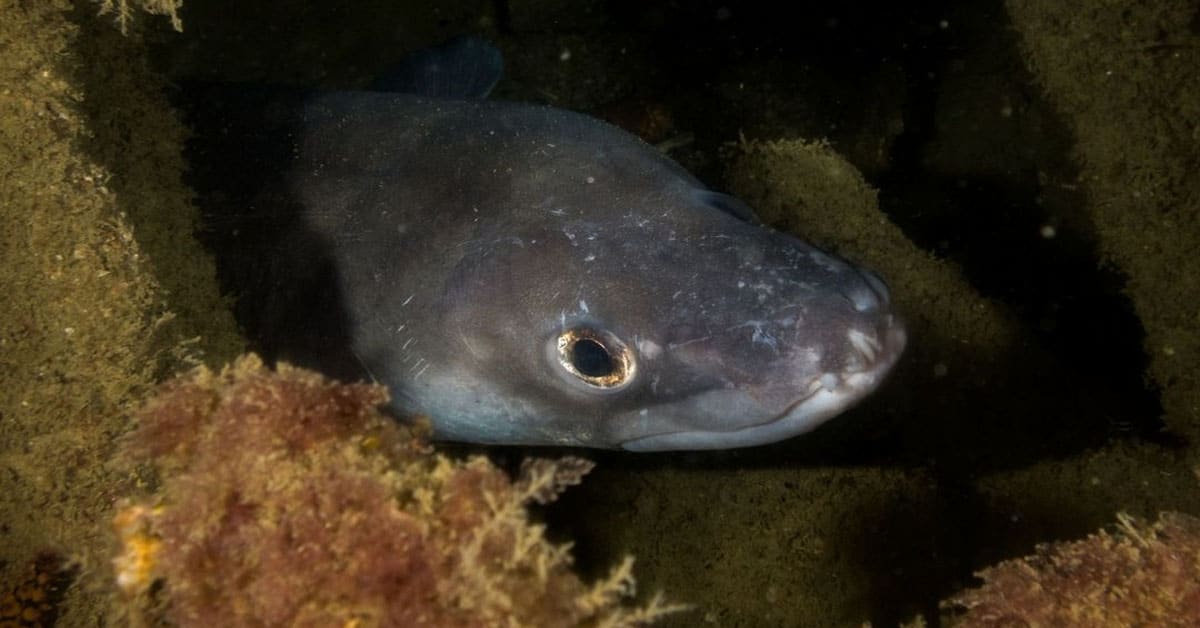
Conger Eel: Diet, Habitat, and Life Cycle
Eels first show up in the fossil record dating back to 100 million years ago during the mid-Cretaceous period, and have evolved into over 800 known species that still exist today, which are classified into 19 families and 111 different genera including Conger eels.
They’re not generally hostile toward humans unless threatened, but should you find yourself around the home of one that does feel threatened by you, it can be a very dangerous place to be.
What happens if an eel bites you?
Well, for starters, eels cannot let go once clamping down on prey, which can cause some serious problems for humans should they find themselves in this situation.
In July of 2013, a diver was attacked by a conger eel off the coast of Ireland at a depth of 82 feet (25 meters). This particular eel tenaciously bit a chunk off the divers face. The diver stated that the eel was about six foot (1.8 meters) in length and was roughly the width of a human thigh.
Their bites can cause major tendon and muscle damage, and the bite area can quite easily become infected. It can cause a need for stitches to sew up the open wound, and it can cause long-term injuries such as you losing a body part or losing mobility of a limb.
Then of course you’d have the issue of your blood being in the water, where many other predators, including sharks, will know just where to find you.
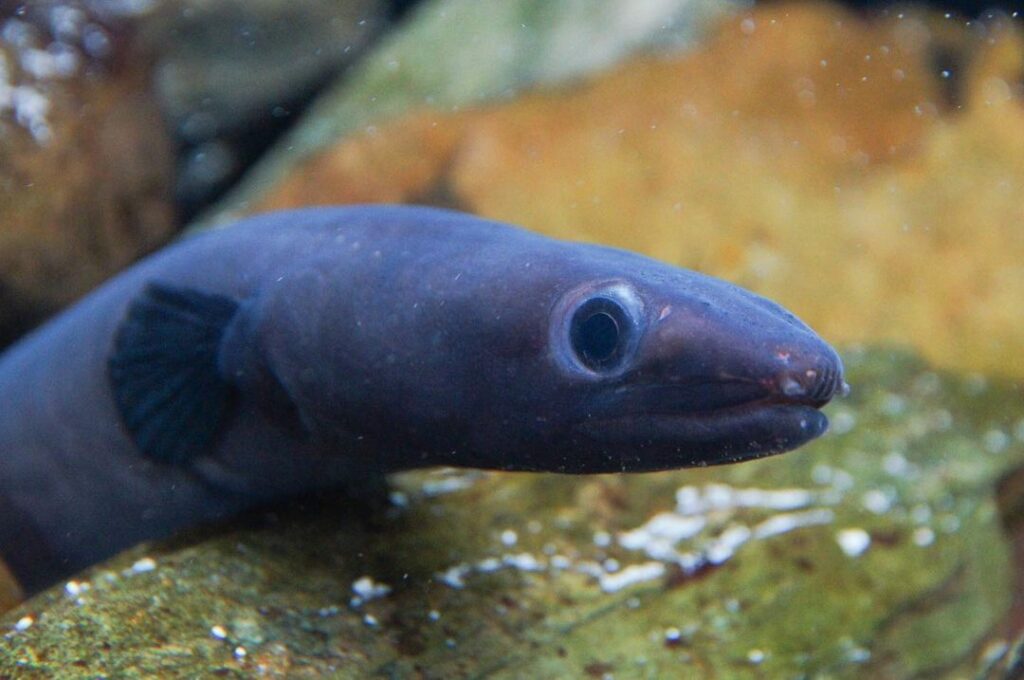
Types of Conger Eels
There are five types of conger eels, the European conger, whitespotted conger, American conger, longfin African conger, and the southern conger, all of which differ in size, looks, and habitat.
First, let’s begin with the European conger, the species in which attacked that unlucky Irish scuba diver in 2013.
European Conger Eel
This species is found in the eastern Atlantic ocean from Norway and Iceland to Senegal, as well as in the Mediterranean and Black Seas.
The European conger is the largest of its genus, measuring an average of five feet (1.5 meters) in length as adults, though they have been known to exceed seven feet (2.1 meters).
It is however believed that they can grow upwards of 9’10” (3 meters) with a maximum weight of roughly 159 lbs, making them the heaviest eels in the world.
Whitespotted Conger Eel
The smallest of the conger eels, the whitespotted conger reaches just over a meter in length, measuring about 39-to-40 inches at full maturity.
These beautiful creatures can be found in the northwest Pacific off the coasts of Japan, Korean Peninsula, and the East China Sea.
American Conger Eel
Also known as the dog eel, poison eel, or sea eel, the American conger reaches a maximum length of 6.6 feet, just over two meters, with a maximum weight of 88 lbs.
These eels can be found along the coastlines of Cape Cod, as far north as Maine, to the Florida Keys, as well as along the northern Gulf Coast.
Longfin African Conger Eel
Also known as the blacktip conger, the longfin African conger eel can be found in the Indo-Pacific oceans and Red Sea, bordering east Africa, Japan and its surrounding islands, as well as Australia.
Longfin African congers can reach up to just over four feet (1.3 meters) in length.
Southern Conger Eel
The southern conger can be found in the Indian Ocean and southwestern Pacific oceans including New Zealand and Australia, living in depths of 100 meters in broken rocky reef areas.
They can grow up to of six feet in length (1.8 meters) and weigh upwards of 110 lbs.
Conger Eel Diet
Conger eel diets don’t differ too much from one another, as they’re all bottom dwellers that feed primarily on crustaceans, shrimp, small fish, squid, sea urchins, and occasionally other eels.
In contrast to hunting, conger eels will also scavenge dead fish when the opportunity arises. Congers have very poor eyesight and hunt by using scent as their main guide.
They do not have many natural predators as adults, though larger carnivorous fish do prey on them in their juvenile and adolescent stages.
To an adult conger, their biggest threat is humans.
Reproduction
Eels reproduce via external fertilization, like other fish, rather than mating with sexual organs. This makes sense considering eels are more or less scaleless fish.
Females will release several million eggs into the water, where the male will then fertilize them with his sperm. Both males and females will die after spawning offspring.
Conger Eel Life Cycle
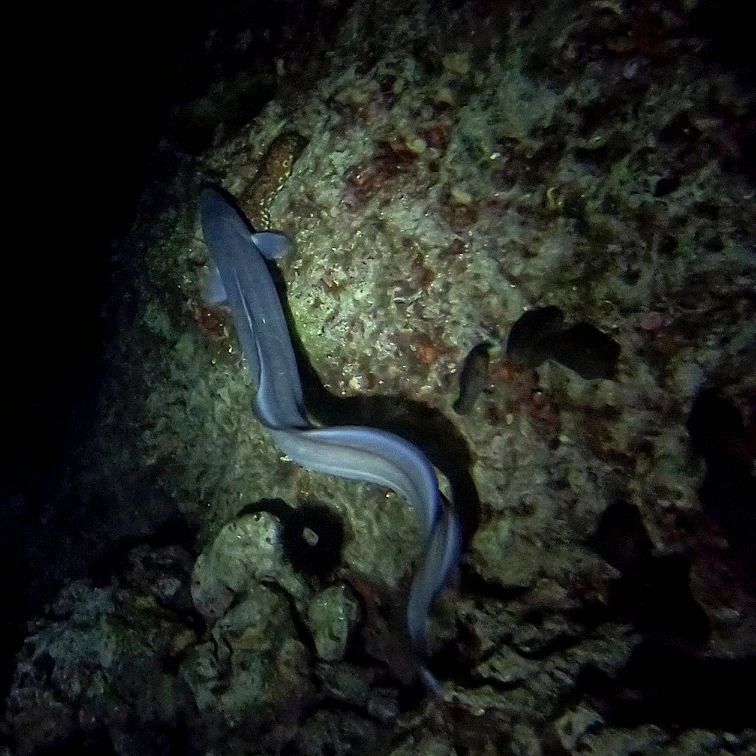
Eels begin their lives as a transparent larvae called leptocephali. From there, they will reach the glass eel stage, before eventually losing their transparency and becoming small elvers (young eel). Not long after this stage they will mature into grown adults.
Once they’ve reached this stage, conger eels can live anywhere from 20-to-30 years before their internal clock runs out.
If you enjoyed this piece, feel free to share it on social media!
And, if you enjoyed this piece, be sure to check out our article on the Top 15 Bite Forces in the Animal Kingdom, which showcases other ocean dwellers such as crocodiles, sharks, and orcas.

I started writing in the fourth quarter of 2018. I wrote solely about MMA and boxing up until October of 2022, where I began writing about animals; primarily dangerous, venomous species. They’ve always fascinated me. Considering, my goal is to make a living by teaching people about these wonderful creatures. You can check out my Facebook page, where every article I’ve ever written currently sits, or you can check out my Twitter page, where I’ve shared all of my animal pieces to date.