Texas Spiny Lizard
Scientific Classification
| Kingdom: | Animalia |
| Phylum: | Chordata |
| Subphylum: | Vertebrata |
| Class: | Reptilia |
| Order: | Squamata |
| Suborder: | Iguania |
| Family: | Phrynosomatidae |
| Genus: | Sceloporus |
| Species: | S. olivaceus |
| Binomial name: | Sceloporus olivaceus |
You can see the collared lizards, belonging to the family Crotaphytidae, order Squamata distributed all over the Western United States. You see them in the Sonoran Desert in southeast California, Arizona, and Northern Mexico which includes eastern Baja California.
Anatomy
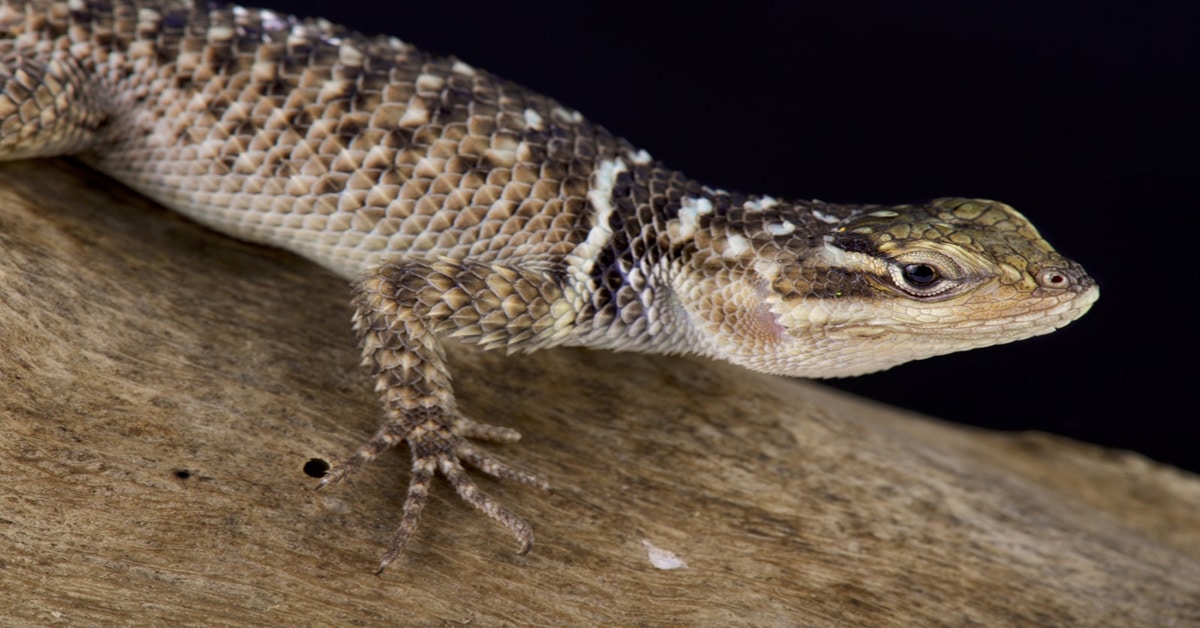
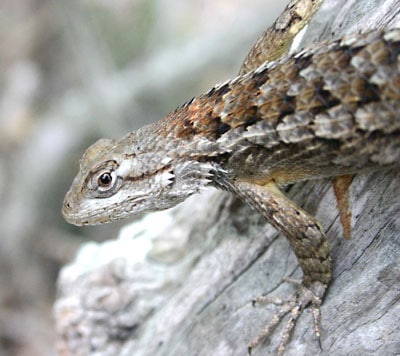
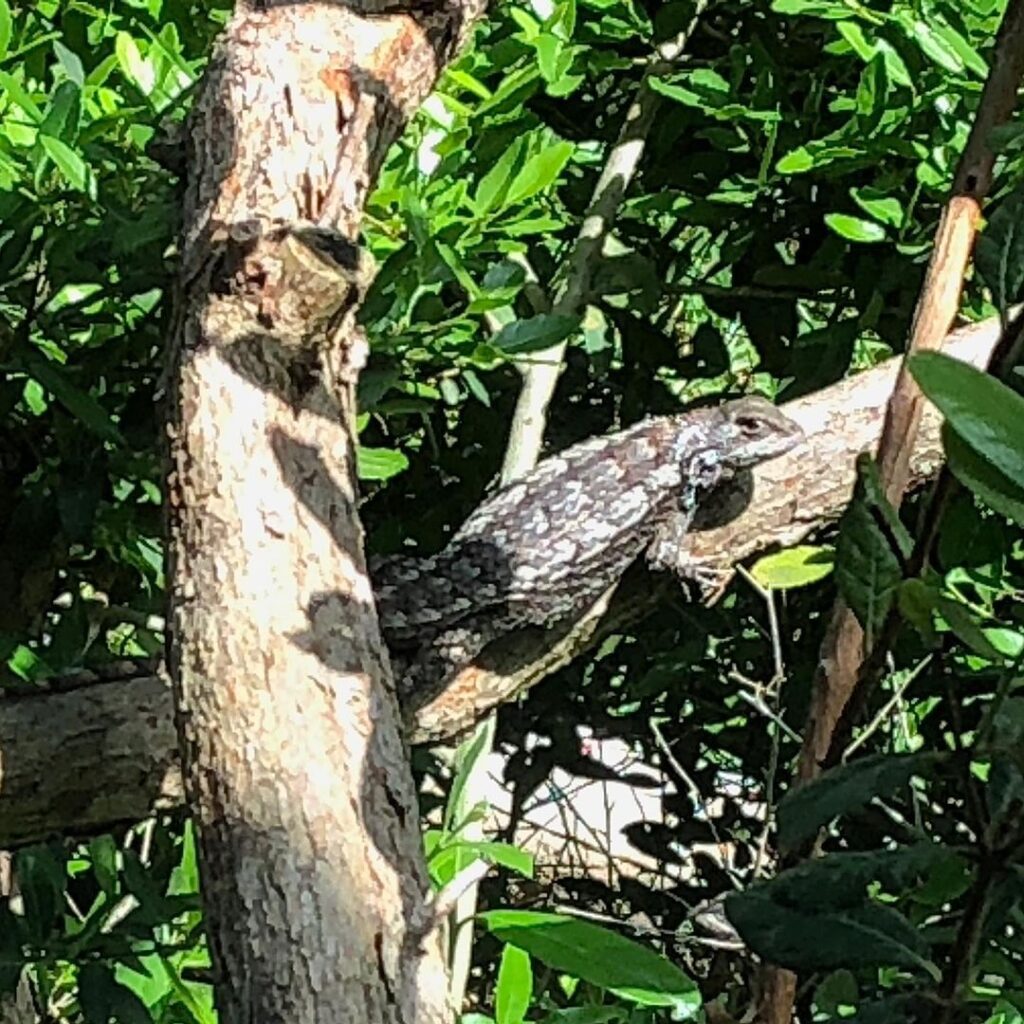
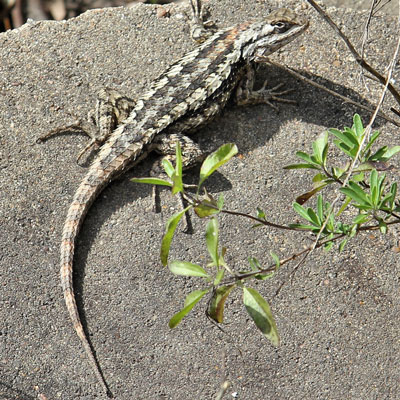
The normal size of a Spiny lizard is from 7.5” to 12”. Their color varies from grayish brown to olive brown to reddish brown, with their backs having contrasting designs.
Female spiny lizards possess lines over their legs that are dark and wavy; their background is colored paler than the males, whereas males possess lean blue blotches on both sides of their bellies. They have pale-colored stripes running parallel to their backs. The tail and toes of Texas Lizards are sufficiently long and the scales on their backs are spiny and long.
They are characteristically gray-colored with red-brown, white, black or gray blotches over the back. They measure about 19 to 28 cm or 7.5 to 11 inches in length.
Behavior
The Texas spiny lizards are arboreal and diurnal. They are fond of dwelling in places that abound in plenty of leaf litter on the ground, and their favorite place is the mesquite trees. Normally you see them in suburban places, basking on on telephone poles and fences,. Characteristically they are nervous and shy, When you reach out to them, they generally run away noisily between the ground leaf litter, or retreat up a tree.
Habitat
Their habitat is in the states of Oklahoma, Texas, south central United States and in the states of San Luis Potosi, Coahuila, Tamaulipas and Nuevo Leon in northeastern Mexico. You can frequently see them on fences, or trees throughout the area.
As a Pet
Breeding
Breeding takes place in the summer and spring with 1 to 4 clutches of 11 eggs each and adults above 4 years lay 25 eggs.
Housing
You can breed a pair if you place them together.
Cage Size – the minimum size of a cage for an adult is 30” L x 12” D x 12” H.
For substrate use cage carpet, sand or powdered walnut shell. The main anxiety of having sand and walnut shell is its chance of impaction. Overdose of substrate consumption leads to blockage in the intestines. This you can avoid by laying a cage carpet, which of course is not easy to clean.
On the cooler portion of the cage provide a dark spot for hiding
Provide an open area for the spiny lizards to play around.
For climbing facilities, place vines, sticks and logs everywhere in the cage.
Provide a high level location for basking
Their hobby lies in digging into decayed logs.
Food
Feed them with ½ or smaller portion of the cricket’s head around 5 pieces a day, and dusted with vitamin D3, calcium supplement twice a week. Once in a way give them a treat of grasshoppers, worms and beetles’.
Do not feed your juveniles with meal worms. It is hard for them to digest exoskeleton. You would do well not to feed meal worms to the adults. As food, they like butterflies most. They take pleasure, jumping about in the air.
Handling
Texas spiny lizards are the right selection for a small pet. These pets, without hesitation, eat crickets that you can easily buy commercially, they adjust well as captives and they are sturdy.
Having discovered a fondness for insects while pursuing her degree in Biology, Randi Jones was quite bugged to know that people usually dismissed these little creatures as “creepy-crawlies”.