Tetra Fish
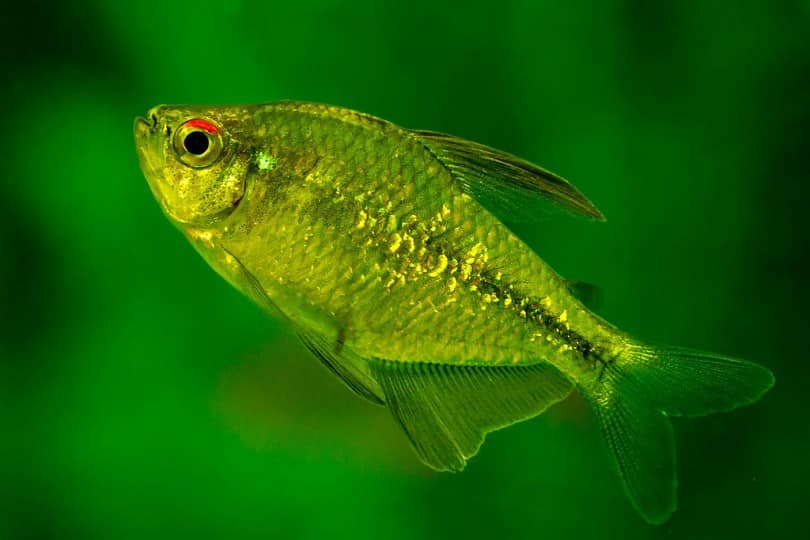
The Tetra Fish belonging to the Characidae family is an inhabitant of Africa and South as well as Central America. The distinctive feature of these fish is that they possess adipose fins between caudal and dorsal fins. These fish are so popular in fish keeping that the other fish of the same size are also called as tetras.
Description
The body of the Tetra fish is generally compressed, and can be identified by their typical fin. Their fusiform bodies have a twin lobed tail fin known as caudal fin that is of equal size in the upper and lower part. This fish grows to about a minimum length of 1.5 to 2 inches, and is basically a toothed fish. The life expectancy of tetra fish is 5 years, but under good and healthy conditions, they can also live up to 10 years.
Reproduction
In the natural habitat, these fish breed only in the rainy season, whereas in the tanks, they can breed all year round. The female fish lays eggs for ten to fourteen days, and scatter on the leaves and around the plants. As so many eggs are laid, the parents seem to be less caring towards the young ones. The eggs hatch after 24 hours of time.
Types of Tetra Fish
Cardinal Tetra (Paracheirodon Axelrodi)
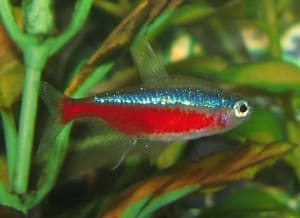
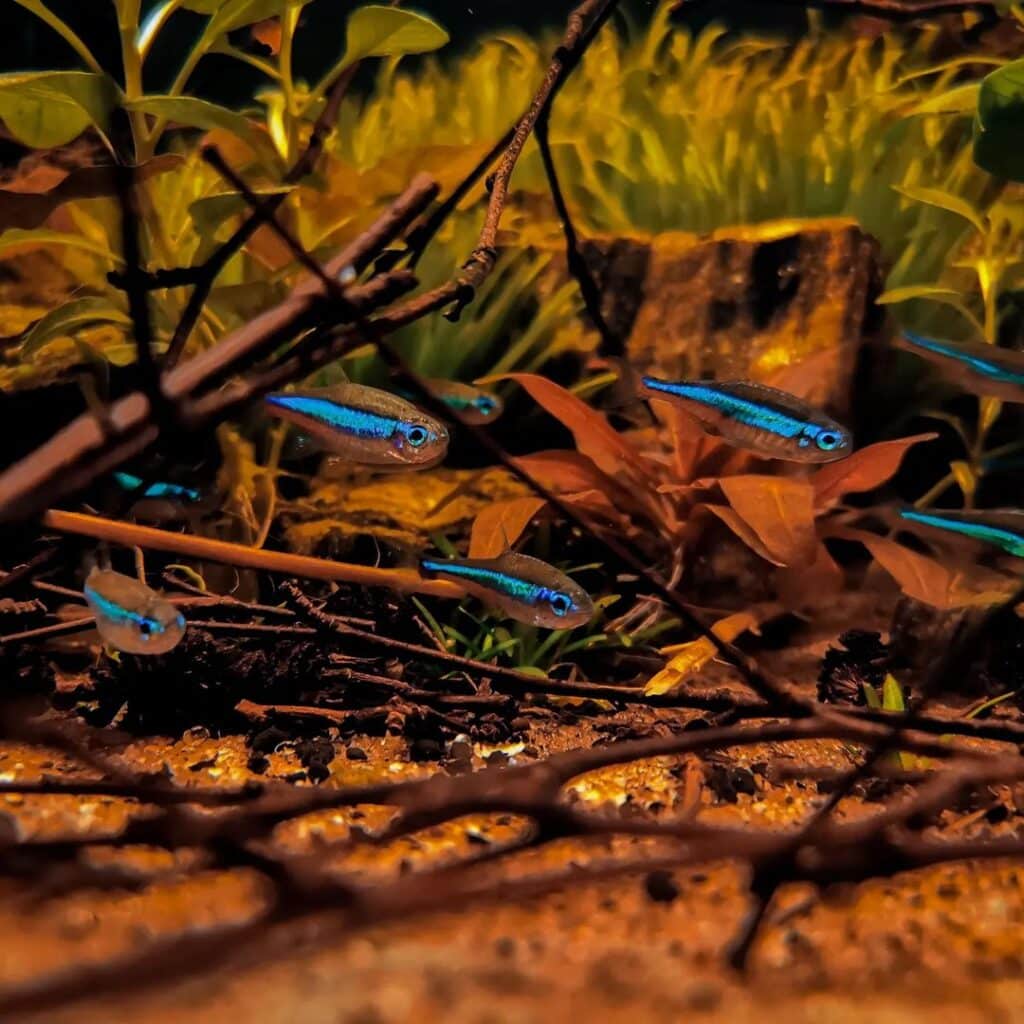
These Tetra fish add beauty to your aquarium with their colorful body. The whole body has a blue stripe on the upper portion and red strips on the lower part. It should be placed in a 10 gallon size tank with more than 6 tank mates. The water hardness suitable for this species is between 1 and 2 DH, and the temperature required should be about 73 to 81 degrees. It grows only about 2 inches in size. It is basically an Omnivores creature. The female lays about 130 eggs after which, the adult should be separated from the tank. The eggs take around 24 hours to hatch, and will become waterborne after 4-5 days.
Silver Tip Tetra
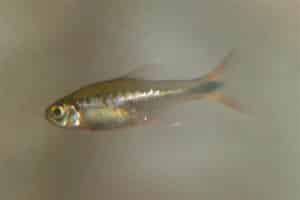
The name Silver tip is acquired from the shining silver colored tip of the fins. It has a sleek body with golden shade, and from the base to the tip of the tail; you can see a shining black shade. It is native to the streams and rivers situated in South America. It should be placed in a tank of minimum size 10 gallons with more than 6 tank mates. The pH level of the water should be between 5.8 and 8.5, and the temperature of the water should be 64 to 82 degree F. The female Silver tip Tetra possesses a fat belly during the breeding period. This helps to distinguish them from the male fish. After they lay eggs, the male counterpart fertilizes the eggs. The eggs hatch after 24 hours.
Head and Tail Light Tetra
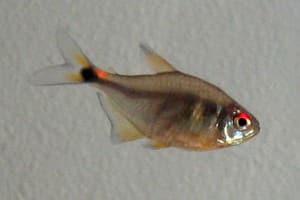
These fish inhabit the rivers and its tributaries in regions of South America. It has a unique transparent body with golden colored head and abdomen. It also has beautiful pink spots on the back of the eye and on the base of the tail. It should be placed in a tank of 10 gallon size with a pH level of 5.8 to 8.5 and a temperature of 64 to 82 degree F.
The other types of Tetras are-:
- Neon Tetra Jumbo
- Glowlight Tetra
- Rummynose Tetra
- Black Neon Tetra
- Green Fire Tetra
- Emperor Tetra
- Bleeding Heart Tetra
- Gold Neon Tetra
- Black Phantom Tetra
- Black Skirt Tetra
- Penguin Tetra
- Albino Buenos Aires Tetra
- Splashing Tetra and many more.
Having discovered a fondness for insects while pursuing her degree in Biology, Randi Jones was quite bugged to know that people usually dismissed these little creatures as “creepy-crawlies”.