Zebra Fish
Scientific Classification
| Kingdom: | Animalia |
| Phylum: | Chordata |
| Class: | Actinopterygii |
| Order: | Cypriniformes |
| Family: | Cyprinidae |
| Genus: | Danio |
| Species: | D. Rerio |
| Binomial Name: | Danio Rerio |
The zebrafish has its scientific name as Danio Rerio. This fish belongs to the tropics. It is a freshwater fish of the minnow group called Cyprinidae, which is of the Cypriniformes order. It is indigenous to the Himalayan region. This fish is well-liked as an aquarium fish, normally sold under the trade name Zebra Danio. In scientific research, this zebra fish is known as an essential vertebrate representing a creature. The zebrafish is specifically known for its capability to regenerate. Researchers have brought about modifications to create many transgenic strains.
Distribution
The habitat of the zebra fish is the streams flowing along the south east regions of the Himalayas. Besides, we see them in other regions of India, Bangladesh, Pakistan, Burma and Nepal. The origin of this species is the regions of the Ganges situated in the eastern part of India, where they are generally found in ditches, streams, ponds, canals and water bodies that are either stagnant or slow-moving which includes the rice fields. The zebra fish spread to the regions of the United States.
Description
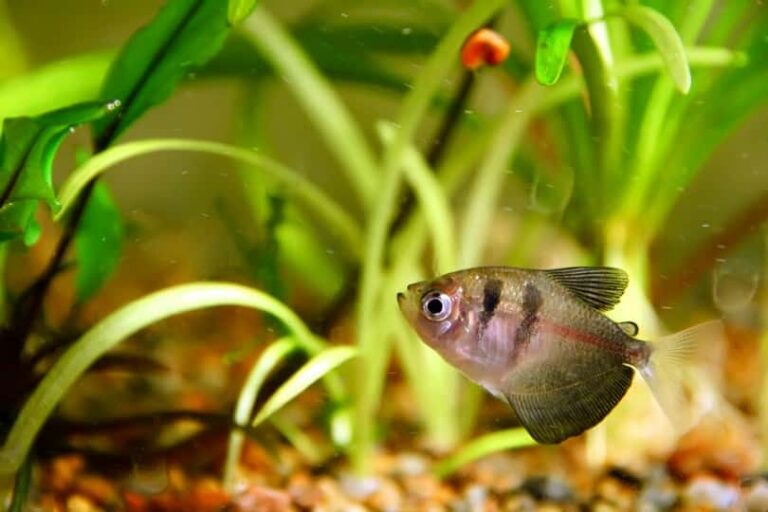
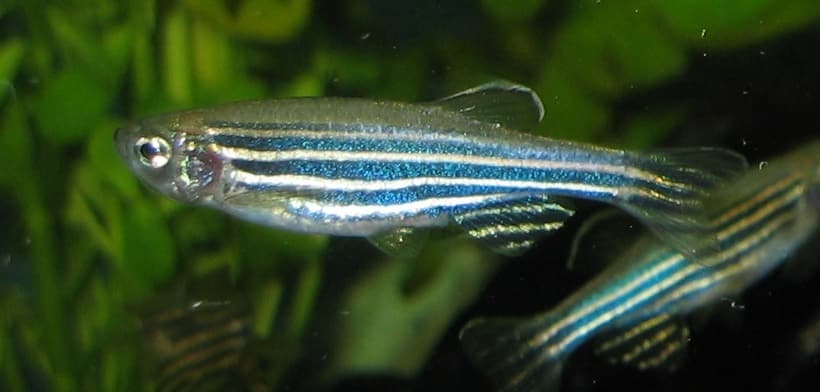
The zebra fish obtained its name because of its five identical, horizontal stripes pigmented blue along the sides of its body, recalling the stripes of the zebra. These stripes stretch along the terminal of the caudal fin. The zebra fish is compressed in the lateral direction, it is fusiformed in shape. Its mouth faces in the upward direction. The male is like a torpedo in shape. In between the blue stripes, it has golden stripes; as for the female, instead of the gold stripes, it has silver stripes and they have a bigger white tummy. A tiny genital papilla is seen front of the rear beginning of the fin. It is possible for the zebra fish to grow to a length of 6.4 cm (2.5 in.). However, in captivity, very rarely do you find them growing more than 4 cm. (1.6in.). Normally the lifespan of the zebra fish is more than 5 years and in exceptional cases we see one of 8 years. But, in captivity, they survive only up to 2 to 3 years
Reproduction
The development of the zebra fish is in stages, up to 2.5 cm in length, which photos to scale except for an adult. The estimated production period for Danio Rerio is 3 months. For spawning and ovulation to happen, a male fish is a must. A female spawns every 2 to 3 days, in every clutch they lay hundreds of eggs. Once the eggs are hatched, embryonic changes are seen; sperms are absent and growth becomes a stunt following the initial few divisions of the cell. Eggs that are fertilized becomes transparent more or less at once, this property makes D Rerio a model species suitable for research
The embryo of the Zebra fish has a rapid development, having the precursors to all the vital organs that fertilize within 36 hours. Initially the embryo is observed as a yolk having a huge cell on the apex; this cell separates into a pair (0.75 panels) and persists in the division process till thousands of tiny cells are formed (3.25 h panel). Later these cells drift downward along the sides of the yolk. (8 h panel) and start the formation of a tail and a head (16 h panel). Later the tail develops by separating from its body (24 h panel). For the initial period as the fish matures the yolk starts to shrink by then, since the yolk is used by the fish as food (72 h panel). Following some months, the fish matures and attains the reproductive stage (bottom panel).
Growing at Home
Water-tank
The zebra fish needs a spacious tank for accommodation to meet its behavioral as well as physical requirements and also for their social necessities. The size of the tank is based on the age and size of the fish, apart from this; it also depends on the quality of the water, the food and the system of feeding. It is suggested that, so long as the tank has a large surface area, you need not increase the height of the water in the tank above 25 cm. In other places, it is recommended that, for the purpose of spawning, in a tank of capacity 50 liter, just 10 cm depth of water is enough for 3 matured males and two females. Just giving them water to this depth is enough
Food
Give the zebra fish, a diet of dry food (maintain the food particle size to 100 microns for the larva and 300 to 400 microns for the adults). Give them even live food like brine shrimp. You get eggs of brine shrimp (Artemia sp.) from the local pet market, it is possible to get these eggs hatched in the incubator..
Water and Temperature
The general guidelines for the quality of water for the zebra fish are:
Temperature – 18 to 24o
Alkalinity: 50 to 150 mg or L (ppm),
Hardness: 80 to 300 + mg/Lv
pH: 6.0 to 8,0
Salinity: 0.5 to 1g or L (ppt)
Conductivity: 300 to 1500 v μ
S unionized ammonia (NHv3):, 0.02
Having discovered a fondness for insects while pursuing her degree in Biology, Randi Jones was quite bugged to know that people usually dismissed these little creatures as “creepy-crawlies”.