Fancy Goldfish
Introduction
Description
Types of Fancy Goldfish
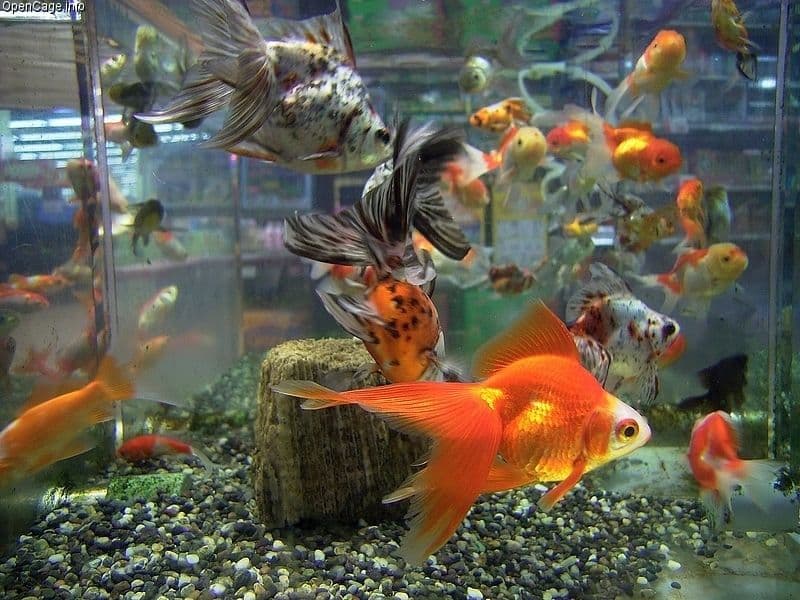
Ryukin Goldfish, Assorted
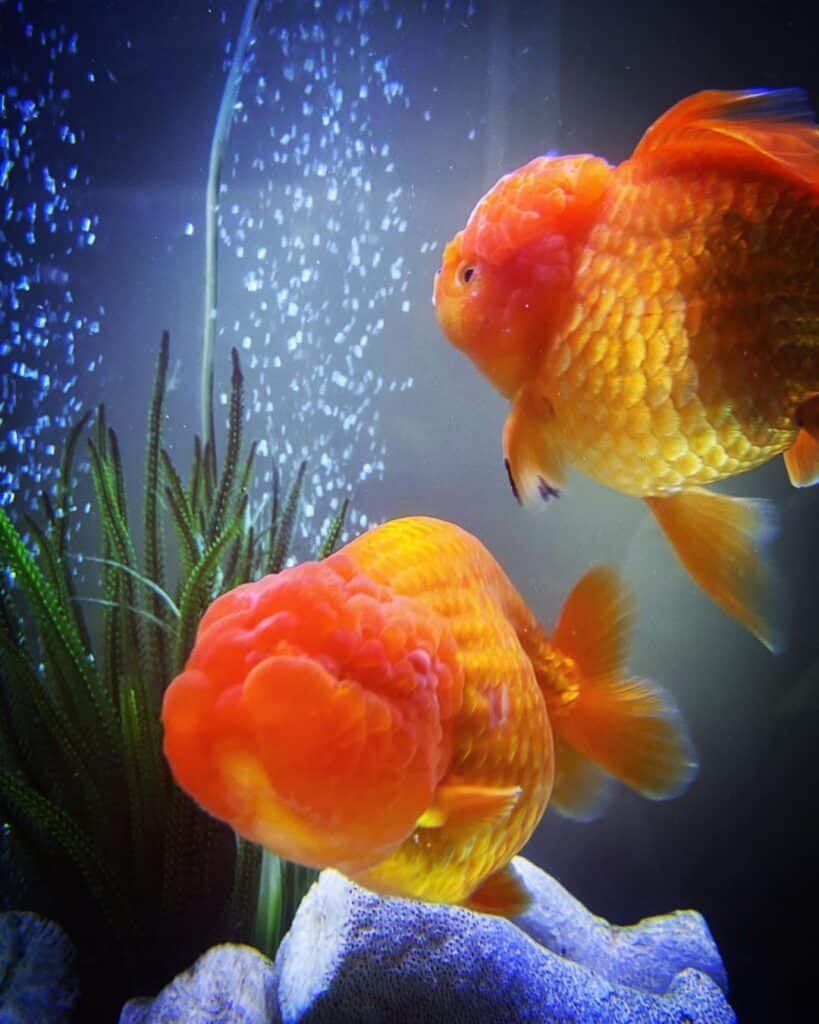
Oranda Goldfish, Assorted
This Goldfish is popular for its “hood” covering its head. They are seen in various color combinations like red/black, red/white and other patterns like red cap, blue, black and chocolate shade.
Telescope Goldfish
This Goldfish is also termed as Celestial Eye Goldfish and Dragon Eye Goldfish. As the name suggests, the unique feature is its eyes that resemble the eyes of a dragon. At the time of hatching, these fish have normal eyes, but after a month it starts to bulge and protrude.
Other Types of Fancy Goldfish are
- Panda Oranda Goldfish
- Ranchu Goldfish, Red & White
- Black Moor Goldfish
- Red Cap Oranda Goldfish
- Crown Pearlscale Goldfish
- Red Ryukin Goldfish
- Red & White Ryukin Goldfish
Reproduction
Reproduction of a Fancy Goldfish is a bit challenging, especially when in captivity. In the natural habitat, they have the advantages of more oxygen, more plants to lay eggs on and more space to spawn. These fish are sexually mature from 1 to 2 years of age. The spawning period is only once in a month between April and August, when it is a warmer climate. The male fish becomes aggressive and starts to pursue the female for laying eggs. The male tries to nudge the belly part of the female nudging her to release the eggs, and at the same time the male releases his milt. The female lays more than 1000 eggs, out of which, only a few eggs fertilize. The eggs are usually laid on the stem plants, and at home, you can get them to lay eggs on a spawning mop. The fertilization of the eggs takes place externally. Remove the eggs immediately, or they will be consumed by the predators. A separate small aquarium with a bare bottom and an air pump should be arranged for these eggs to hatch. It should have a temperature around 76 to 78 degree F.
Fancy Goldfish at Home
Food
The Fancy Goldfish should be given a proper nutritious and healthy diet to survive for long years. Their food should mainly consist of a pellet diet. You can also include blanched vegetables like peas, zucchini and kale. Frozen or live food can also be included in their diet like brine shrimp, blood-worm and mosquito larvae. Thus, you should introduce variety in their food. Feed them at least 3 to 4 times a day, but the quantity should be very small each time. Similarly the food provided each time should be different, like, you can provide pellet diet twice a day and the frozen or live food for the remaining occasions. Always prefer giving frozen food than the live food, as the chances to introduce diseases into the aquarium is more from the live food compared to the frozen food.
Water
The most important aspect in maintaining a healthy life of a fish is the water condition. The levels like the ammonia, nitrate, nitrite, temperature and salinity should be taken into consideration, because a slight difference can disturb these small creatures. The pH level of the water should be at least 7.2 to 8, and the temperature should be around 66 to 71 degree F. The kH level should be between 4 and 20. Regularly check these levels with the help of an aquarium kit or your fish may die. The water change should be done at least once in two weeks, but only 25% of the water should be changed at a time, or the fish may feel disturbed.
Tank
Goldfish should not be kept in a bowl, as it does not provide enough oxygen required by this fish. A matured goldfish attains at least 8 to 12 inches of body length. Hence the minimum size of the tank should be 30 gallons for a single fish and an extra 10 gallons for each additional Fancy Goldfish. A filter is a vital requirement in a Goldfish aquarium, as the water of a Fancy Goldfish tank turns foul and dirty within a day. These fish are bottom dwellers and always scan the tank bottom, hence it should be decorated with gravel, wood, hiding place like a castle, caves or hollowed rocks and many green plants.
How to Set Up a Fish Tank for Your Fancy Goldfish
Before placing your favorite pet inside the fish tank, you have to be aware of some important points that are essential for a healthy and happy life of these Fancy Goldfish. Some of the points are-:
- Prefer a rectangular tank for a Goldfish aquarium as it allows dissolving more oxygen in the water.
- Wash the tank, gravel and other decorative items with plain treated water. Do not use direct tap water for any purpose related to the fish aquarium; instead treat them with conditioners. Similarly before adding the fish in the water, use a dechlorinator to remove the chlorine content in the water. Do not use soaps or detergents as it can be toxic for these creatures.
- After adding water, place all the decoration, substrate and other necessary items, after which, you can leave the tank for at least a month for cycling. This will help to build up many useful bacteria that will help to keep the tank environment stable.
- After the cycling process, you can introduce your new fish in the tank. Add only 1 or 2 fish at a time.
- While adding the fish into the tank water, do not pour the water and fish from above, instead leave the bag open, and let it float in the aquarium water for 15 to 20 minutes. This will equalize the temperature of both the tank and the bag water.
Having discovered a fondness for insects while pursuing her degree in Biology, Randi Jones was quite bugged to know that people usually dismissed these little creatures as “creepy-crawlies”.