Why Do Ladybugs Have Spots?
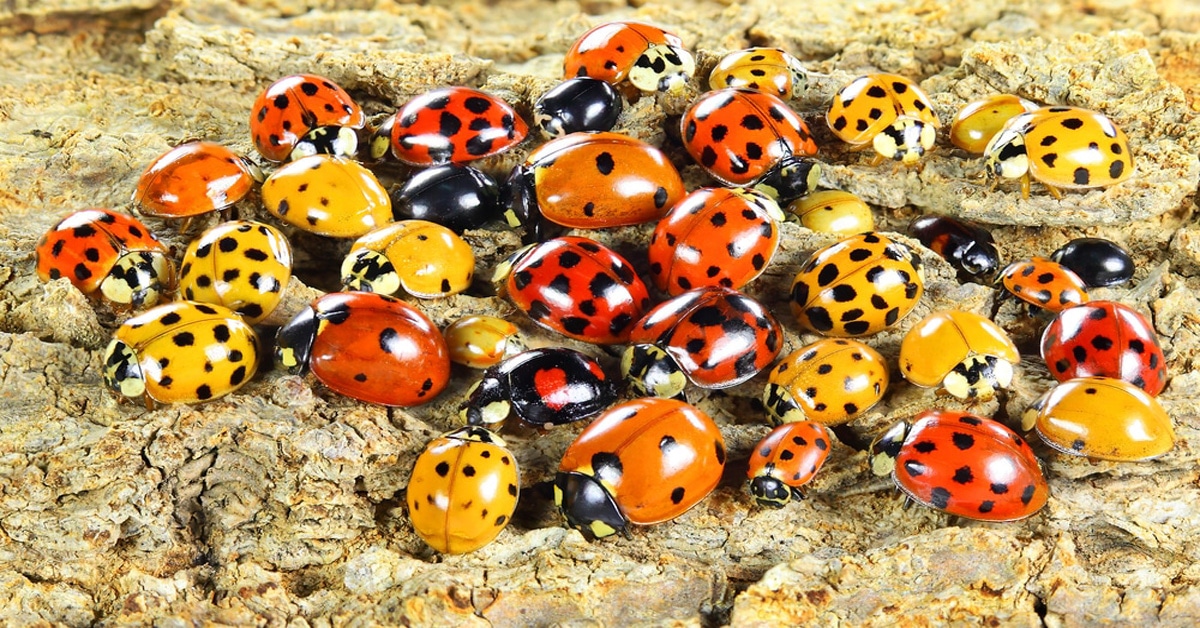
Quick answer: Ladybugs have spots as a warning to predators that they taste bad. The spots and bright red color signal toxic chemicals. The number of spots varies by species and does not reliably show a ladybug’s age.
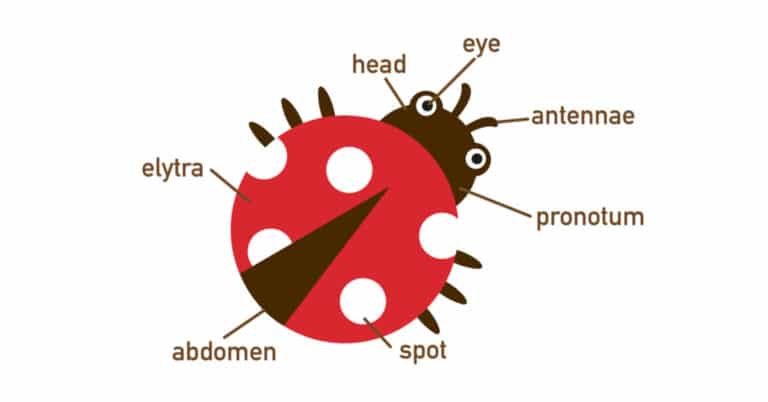
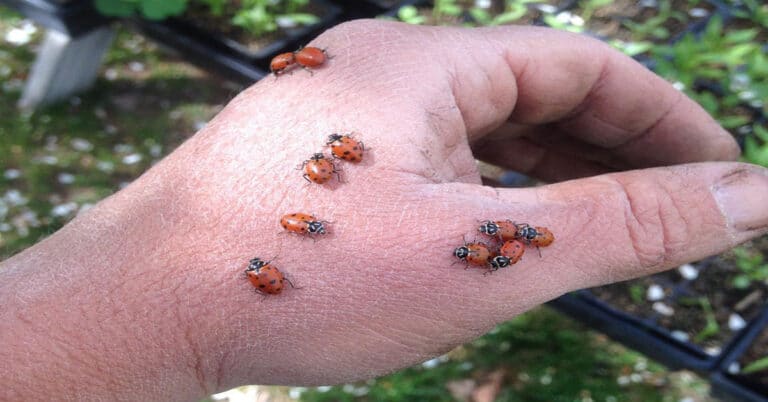
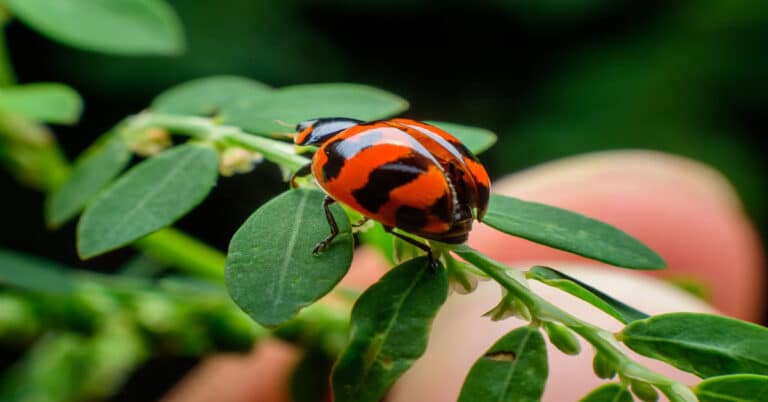
There are about 5,000 different kinds of ladybugs in the world, and scientists call them lady beetles or ladybird beetles. Some are red or orange with black spots, some are yellow with black spots, and some are black with red or yellow spots. A few have stripes or no spots at all! Each species has its own pattern, which helps scientists tell them apart.

Not all ladybugs have black spots on them, though, and not all ladybugs are red, either. There are many different species of ladybugs and they all look a little different in their colors and patterns. But since you, and most people, think of a ladybug as the red, spotted variety, you might wonder why ladybugs have their spots and what they mean.

Photo by Dan Parsons
Why Ladybugs Are Red With Black Spots
The reason that entomologists think that ladybugs have such brilliant red coloring and black spots is to warn their predators that they taste really bad and that they are a little bit poisonous, too.
Other Insects With Warning Colors
Think about other colorful, uniquely marked insects. Bumble bees are bright yellow and black striped and can be seen coming from a mile away it seems. Not very many animals want to eat bumble bees because of their poisonous and hurtful stinger. Bumble bees can’t tell predators that they will hurt them if they are eaten, but their bright colors let predators know to stay away from them.
Camouflage vs. Bright Warning Colors
Frogs are usually green and brown and they can blend in with their surroundings. That is their defense from predators because they can’t fight back with poison or stingers. These frogs have to hide from their predators instead. But some frogs are very poisonous to predators. They have poison in their skin that is enough to kill a large bird that might otherwise eat them. These poisonous frogs don’t have to hide, but nature lets the birds know not to eat them anyway by giving these frogs bright yellow, red, orange, and black patterns.
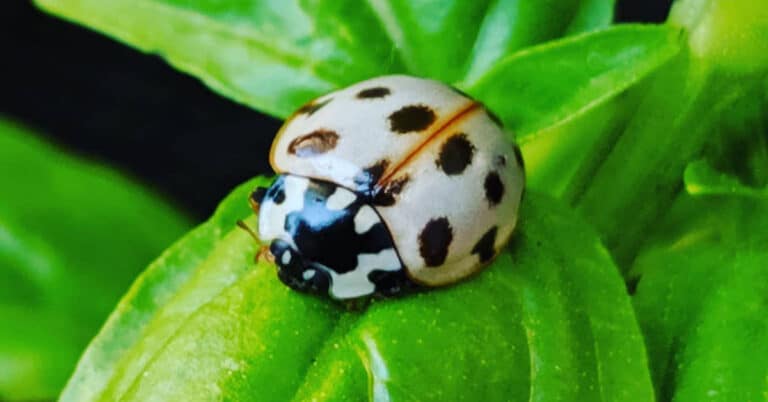
This ladybug has tons of spots.
Photo by John Alan Elson

This is the same concept for the bright colors of a ladybug. A ladybug’s body has a substance in it that tastes really bad to birds and other predators, and it is a little bit poisonous. Probably not poisonous enough to kill a bird, but enough to make it pretty sick for a while. Once a bird eats the first ladybug it will get so sick that it won’t ever want to eat another one, and it will remember the unique colors and spots of the ladybug and stay far away from them.
Ladybug Spot Myths Around the World
There are lots of myths around the world about ladybugs and their spots. If a ladybug lands on you in Brussels, the spots on that ladybug tells you how many children you will have. Many farmers around the world have believed that the spots on a ladybug tells the fortune of the next harvest, if there are less than seven spots, the harvest will be good. Some people believe that if a ladybug lands on you, you can count the spots and you will soon receive dollars in the same amount as the spots. Believe what you want about ladybug spots, but the fact is they just make ladybugs the cutest beetle in the world.
Ladybug Spots and Colours FAQs
Why are ladybugs red with black spots?
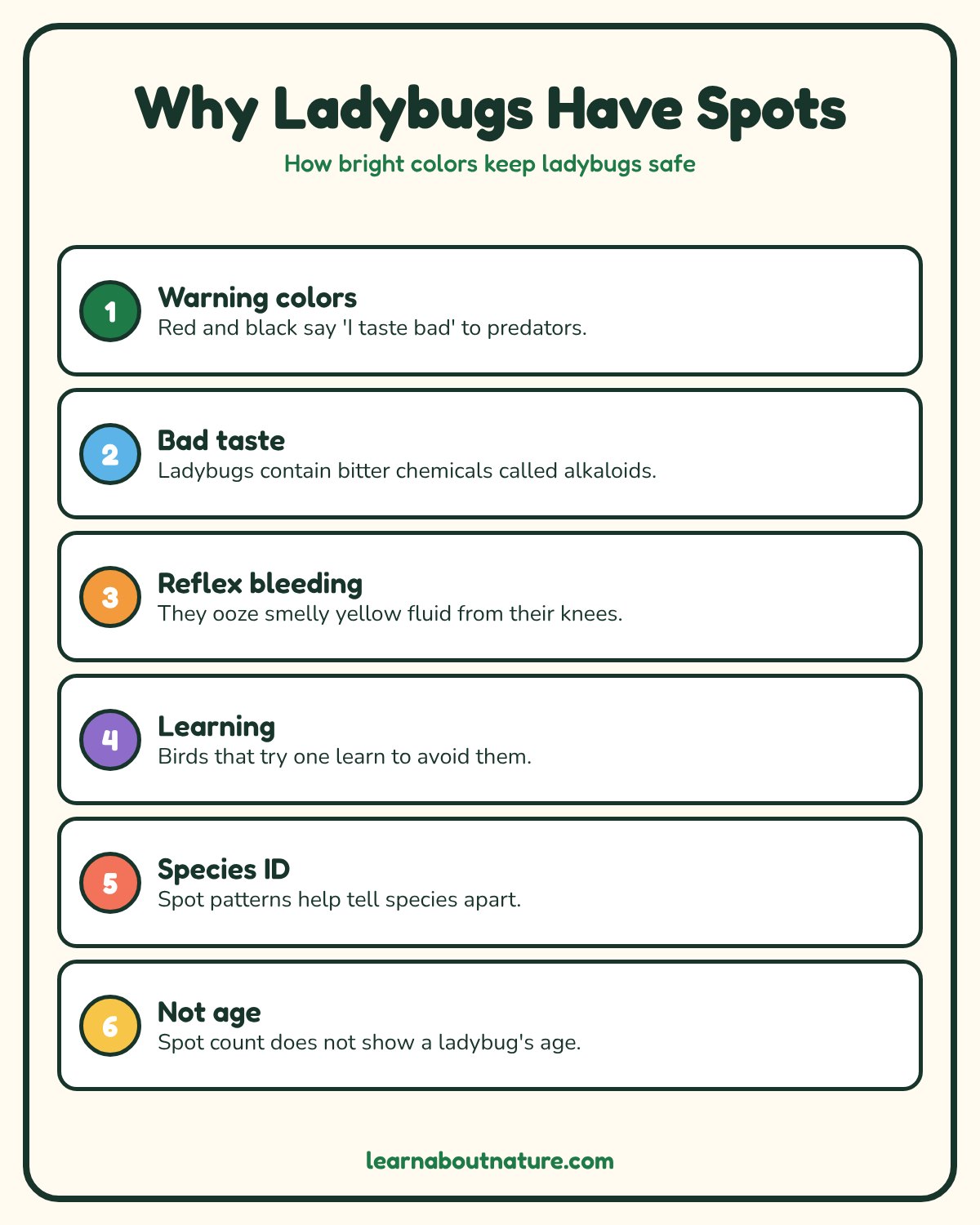
The bright colours are a warning signal, known as aposematism. They tell predators such as birds that the ladybug tastes bad and contains defensive chemicals. Predators that try one quickly learn to avoid them. This strategy is shared by many other insects.
Do the spots on a ladybug tell its age?
No. This is a common myth. The number of spots depends on the species, not the age, and an adult ladybug’s pattern stays the same throughout its life. For example, the seven-spot ladybird always has seven spots.
Are ladybugs poisonous?
Ladybugs produce bitter-tasting alkaloid chemicals that make them unpleasant to predators and can be mildly toxic to small animals. They are harmless to people, although some species may give a tiny nip or leave a yellowish stain.
What is reflex bleeding in ladybugs?
When threatened, ladybugs can release a yellowish fluid from their leg joints, called reflex bleeding. It contains foul-tasting chemicals that deter predators and has a distinctive smell. The fluid can leave yellowish stains on surfaces and skin, but it is harmless to people.
Are all ladybugs red?
No. Ladybugs can be orange, yellow, black, pink, brown or even white, and some have stripes or no markings at all. The Asian lady beetle alone shows a wide range of colours and spot patterns.

Randi Jones is the owner and founder of the Nature Gift Store, an online retailer specializing in nature-themed gifts, educational science projects, live animal nature kits and real butterfly artwork. A biology graduate who fell in love with insects, she founded the company in 2001 to make active learning about nature fun, accessible and engaging for children and adults. Her store offers real butterfly frames, home and garden decor and educational live animal kits, including ant farms, worm farms, tadpoles, ladybugs and hermit crabs, and she runs a bug museum in Washington featuring live animals like Eddie the Iguana alongside other reptiles and insects. Randi wrote most of the guides on this site. They first appeared on her long-running nature sites, including Monarch-Butterfly.com, Ladybug-Life-Cycle.com, Frog-Life-Cycle.com, Dragonfly-Site.com and Butterfly Pictures, which have now been brought together here at Learn About Nature.