Ladybug Life Cycle
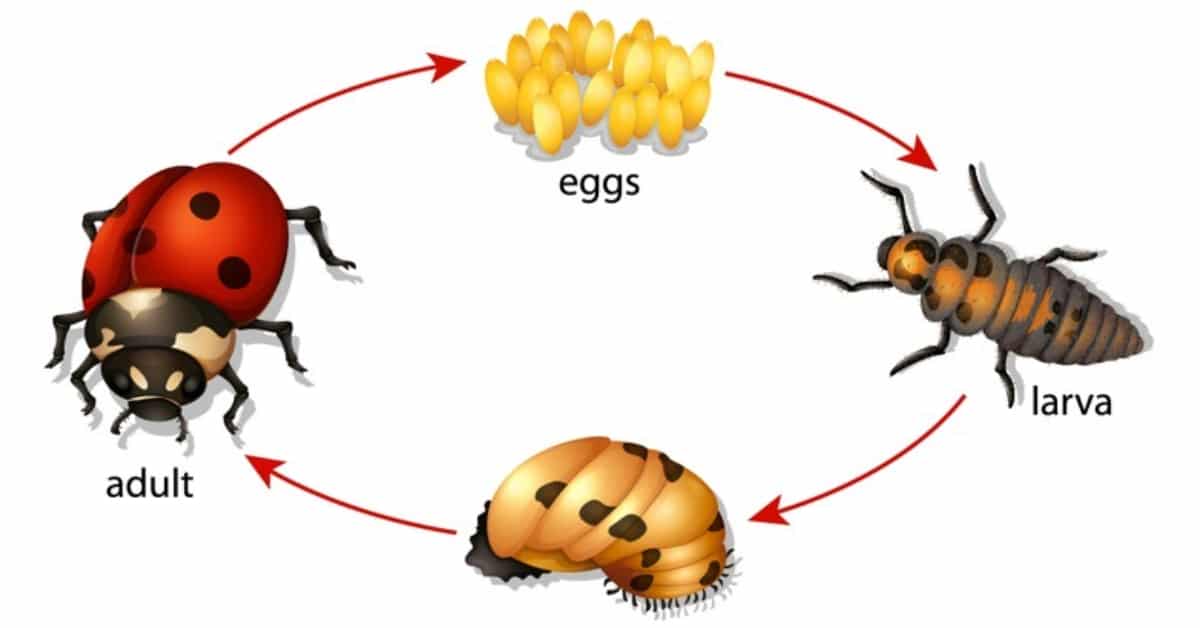
The ladybug life cycle is not much different from the life cycle of a butterfly. The ladybug goes through the same four stages as a butterfly, the egg stage, the larvae stage, the pupa stage, and the adult ladybug stage. You know what adult ladybugs look like, but you wouldn’t even recognize them before they get to that final stage of their lives.
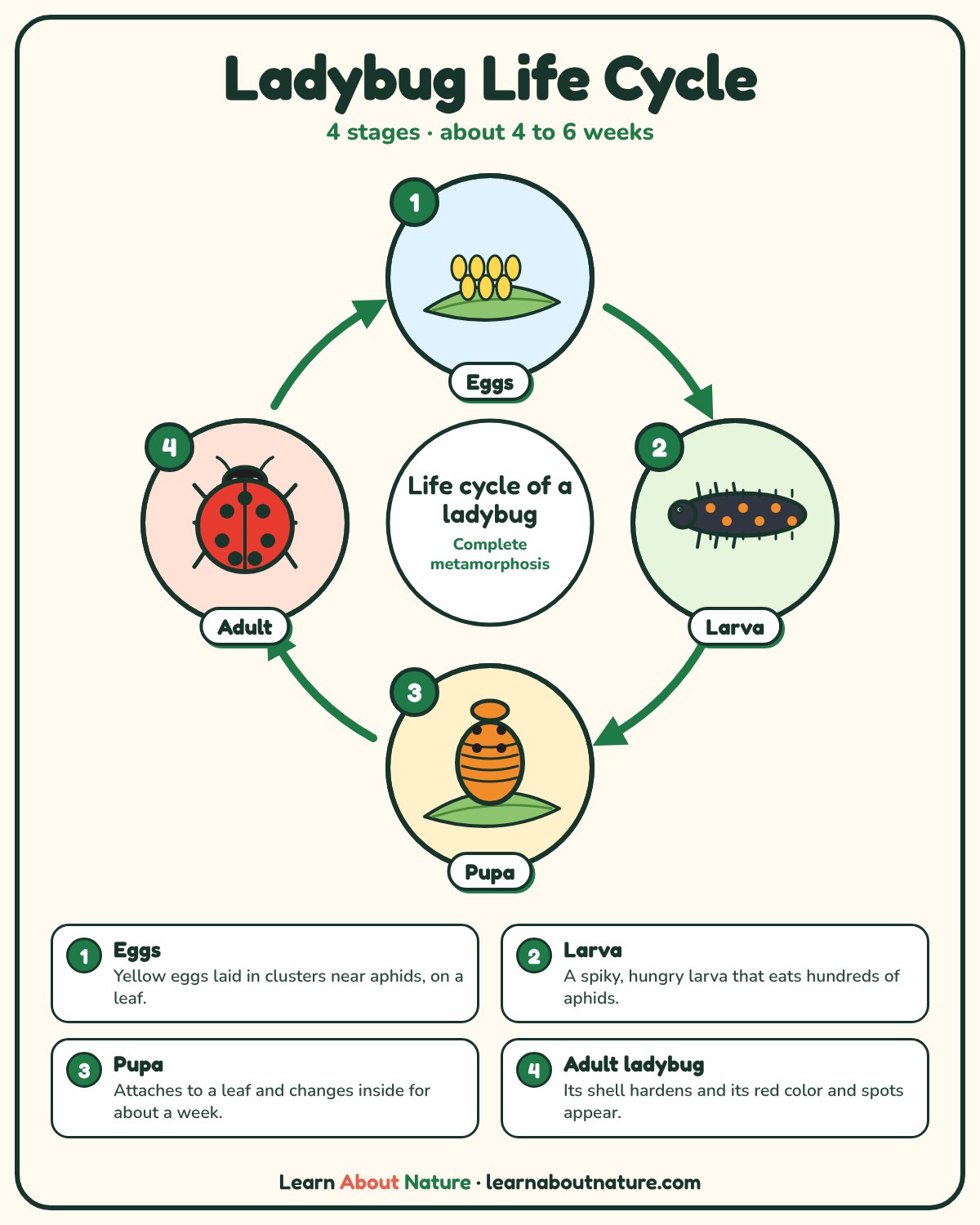
Teachers and students: you’re welcome to use this diagram in lessons and projects with credit to Learn About Nature.
What Is the Life Cycle of a Ladybug?
A ladybug has four life stages: egg, larva, pupa and adult. This is called complete metamorphosis. Eggs hatch in about 3 to 5 days, the larva eats aphids for 2 to 3 weeks, the pupa changes for about 1 week, and an adult emerges. The whole cycle takes about 4 to 6 weeks.
Egg Stage

Female ladybugs lay their eggs on the underside of leaves. This is to protect them from being seen by flying predators as well as from the weather. A mother ladybug will lay from ten to fifteen eggs in one place and she will make sure that it is a place where the babies can find food when they hatch. The ladybug eggs look similar to yellow jellybeans, except that they are tiny. The next time you are in the park in springtime, carefully look under some plant leaves and see if you can pick out some ladybug eggs, but don’t touch them because you could kill the babies.
Larvae Stage

Once the eggs hatch, the larvae will come out and start looking for something to eat. They will look for tiny mites or aphids and they should find plenty because the mother found the perfect leaf to lay her eggs under because of the abundance of food for the larvae to find. Newborn larvae look sort of like tiny alligators. After only a few days, the larvae will be large enough to begin to molt (shed their skin), and they keep molting for as long as they are growing. You can find the molted skins on leaves if you look very hard.
Pupa Stage

After a couple of weeks of growing, the larvae will start to change into something that looks like a shrimp. It will find a leaf to attach itself to and it will seem to fall asleep for a few days, but it is not sleeping at all. During the pupa stage, the larvae are going through a metamorphosis into a ladybug.
Adult Ladybug Stage

When the metamorphosis is complete, the skin of the larvae will split open and the full grown ladybug will emerge, but it still won’t look like the ladybug that you know so well. It will look soft and pink or very pale for a couple of hours until its shell becomes hard. As the shell hardens it also gains pigment, which causes the ladybug to become bright red.


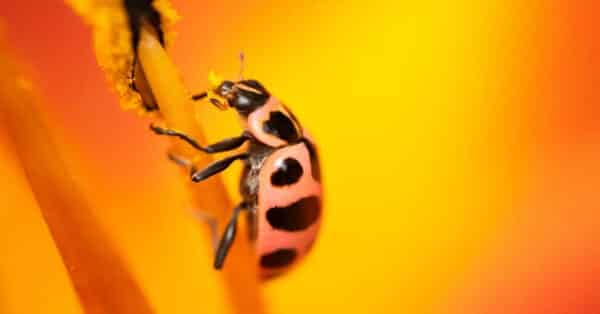
Raising Ladybugs
Some people like raising ladybugs in ladybug farms similar to an ant farm or a worm farm. They do this because they love ladybugs and so that they can watch the wonderful transformation of the ladybug life cycle. Lots of teachers have ladybug farms. If your teacher doesn’t have one, you should ask him or her to get a ladybug farm for the classroom.
You can go here to see our frog life cycle coloring page and drawings.
Ladybug Life Cycle Index
- What Do Ladybugs Eat?
- Ladybug Classification/Types
- Ladybug Anatomy
- Why Do Ladybugs Have Spots?
- Ladybug Facts
- Ladybug Clip Art
- Ladybug Coloring Pages
- Ladybugs Pictures
- Unusual Ladybugs
- Ladybug Reproduction
- Science Fair Info
- Ladybug Infestations
- Fun Ladybug Crafts
- Ladybugs Helping Gardeners
You can also find out about the butterfly life cycle, dragonfly life cycle and frog life cycle and more information across Learn About Nature.
Ladybug Metamorphosis: Complete or Incomplete?
Ladybugs go through complete metamorphosis. That means the young look completely different from the adults and must pass through a resting pupa stage to rebuild their bodies. Butterflies, beetles, bees and flies do the same thing.
Insects with incomplete metamorphosis, such as grasshoppers and dragonflies, skip the pupa. Their young, called nymphs, look like small wingless adults and simply molt until they are grown.
- Complete metamorphosis: egg, larva, pupa, adult (ladybugs)
- Incomplete metamorphosis: egg, nymph, adult (grasshoppers)
Ladybugs are a type of beetle, so their metamorphosis matches the beetle life cycle. A fresh adult is pale and has no spots at first. Its color and spots appear over a few hours to a day as the wing covers harden.
Ladybug Life Cycle for Kids
- Egg: A ladybug lays clusters of yellow eggs on leaves near aphids.
- Larva: Spiky larvae hatch and eat many aphids.
- Pupa: The larva attaches to a leaf and forms a pupa.
- Adult: The adult ladybug comes out, pale at first, then spots appear.
Key words: larva – the young, worm-like stage of some insects; pupa – resting stage where a larva changes into an adult; metamorphosis – a big change in body shape as an animal grows.
Try this activity: Raise ladybugs from a school kit and record each stage. Release them onto plants with aphids. Count spots on each adult and compare them.
Free printable: Download the Ladybug life cycle worksheet (PDF) – put the stages in order, match key words, draw and explain. Answer key included.
Ladybug Life Cycle FAQs
How long does the ladybug life cycle take?
In warm weather a ladybug can go from egg to adult in roughly four to six weeks. The eggs hatch in under a week, the larvae feed and grow for about two to three weeks, and the pupa stage lasts about a week. Cooler temperatures slow every stage down, so the cycle can take longer.
What do ladybug larvae look like?
Ladybug larvae look nothing like adult ladybugs. They are long, spiky and usually dark grey or black with orange or yellow markings, which is why people often say they look like tiny alligators. Many gardeners mistake them for pests, but they are hungry aphid eaters and very helpful to plants.
Where do ladybugs lay their eggs?
Female ladybugs usually lay small clusters of yellow or orange eggs on the underside of leaves, close to colonies of aphids or other soft-bodied insects. Laying them out of sight protects the eggs from predators and weather, and placing them near food means the larvae can start eating as soon as they hatch.
Why are newly emerged ladybugs pale?
When an adult ladybug first comes out of its pupa, its wing covers are soft and pale yellow or pinkish. Over the next few hours they harden and the colour develops as pigments form. Its familiar red or orange colour and black spots only appear once this hardening process is complete.
Can you raise ladybugs at home or in a classroom?
Yes, ladybug kits let children watch the whole life cycle up close. Larvae are kept in a ventilated container and fed aphids or a supplied food, then they pupate and emerge as adults. Once the adults are active, they are usually released into a garden where they can keep eating aphids.
More life cycles
- Cockroach Life CycleEgg case → nymph → adult
- Mealworm Life CycleEgg → mealworm → pupa → darkling beetle
- Ant Life CycleEgg → larva → pupa → adult
- Snail Life CycleEgg → hatchling → adult snail
- Crab Life CycleEgg → zoea → megalopa → juvenile → adult

Randi Jones is the owner and founder of the Nature Gift Store, an online retailer specializing in nature-themed gifts, educational science projects, live animal nature kits and real butterfly artwork. A biology graduate who fell in love with insects, she founded the company in 2001 to make active learning about nature fun, accessible and engaging for children and adults. Her store offers real butterfly frames, home and garden decor and educational live animal kits, including ant farms, worm farms, tadpoles, ladybugs and hermit crabs, and she runs a bug museum in Washington featuring live animals like Eddie the Iguana alongside other reptiles and insects. Randi wrote most of the guides on this site. They first appeared on her long-running nature sites, including Monarch-Butterfly.com, Ladybug-Life-Cycle.com, Frog-Life-Cycle.com, Dragonfly-Site.com and Butterfly Pictures, which have now been brought together here at Learn About Nature.