Red-Eared Slider – A Favorite Pet Over the World
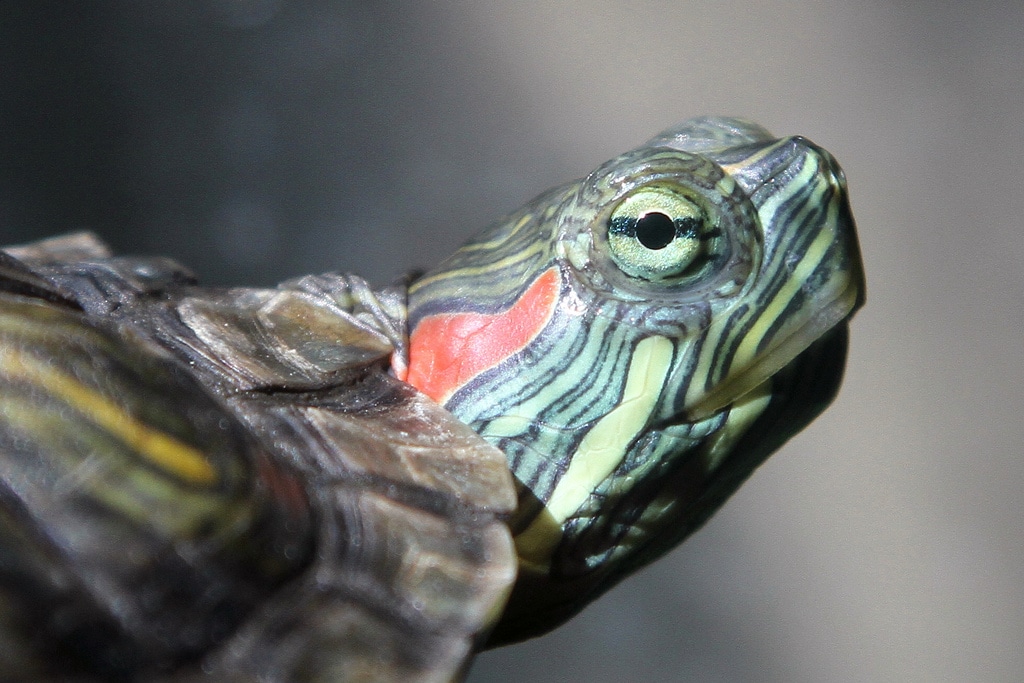
The red-eared slider (Trachemys scripta elegans) is a semi-aquatic turtle from the southern United States and northern Mexico, named for the red stripe behind each eye. It is one of the most popular pet turtles in the world, but it needs a big tank, lots of care and a commitment that can last 20-30 years or more.
Scientific Classification & Quick Facts
| Common name | Red-eared slider |
| Scientific name | Trachemys scripta elegans |
| Kingdom | Animalia |
| Phylum | Chordata |
| Class | Testudines |
| Family | Emydidae |
| Genus | Trachemys |
| Type | Reptile (semi-aquatic pond turtle) |
| Diet | Young eat mostly meat; adults mostly plants |
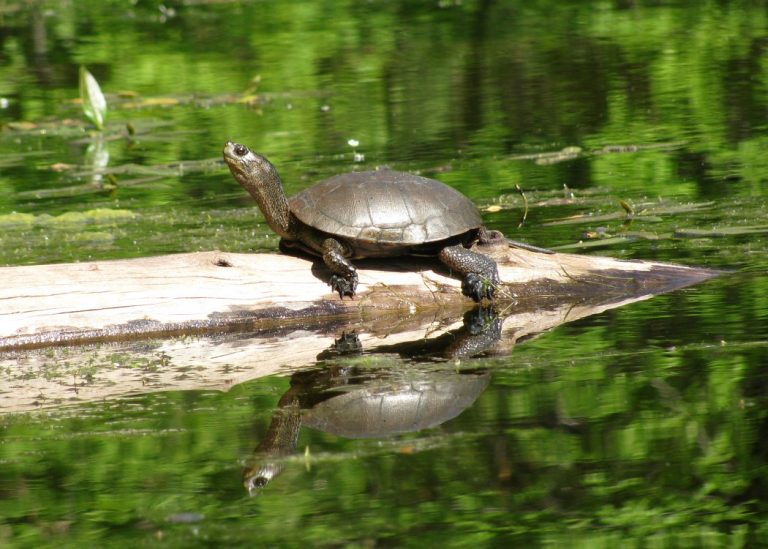
| Habitat | Calm, warm water with logs and rocks for basking |
| Native range | Southern United States and northern Mexico |
| Size | Usually 12–20 cm; some over 30 cm |
| Lifespan | 20 to 30 years; some 40 or more |
| Colours | Dark green shell; small red patch by each ear |
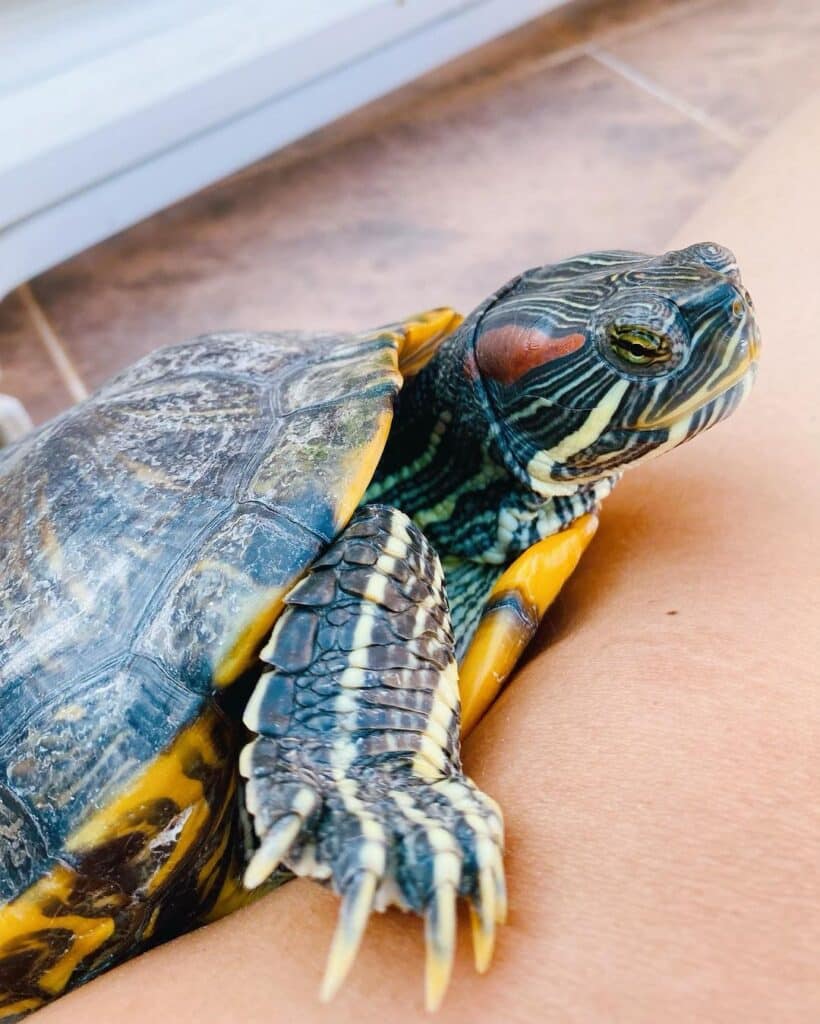
The red-eared slider is a subspecies of the pond slider and belongs to the family Emydidae, the pond turtles. It gets the name “slider” from the way it quickly slides off rocks and logs into the water when it senses danger.
How Do You Take Care of a Red-Eared Slider?
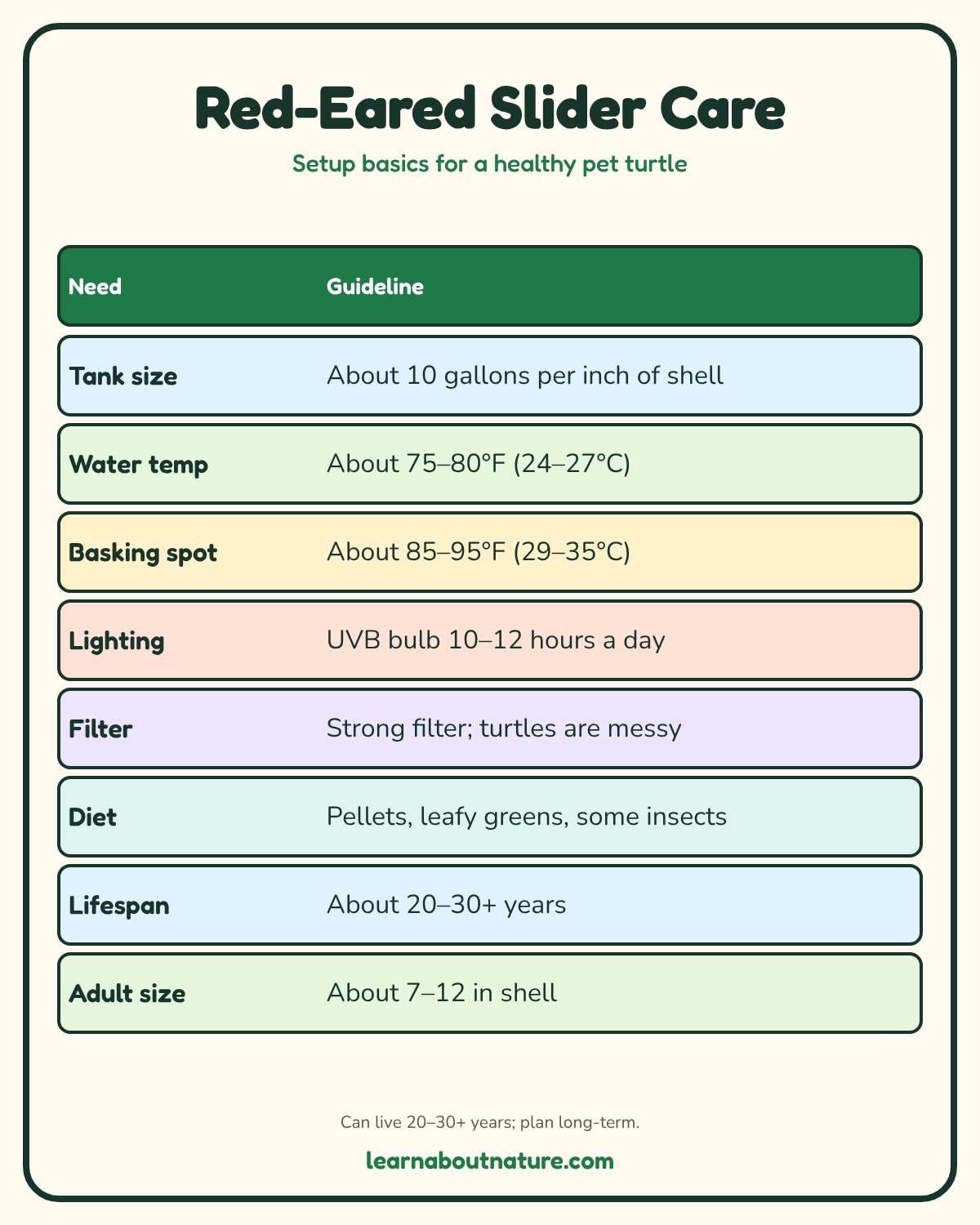
To care for a red-eared slider, provide about 10 gallons of filtered water per inch of shell, a dry basking area at 90-95°F, water at 75-80°F, and a UVB lamp for 10-12 hours a day. Feed turtle pellets plus leafy greens, and wash your hands after handling to prevent Salmonella.
What Red-Eared Sliders Look Like
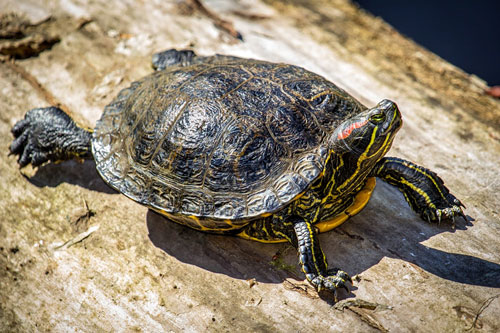
Adult red-eared sliders usually have a shell about 15-28 cm (6-11 in) long. Females grow bigger than males, and large females can reach about 30 cm (12 in).
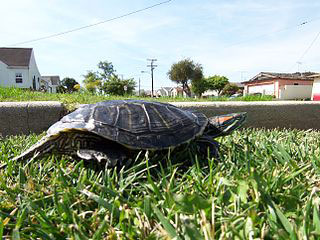
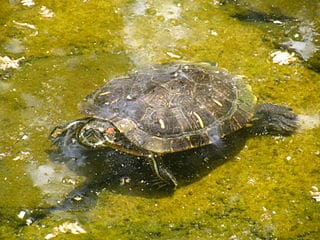
- The top shell (carapace) is olive to dark green with yellow lines and markings, which often fade and darken with age.
- The bottom shell (plastron) is yellow with dark blotches.
- The head, legs and tail are green with thin yellow stripes.
- A bright red or orange stripe sits behind each eye.
Young sliders all look much alike. As they grow, males develop very long front claws, which they flutter in front of a female’s face during courtship, and longer, thicker tails than females.
Habitat and Range
In the wild, red-eared sliders live in the Mississippi River valley and around the Gulf of Mexico, from the southern United States into northern Mexico. They prefer calm, warm water such as ponds, lakes, slow rivers and marshes, with muddy bottoms, plenty of water plants and logs or rocks where they can climb out to bask in the sun.
Because so many pet sliders have been released or escaped, they now live wild in many other parts of the world, including Europe, Asia and Australia. There they compete with native turtles for food and basking spots, so they are considered an invasive species. Some places, including the European Union, have banned selling them.
Red-Eared Sliders as Pets
Sliders are hardy and full of personality, but they are not easy “starter” pets. They grow large, live a long time and need a lot of space and equipment. Never release a pet turtle into the wild. If you can no longer care for one, contact a reptile rescue group.
Housing
A common rule is to provide about 10 gallons of water for every inch of shell length. That means an adult male needs at least a 75-gallon tank, and a large female needs 125 gallons or more. Many keepers use stock tanks or outdoor ponds for adults.
- A powerful filter, because turtles are messy eaters
- A dry basking area where the turtle can climb completely out of the water
- A heat lamp over the basking spot
- A UVB lamp, which helps the turtle make vitamin D3 and build a strong shell
- A bare bottom or large, smooth stones too big to swallow
Temperature
Turtles are cold-blooded, so they rely on their surroundings to stay warm. Aim for these temperatures:
- Water: about 75-80°F (24-27°C), a little warmer for hatchlings and sick turtles
- Basking spot: about 90-95°F (32-35°C), roughly 10-15°F warmer than the water
Keep the lights on for about 10-12 hours a day, and replace UVB bulbs as often as the maker recommends, since they weaken over time even if they still glow.
Diet
Red-eared sliders are omnivores. Young turtles eat more animal food, while adults eat more plants. A healthy diet includes:
- Good-quality commercial turtle pellets as the main food
- Leafy greens such as romaine lettuce, dandelion greens and collard greens (iceberg lettuce has little nutrition)
- Aquatic plants such as anacharis and duckweed
- Occasional treats like earthworms, crickets, shrimp or small feeder fish
Feed young turtles every day and adults every two or three days. Too much food can make turtles overweight and their shells grow unevenly.
Health and Hygiene
Like many reptiles, turtles can carry Salmonella bacteria, which can make people sick. Always wash your hands with soap and water after touching a turtle, its water or anything in its tank, and keep turtle equipment away from the kitchen. Young children should handle turtles only with an adult’s help. Find a reptile vet before you get a turtle.
A Lifelong Companion
A red-eared slider can be a wonderful pet for a family that is ready for a long commitment. Well cared for sliders often live 20-30 years, and some live for 40 years or more. Before getting one, make sure you have the space, time and budget to look after it for its whole life.
Red-Eared Slider Size by Age
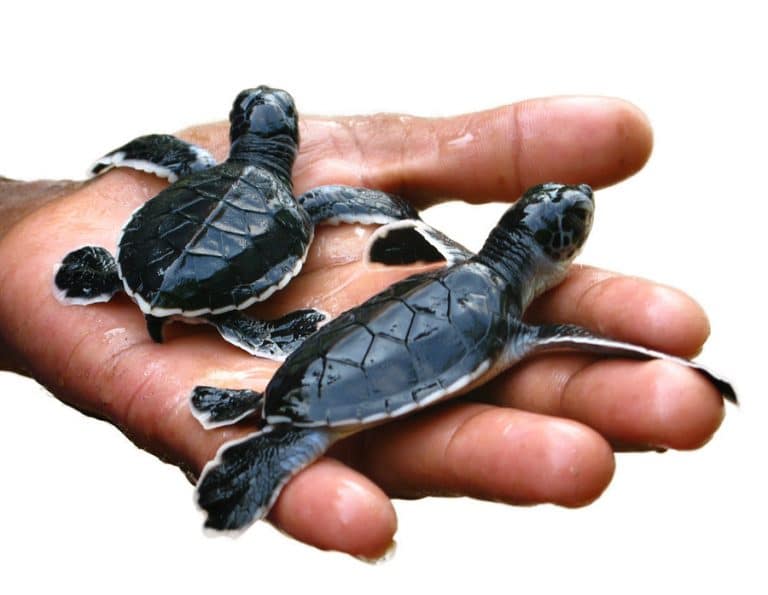
Hatchlings are only about the size of a large coin, which is why many people buy them without realising how big they will become. Growth depends on diet, temperature and whether the turtle is male or female, so these figures are only a rough guide.
| Age | Typical shell length | Notes |
|---|---|---|
| Hatchling | About 1 inch (2.5 cm) | Needs warm water and daily feeding |
| 1 year | About 2 to 4 inches (5 to 10 cm) | Fastest growth period |
| 2 to 3 years | About 4 to 7 inches (10 to 18 cm) | Males start to show long front claws |
| Adult male | About 6 to 9 inches (15 to 23 cm) | Mature around 2 to 5 years |
| Adult female | About 8 to 12 inches (20 to 30 cm) | Mature around 5 to 7 years |
Overfeeding to make a turtle grow faster is harmful. It can cause shell deformities and health problems later in life.
How to Tell If a Red-Eared Slider Is Male or Female
You cannot reliably sex a hatchling. Once a slider’s shell is about 4 inches long, the differences start to show:
- Front claws: males have very long front claws; females have short ones.
- Tail: males have a longer, thicker tail, and the vent (opening under the tail) sits beyond the edge of the shell. Females have a short tail with the vent close to the shell.
- Size: adult females are larger than adult males.
- Plastron: in some males the bottom shell is slightly curved inward.
Female sliders can lay eggs even without a male. A pet female needs a box of damp sand or soil to dig in, or she may hold her eggs too long, which can make her seriously ill.
Common Health Problems
Most health problems in pet sliders come from poor water quality, wrong temperatures or a lack of UVB light. Watch for these warning signs and see a reptile vet if you notice them:
- Shell rot: soft, pitted or smelly patches on the shell, often caused by dirty water or no dry basking area.
- Swollen or closed eyes: often linked to a lack of vitamin A in the diet.
- Respiratory infection: bubbles from the nose, wheezing, or swimming lopsided, usually caused by water or air that is too cold.
- Soft shell: a sign of metabolic bone disease from too little UVB light or calcium.
- Not eating: can be normal for a short time in cool weather, but a long loss of appetite needs attention.
Clean the filter regularly, change part of the water every week and keep a cuttlebone in the tank as an extra source of calcium.
Do Red-Eared Sliders Hibernate?
In the wild, red-eared sliders in cooler areas go through a winter slowdown called brumation. When the water gets cold, they rest at the bottom of ponds, barely moving and breathing very little, until spring warms the water again. In warmer parts of their range they may stay active all year.
Pet sliders kept in a heated indoor tank do not need to brumate, and trying to make them do so can be risky. Brumation should only be done with healthy adult turtles, under the guidance of a reptile vet. A turtle that is sick or underweight could die during the cold months.
Red-eared slider FAQs
Why is it called the red-eared slider?
It has a small red stripe behind each eye, where its ears are. It is called a slider because it slides off logs and rocks into the water.
How long do red-eared sliders live?
They typically live 20 to 30 years, and some live 40 years or more.
What do red-eared sliders eat?
Young ones eat mostly meat such as insects, krill and earthworms. Adults eat mostly plants, such as romaine lettuce and water plants, along with turtle pellets.
Where do red-eared sliders come from?
They come from the southern United States and northern Mexico, around the Mississippi River and Gulf of Mexico. They live in calm water and bask on logs and rocks.
Why are red-eared sliders invasive in some places?
They are the most traded turtle in the world and are often released by pet owners, so they now live in many places far from home where they are a pest.

Randi Jones is the owner and founder of the Nature Gift Store, an online retailer specializing in nature-themed gifts, educational science projects, live animal nature kits and real butterfly artwork. A biology graduate who fell in love with insects, she founded the company in 2001 to make active learning about nature fun, accessible and engaging for children and adults. Her store offers real butterfly frames, home and garden decor and educational live animal kits, including ant farms, worm farms, tadpoles, ladybugs and hermit crabs, and she runs a bug museum in Washington featuring live animals like Eddie the Iguana alongside other reptiles and insects. Randi wrote most of the guides on this site. They first appeared on her long-running nature sites, including Monarch-Butterfly.com, Ladybug-Life-Cycle.com, Frog-Life-Cycle.com, Dragonfly-Site.com and Butterfly Pictures, which have now been brought together here at Learn About Nature.