Mud Turtle
Scientific Classification
| Kingdom: | Animalia |
| Phylum: | Chordata |
| Class: | Sauropsida |
| Order: | Testudines |
| Suborder: | Cryptodira |
| Superfamily: | Kinosternoidea |
| Family: | Kinosternidae |
| Genus: | Kinosternon |
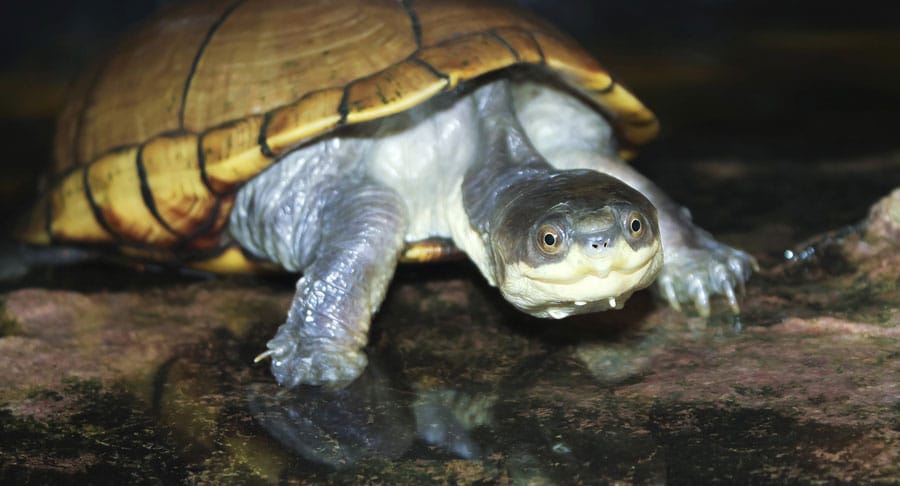
Kinosternon is a genus of aquatic turtles with the local name mud turtle. Mexico, South America, the United States, and Central America are the places where you can see them. You find the best variety of species in Mexico. In South Africa, we find only three species (K. Dunni, K. Leucostomum, and K. Scorpioides)
Some of the typical qualities that make musk and mud turtles ideal as indoor pets are their inquisitiveness, cute size, and enduring nature. An excellent display is one with a big aquarium decorated with plenty of aquatic plants, driftwood and good filtration, and a pair of musk turtles.
The mud turtles resemble the musk turtles in many ways, except that their shell is not sufficiently domed, and they are smaller in size.
Habitat
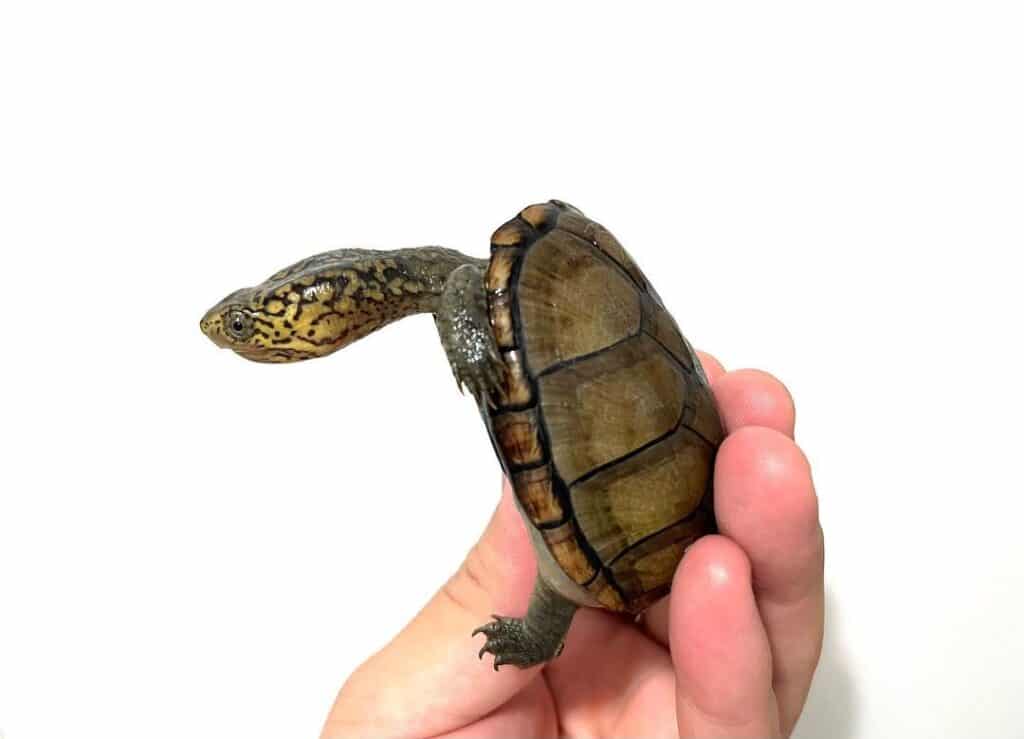
The mud turtles inhabit water bodies with or without plants, ponds and sand bottoms, but normally they like places with sufficient plants. Eastern mud turtles seem to like sluggish and shallow bodies of water.
As a Pet
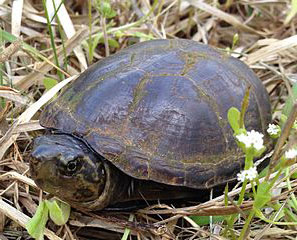
Mud turtles are famous as pets just because of their little size. A fascinating thing about mud turtle is that they grow only to 5 inches and not more. A small space is enough for you to bring up a mud turtle as a pet.
Mud Turtle Housing
A reason why people take pleasure in making mud turtles as a popular pet is its little size, with often a limited growth of 5 inches when adult. There are compact and small aquatic turtles. Still, in spite of their small size as adults, they still require sufficient space indoors to swim and dive.
For accommodating your mud turtle indoors, you need a bulky fish tank with facilities for swimming and diving, and space for dry dock on land. Mud turtles earned their name, not just because they need a muddy enclosure, but because they take a fancy in burrowing in the mud while hibernating. While in captivity, they are not supposed to hibernate so you need not make provision for mud in your enclosure. Make sure however that your aquarium is not very cold.
Diet
Mud turtles eat both meat and vegetation which means they are omnivorous. They enjoy food like fish, tadpoles, worms, insects, together with plants. While in the enclosure feed them with dark-colored fresh green and leafy vegetables, which include dandelion greens, fresh parsley and other like items. Besides this mud turtles have a good appetite for red worms, minnows/guppies, earthworms and snails. Research shows that they have an exceptional and typical liking for shrimps, especially in spring.
Health
The health of the shell is the frequently occurring problem with any aquatic turtle. Inappropriate diet, incorrect lighting, and dirty water cause the shells to flake, rot, and even deform.Some keepers evince concern about an abrupt foul odor or smell that emanates from the mud turtle. You must remember the fact that mud turtles resemble musk turtles in many ways, and similar to them, secrete an awful smelling liquid to repel their predators.
Lighting
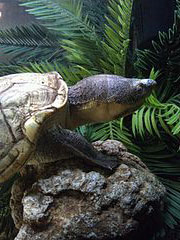
Your mud turtles need sufficient heat lights to heat and light their big aquarium. Provide your enclosure with traditional reptile heating bulbs and also a UVB bulb for facilitating a basking temperature nearing 900F.Nnever allow the remaining part of your enclosure temperature to drop below 700F. A 12 hour cycle is essential for the UVB bulb. Replace this bulb every 6 months, even if it is working. The invisible UVB ray will fuse prior to the visible light fusing. A Mercury vapor bulb is not favorable for many of the mud turtles in aquariums.
Temperature
The ideal temperature range for mud turtles is 80 – 85°F, but they can also tolerate lightly lower water temperatures of about 70 – 75°F. At night you would do well to to drop the temperature by about 50° F.
Handling
You do not handle Mud turtles soon as they require time for adapting themselves to humans. They find themselves safe while in the water, if you take a fancy in scooting them in the water, you develop stress in them.
Having discovered a fondness for insects while pursuing her degree in Biology, Randi Jones was quite bugged to know that people usually dismissed these little creatures as “creepy-crawlies”.