What is Bat Echolocation?
Sound Navigation And Ranging
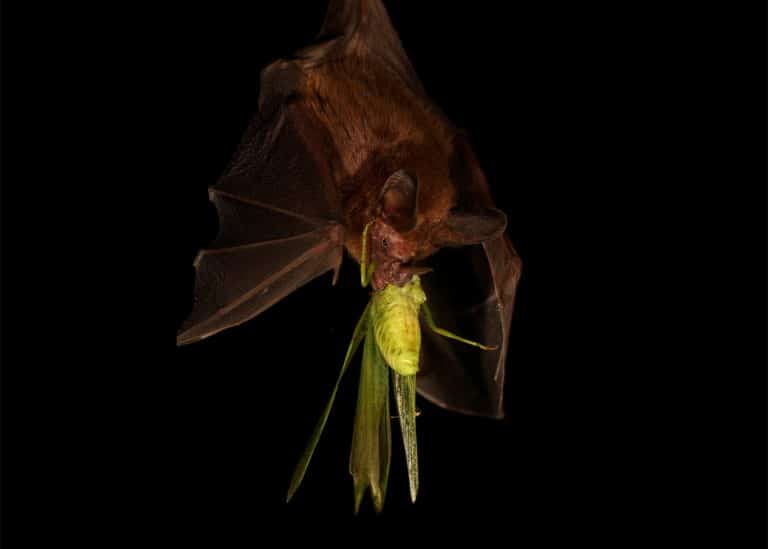
Sound Navigation and Ranging is what we normally know as an abbreviation. Yes…Sonar. It is quite interesting how these little critters have evolved to adapt to their environment, their innate abilities and rise up to the very top of the food chain in their ecosystem.
What is Sonar (echolocation)
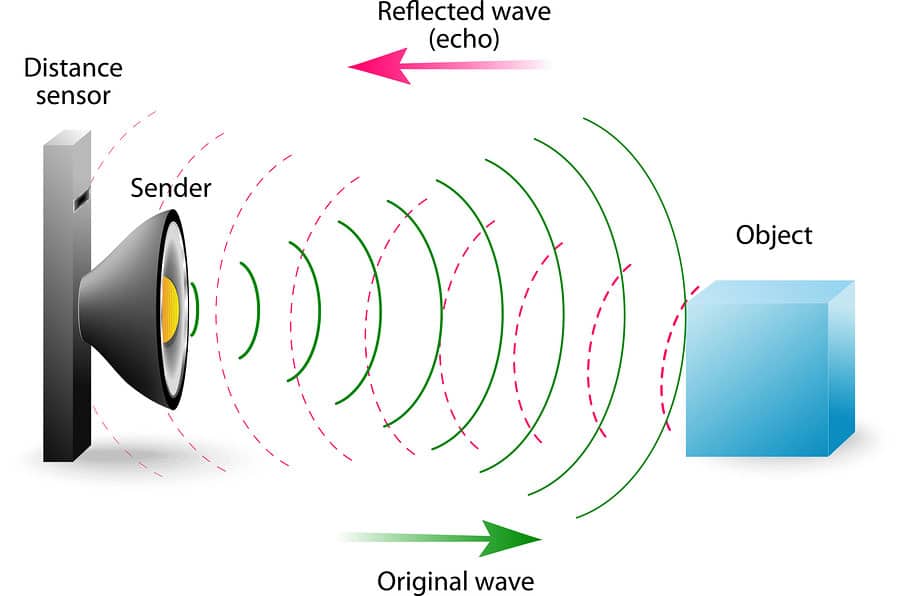
Sonar uses small pulses of sound to locate the position of objects in the vicinity of the source of the sound. These days, it is most used by submarines to find their way around underwater.
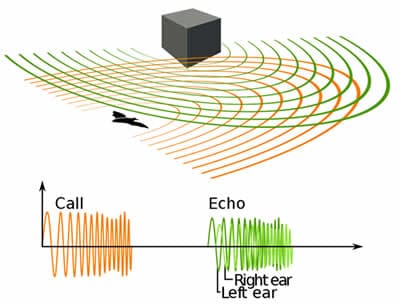
So how is this done? It’s very simple. The bat emits a pulse of sound and listens carefully as the sound hits the objects in its surroundings and is reflected back to the bat’s ears. Using the information gathered this way, the bat creates an up-to-date, 3-dimensional picture of its immediate vicinity and this picture is updated each time the bat receives an echo.
That is how the bats manage to avoid even moving objects while they fly.
The Truths About Echoes
To get into the technical aspects of echoes, the minimum distance for an ‘echo’ is 16.67 feet. So if you stand 16 feet and 8 inches from a wall and shout out your name, it would get an echo. But there are a few other aspects that govern the way sound travels and the speed, which would ultimately determine the speed of sound and in turn, the minimum distance for an echo and things like that. We don’t need to get into those details yet.
So for now, we know this. That bats, like submarines and dolphins use echolocation or Sonar to find their way around, as they fly.
But Why Can’t Humans Do the Same?
Strictly speaking humans can, but it is the persistence of hearing that prevents them from hearing the echo.
Persistence of Hearing is a phenomenon where a sound heard by the ear prevents it from hearing anything else for 0.1 seconds or one tenths of a second. If you go out in the yard and yell, you would get an echo but you would not be able to hear it. However, if you do the same thing at a large valley, you would hear the sound bounce off the distant hills and rocks, and get back to you. Since the echoes coming off distant objects take much longer than 0.1 seconds to get back, you would hear them clearly.
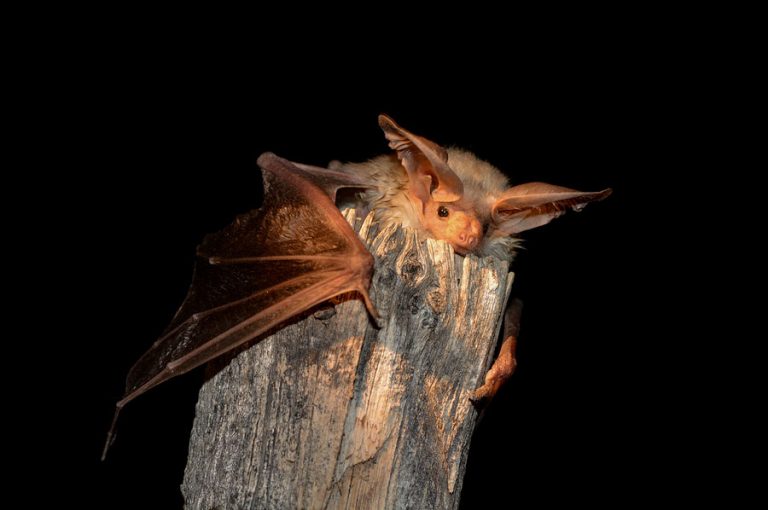
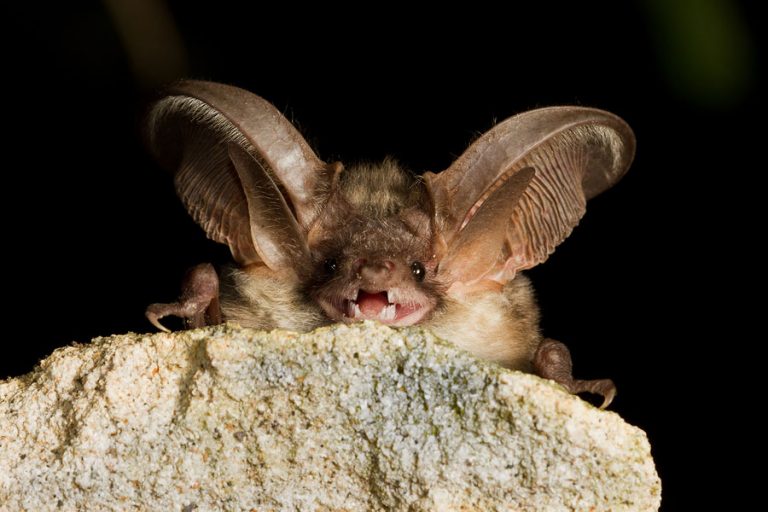
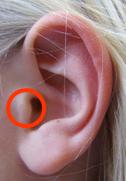
But this property is a problem even for the bat. How have they solved it? Again, simple but ingenious is the beauty of Nature’s solutions to problems. In the photograph you see the small muscular projection to the front of the ear circled? That is a piece of tissue that when folded into the ear, completely covers the ear duct. This essentially shuts off the sound or at least brings it down to a very great extent.
Now go out in the yard, fold this portion into your ear (it won’t hurt) release it as soon as you call out your name. Bingo! You’ll hear a distinct echo coming off the fence, the trees and perhaps even your neighbor’s house.
Bats have a small muscle that folds this tissue inside each time it makes its Sonar call. Hence it can very clearly hear the echo.
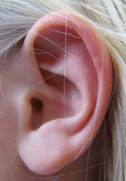
Now if you jog along, hands to your ears, calling repeatedly, and releasing the muscle each time you finish calling, you will be able to hear the different echoes and will, if you pay enough attention, be able to locate where the echo is coming from. This means you would know which object the sound bounced off…and this in turn means you would know that there is an object there. Just like the bat can. But bats have gone a few steps further than that. By measuring the time it takes for each echo to return, it is able to calculate the distance to each object in its flight path. Isn’t it amazing?
So advanced is their hearing and their brain’s processing power of echoes, bats can actually detect the shape of objects in their path and dodge them with pin point precision. You might see raven, pigeons and sometimes even owls being hit by a bus…but you’ll never see a bat being hit by anything while it is flying as it would know exactly where the bus is, the shape of the bus, the speed of its approach and also the precise angle by which it should change its direction of flight to avoid hitting it.
To aid them in their aerobatics, bats have very large wing spans when compared to their body and because their wings are actually leathery, rather than feathery, they catch more air and this in turn exponentially increases the degree of control they have in their flight.
All in all, bats are by and far the best fliers there are, even when compared to dragonflies and humming birds although they are not really capable of backward flight. However, there are problems that even bats cannot fly away from.
They need their habitat and they need warm climates to survive and many of the bat species are vulnerable to extinction due to deforestation, habitat loss, and excessive use of insecticides. Providing bats with bat houses can help to control the population decline by arranging areas for them to roost, hibernate and raise their young pups. Wouldn’t you be proud to say you saved 1 family of bats by building a small bat house in your back yard? After all they are such amazing animals and it would be a shame to lose them.
Having discovered a fondness for insects while pursuing her degree in Biology, Randi Jones was quite bugged to know that people usually dismissed these little creatures as “creepy-crawlies”.