King Snake
Scientific Classification & Quick Facts
| Common name | Kingsnake |
| Scientific name | Lampropeltis |
| Kingdom | Animalia |
| Phylum | Chordata |
| Class | Squamata |
| Family | Colubridae |
| Type | Reptile (non-venomous snake) |
| Diet | Rodents, birds, amphibians, reptiles including snakes |
| Habitat | Hills, deserts, savannas, thin woodland |
| Native range | Western North America, e.g. California to Colorado |
| Colours | Black with yellow or white bands, rings or spots |
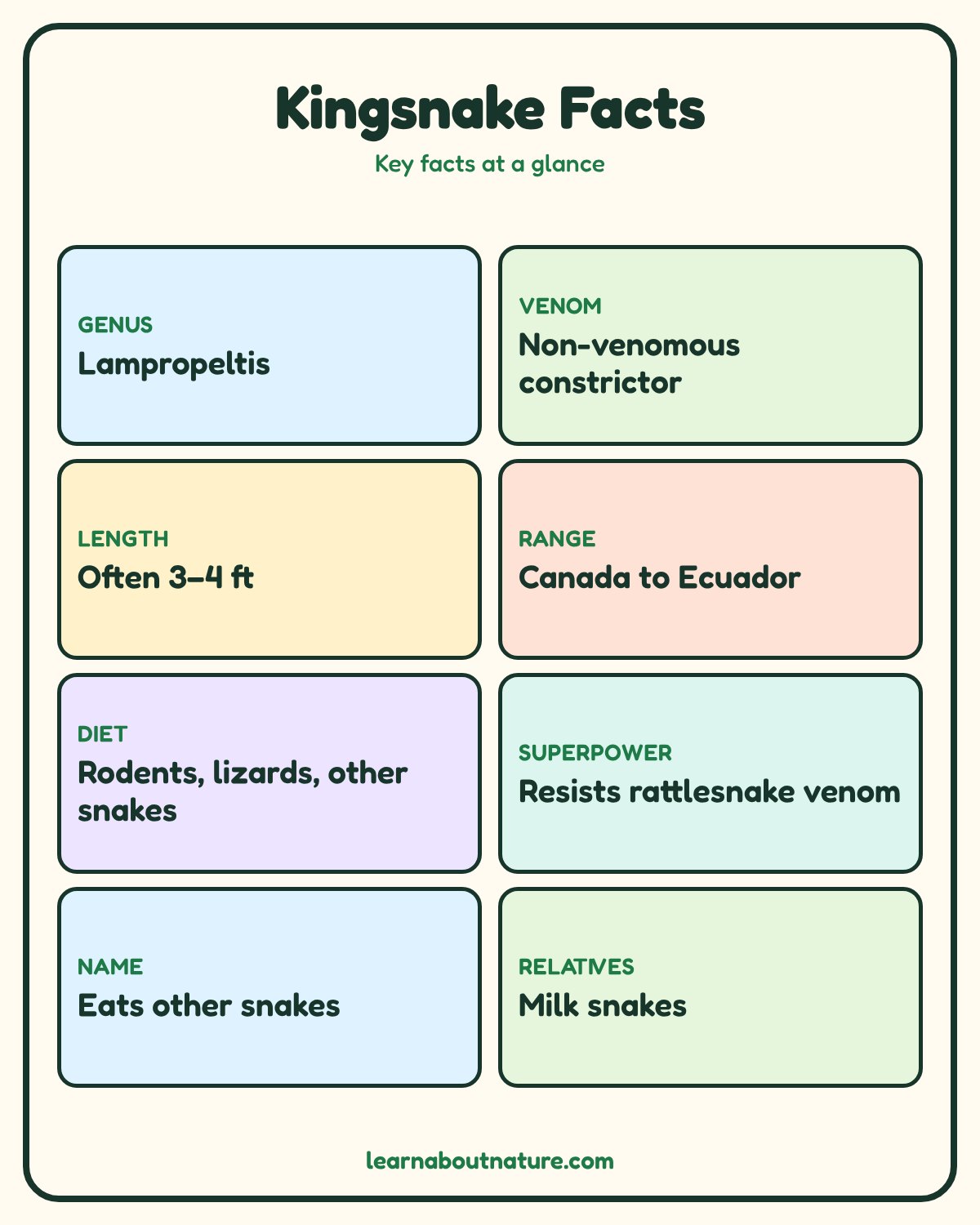
| Special feature | Eats venomous snakes; resistant to their venom |
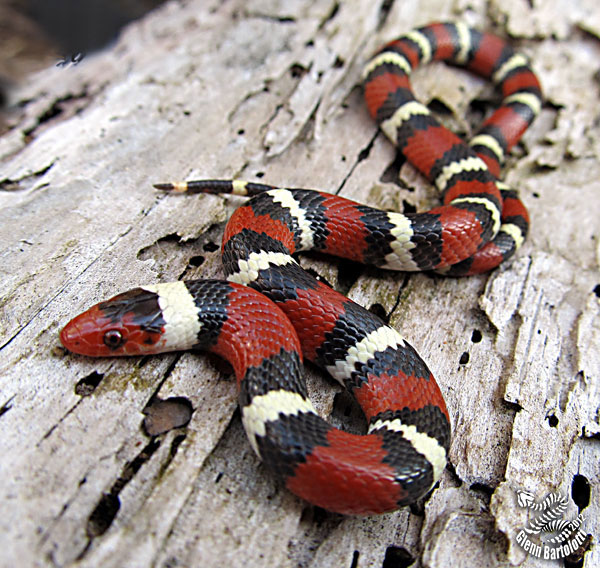
The King Snake belongs to the category of colubrid snakes which are members of the genus Lampropeltis, which includes the milk snake and a number of other species and subspecies. The average length of a king snake is about 1 to 1.5 meters (3 to 5 feet), although some grow longer. It is generally black in color with patches of yellow marks on its belly and a band of yellow or white on its back. The bands divide and join each other, creating a chain-like structure along its side. One of the members of the king snake genus is the milk snake. It has various other species.
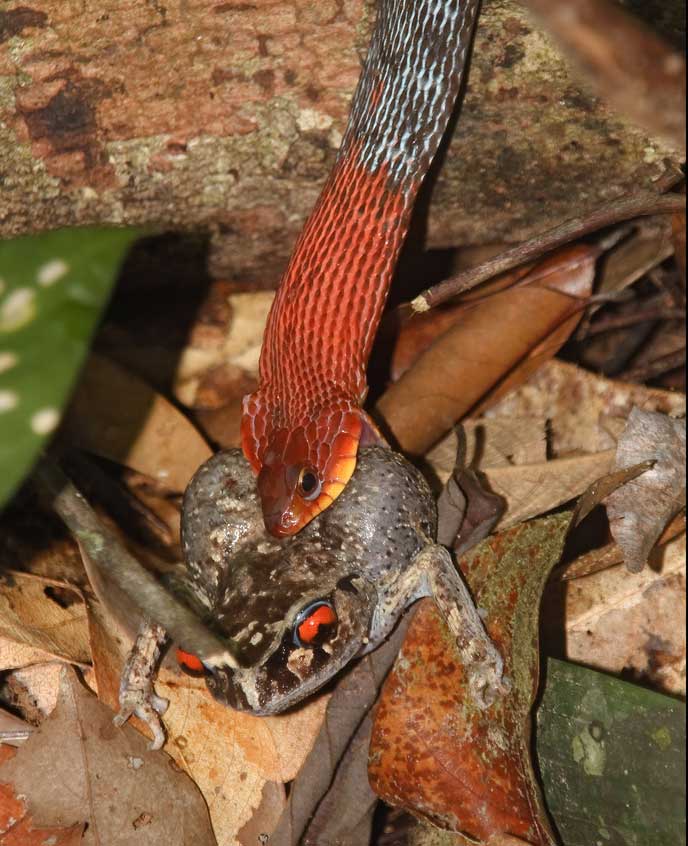
You can call them ground-dwelling snakes with a habit of killing and eating other snakes. The snakes that they eat may be venomous, including Rattlesnakes Cottonmouths and Copperheads.King snakes are highly resistant to their venom.
It is a belief that the ability of eating other snakes helps the King snakes to acquire their royal title. The capability of the King snakes to overcome various poisonous snakes had helped them to get crowned King of all snakes; hence the royal tittle King Snake.

Anatomy

King snakes can appear in various possible colors, which is a main reason for them to become popular pets. It has become difficult to describe the common color of the snake because of its diverse colors, as breeders even arrive at various new colors by cross breeding.There is diversity in a variety of colors between various subspecies of the King snake that may appear in various sparing color combinations of bright yellow in black as in the California King snakes. Or, they may appear simple black like the Mexican King Snake. Their scales are shiny and smooth with rings, spots, or a combination of both.They have a head with a dark top and a lighter underside.
Every color combination is equally attractive. That is why the King Snake has such a demand.
Behavior
They possess a comparatively amenable attitude, and you can easily train them. Their active and curious temperament makes them pets worth keeping. You can easily manage them. You can keep them safely and these snakes offer a good option to those people who are novices in this hobby. Predominantly, it tends to be a bit difficult to handle hatchlings, but regular handling makes it easy to tame them down.Except for the period of hibernation in winter, these snakes prefer to live a solitary life.
The Kingsnake’s hatchlings may seem a little aggressive, but with patience and sound and habitual handling you can easily domesticate them. They have a tendency to bite or release a foul smelling musk odor. They will often release fecal matter if handled unfamiliarly in captivity, and they may vibrate their tails, hiss or go into a ball-like posture, but with the time, the snakes cease this defensive trick of theirs..The bite of king snake rarely hurts and this is a feature of comfort to those who desire Kingsnake pets.
Habitat
You usually see the Kingsnakes in hilly areas, desert region and in barely forested areas. Common Kingsnakes usually inhabit the desert, mountain regions, savannahs and thinly wooded forests. They have a preference of low-humidity level in their habitat due to a dry climatic conditions in their native homeland. They are generally diurnal in nature, but sometimes hot summer temperature makes them more active at night to avoid the high temperature during the day.
You can find the California Kingsnake all over the state, with the clear exception of the edges of the northwest areas or the coast in the northwest and the wet redwood areas. You can also see them extending into Nevada, Oregon, Utah, Colorado, Arizona, Baja California and New Mexico.
As a Pet
Breeding
Breeding season of the king snakes generally persists from April to July with an average hatching of 4-15 eggs. Sometimes the snakes are kept together by their keeper for a whole year, or they introduce pairs for breeding. Usually, after their brumation, the female goes for shedding. If it happens within a month, the breeder will consider the next opportunity for the male to enter to the female cage is after their shedding, but this is not a rule, as sometimes, breeding takes place without shedding. Some keepers keep the males with the females for a long time. Many of them after their breeding is over.
Housing

Food
King Snakes depend on a variety of diets including birds, rodents, amphibians and various reptiles (including other snakes). They have the capability of feeding themselves with rats and mice and still remain in good health. The rodent’s size should adjust to the size of the mouth. Each hatchling can subsist with one pinky mouse every 5-6 days, but you can increase their feed to an adult mouse every 7-10 days as they grow. A large size snake can eat 2 adult mice per feed..For variation in their diet, you can give a matured snake a chick as feed. Keep in mind not to feed your snake with live food as it can bite your snake. You must keep the frozen rodents from the shops at room temperature before giving it to your snake. This can serve as a good food for your pet. You should avoid wild rodents as they possess parasites.
Handling
The Kingsnakes are very energetic and active, and they love to exercise outside the vivarium..By regular handling you can make them tame down easily. They are very powerful snakes, but easy to handle.
Kingsnake FAQs
Why is it called a kingsnake?
Kingsnakes eat other snakes, even venomous ones like rattlesnakes, cottonmouths and copperheads. They are highly resistant to the venom, so they are crowned ‘king’ of snakes.
Are kingsnakes venomous?
No. Kingsnakes are not venomous, and their bite rarely hurts. When scared they may release a stinky musk, hiss, shake their tail or curl into a ball.
What do kingsnakes eat?
They eat birds, rodents, amphibians and reptiles, including other snakes. In captivity they do well on mice and rats.
Where do kingsnakes live?
They live in hilly areas, deserts, savannas and thinly wooded forests. They prefer dry climates, and the California kingsnake lives in most of California and nearby western states.
Do kingsnakes lay eggs?
Yes. They breed from April to July and lay about 4 to 15 eggs at a time.

Randi Jones is the owner and founder of the Nature Gift Store, an online retailer specializing in nature-themed gifts, educational science projects, live animal nature kits and real butterfly artwork. A biology graduate who fell in love with insects, she founded the company in 2001 to make active learning about nature fun, accessible and engaging for children and adults. Her store offers real butterfly frames, home and garden decor and educational live animal kits, including ant farms, worm farms, tadpoles, ladybugs and hermit crabs, and she runs a bug museum in Washington featuring live animals like Eddie the Iguana alongside other reptiles and insects. Randi wrote most of the guides on this site. They first appeared on her long-running nature sites, including Monarch-Butterfly.com, Ladybug-Life-Cycle.com, Frog-Life-Cycle.com, Dragonfly-Site.com and Butterfly Pictures, which have now been brought together here at Learn About Nature.