Black Rat Snake
Scientific Classification
| Kingdom: | Animalia |
| Phylum: | Chordata |
| Subphylum: | Vertebrata |
| Class: | Reptilia |
| Order: | Squamata |
| Family: | Colubridae |
| Genus: | Elaphe |
| Species: | Elaphe obsoleta obsoleta |
The biggest snake found in Virginia is The Black rat snake, Elaphe obsoleta obsolete. The length of this full-grown snake is 8ft. These black snakes are often seen in the fields, farms, and in uptown gardens. These are the ones we often find around constructions, foraging for rodents, little birds, and amphibians. These black rats are in a sense, quite timid, even though they are often seen all through the summer, when they face a threat, they may run for life frozen in fear.
Rat snakes are good friends of the farmers; they are helpful in controlling the number of pests which are a threat to the barns and in the fields. The acquisition of land for development, felling of trees, etc. are some of the reasons for the decrease in their territory. In spite of this they sustain with a good number. The people around are not aware of the details of these rat snakes, and as such, persist to view them as a threat to their lives.
Anatomy
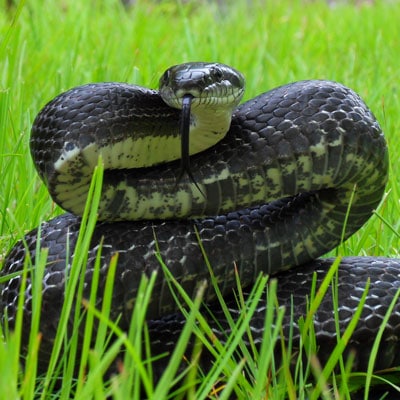
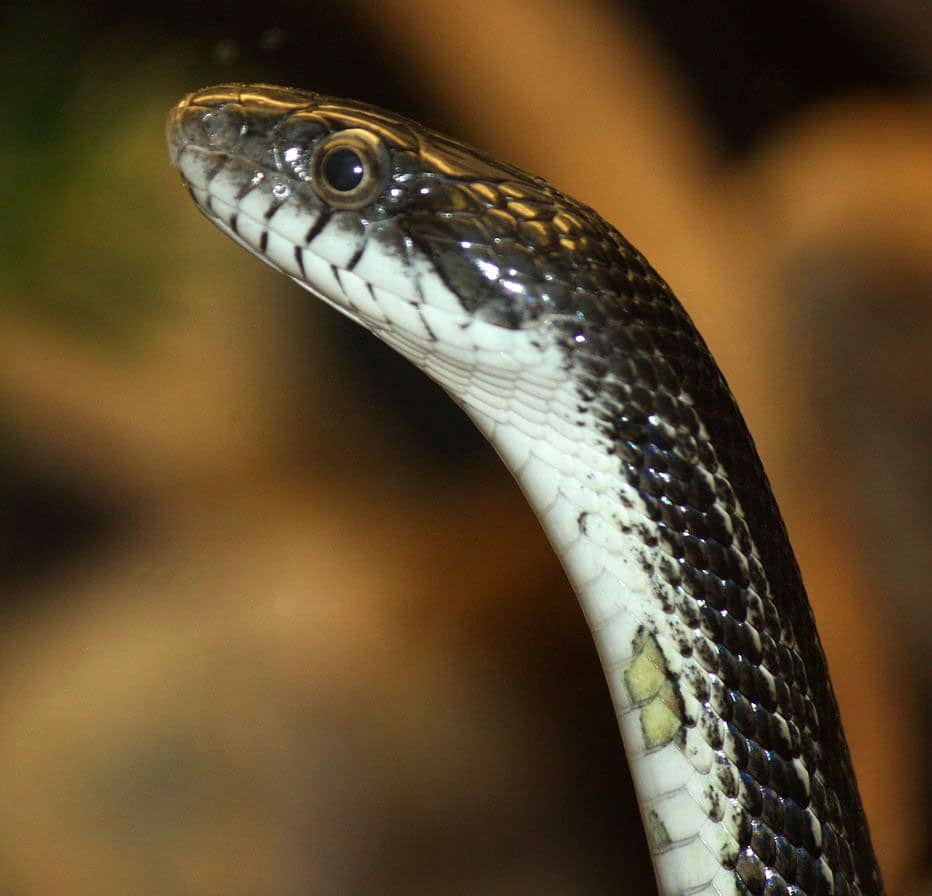
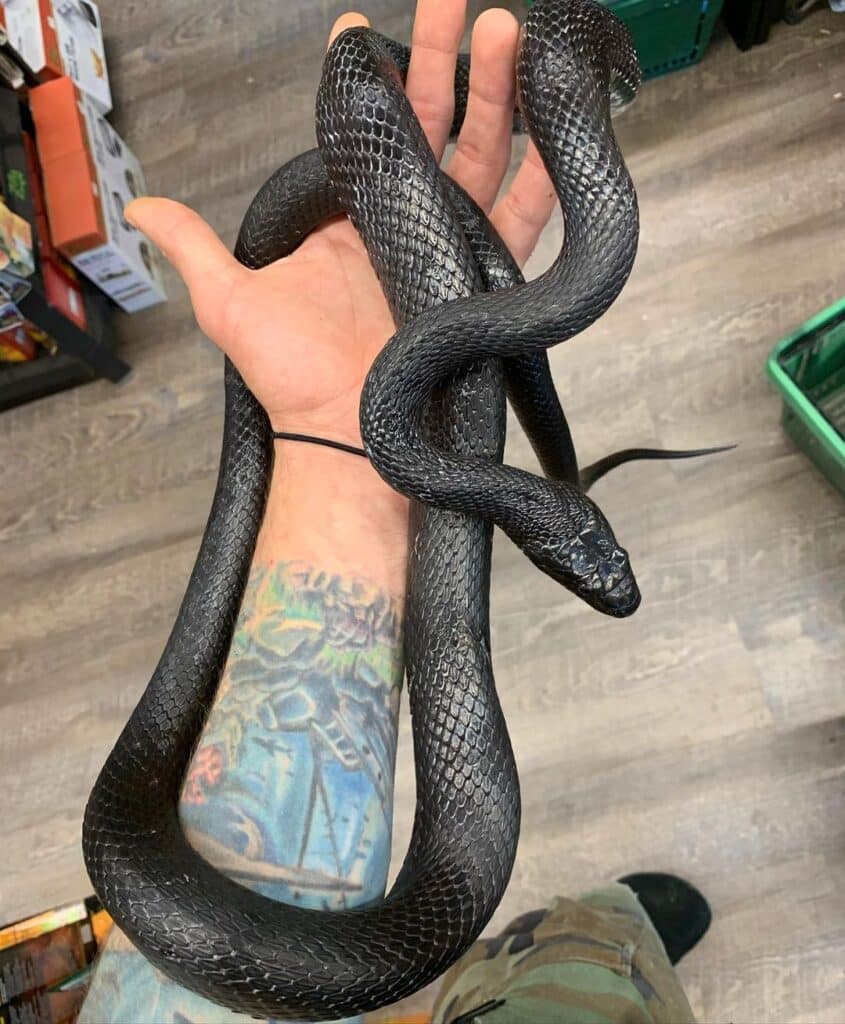
Other than having the chin colored white, the black rat snake is totally black, simulating its name. The black rat snake babies are light gray with black spots on its back. In the course of its growth, the color turns darker and darker, thus attaining its parent color. These babies are always erroneously pictured as Copperheads, since the design of their skin is similar. Even though a major portion of the body is black, a little shade of white is visible in its scales. Its belly too is white in color.
Behavior
The Black Rat Snake is very lively at night time during summer and in the fall and spring, they are lively at day time.
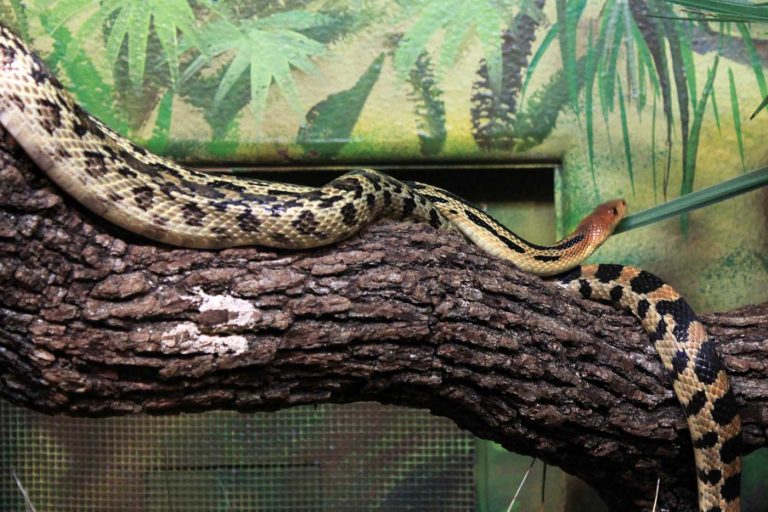
They are expert climbers and climb the top of trees, hunting for their prey. The holes made by woodpeckers are a good place for them to hide. Black snakes climb the roof beam in barns and similar constructions
The Black Rat Snakes are very good at encircling and squeezing their prey (they are powerful constrictors). The moment they snatch their prey, they wind their body round the prey and press it till it chokes for breath.
Habitat
The widespread rat snake is none but the black rat snake. It spreads all over from South of New England all along the Georgia and along the west to the North of Alabama, Louisiana and Mississippi and also along the southern part of Wisconsin and the Northern part of Oklahoma. Besides, they also inhabit a remote place in North of New York and South of Canada.
As a Pet
Breeding
The Black Rat snake is no different from the other snakes, in the matter of laying eggs. In the midst of March and May, snakes start to come out of their hibernation in winter. The end of April and the beginning of May or start of June is the time when the male starts to find its mate. The male begins to hang around till the female passes by. Then by the use of pheromones, it communicates with the female and takes the lead in mating. The male snake reaches the female snake, brings himself in alignment with her and tries to enfold its tail round that of the female, keeping their vents almost near. Certain males grip the female with their mouths to keep her in position, thus obstructing her escape. Further the male inserts its erected hemipenes in that of the female’s cloaca; at this moment many tiny spines fasten the hemipenes steadfastly. The time for mating is just a few minutes or a fraction of an hour.
Housing
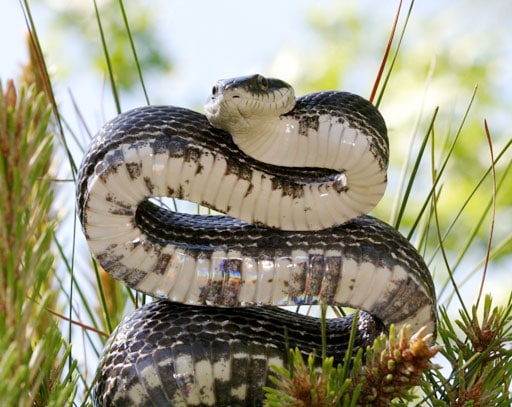
Black Rat Snake is an expert in climbing (half-arboreal), In case you possess an additional secure place in your house that can offer the snake provision for climbing, it is an advantage. Make sure to provide a safe latch and sufficient cage height to satisfy the snake’s arboreal instincts.
In the cage, keep a big bowl large enough for the snake to immerse itself and also keep some substrate for it to hide. In nature, Black Rat Snakes mostly inhabit thick wooded regions, hence provide them a substrate that simulates a natural surrounding. Jungle Mix or Reptile-Bark is ideal.
Food
When this black rat snake is young, it consumes baby mice, tiny lizards and perhaps tiny frogs. The diet of a grown up snake is mainly rats and mice, and also moles, chipmunks and tiny rodents. In addition, they consume young birds and bird’s eggs. They slay their prey by squeezing them to death.
Pet rat snake keepers feed their pet snake with rats and mice, as they are easily available in several pet stores. Besides online purchase of frozen stuff is possible. It is best to feed your rat snake once a week, whereas it depends on the size of your snake and that of the food
Handling
Rat snake will be a good choice for a selection as a pet. You can always handle it safely.

Having discovered a fondness for insects while pursuing her degree in Biology, Randi Jones was quite bugged to know that people usually dismissed these little creatures as “creepy-crawlies”.