Aldabra Tortoise

Scientific Classification & Quick Facts
| Common name | Aldabra giant tortoise |
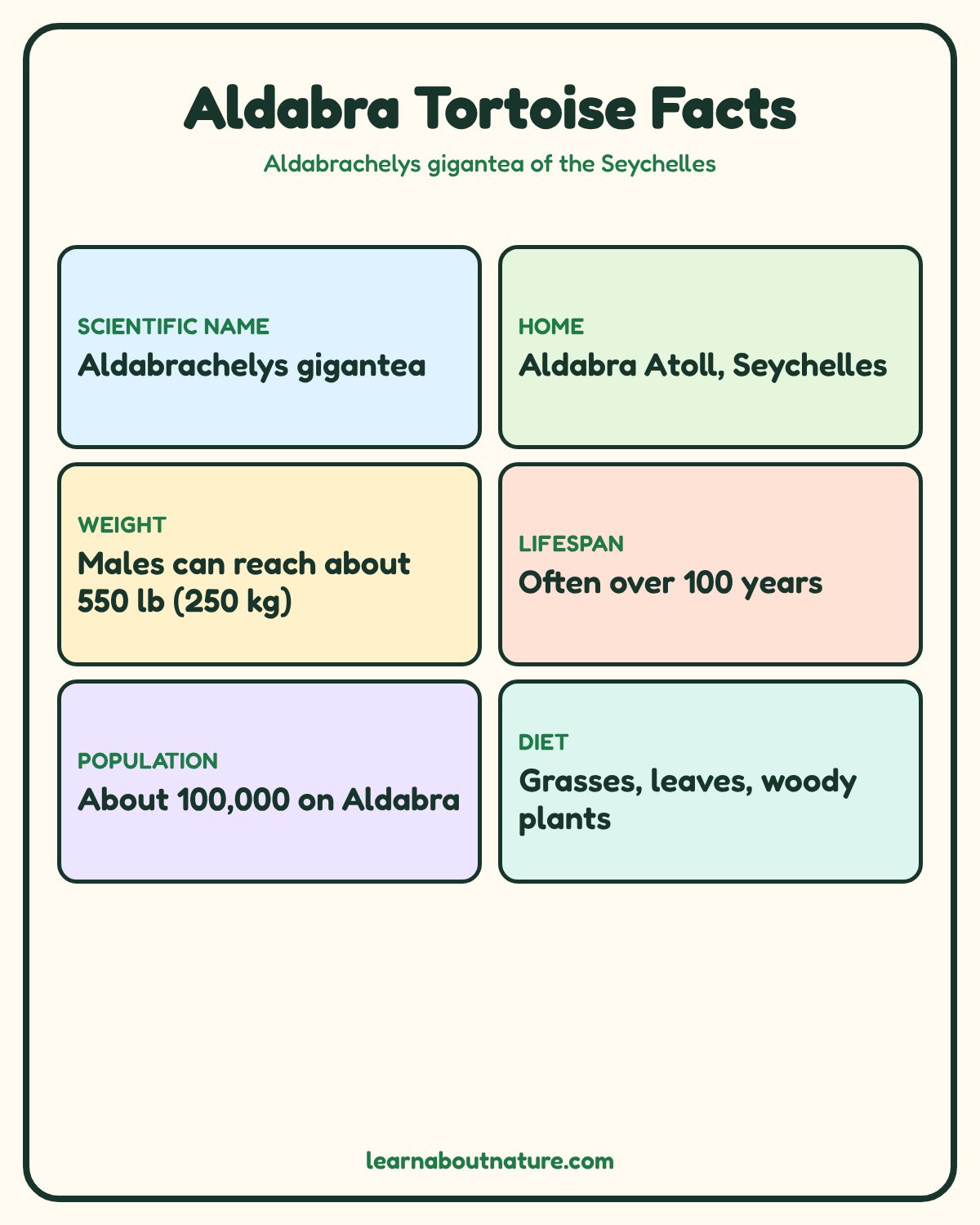
| Scientific name | Aldabrachelys gigantea |
| Kingdom | Animalia |
| Phylum | Chordata |
| Class | Testudines |
| Family | Testudinidae |
| Genus | Aldabrachelys |
| Type | Reptile (giant tortoise) |
| Diet | Mainly plants; sometimes small invertebrates and carrion |
| Native range | Aldabra atoll, Seychelles |
| Size | Males about 120 cm (47 in); females about 90 cm (35 in) |
| Weight | Males about 250 kg; females about 150 kg |
| Lifespan | Reported over 100 years |
| Special feature | Makes clearings in forests like an elephant |
Aldabra Tortoise, Aldabrachelys gigantea, has one of the longest life spans on earth. They could very well have the longest lifespan. Nobody exactly knows how long these animals live, If reports are true, their life span exceeds 100 years.
These are definitely the biggest creatures living on the Island, The Aldabta tortoises hold a position similar to the elephants of Africa as well as Asia. Like elephants, they are the primary vegetation consumers. Similarly, they change their habitats, as they search for food. They even uproot shrubs and even small trees for getting nutritious leaves. This creates clearings and pathways in the forest for other animals. The seeds that pass through the digestive system of the creature ultimately becomes the food of many creatures.

Anatomy

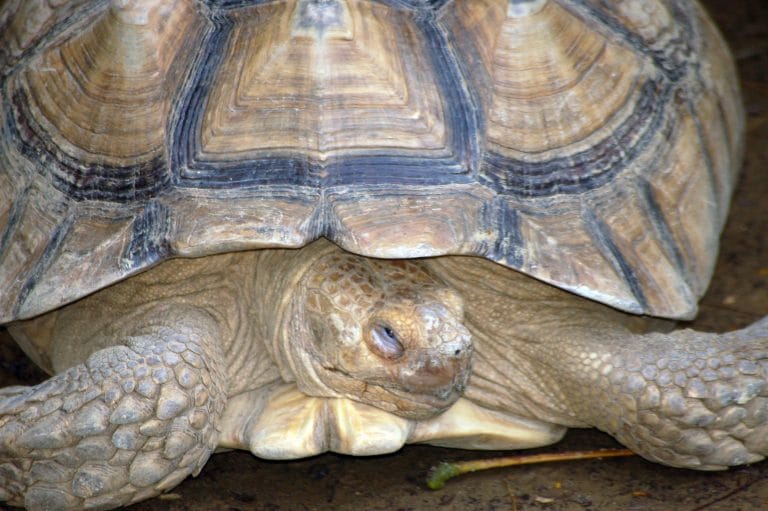
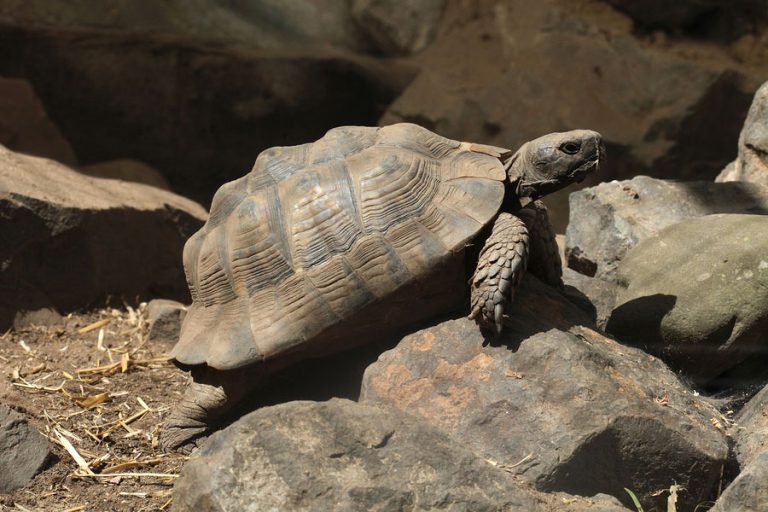
The upper shell or carapace of the Aldabra tortoises has a high dome shape. The carapace sports brown or tan color. The stocky legs with heavy scales provide support for its heavy body. Their long neck helps the animals to reach tree branches as high as a meter, when they forage for food.
Aldabra Giant Tortoises are very similar size-wise to the Galapagos giant tortoises. The average carapace length is around 120 centimeters or 47 inches. The weight of the average male tortoise is around 250 Kilos or 550 lbs. In comparison with the males, the females are much smaller. The average female has a shell length of about 90 centimeters or 35 inches. The average weight is 150 Kilos or 330 pounds. The tail of the male is longer and thicker than that of the female.
Behavior
These giant tortoises are typically very cautious and slow. When the situation arises, they can surprise you with their considerable speed. Sometimes they perform dangerous acrobatic stunts. They rise on their hind legs very dangerously to reach low overhanging branches. They may fall over on their backs and they will not be able to right themselves. They even risk death this way. The Mexican biologist, Ramfrez observed this behavior and promptly called giant turtles, the ninja tortoises.
Habitat
A major portion of the giant tortoise population inhabits the Aldabra atoll islands in THE Seychelles. The atoll is kept free from human influence, and houses around 100,000 of the species. This is the largest population of the species in the world. We can see an isolated population of Aldabra giant tortoises in Changuu Island near Zanzibar. Captive populations of giant tortoises exist in the conservation parks in Rodrigues mangrove swamps.
As a pet
Breeding
The breeding season is between February and May. The female tortoises lay eggs in shallow nests. A clutch can have 9 to 25 eggs. The fertility of the eggs is less than 50% generally. A female can lay multiple clutches of eggs in a year The eggs hatch between October and December after incubation. In captivity, artificial incubation is more effective. They hatch faster if you incubate the eggs between 81 and 86 Degrees.
Housing

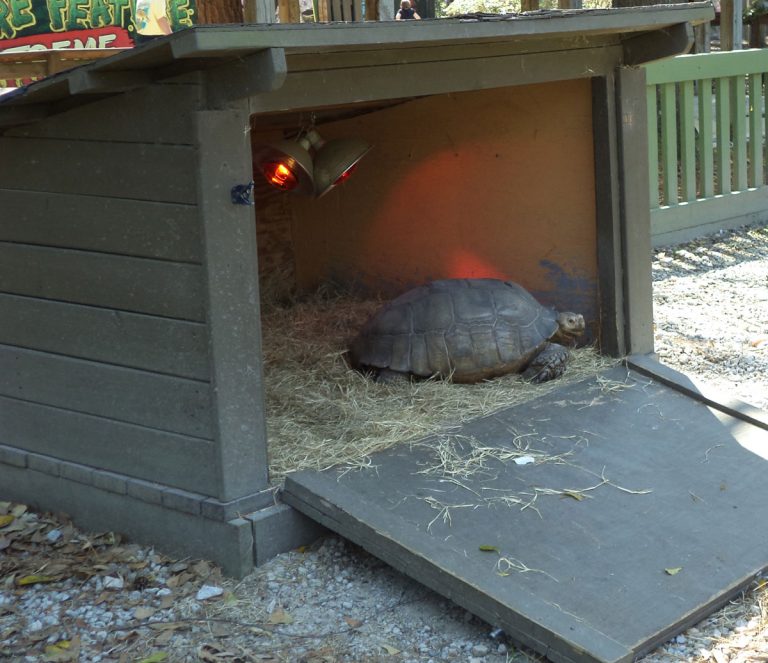
Outdoors is the best place to house Aldabra tortoises. You can keep the hatchlings up to two years indoors. Beyond two years they need the freedom of the great outdoors to roam. Tortoise tubs will do for babies less than a year old. You should spread bark or crushed coconut at the bottom of the enclosure. You should provide a hot spot of 90 degree F at one end. The ambient temperature should be around 80 Degrees. Mercury lamps are ideal as they provide both UVB and heat.
The giant tortoises grow to very large sizes. The bigger the enclosure, the better for them. We can house them in pens made of cinder blocks. The wall should be a bit more than two feet high. The paddock area can be 100” x 30”. The size of the paddocks can vary with the number of pets you keep.
Food
Though they are primarily vegetarian, These giant opportunists are flexible in the matter of diet. When it comes to nutrition for survival, the tortoise may feed on small invertebrates or even carrion.
Handling
These giants are smart, entertaining and have great personality. Just watching them is a great way of relaxing.
Aldabra giant tortoise FAQs
How big are Aldabra tortoises?
Males have a shell about 120 cm (47 inches) long and weigh around 250 kilograms (550 pounds). Females are smaller, at about 90 cm and 150 kg.
How long do Aldabra tortoises live?
Nobody knows exactly, but reports say they live for more than 100 years, which could make them one of the longest-lived animals on Earth.
Where do Aldabra tortoises live?
Most live on the Aldabra atoll in the Seychelles, where about 100,000 roam free of human influence. Small groups also live on Changuu Island near Zanzibar.
What do Aldabra tortoises eat?
Mostly plants, but they are flexible. They can also eat small invertebrates or carrion. They even uproot shrubs and small trees to get at leaves.
Why are Aldabra tortoises like elephants?
They are the main plant eaters on their island, and their feeding opens up clearings and paths in the forest. Seeds that pass through them become food for other animals.

Randi Jones is the owner and founder of the Nature Gift Store, an online retailer specializing in nature-themed gifts, educational science projects, live animal nature kits and real butterfly artwork. A biology graduate who fell in love with insects, she founded the company in 2001 to make active learning about nature fun, accessible and engaging for children and adults. Her store offers real butterfly frames, home and garden decor and educational live animal kits, including ant farms, worm farms, tadpoles, ladybugs and hermit crabs, and she runs a bug museum in Washington featuring live animals like Eddie the Iguana alongside other reptiles and insects. Randi wrote most of the guides on this site. They first appeared on her long-running nature sites, including Monarch-Butterfly.com, Ladybug-Life-Cycle.com, Frog-Life-Cycle.com, Dragonfly-Site.com and Butterfly Pictures, which have now been brought together here at Learn About Nature.