Goliath Tarantula
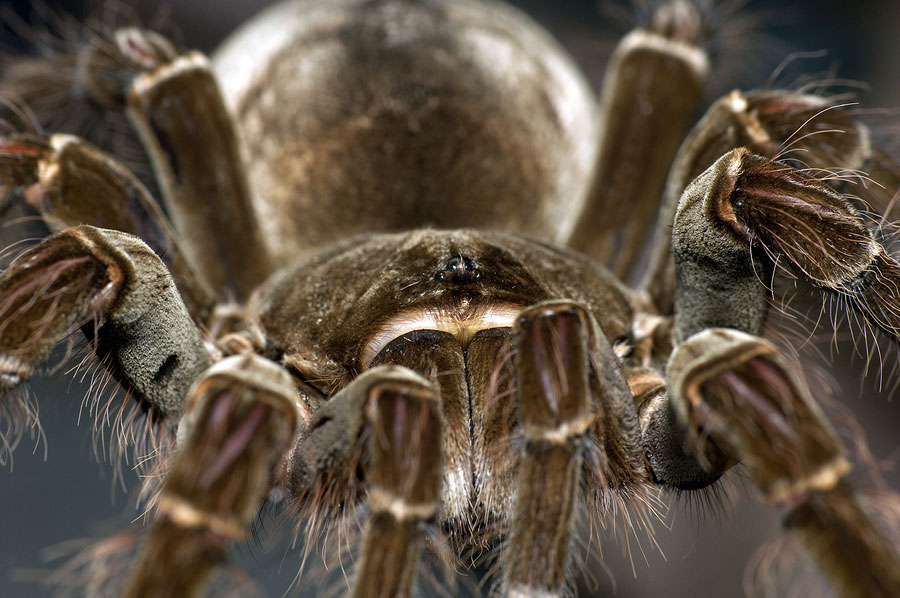
Goliath bird-eating tarantula Quick Facts
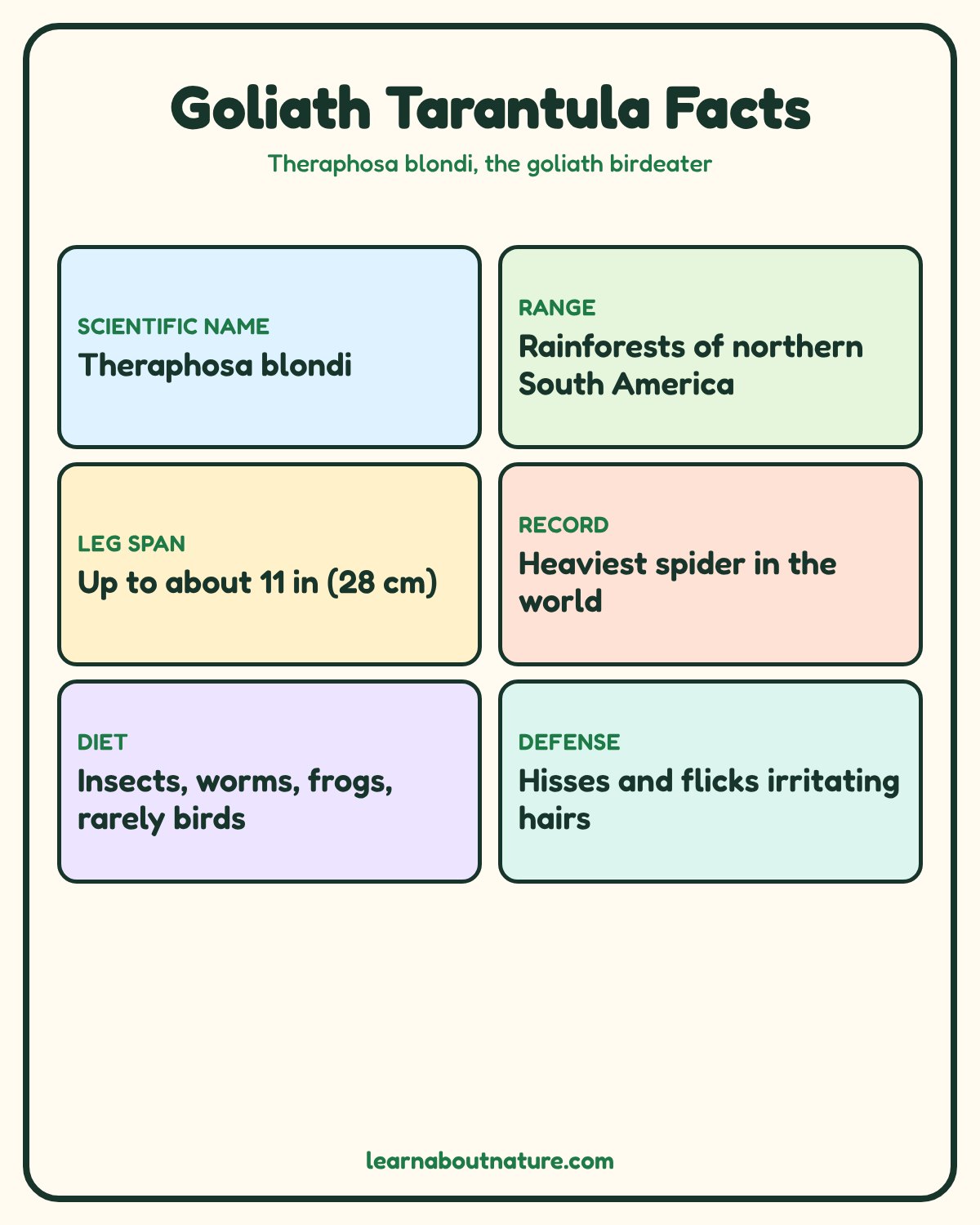
| Common name | Goliath bird-eating tarantula |
| Scientific name | Theraphosa blondi |
| Kingdom | Animalia |
| Phylum | Arthropoda |
| Class | Arachnida |
| Order | Araneae |
| Family | Theraphosidae |
| Genus | Theraphosa |
| Type | Arachnid (tarantula) |
| Habitat | Deep burrows in damp, marshy areas |
| Native range | Northern South America |
| Size | Leg span about 12 inches |
| Lifespan | Females 15-25 years, males 3-6 years |
| Colours | Light to dark brown with pale leg markings |
| Special feature | Hisses and flicks irritating hairs |
Largest Among the Species of Spiders in the World
The Goliath tarantula is one among their species. The expert says that this bird-eating variety is the second largest spider on earth. It derived its name, the Goliath bird-eating spider, from an eighteenth-century copper engraving that showed one eating a hummingbird. However, that is rather incorrect, as mostly they do not kill birds for their food genus.
Habitat and Ecology
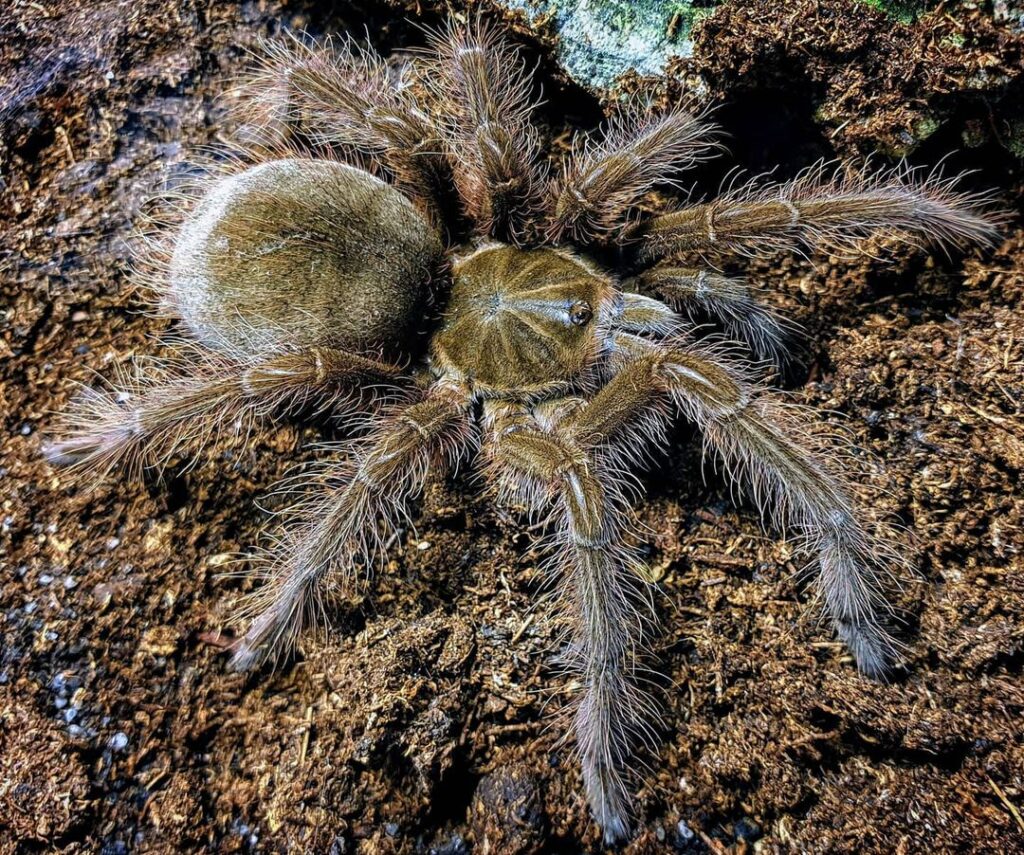
The Northern part of South America is home to Theraphosa blondi. The wild Goliath Tarantula variety lives in deep burrows, generally found in marshy damp areas. Tarantulas characteristically live in deep burrows. They may make their own hideaway or may use those made and deserted by other creatures. The feminine gender mostly lives in its burrow lined with silk. These are nighttime spiders. They do not move far away from their hideaway, not beyond a couple of feet, and they continue to rest in their hideaway throughout the day.
Biology
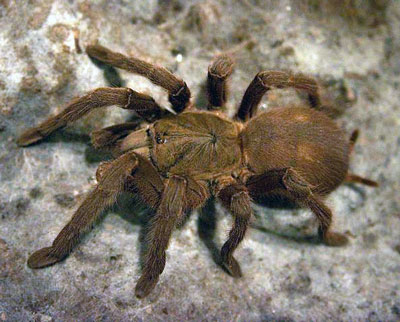
The leg span of this hairy variety is twelve inches, almost the size of a small pizza and may weigh about 6 ounces. Their bodies are of light and dark brown colors. Quite like most varieties of spiders, they have eight legs with seven segments each, and do not have antennae. The color is light to dark brown, while the legs have pale markings. Hair covers the body, abdomen and legs of these bird eaters.
Life Cycle
The females attain maturity in three to four years. Their average lifespan varies from fifteen to twenty-five years. It is common for females to eat their mates. Males do not survive for long after attaining maturity. Their lifespan is rather small, from 3 to 6 years. The female lays nearly fifty eggs in a silky smooth egg sack having a diameter of just about an inch. The eggs are stored in her burrow, which she guards for six to seven weeks, during which she takes the sack along, when it moves out of the burrow. Having emerged from the eggs, the young ones keep living in their nest. They move out of there only after their first molt. In fact, there are particular varieties of tarantula that prey on rodents like rats and cockroaches and snakes and the Goliath with its build and size is renowned among them.
Is the Goliath a Good Pet?
Some people do not consider the Goliath Tarantula for a pet because the species are aggressive. The Goliath tarantulas, further intimidate predators by making a hissing sound by rubbing together the bristles on their legs. They sometimes raise themselves on their hind legs in a ready-to-attack position. They have two fangs with poison glands, and though their toxicity levels in humans are bearable, severe pain, nausea and sweating, are some of the side effects of the bite. Smaller victims are not as lucky as the poison paralyzes them by acting on the nervous system. The Goliath tarantula defends itself by using its legs to flick the bristly hairs on its abdomen, causing irritation to the lungs and the skin causing swelling for a few hours. Take care that the minute barbed bristles do not enter your mouth or eyes, when the results can turn more serious.
Goliath bird-eating tarantula FAQs
How big is a Goliath tarantula?
The Goliath tarantula has a leg span of about 12 inches, close to the size of a small pizza.
How long do Goliath tarantulas live?
Females live about 15 to 25 years. Males live much less, only about 3 to 6 years.
Where do Goliath tarantulas live?
They live in the northern part of South America. They shelter in deep burrows in damp areas and come out at night, but they do not wander far.
Do Goliath tarantulas really eat birds?
Not usually. The name comes from an old engraving of one eating a hummingbird, but they mostly do not hunt birds.
Are Goliath tarantulas dangerous?
Their bite hurts and can cause nausea and sweating, but the venom is bearable for people. They also flick itchy hairs from their abdomen, which can irritate your skin and lungs, so keep them out of your eyes and mouth.

Randi Jones is the owner and founder of the Nature Gift Store, an online retailer specializing in nature-themed gifts, educational science projects, live animal nature kits and real butterfly artwork. A biology graduate who fell in love with insects, she founded the company in 2001 to make active learning about nature fun, accessible and engaging for children and adults. Her store offers real butterfly frames, home and garden decor and educational live animal kits, including ant farms, worm farms, tadpoles, ladybugs and hermit crabs, and she runs a bug museum in Washington featuring live animals like Eddie the Iguana alongside other reptiles and insects. Randi wrote most of the guides on this site. They first appeared on her long-running nature sites, including Monarch-Butterfly.com, Ladybug-Life-Cycle.com, Frog-Life-Cycle.com, Dragonfly-Site.com and Butterfly Pictures, which have now been brought together here at Learn About Nature.