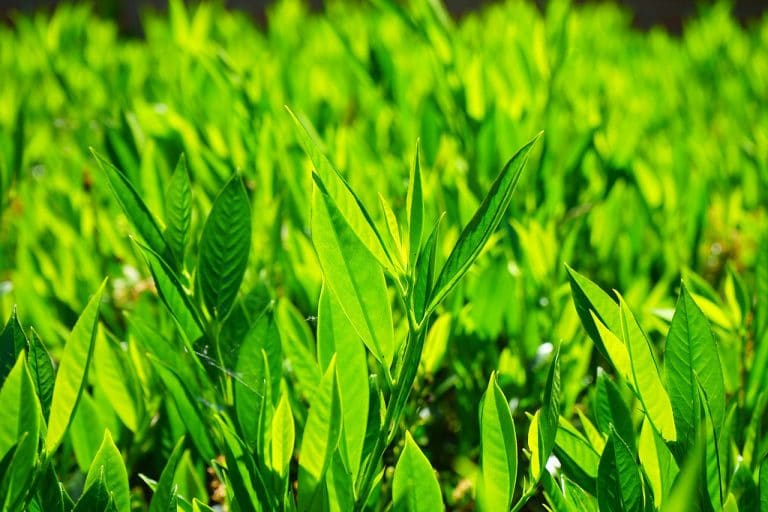
Nutmeg

Scientific Classification & Quick Facts
| Common name | Nutmeg |
| Scientific name | Myristica fragrans |
| Kingdom | Plantae |
| Phylum | Tracheophyta |
| Class | Magnoliopsida |
| Order | Magnoliales |
| Family | Myristicaceae |
| Genus | Myristica |
| Conservation status | Data Deficient |
| Type | Evergreen tropical tree |
| Habitat | Hot, humid tropics; well-drained organic soil |
| Native range | Banda Islands, Indonesia |
| Lifespan | Bears fruit even at 90 years old |
| Height | Up to 60 ft |
| Edible parts | Seed (nutmeg) and its covering (mace) |
| Special feature | Only tropical plant giving two spices |
Nutmeg is a popularly known spice belonging to the genus Myristica, which is obtained from a variety of species of this genus. It is referred to as Pala in the areas of Indonesia. Two types of spice are obtained from the fruit of this plant, namely Mace and Nutmeg.
Nutmeg is the seed of the fruit while the mace is the outer covering usually seen in the golden-brown shade. It is the only tropical plant that provides two different spices. It originated from the Banda Islands of Indonesia. The other products made from this plant, like the essential oil, Nutmeg butter, and some extracts are commercially very important.
History
Nutmeg has a rich history of its medicinal use. It was a valuable spice in those days. Ancient scripts belonging to 1st century have the evidence of Nutmeg usage. In Indian Vedas, it is recommended for treating headaches and fever. From the medieval times, it is used in the cuisine for its enchanting flavor and taste. In those days, this spice was very expensive, and the zeal to control the Nutmeg trading empire has led to many wars among Danish, Portuguese and other European expansionist regimes.. It has been introduced to Srilanka only in the beginning of the 19th century.
Anatomy
The Nutmeg tree is an evergreen perennial that grows up to 60 feet tall. The fruit is produced only after 7 to 8 years after planting, but continues to bear fruit even when 90 years old. The fruit contains both the spice. The Nutmeg is the egg-shaped seed of the fruit with 20 to 30 mm length and 15 to 18 mm width. The dried lacy part of the fruit is the mace which is seen in a golden-brown color
Habitat
Nutmeg is mainly found in all tropical regions like Maluku Spice Islands and West Indies Islands. It is also widely grown in Madagascar, India and Brazil. It is hardy to US zone 10 and 11.
Soil for Planting
Nutmeg prefers a well drained soil; hence using a combination of soil, perlite and sand will be beneficial for the plant. It will provide a good drainage capacity to the soil. Water logging may cause the roots of the Nutmeg plant to rot. It prefers an organic rich soil with a pH level of 6 to 7.
Planting
The root balls of the plants are used to propagate the Nutmeg tree. Before planting the root balls, the soil should be mixed well, up to 12 inches with 2 to 4 inches of rotted manure. Dig a hole twice or thrice bigger than the root ball to place it perfectly inside. The holes should be placed in a gap of 40 to 50 feet far from other cultivation or buildings. The root ball should be placed in the soil, but the top part of the root ball, around 1 inch should be protruding outside the soil. Water it thoroughly and wait for the water to drain while adding soil part by part to the hole. Provide 1 to 2 inches of mulch to retain the moisture in the soil.
Watering
Water is essential for the Nutmeg plant to grow, especially during the young period. Except in the rainy period, the plant should be supplied with adequate water. Lightly soak while watering the soil and let the soil dry up to 2 inches completely before the next irrigation.
Temperature and Humidity
Nutmeg prefers a tropical climate and a temperature of about 77 to 95 degree F. But in the first 3 to 4 years, it should be protected from direct sun; after that, it will require full sun to thrive.
Processing
The seeds of Nutmeg can be harvested around 3 times a year. The seeds are inside the fruit; hence to start processing, first, the outer cover should be removed and then the aril, in a golden-brown color, covering the red seed should be carefully peeled out. After drying under the sun, the aril is commercially sold as a spice known as “mace” that is available in a strip or powdered form. The kernel is also dried for a long period till the outer part breaks off and the whole Nutmeg, as a single piece, can be acquired which is used as a spice. Before using, the nut is washed in a lime solution to prevent from insect attack and germination of seeds.
Nutmeg a Good Source
Nutmeg possesses many chemicals derived from the plants that are helpful in preventing numerous ailments. Other than that, it possesses anti-oxidant and anti-bacterial properties. The seeds are a rich source of oils such as Trimyristin, Elemicin, Safrole, Eugenol, Myricticin, Camphene, Cineole, Linalool etc., out of which some oils give the nut a spicy and sweet aroma. It is a rich source of Potassium, Iron, Calcium, Zinc, Manganese, Copper and many vitamins like Vitamin C, Vitamin B-complex, Riboflavin, Folic acid, Vitamin A and Niacin.
Dosage
Till date, no clinical trials have suggested the exact amount of Nutmeg dosage. Some experiments have found that ingesting about 1 tablespoon of Nutmeg powder has caused nausea, vomiting, stomach inflammation, irritation, allergy and other discomforts. Taking about 1 to 2 mg per kg has caused CNS effects. It is also said that ingesting Nutmeg can give a hallucinatory effect. Pregnant ladies and Nursing mothers should be careful with the quantity of Nutmeg, while using it. Seeking a medical expert’s advice is recommended before the use of any herbs.
Pests and Diseases
Nutmeg trees affected by any serious pests and diseases have not been recorded yet, but some small pests like Black Scale, White Scale and Shield Scale feed on the sap and leaves of the plant and especially the younger specimens. Diseases like Leaf Spot and Shot Hole are commonly seen.
Uses
Nutmeg has many medicinal qualities and it is a very popular spice. It is used for stomach spams, diarrhea, intestinal gas and nausea. It is applied to the skin for joint pains or aching muscles and toothaches. Other than that, in the olden days it was considered as a brain tonic that can stimulate the brain and thereby prevent drowsiness, stress and fatigue. In traditional medicine it has been used for anxiety and sleeplessness. It possesses antibacterial properties that help to prevent bad breath by getting rid of build-up of bacteria in the mouth, hence it is used in making tooth pastes and mouth gargles. It is a useful ingredient in skin care cosmetics. When the Nutmeg powder is used as a scrub along with orange lentil powder, the skin glows and the acne marks are reduced.
Nutmeg FAQs
What is nutmeg?
Nutmeg is the egg-shaped seed of the fruit of the nutmeg tree. People grind it into a spice with a spicy, sweet smell.
What is mace?
Mace is the golden-brown, lacy covering around the nutmeg seed. It is dried and sold as a second spice, in strips or powder.
Where does nutmeg come from?
Nutmeg comes from the Banda Islands of Indonesia. Today it also grows in the Spice Islands, the West Indies, Madagascar, India and Brazil.
How long does a nutmeg tree take to make fruit?
A nutmeg tree starts to bear fruit 7 to 8 years after planting. It keeps fruiting until it is about 90 years old.
Is it safe to eat a lot of nutmeg?
No. The article says about one tablespoon of nutmeg powder has caused nausea, vomiting and stomach upset in tests. Nutmeg is for flavouring food in small amounts.

Randi Jones is the owner and founder of the Nature Gift Store, an online retailer specializing in nature-themed gifts, educational science projects, live animal nature kits and real butterfly artwork. A biology graduate who fell in love with insects, she founded the company in 2001 to make active learning about nature fun, accessible and engaging for children and adults. Her store offers real butterfly frames, home and garden decor and educational live animal kits, including ant farms, worm farms, tadpoles, ladybugs and hermit crabs, and she runs a bug museum in Washington featuring live animals like Eddie the Iguana alongside other reptiles and insects.