African Violets – One of the Most Popular Indoor Flowering Plants in the World

Scientific Classification & Quick Facts
| Common name | African violet |
| Scientific name | Saintpaulia |
| Kingdom | Plantae |
| Phylum | Tracheophyta |
| Class | Magnoliopsida |
| Order | Lamiales |
| Family | Gesneriaceae |
| Type | Herbaceous perennial, popular houseplant |
| Native range | East Africa, such as Tanzania and Kenya |
| Height | 6-15 cm tall, 6-30 cm wide |
| Colours | White, violet, purple or pale blue in the wild |
| Special feature | Can bloom all year round with enough light |
African Violets is the common name for Saintpaulias that belong to the family Gesneriaceae. Six to twenty species of the genus of herbaceous perennial flowering plants belong to this genus and you find them in the east African regions, like Tanzania, and Kenya. The African violet is typically an indoor plant and is best grown indoors in bright, indirect light. With its botanical origins going back to 19th century Africa, Some consider African Violets as one of the most popular indoor flowering plants in the world.
Anatomy
African Violets (Saintpaulias) can be six to thirty cm wide and grow up to a height of 6-15 cm. They have oval to rounded fleshy leaves, 2.5 to 8.5 centimeters long with a finely hairy petiole of 2 to 10 cm. The flowers grow to a diameter of about 3 cm with a velvety corolla with five lobes (petals).They grow in clusters of 3 to 10 + on “penduncles” or tender stalks. In the wild, these flower species manifest in white, violet, purple, or pale blue colors.
Domestic Cultivation

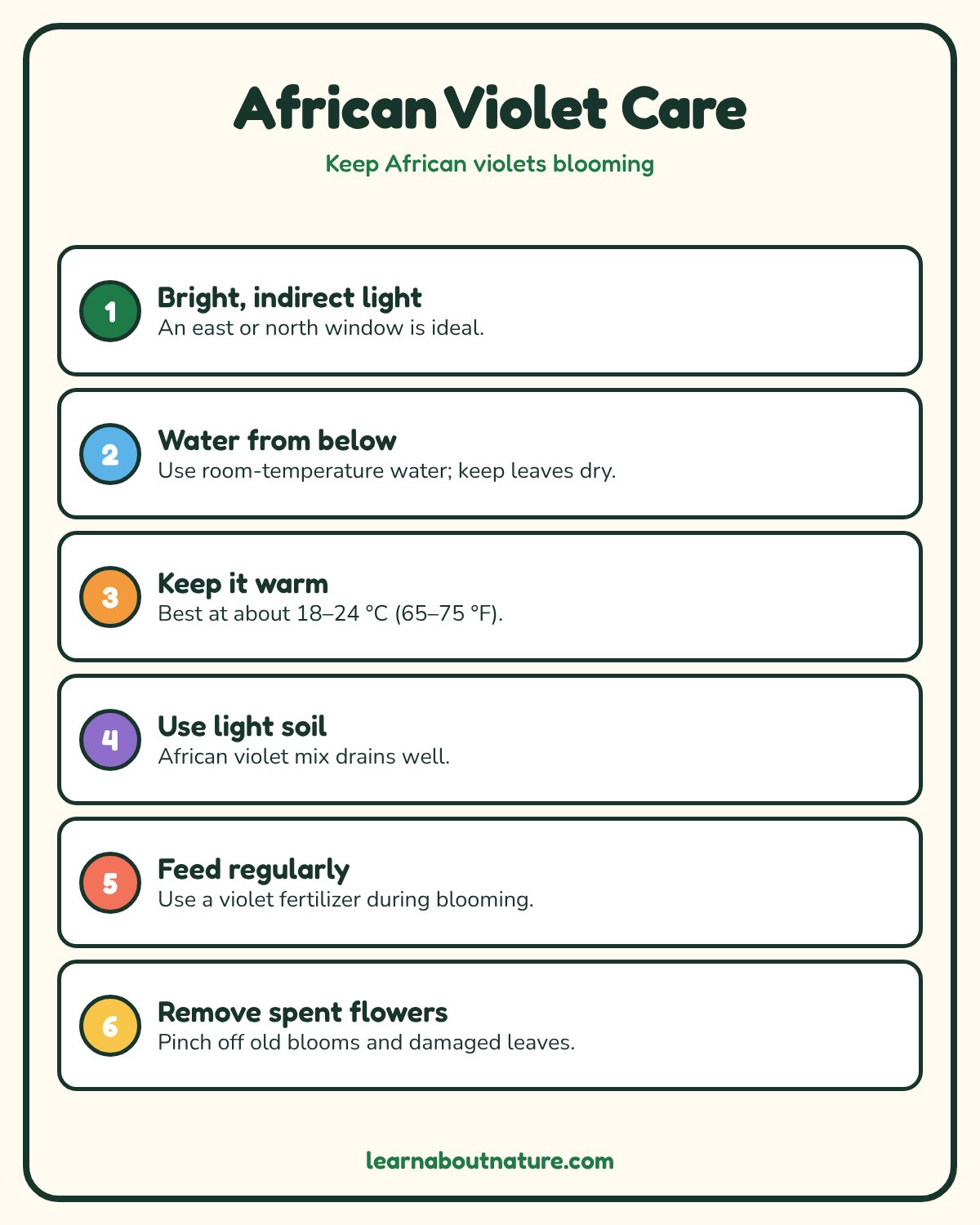
People cultivate African violets indoors in the garden at home, and among them, the white, violet and pink flowers are great when they blossom. We often find them in houses of plant lovers. Cultivating them is cumbersome; however, adopting certain guidelines, makes them easy to cultivate.
Preparation of Watering
The African violet needs an excellent site for growing and requires good sunlight. Place the pots where they get bright, indirect light. This is possible by placing the pots near the windows facing west or east. Keep them out of harsh direct sunlight, which can scorch the leaves, and water them when the top of the soil feels slightly dry. These plants require pure water, very often; therefore place water in an open vessel for minimum 8 hours for the impurities to evaporate before using it.
Preparation of Planting
Take care while potting African violets, since their roots and stem are very delicate and liable to break away. Grown-up plants normally possess more than one crown. After gently uprooting the plant from the pot, cut the root ball with a sharp knife and split the crown. Take care not to tamper with the roots and retain some soil on them.
Planting
Bear in mind that plants grow when potted in pots with holes for drainage. In order to avert soil from seeping through the holes, place pieces of stockings, broken pot pieces and a thin layer of gravel in the pots.
After Bloom Care

At Home
African violets bloom round the year, but if you do not meet some basic requirements, they fail to bloom. Inadequacy of light is one of the main reasons for them not to bloom.
African violet FAQs
Where do African violets come from?
African violets come from East Africa, in countries such as Tanzania and Kenya. They are now one of the most popular indoor flowering plants in the world.
How big do African violets get?
African violets stay small. They grow about 6 to 15 cm tall and 6 to 30 cm wide, with fleshy, oval leaves and flowers about 3 cm across.
What colour are African violets?
In the wild their flowers are white, violet, purple or pale blue. Houseplants are also grown in white, violet and pink.
How much light do African violets need?
They need plenty of sunlight, so put them near an east- or west-facing window. Too little light is a main reason they do not flower.
Do African violets flower all year?
Yes, African violets can bloom round the year if their basic needs are met, especially enough light.

Randi Jones is the owner and founder of the Nature Gift Store, an online retailer specializing in nature-themed gifts, educational science projects, live animal nature kits and real butterfly artwork. A biology graduate who fell in love with insects, she founded the company in 2001 to make active learning about nature fun, accessible and engaging for children and adults. Her store offers real butterfly frames, home and garden decor and educational live animal kits, including ant farms, worm farms, tadpoles, ladybugs and hermit crabs, and she runs a bug museum in Washington featuring live animals like Eddie the Iguana alongside other reptiles and insects. Randi wrote most of the guides on this site. They first appeared on her long-running nature sites, including Monarch-Butterfly.com, Ladybug-Life-Cycle.com, Frog-Life-Cycle.com, Dragonfly-Site.com and Butterfly Pictures, which have now been brought together here at Learn About Nature.