Red Footed Tortoise
Scientific Classification
| Kingdom: | Animalia |
| Phylum: | Chordata |
| Subphylum: | Vertebrata |
| Class: | Reptilia |
| Order: | Testudine |
| Suborder: | Cryptodira |
| Family: | Testudinidae |
| Genus: | Chelonoidis |
| Species: | C. carbonaria |
| Binomial name: | Chelonoidis carbonaria |
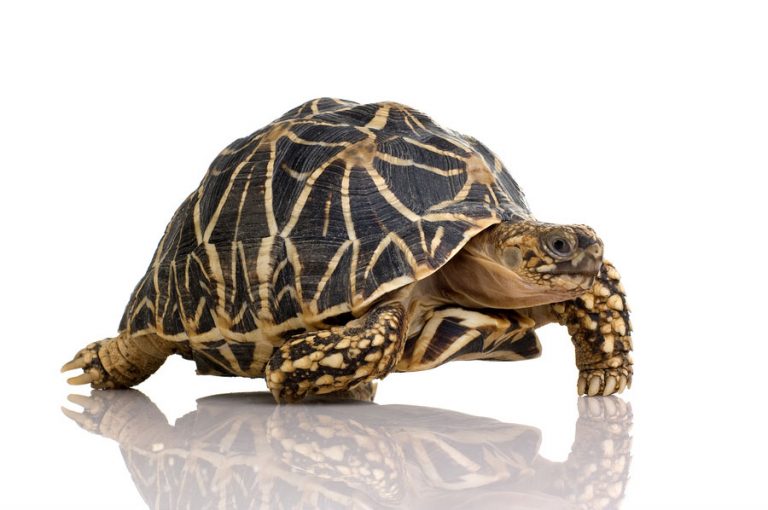
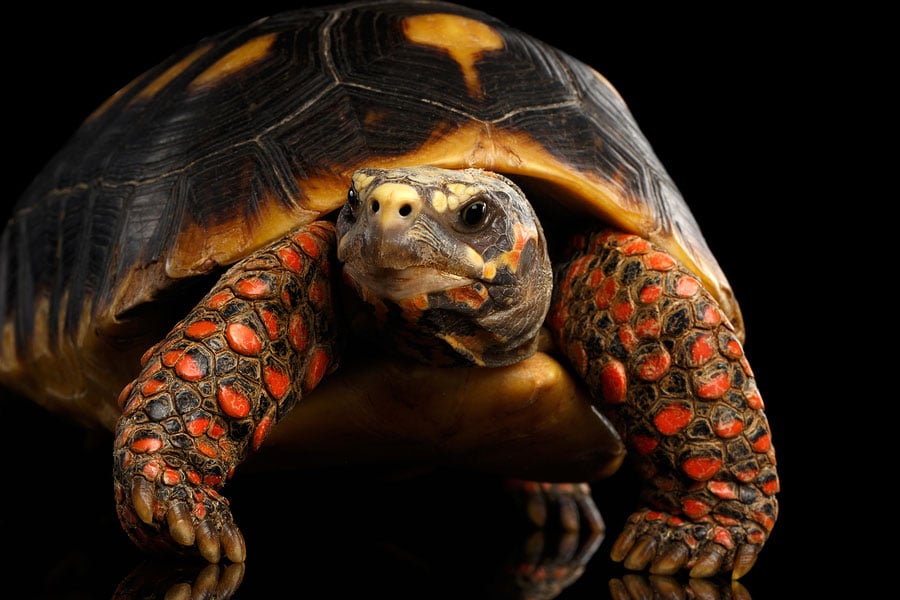
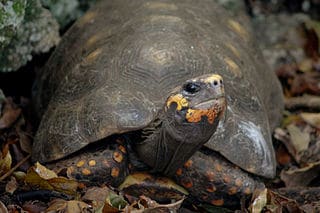
The red-footed tortoises or Chelonoidis carbonaria are the favorite pet tortoises of North and South America. The normal size of an adult is approximately 30 cm (12 in). Some grow up to 16 Inches (40 cm) Their back shell or “carapace” has a loaf shape and is dark in color. In the center of every scale on the shell(scutes), there is a pale patch. The scales are bright, diminishing from dull yellow to deep red; their limbs are dark in color. The Red-footed tortoise lives up to 50 years.
Anatomy
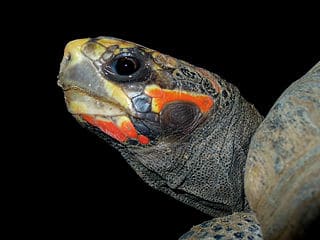
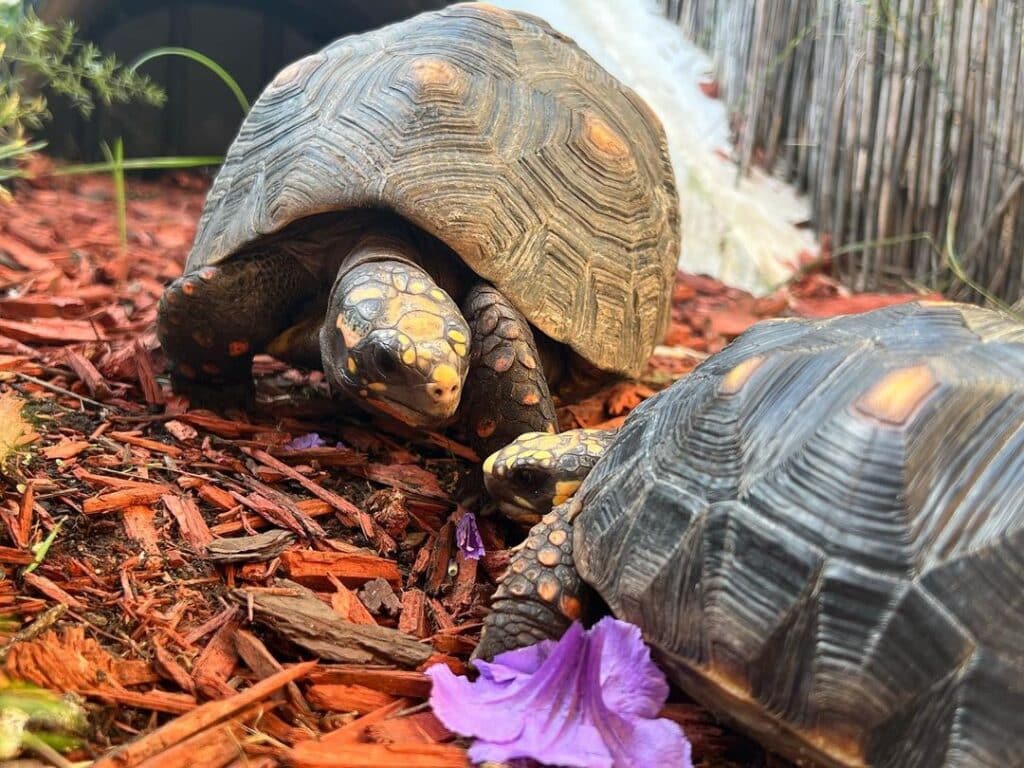
The color of the red-footed tortoise varies in color depending on their individual differences, gender and region. Features of their anatomy and shell shape also differ. The carapace of the fully developed red-footed tortoise is oval and elongated in shape, having parallel sides. However, the male tortoise carapace curves inward. Even though their domes are high, they are smooth and more or less flat at the back.
The Plastron (bottom shell) is big and along the borders they are thick. Red-footed tortoises have a comparatively small, square head that is flattened at the top. The length is more than its width. They have large eyeballs and iris black in color, with hardly any sclera seen around it.
Habitat
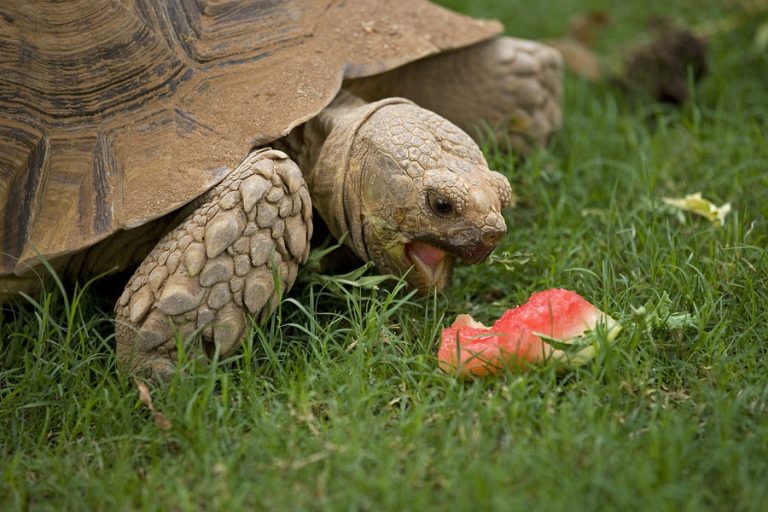
Normally they inhabit the basins of the Amazon, such as forest-borders and savannahs. These tortoises are omnivorous reptiles that feed on a variety of different available plants and fruits. Their diet includes flowers, carrion, grasses, fungi and invertebrates. In hot and dry climate they aestivate (spending a hot or dry period in a prolonged state of torpor). but never brumate (live in lethargy)
As a Pet
Red-footed tortoises are friendly, pretty and inquisitive animals. On account of their pleasing and inquisitive behavior, they rank as amazing pets, particularly for families.
Housing
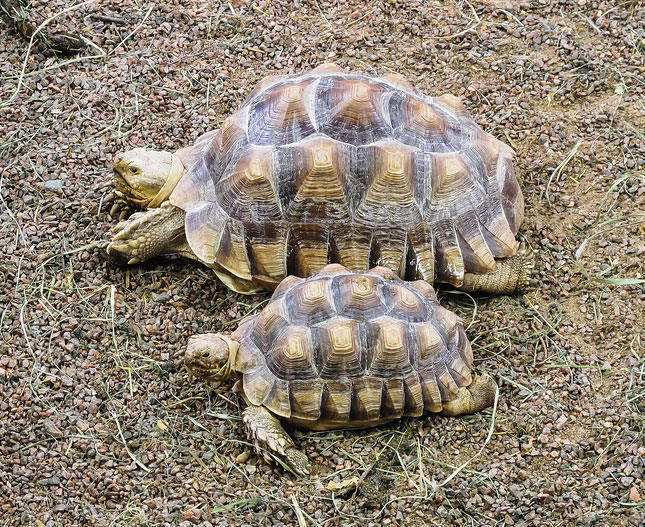
The terrariums that majority of the keepers use, for Red-footed and yellow-footed tortoises, are made of glass. A terrarium of 20-gallon, measuring 20” x 12” x 12” (L x B x H) is good, and an average size tortoise requires a 40 breeder terrarium or even bigger. Despite of the fact that the glass terrarium is easily available in different sizes in the pet store, some keepers use wooden or plastic cages. However, increase the size of the terrarium as the tortoise grows. An ideal size for a pair of Red-footed tortoise is 6’x4’ (LxB).
Substrate
Use a blend of ½ peat moss and ½ sand as substrate for both the yellow-foot and the red-foot. In order to retain the moisture, place a layer of cypress mulch.
Temperature and Humidity
The keeper would do well to provide a UVB bulb 12” above the substrate. Red-footed Tortoises require an average humidity of 80% in their terrarium.
Lighting
A heating lamp and a UVB are both required for the red-footed tortoise.
Having discovered a fondness for insects while pursuing her degree in Biology, Randi Jones was quite bugged to know that people usually dismissed these little creatures as “creepy-crawlies”.