Must-Know Facts About the African Sultaca Tortoise

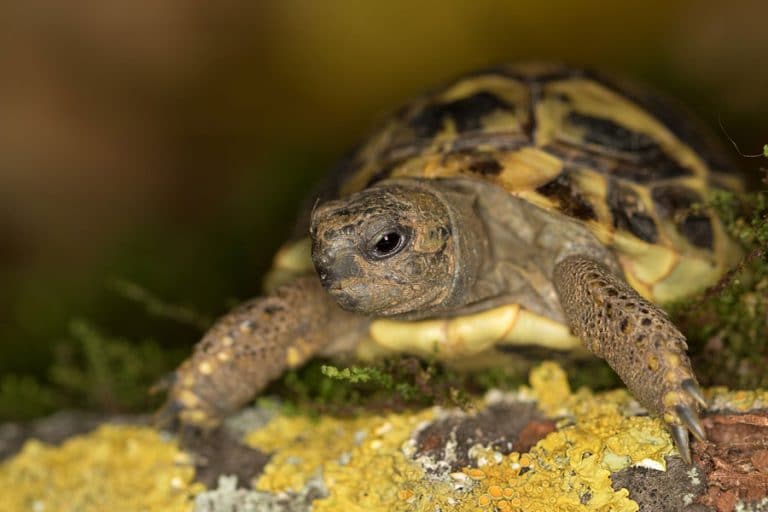
The African sulcata tortoise (often misspelled “sultaca”), also called the African spurred tortoise, is the third-largest tortoise in the world and the largest that lives on a mainland. Its scientific name is Centrochelys sulcata (it used to be called Geochelone sulcata). These big, active, strong-willed tortoises are popular pets, but they grow huge and can live for many decades.
African spurred tortoise Quick Facts
| Common name | African spurred tortoise |
| Scientific name | Centrochelys sulcata |
| Kingdom | Animalia |
| Phylum | Chordata |
| Class | Testudines |
| Family | Testudinidae |
| Genus | Centrochelys |
| Conservation status | Endangered |
| Type | Reptile (tortoise) |
| Diet | Plant eater: grasses, hay and greens |
| Habitat | Deserts, grasslands and dry savannas |
| Native range | Ethiopia, Sudan and the southern Sahara edge |
| Size | Males often over 30 inches (76 cm) |
| Colours | Tan shell with a low, flat shape |
| Special feature | Spurs on its back legs give it its name |
Where Do Sulcata Tortoises Live?
Wild sulcatas live in the Sahel, the dry strip of land along the southern edge of the Sahara Desert. Their range stretches across Africa from Senegal and Mauritania in the west to Sudan, Ethiopia and Eritrea in the east.
This is a tough place to live, with dry grasslands, scrub and long, hot dry seasons. To escape the heat, sulcatas dig deep burrows, sometimes several feet long, where the air is cooler and more humid.
In the wild, the sulcata is now an endangered species. Its habitat is being lost to farming, grazing and desertification, and many have been collected for food and the pet trade.
African Sulcata Tortoise Size and Appearance
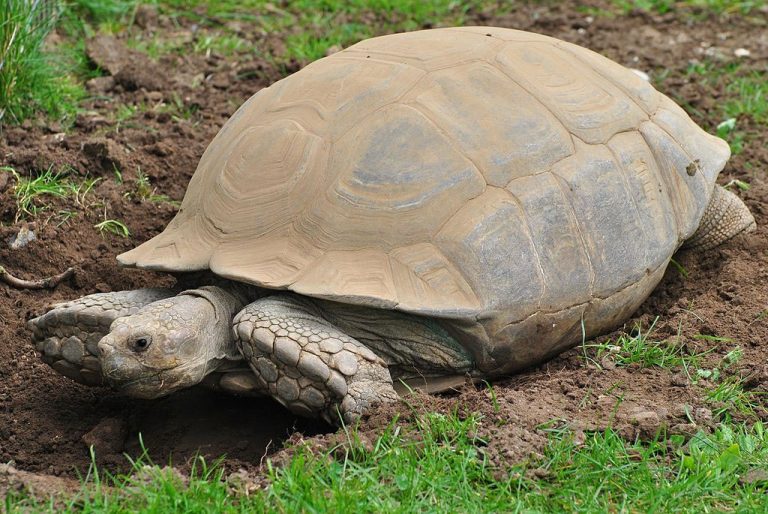
Sulcatas grow big. Adult males are often around 2 to 2.5 feet (60 to 75 cm) long and commonly weigh 70 to 100 pounds or more. Females are usually smaller. Only the giant tortoises of the Galapagos and Aldabra islands grow larger.
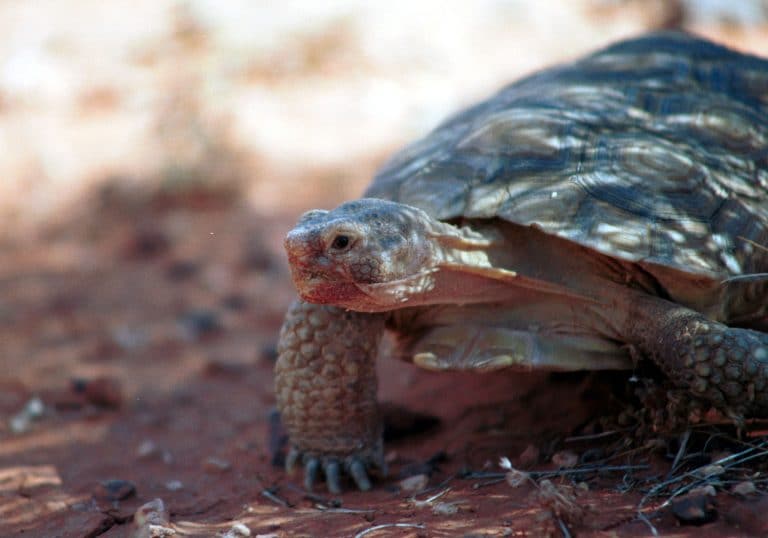
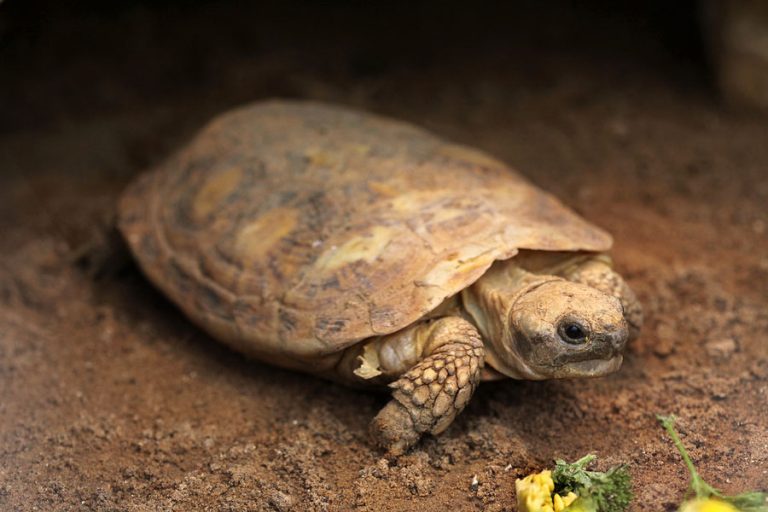
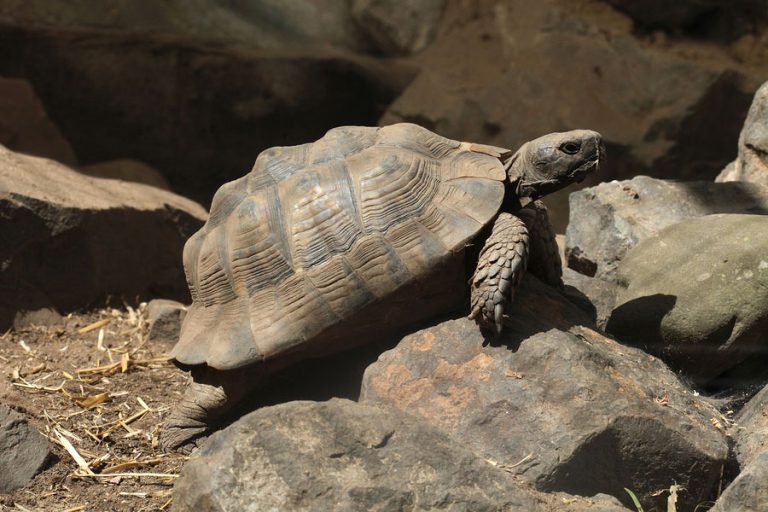
The shell is a sandy tan or brownish color that blends in with dry grass and soil. It is broad and fairly flat on top rather than tall and domed, and each large scale has deep growth rings. The name “sulcata” comes from a Latin word for “furrow,” describing these grooves.
The other common name, African spurred tortoise, comes from the two or three large, cone-shaped spurs on the back of each thigh. Their front legs are covered in thick, overlapping scales that help them dig.
Housing an African Sulcata Tortoise
Because of its size and strength, an adult sulcata needs a very large outdoor enclosure, ideally a big yard with plenty of grass to graze. A hatchling can start indoors, but it will outgrow most indoor setups within a few years.
Sulcatas are powerful and curious. They can push over flimsy fences, and they are champion diggers. Walls need to be solid, so the tortoise cannot see through them and keep trying to push through, and fencing should extend below ground to stop escapes by tunneling.
They also need a warm, insulated shelter, especially in cooler climates. Sulcatas come from a hot region and do not hibernate, so in cold or wet weather they need a heated house to retreat to. Plenty of hiding spots and shade help them feel secure.
What Do Sulcata Tortoises Eat?
Sulcatas are grazers. In the wild they eat mostly grasses and other tough, fiber-rich plants. A healthy pet diet is based on grass and grass hay, such as timothy or Bermuda hay, plus weeds like dandelion, clover and plantain, and some leafy greens.
Richer hays such as alfalfa are high in protein, so most keepers offer them only now and then rather than as the main food. Fruit should be a rare treat at most.
A calcium supplement, such as a reptile calcium powder or a cuttlebone they can nibble, helps build strong bones and shell. Sulcatas also need plenty of sunshine or a UVB lamp, and a shallow dish of fresh water.
Breeding Sulcata Tortoises
Adult males can be very territorial and will ram and flip each other, so two males should not be kept together. Keepers who breed sulcatas usually house one male with one or more females.
Females dig nests in the ground and can lay several clutches a year, often with 15 to 30 or more eggs in each. That means a single breeding pair can produce a lot of baby tortoises, each of which will need a big home for many decades.
Is a Sulcata the Right Pet?
Sulcatas commonly live more than 70 years, so a tortoise bought by a child could still be alive when that child is a grandparent. Their huge size, strength and need for space mean they are best suited to keepers who have a large, secure yard and a warm climate or heated shelter.
For the right family, the African sulcata tortoise is a fascinating and characterful animal. Just be sure you can provide the housing, time and long-term care it needs before you bring one home.
African spurred tortoise FAQs
How big do sulcata tortoises get?
Sulcata tortoises are the third biggest tortoise species. Males often grow to more than 30 inches (about 76 cm) long.
Why is it called a spurred tortoise?
It is named for the spurs, or bumps, on its back legs.
What do sulcata tortoises eat?
Sulcata tortoises are plant eaters. A bale of alfalfa hay and a cuttlebone for extra calcium can help keep them healthy.
Where do sulcata tortoises live?
They live in places like Ethiopia and Sudan, along the southern edge of the Sahara. Their homes range from desert to grassland and dry savanna.
Can you keep two male sulcata tortoises together?
No. Two or more males kept together will fight and may hurt each other, so keep only one male with one or more females.

Randi Jones is the owner and founder of the Nature Gift Store, an online retailer specializing in nature-themed gifts, educational science projects, live animal nature kits and real butterfly artwork. A biology graduate who fell in love with insects, she founded the company in 2001 to make active learning about nature fun, accessible and engaging for children and adults. Her store offers real butterfly frames, home and garden decor and educational live animal kits, including ant farms, worm farms, tadpoles, ladybugs and hermit crabs, and she runs a bug museum in Washington featuring live animals like Eddie the Iguana alongside other reptiles and insects.