Hermit Crabs: The Molting Process
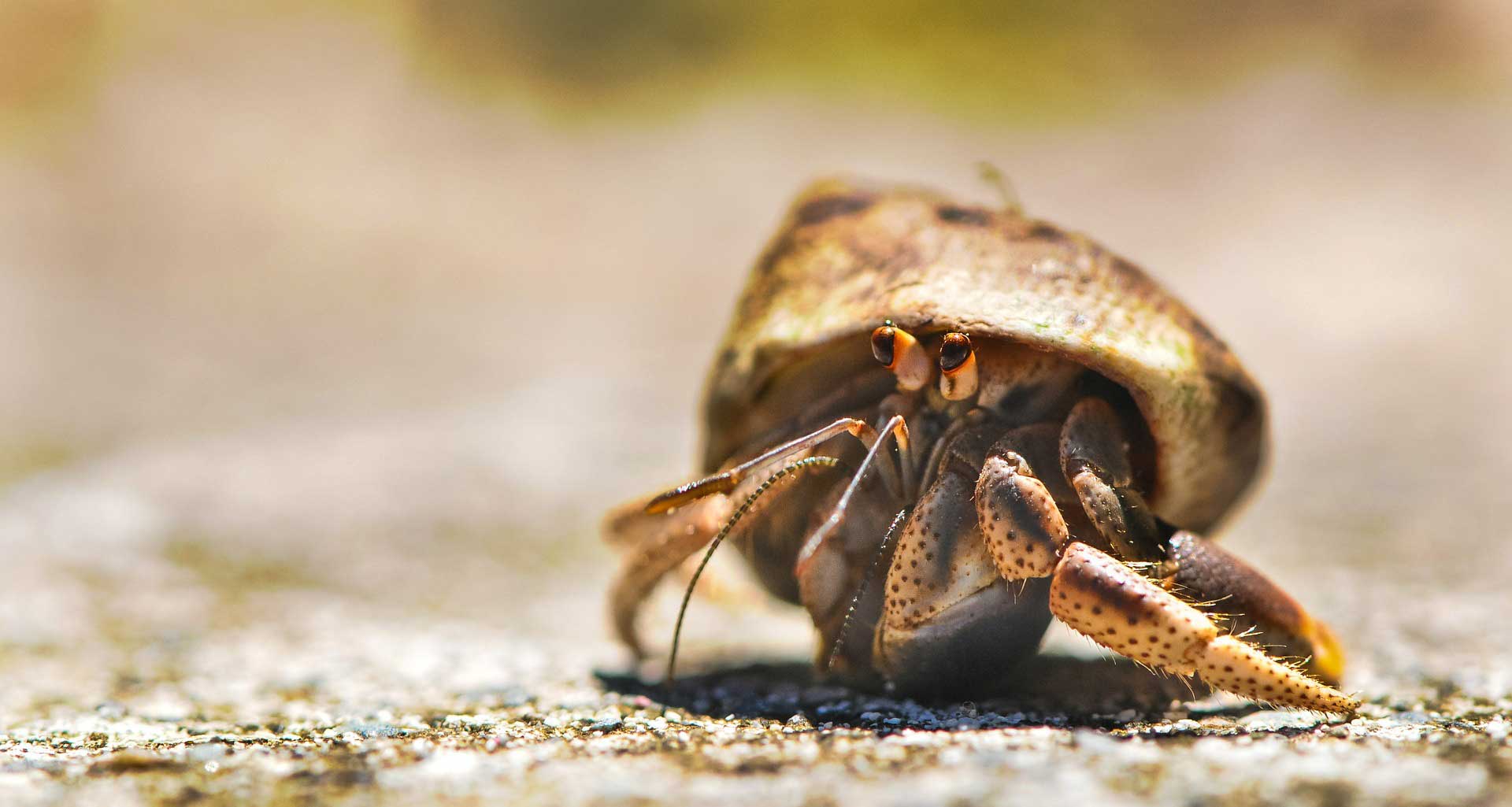
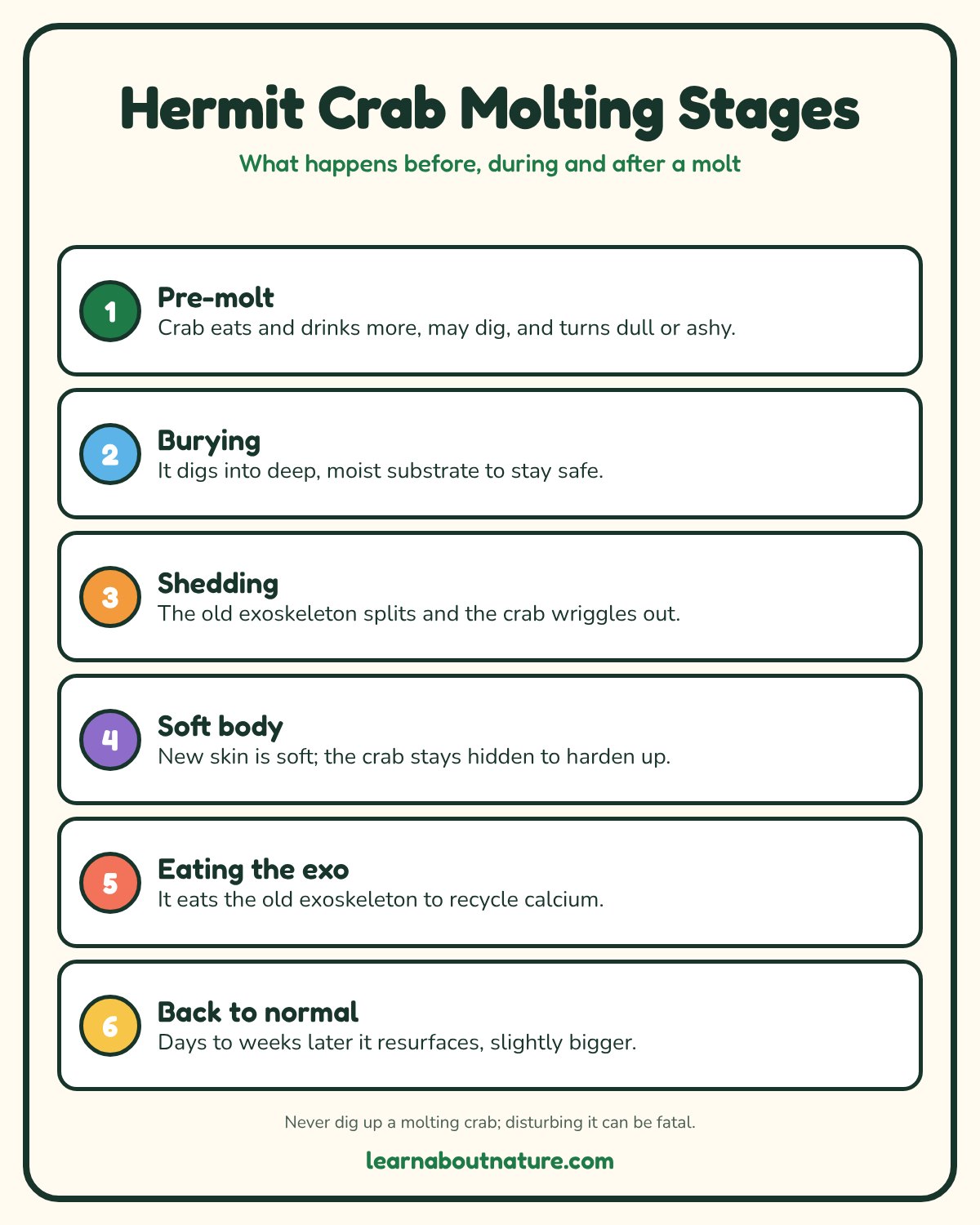
Hermit crabs, like snakes, shed their skin when they grow new and better skin. This process is called molting. Molting happens naturally about every 18 months for a hermit crab, but smaller hermits might molt more often. During the molting process, the crab will regrow any limbs it has lost.
Where Hermit Crabs Molt
When a hermit crab molts, it will dig a tunnel into the sand so that it can have some privacy and protection from the elements. It is best to provide your molter with a special place to do his thing. If you can, buy a separate molting tank and fill it with about six inches of sand or forest bedding. The sand or bedding should be moist, but not dripping wet. You should be able to make a mound in the substrate that stays put, like when you make a sand castle.
During the molting process it is best to leave your hermit crab alone. Just a squirt of water over the molting tunnel each day is enough to keep hermit happy. Once he has finished molting he will emerge from his tunnel, but he won’t be completely hardened yet. You really should leave him alone during the hardening process, too.
How Hermit Crabs Change After Molting
Don’t be surprised if your hermit crab looks smaller after he has molted, because he is smaller a little bit. He will add to his size as he hardens and will get back into shape in no time. There is no need to worry about your hermit crab during the molting and hardening process, it is perfectly natural and he will feel much better after it is over.
Signs Your Hermit Crab Is Ready to Molt
You will know when your hermit crab is ready to molt when he starts to change his appearance. His eyes will look foggy and he won’t move around as much. His antennae will look funny, too, and won’t move much. He will also start to dig his tunnel, but he might also dig if his conditions aren’t the best, too, so be sure to check the temperature and humidity of the tank when he starts to tunnel before you assume that he is ready to molt.
One way to know for sure if your hermit crab is about to molt when he digs a tunnel is to first check the conditions of the tank. If the temperature and humidity are fine, then just smooth the bedding out over the tunnel, without collapsing the tunnel on him, and check in the morning to see if he came up to eat or get a drink. You’ll know because there will be a new hole in the bedding. If he has come up then he is probably not molting and is digging for another reason. If he hasn’t, then move him into his new temporary molting home.
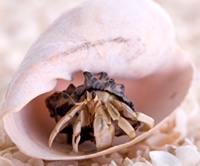
This little crab probably doesn’t need this big of a shell yet!
Hermit Crab Molting FAQs
How often do hermit crabs molt?
Hermit crabs molt periodically as they grow. Small, young crabs molt more often, while larger adults may molt once every year to eighteen months. A molt can take several weeks from start to finish. During that time the crab usually stays buried.
What are signs a hermit crab is about to molt?
Signs include digging and burying more, eating and drinking more, a dull or ashy look, cloudy eyes, and lethargy. Some crabs store water in their shells before molting. They may also lose a limb, which will regrow.
Should I dig up a molting hermit crab?
No. Molting crabs are extremely vulnerable and should not be disturbed. Digging them up can stress or kill them. Keep humidity and temperature correct and, if needed, separate other crabs with an isolation barrier. Patience is essential, as the process can take weeks.
Why do hermit crabs eat their old exoskeleton?
After molting, hermit crabs eat their shed exoskeleton to recover calcium and other minerals. This helps harden their new exoskeleton. Owners should leave the old exoskeleton in the tank for the crab to eat. Removing it too early deprives the crab of these nutrients.

Randi Jones is the owner and founder of the Nature Gift Store, an online retailer specializing in nature-themed gifts, educational science projects, live animal nature kits and real butterfly artwork. A biology graduate who fell in love with insects, she founded the company in 2001 to make active learning about nature fun, accessible and engaging for children and adults. Her store offers real butterfly frames, home and garden decor and educational live animal kits, including ant farms, worm farms, tadpoles, ladybugs and hermit crabs, and she runs a bug museum in Washington featuring live animals like Eddie the Iguana alongside other reptiles and insects. Randi wrote most of the guides on this site. They first appeared on her long-running nature sites, including Monarch-Butterfly.com, Ladybug-Life-Cycle.com, Frog-Life-Cycle.com, Dragonfly-Site.com and Butterfly Pictures, which have now been brought together here at Learn About Nature.